
Deconstructing Rarity in a Digital Ecosystem
The concept of “rarity” within a digital environment, particularly in a sprawling open-world racing game like Forza Horizon 5, transcends simple in-game cost or performance metrics. Unlike the real world, where vehicle rarity is typically dictated by limited production runs, historical significance, or catastrophic loss, the scarcity of a digital asset like a car in FH5 is a meticulously engineered outcome. It is a product of sophisticated game design, strategic content distribution, and an evolving in-game economy that leverages technological frameworks to create distinct tiers of accessibility. Understanding the rarest car isn’t merely about identifying an expensive pixelated model; it’s about dissecting the developer’s intent, the mechanisms of digital distribution, and the behavioral economics of a player base interacting with a dynamic virtual marketplace.

Playground Games, the developer, employs a multi-faceted approach to introduce and maintain vehicle scarcity. These methods include time-gated seasonal events, specific challenge rewards, premium DLC integrations, limited-time shop offerings, and even real-world promotional tie-ins. Each method relies on the game’s underlying technological infrastructure to control the supply of vehicles entering the player ecosystem. When a car is not available for direct purchase from the in-game Autoshow and can only be acquired through these transient or external means, its rarity automatically elevates. This scarcity is a powerful tool to drive player engagement, encourage participation in new content, and reward dedicated players who either complete challenging objectives or remain vigilant to unique opportunities. The ultimate benchmark for rarity, therefore, lies not just in a car’s in-game value but primarily in the difficulty, uniqueness, and temporal constraints surrounding its acquisition pathway.
The Primary Contenders: A Deep Dive into Exclusivity
Identifying the absolute rarest car in Forza Horizon 5 is a dynamic challenge, as the game’s content pipeline constantly introduces new vehicles and occasionally re-releases previously exclusive ones. However, several vehicles consistently stand out due to their exceptionally difficult, time-limited, or unique acquisition methods, making them perpetual symbols of digital automotive exclusivity. These are not merely expensive cars; they are cars whose availability is fundamentally constrained by game design and digital distribution strategies.
Among the strongest candidates for the rarest vehicle title are the OPI Ford GT, the Ferrari 599XX Evolution, and the 2004 Honda Civic Type R. Each represents a distinct facet of engineered rarity within the game’s technological framework.
The Ferrari 599XX Evolution, while often associated with extreme performance, earns its rarity stripes primarily through its past seasonal event exclusivity. In Forza Horizon 4, it was notoriously difficult to obtain, often requiring completion of arduous seasonal objectives. While its presence in FH5 has seen various re-runs through seasonal events, its initial scarcity and its status as a top-tier racing machine mean demand perpetually outstrips supply, especially for newer players who missed its initial windows of availability. Its high performance amplifies its desirability, contributing to its perceived and actual scarcity on the player-driven Auction House.
The 2004 Honda Civic Type R presents a fascinating case of engineered rarity for a seemingly common car. At launch, this model was not available in the Autoshow, nor was it a common Wheelspin drop. Its initial distribution was limited to specific seasonal challenges or unique event rewards. This strategic scarcity for a popular real-world car made it highly coveted among collectors and enthusiasts who appreciate its handling characteristics. Its rarity highlights how developers can intentionally manipulate the availability of even seemingly “ordinary” vehicles to create engagement and value through scarcity. A car doesn’t need to be hypercar to be rare; it simply needs to have a tightly controlled digital supply.
The OPI Ford GT: A Case Study in Promotional Exclusivity
Without question, the strongest contender for the title of the rarest car in Forza Horizon 5 is the OPI Ford GT. Its rarity is not born from in-game difficulty or seasonal exclusivity alone, but from an unparalleled real-world promotional distribution model that set it apart from every other vehicle in the game. This car serves as a prime example of the intersection between digital content, external brand partnerships, and technologically-driven scarcity.
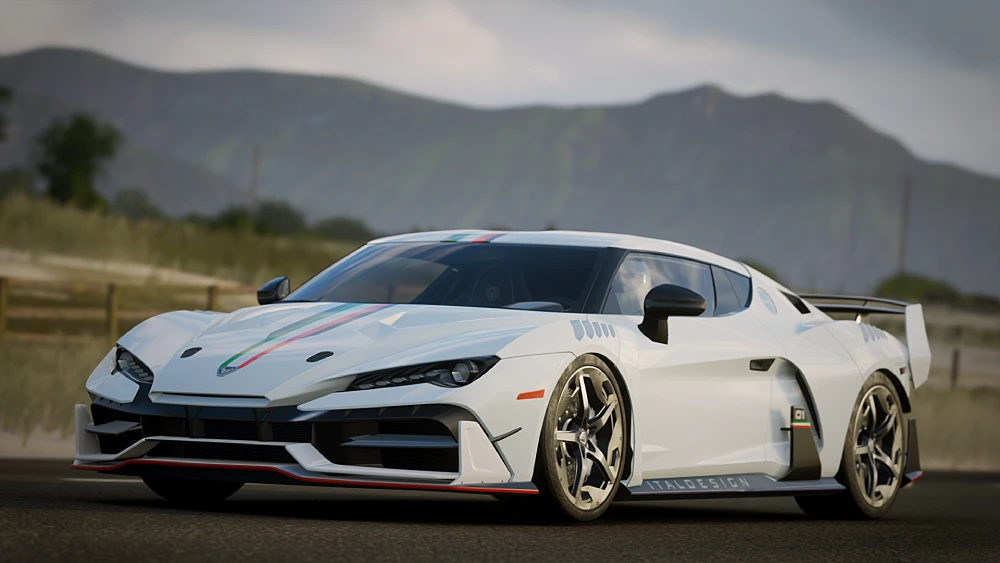
The OPI Ford GT was introduced as part of a limited-time collaboration between Xbox and OPI, a global leader in professional nail lacquer. To acquire the car, players in specific regions (primarily the United States, Canada, and the UK) had to purchase qualifying OPI nail polish products from participating retailers during a specific promotional window in early 2022. Upon purchase, they would receive a unique, one-time-use digital code that could be redeemed within the Xbox ecosystem to unlock the car in Forza Horizon 5.
Several critical factors contribute to its extreme rarity:
- External Acquisition Method: Unlike virtually every other car in FH5, the OPI Ford GT could not be acquired through standard in-game methods. It was never available in the Autoshow, as a Wheelspin prize, in the Forzathon Shop, or as a reward for seasonal events or Horizon Stories. Its sole initial pathway was a real-world product purchase.
- Geographic and Temporal Limitations: The promotion was confined to specific countries and a very narrow timeframe. Players outside these regions, or those who missed the promotional window, had no official means of acquiring a code.
- No In-Game Re-release: To date, Playground Games has shown no indication of re-releasing the OPI Ford GT through traditional in-game channels. This intentional decision preserves its unique status as a promotional item.
- Limited Auction House Presence: Due to the severe constraints on its initial acquisition, very few OPI Ford GTs entered the in-game Auction House. When they do appear, they command extremely high prices, often reaching the maximum credit cap, and are swiftly “sniped” by vigilant collectors. The sheer scarcity of its digital “tokens” (the codes) in the wild translates directly to its minimal presence within the game’s secondary market.
The OPI Ford GT stands as a testament to how external brand collaborations, facilitated by digital code redemption technology, can create an unparalleled level of scarcity for in-game content. It’s not just a rare car; it’s a digital artifact of a specific, limited real-world event.
The Game Economy and Player-Driven Scarcity
Beyond developer-controlled distribution, the in-game Auction House in Forza Horizon 5 plays a pivotal role in shaping perceived and actual rarity. This player-driven marketplace, a complex digital economy built on demand and supply, often amplifies the scarcity of already rare vehicles. The Auction House operates under a set of technological parameters that allow players to list cars for sale, bid on them, and complete transactions, often influencing their market value significantly.
Cars like the OPI Ford GT or the Ferrari 599XX Evolution, due to their limited entry into the ecosystem, inevitably become highly sought after on the Auction House. This leads to intense competition, with players employing strategies like “sniping” – rapidly searching for and buying newly listed cars at advantageous prices – to acquire these elusive vehicles. The maximum credit cap for car sales, while intended to prevent hyperinflation, often means that truly rare cars are listed at this cap and still sell instantly, indicating their actual market value could be far higher if not for the system’s limitations.
Furthermore, the game allows “Legendary” tuners and painters to sell cars for higher prices, indirectly affecting the flow of rare cars. A legendary creator who applies a unique livery or tune to a rare car might be able to list it at a premium, making it even harder for the average player to acquire, thus reinforcing its exclusivity within the economic framework of the game. This player interaction layer adds another dimension to rarity, where the digital asset’s value is not solely determined by its developer-assigned properties but also by the collective actions and desires of the player base.
Strategies for Digital Car Collectors
For dedicated collectors aiming to acquire the rarest vehicles in Forza Horizon 5, a multi-pronged approach combining vigilance, strategic resource management, and understanding of game mechanics is essential. These strategies leverage the game’s technological features and economic systems to maximize chances of obtaining elusive digital assets.
- Vigilance and Patience: The most fundamental strategy is to stay informed. Regularly checking the official Forza Horizon 5 social media channels, news feeds, and in-game Festival Playlist updates is crucial. Seasonal events are the primary method for re-introducing many rare cars, so understanding the event schedule and completion requirements is paramount. Patience is key; many rare cars will eventually cycle back into the Festival Playlist, even if it takes many months.
- Mastering the Auction House: The Auction House remains the most consistent (albeit challenging) method for acquiring cars that are not currently available via seasonal events. This requires sharp reflexes and a deep understanding of its interface.
- Advanced Filters: Learn to use specific car filters to narrow down searches instantly.
- Rapid Refreshing: Continuously refreshing searches for desired rare cars, particularly during peak player times, can provide an edge in catching newly listed items.
- Credit Accumulation: Maintaining a substantial credit balance is vital, as rare cars frequently sell at or near the maximum allowable price.
- Understanding Seller Behavior: Rare cars are often listed by players who may have duplicates or who are looking to capitalize on demand. Identifying patterns can sometimes help predict listings.
- Resource Management (Forzathon Shop and Wheelspins): While less reliable for specific rare cars, the Forzathon Shop occasionally features highly sought-after vehicles, requiring players to save up Forzathon Points earned from completing daily and weekly challenges. Wheelspins and Super Wheelspins, while largely luck-based, can also randomly reward rare cars. Maximizing the earning of these spins through gameplay progression and accolades increases the statistical chance of a rare drop.
- Leveraging Car Pass and DLC: While these are paid expansions, they sometimes include exclusive vehicles that might become rare over time if they are not re-released through other methods. Investing in the Car Pass or specific DLC packs can guarantee access to certain unique vehicles from the outset.
Ultimately, successful rare car acquisition in Forza Horizon 5 is a blend of engaging with the game’s intended content cycles, exploiting its player-driven economic systems, and harnessing community knowledge. For cars like the OPI Ford GT, however, the digital collector’s journey remains largely a waiting game, hoping a unique opportunity arises on the Auction House for a car whose origin story is deeply rooted in a very specific, technologically-enabled real-world promotion.
aViewFromTheCave is a participant in the Amazon Services LLC Associates Program, an affiliate advertising program designed to provide a means for sites to earn advertising fees by advertising and linking to Amazon.com. Amazon, the Amazon logo, AmazonSupply, and the AmazonSupply logo are trademarks of Amazon.com, Inc. or its affiliates. As an Amazon Associate we earn affiliate commissions from qualifying purchases.