
In the world of mathematics, the quotient is the final result obtained by dividing one quantity by another. While most students encounter this term in elementary arithmetic, its implications extend far beyond the classroom, particularly within the realms of personal finance, corporate accounting, and investment analysis. In these professional spheres, the quotient is the essential metric that converts raw data into actionable intelligence. Whether you are calculating the return on an investment, determining the solvency of a business, or managing a household budget, understanding the quotient—and the division that produces it—is the key to financial literacy.

The Fundamental Logic of the Quotient in Financial Data
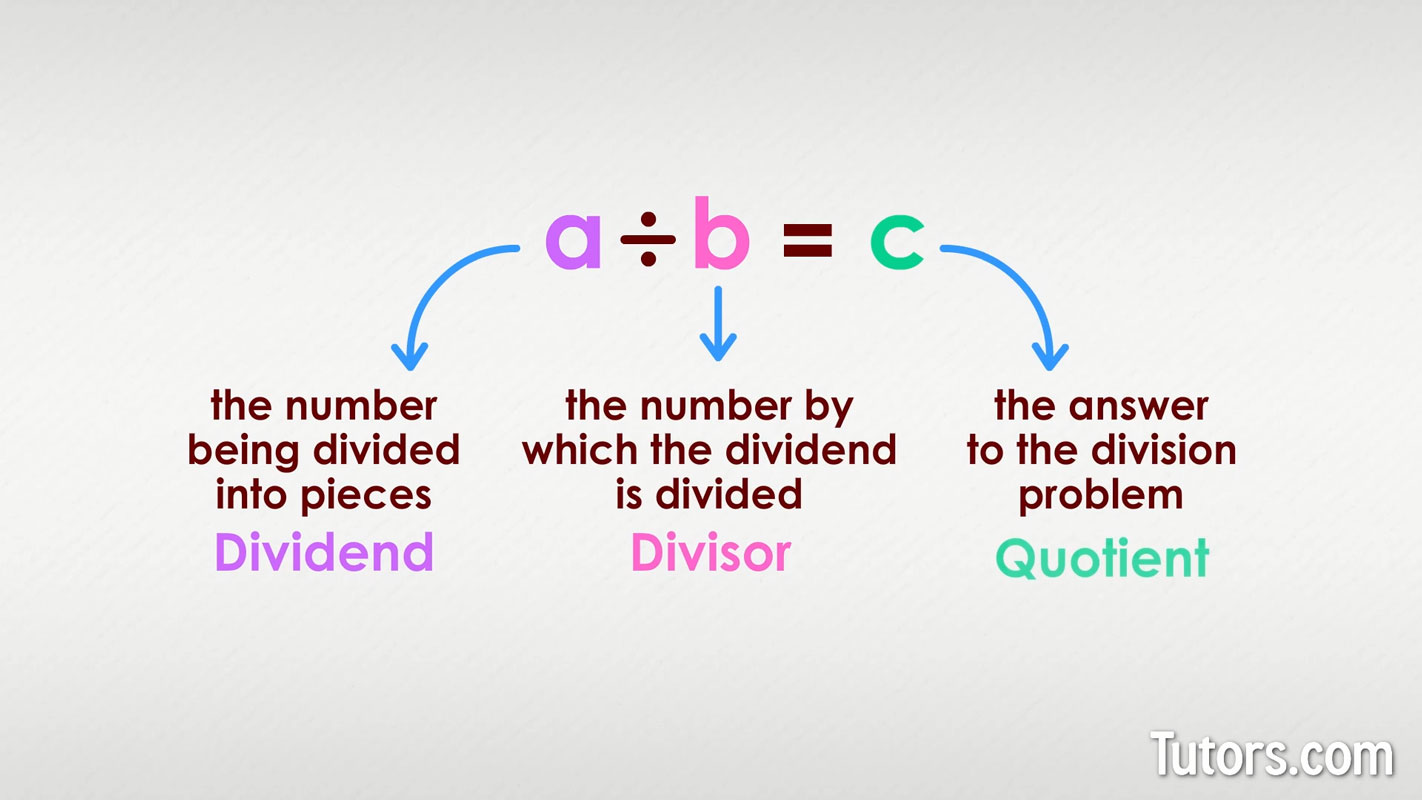
To understand the quotient in a financial context, one must first master the three components of a division equation: the dividend, the divisor, and the quotient itself. The dividend is the total amount you have or are analyzing; the divisor is the number of units or the factor you are dividing that total by; and the quotient is the result that tells you how much of the dividend is allocated to each unit of the divisor.
Defining the Dividend, Divisor, and Quotient
In a standard division problem (Dividend ÷ Divisor = Quotient), each part represents a specific financial data point. For example, if a company earns $1,000,000 in net income (the dividend) and has 500,000 shares outstanding (the divisor), the quotient is 2. In financial terms, this quotient is known as Earnings Per Share (EPS). Without the ability to identify the quotient, an investor would see only a large, contextless number rather than a precise measure of profitability per share.
Why the Quotient Matters in Quantitative Analysis
In finance, the quotient serves as a “normalizer.” It allows professionals to compare entities of different sizes. A company with $10 million in profit might seem more successful than one with $1 million in profit, but if we calculate the quotient of profit relative to total assets (Return on Assets), we might find that the smaller company is actually more efficient. The quotient strips away the noise of scale to reveal the underlying health of an asset or enterprise.
Applying the Quotient to Profitability and Efficiency
The most frequent application of the quotient in the money niche is the calculation of profitability ratios. These ratios are essentially quotients that describe how well a company uses its resources to generate value. By focusing on the quotient, analysts can determine if a business model is sustainable or if it is leaking capital.
Net Profit Margin: The Efficiency Quotient
The net profit margin is perhaps the most critical quotient for any business owner. It is calculated by dividing net profit by total revenue. This quotient tells you what percentage of every dollar earned remains as profit after all expenses are paid. If a business has $500,000 in revenue and $50,000 in profit, the quotient is 0.10, or 10%. This specific quotient allows a business to compare its current efficiency against historical performance or industry benchmarks. A shrinking quotient indicates rising costs or declining pricing power, signaling a need for strategic intervention.
Return on Equity (ROE)
For investors, the Return on Equity quotient is a primary indicator of how effectively management is using shareholder capital. By dividing net income by shareholder equity, we arrive at a quotient that represents the “yield” on the owners’ investment. A high quotient in this area suggests a company that is adept at generating internal growth, while a low quotient may indicate that the company is over-capitalized or struggling to find profitable projects.
Valuation Quotients: The Language of the Stock Market
In the stock market, quotients are the primary tools used to determine whether a security is undervalued, overvalued, or fairly priced. These valuation quotients, often referred to as “multiples,” are the bread and butter of fundamental analysis.
The Price-to-Earnings (P/E) Ratio
The P/E ratio is the most widely cited quotient in the world of investing. It is calculated by dividing the current share price by the earnings per share (EPS). This quotient represents how much investors are willing to pay for every dollar of the company’s earnings. A high quotient might suggest that the market expects significant future growth, whereas a low quotient could indicate that the stock is a bargain—or that the company is in trouble. Understanding that this ratio is fundamentally a quotient helps investors realize that it is a relative measure, not an absolute one.
Dividend Yield and Payout Ratios
For income-focused investors, the quotient of dividend payments relative to the stock price (dividend yield) is the most important figure. Furthermore, the dividend payout ratio—the quotient of dividends per share divided by earnings per share—tells the investor how much of the company’s profit is being returned to shareholders versus being reinvested. If this quotient exceeds 1.0 (or 100%), it suggests that the company is paying out more than it earns, which is a red flag for the sustainability of the dividend.
The Personal Finance Quotient: Tracking Solvency and Growth
On an individual level, the quotient is a powerful tool for wealth management. By applying division to personal income and expenses, individuals can gain a clear picture of their financial trajectory and make informed decisions about debt, savings, and retirement.
The Savings Quotient
One of the most vital numbers in personal finance is the savings rate, which is the quotient of your monthly savings divided by your gross monthly income. Financial advisors often recommend aiming for a quotient of at least 0.15 to 0.20 (15% to 20%). By tracking this quotient over time, you can ensure that your lifestyle expenses are not scaling faster than your income, a phenomenon known as lifestyle creep.
Debt-to-Income (DTI) Ratio
When applying for a mortgage or a personal loan, lenders look almost exclusively at one specific quotient: the Debt-to-Income ratio. This is calculated by dividing your total monthly debt obligations by your gross monthly income. Lenders generally look for a quotient of 0.36 or lower. If the quotient is too high, it indicates that a significant portion of the dividend (your income) is already being consumed by existing divisors (debts), making you a higher risk for further credit.
The Burn Rate for Entrepreneurs and Side Hustlers
For those running a side hustle or a startup, the “burn rate” quotient is a matter of survival. By dividing the total cash on hand by the monthly net loss, you arrive at a quotient that represents the “runway”—the number of months the business can survive before running out of money. This quotient provides a deadline for achieving profitability or securing additional funding.
Mastering the Numbers: Improving Your Financial Quotients
The ultimate goal of understanding “what is the quotient in division” within a financial framework is to learn how to manipulate the variables to produce a more favorable result. To improve a financial quotient, you must either increase the dividend or decrease the divisor.
Increasing the Dividend
In the context of ROI (Return on Investment), the dividend is the net gain. To increase the quotient (your return), you must focus on increasing the yield of your assets. this might involve diversifying into higher-growth sectors, negotiating higher salaries, or optimizing business operations to boost net income. When the dividend increases while the divisor remains constant, the quotient grows, signifying greater wealth and efficiency.
Decreasing the Divisor
Conversely, you can improve your financial quotients by reducing the divisor. In personal finance, this often means cutting costs or paying down high-interest debt. In corporate finance, it might involve share buybacks, which reduce the number of outstanding shares (the divisor) and thereby increase the Earnings Per Share (the quotient), even if net income remains flat. This strategy is frequently used by established companies to provide value to shareholders when organic growth is slow.
Conclusion: The Strategic Value of the Quotient
While the term “quotient” originates in basic mathematics, its role in the world of money is foundational. It provides the mathematical architecture for every major financial metric used today. From the P/E ratios that drive Wall Street to the DTI ratios that determine homeownership, the quotient is the definitive answer to the question of how resources are allocated and how performance is measured. By viewing your finances through the lens of division, you can transform abstract numbers into a strategic roadmap for building and maintaining long-term wealth. Understanding the quotient isn’t just about solving a math problem; it’s about solving the problem of financial independence.
aViewFromTheCave is a participant in the Amazon Services LLC Associates Program, an affiliate advertising program designed to provide a means for sites to earn advertising fees by advertising and linking to Amazon.com. Amazon, the Amazon logo, AmazonSupply, and the AmazonSupply logo are trademarks of Amazon.com, Inc. or its affiliates. As an Amazon Associate we earn affiliate commissions from qualifying purchases.