
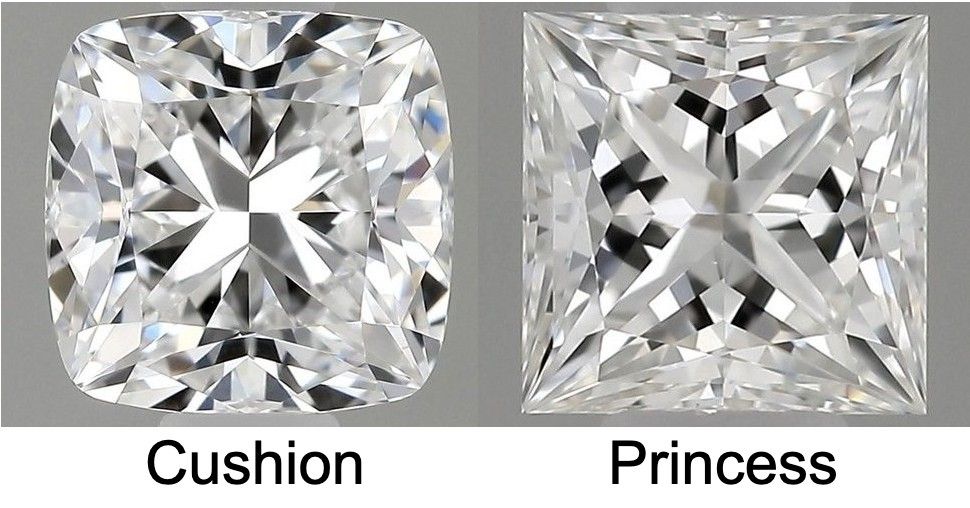
When navigating the complex world of luxury commodities, few assets carry as much emotional weight and financial nuance as the diamond. Among the various shapes available to investors and consumers, the princess cut stands as a pinnacle of modern engineering and economic efficiency. Developed in the 1960s and refined in the late 1970s, the princess cut—technically known as a “square modified brilliant”—has become the second most popular diamond shape in the world.
From a financial perspective, understanding the princess cut is not merely an exercise in aesthetics; it is an analysis of market demand, manufacturing yield, and asset liquidity. This guide explores the princess cut through the lens of personal finance and investment, detailing why this specific cut represents a unique intersection of luxury and fiscal pragmatism.

The Economics of the Princess Cut: Maximizing Rough Yield
The primary reason the princess cut occupies a significant niche in the jewelry market is rooted in the industrial efficiency of its creation. To understand the value of a princess cut, one must first understand the “yield” of a rough diamond.
The Yield Factor: Why Princess Cuts Offer Better Value
In the diamond cutting industry, the goal is to retain as much of the original rough stone’s weight as possible while achieving maximum brilliance. When cutting a traditional Round Brilliant diamond, a cutter typically loses about 50% to 60% of the rough stone to dust and scrap. This high level of waste is reflected in a significantly higher price-per-carat for round diamonds.
In contrast, the pyramid-like shape of a princess cut closely mirrors the natural shape of an octahedral diamond crystal. Because of this structural alignment, diamond cutters can often retain up to 80% of the rough stone. This manufacturing efficiency is passed down to the consumer. Financially speaking, a princess cut diamond typically costs 20% to 30% less than a round diamond of the same carat weight, color, and clarity. For the value-conscious buyer, this allows for the purchase of a larger or higher-quality stone for the same capital outlay.
Cost-Efficiency and the “Face-Up” Size
While the princess cut offers a lower price-per-carat, an astute investor must consider the “face-up” area. Because princess cuts are “bottom-heavy”—meaning much of their weight is held in the pavilion (the lower portion)—they often appear slightly smaller than a round diamond of equal carat weight when viewed from above. However, the diagonal measurement of a princess cut is often larger than the diameter of a round diamond, creating an optical illusion of size that maintains its competitive edge in the luxury market.
Market Dynamics and Resale Liquidity
In the realm of personal finance, a luxury purchase should ideally maintain a reasonable portion of its value. The princess cut is a “standardized” shape, which contributes significantly to its liquidity in the secondary market.
Historical Performance in the Luxury Sector
Since its surge in popularity in the 1980s, the princess cut has maintained a consistent share of the global diamond market. Unlike “fancy” shapes that may fall in and out of fashion—such as the marquise or the heart shape—the princess cut has cemented itself as a staple. For an asset to have high liquidity, there must be a constant, predictable demand. The princess cut benefits from being the primary alternative to the round brilliant, ensuring that there is always a robust secondary market for these stones should an owner choose to divest.
The Impact of Standardization on Resale Value
The financial world thrives on standardization. The more standardized an asset, the easier it is to price and trade. While round diamonds are the most standardized, princess cuts are a close second. Major grading laboratories, such as the Gemological Institute of America (GIA), provide detailed reports for princess cuts, though it is important to note that the GIA does not provide a “Cut Grade” for princess diamonds in the same way they do for rounds. Instead, they grade Polish and Symmetry.
From a resale perspective, a princess cut with “Excellent” or “Very Good” polish and symmetry, accompanied by a reputable laboratory certificate, acts as a high-quality collateral or a portable store of wealth. The lack of a formal GIA cut grade means that the market relies on “depth” and “table” percentages to determine value, requiring a more sophisticated level of financial due diligence from the buyer.
Evaluating the “Four Cs” Through a Financial Lens

To maximize the return on investment (ROI) or to ensure a “smart buy,” one must analyze the “Four Cs” (Carat, Color, Clarity, and Cut) specifically as they relate to the princess cut’s unique geometry.
Color Thresholds and the Price Premium
In square-shaped diamonds, color tends to be more visible in the corners. In a round diamond, the brilliance can often “hide” a lower color grade. However, because the princess cut has four pointed corners where the material is relatively thin, these areas can act as a “color trap.”
From a financial strategy standpoint, this means that while you save money on the shape, you may need to allocate some of those savings into a higher color grade (typically G or higher) to ensure the stone remains a high-quality asset. Buying a princess cut with a visible yellow tint (K or lower) significantly reduces its desirability on the secondary market, thereby impacting its future resale value.
Clarity and Risk Management
The four corners of a princess cut are its most vulnerable points. If a diamond has a significant inclusion (a “feather” or “crystal”) near a corner, it poses a structural risk; a sharp blow to the corner could cause the diamond to chip.
In terms of risk management, an investor should look for stones where the inclusions are located under the table (the center) rather than the edges. A “flawless” or “VVS” clarity grade commands a massive price premium that may not be recovered upon resale. Therefore, the “sweet spot” for financial value is often found in the “VS1” or “VS2” range—stones that are “eye-clean” but do not carry the “perfection premium” of higher grades.
Strategic Purchasing: Diamonds as a Tangible Asset
If you are treating the purchase of a princess cut diamond as a part of a diversified portfolio of tangible assets, certain logistical and market factors must be considered to protect your capital.
The Role of Certification (GIA vs. AGS)
In the diamond market, the “paper” (the certificate) is as important as the stone. For a princess cut to hold its value, it must be certified by a top-tier laboratory. While the GIA is the industry standard for most, the American Gem Society (AGS) historically provided a more rigorous “Cut Grade” for princess diamonds.
A princess cut with an “AGS 0” (Ideal) cut grade is a rare commodity. These stones represent the top 1% of the market in terms of light performance. While they carry a higher upfront cost, they are far more likely to retain value and appeal to high-end collectors and investors who prioritize performance over raw carat weight.
Lab-Grown vs. Natural: The Financial Divide
A modern discussion on the princess cut cannot ignore the rise of lab-grown diamonds. From a purely functional standpoint, they are identical. From a financial standpoint, they are vastly different.
Natural diamonds act as a “store of value” due to their scarcity. Lab-grown princess cuts, however, are subject to the same price depreciation as technology; as manufacturing becomes cheaper, the value of the existing inventory drops. If the goal is a “side hustle” or long-term investment, natural stones remain the standard. If the goal is minimizing current expenditure with no expectation of future return, lab-grown princess cuts offer a lower barrier to entry.
Conclusion: The Business Case for the Princess Cut
The princess cut diamond is more than just a centerpiece for an engagement ring; it is a masterclass in industrial optimization and market positioning. By offering a brilliant aesthetic at a 20% to 30% discount relative to round diamonds, it provides a unique opportunity for capital efficiency.
To successfully navigate this market, a buyer must move beyond the surface-level beauty and analyze the underlying metrics: the yield of the rough, the visibility of color in the corners, and the structural integrity of the facets. Whether viewed as a portable store of wealth or a high-value consumer purchase, the princess cut remains one of the most logically sound choices in the luxury world. By prioritizing certification, strategic clarity placement, and market-standard proportions, one can ensure that their “princess” is not just a symbol of status, but a well-hedged financial asset.
aViewFromTheCave is a participant in the Amazon Services LLC Associates Program, an affiliate advertising program designed to provide a means for sites to earn advertising fees by advertising and linking to Amazon.com. Amazon, the Amazon logo, AmazonSupply, and the AmazonSupply logo are trademarks of Amazon.com, Inc. or its affiliates. As an Amazon Associate we earn affiliate commissions from qualifying purchases.