
In the complex ecosystem of global finance, few numbers hold as much weight for the average consumer and business owner as the “prime rate.” While it is often discussed in the corridors of the Federal Reserve and reported on financial news segments with a sense of urgency, many people remain unclear on what the prime rate actually is and, more importantly, how it dictates the cost of their daily lives.
The prime rate serves as the foundational heartbeat of the lending world. Whether you are swiping a credit card, looking to buy a home, or seeking capital to launch a small business, the prime rate is the invisible hand guiding your interest costs. Understanding the prime rate today requires more than just looking up a percentage; it requires an understanding of how macroeconomic policy trickles down to your personal bank account.
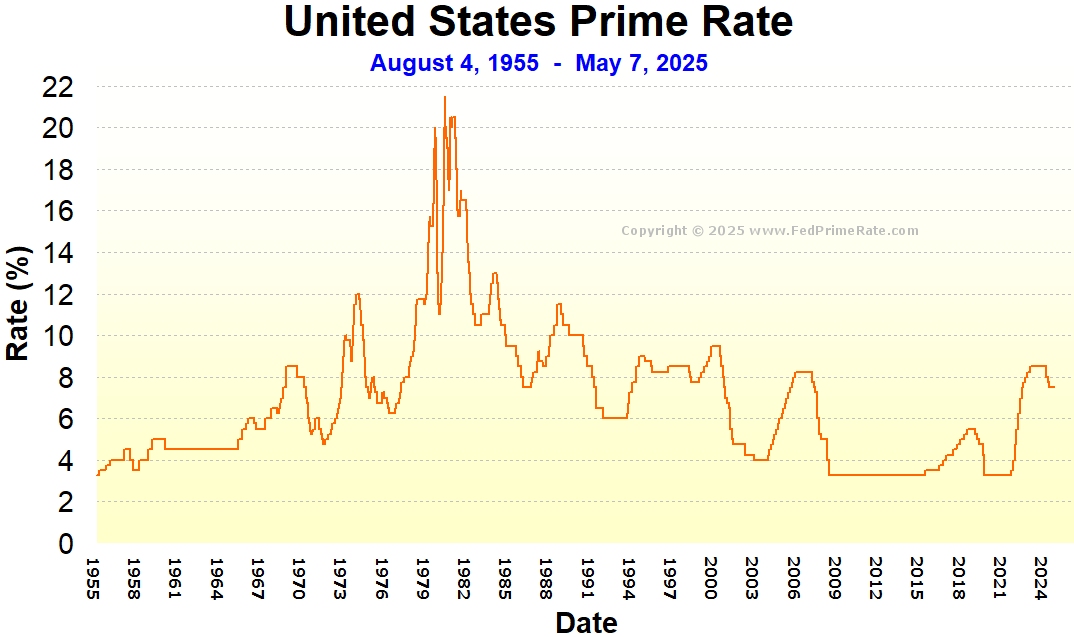
The Mechanics of the Prime Rate: What It Is and How It Is Set
At its core, the prime rate is the interest rate that commercial banks charge their most creditworthy corporate customers—usually large corporations with impeccable financial standing. However, its influence extends far beyond the Fortune 500. It serves as the base benchmark for almost all consumer and small business lending in the United States.
How the Prime Rate is Determined
While individual banks technically have the right to set their own prime rates, the industry almost universally follows the “Wall Street Journal Prime Rate.” The WSJ surveys the 30 largest banks in the country and publishes the rate when at least 23 of them change their pricing.
The formula is remarkably consistent: the prime rate is typically set at 3 percentage points (300 basis points) above the federal funds target rate. The federal funds rate is the interest rate at which commercial banks lend to each other overnight to maintain their reserve requirements. Therefore, when the central bank moves, the prime rate moves in lockstep.
The Role of the Federal Reserve
The Federal Open Market Committee (FOMC) is the primary driver of prime rate changes. When the Federal Reserve perceives that the economy is overheating and inflation is rising, it raises the federal funds rate to “cool” the economy. This makes borrowing more expensive, which in turn reduces spending. Conversely, when the economy is sluggish, the Fed lowers rates to encourage borrowing and investment.
Because the prime rate is pegged to these decisions, it serves as the primary transmission mechanism through which the government’s monetary policy reaches the average citizen. When the Fed announces a 0.25% hike, you can expect the prime rate to jump by that same amount within 24 to 48 hours.
Why the Prime Rate Matters to Your Personal Finances
For the individual consumer, the prime rate is not a theoretical concept; it is a direct expense. Most consumer debt is “variable,” meaning the interest rate is not fixed but rather fluctuates based on an underlying index. In the vast majority of cases, that index is the prime rate.
The Impact on Credit Cards
Credit cards are perhaps the most sensitive products to prime rate fluctuations. Most credit card agreements state that your Annual Percentage Rate (APR) is calculated as “Prime + [X]%.” For example, if your card has a margin of 15% and the prime rate is 8.5%, your total interest rate is 23.5%.
When the prime rate increases, the interest on your carrying balance increases automatically, often in the very next billing cycle. This can create a compounding effect where more of your monthly payment goes toward interest rather than the principal balance, making it significantly harder to get out of debt during periods of high interest rates.
Mortgages and Home Equity Lines of Credit (HELOCs)
While most Americans opt for 30-year fixed-rate mortgages—which are more closely tied to the 10-year Treasury yield—the prime rate is the primary driver for Home Equity Lines of Credit (HELOCs) and Adjustable-Rate Mortgages (ARMs).
A HELOC functions much like a credit card secured by your home. If the prime rate rises, the monthly “interest-only” payment on a HELOC can skyrocket. For homeowners who have used their equity to fund renovations or consolidate debt, a significant rise in the prime rate can strain the monthly household budget, forcing a pivot in financial priorities.

Personal Loans and Auto Financing
New loans are also priced based on the current prime rate environment. When the prime rate is high, banks become more selective and the “floor” for interest rates on personal loans and auto financing rises. This means that even consumers with excellent credit will find themselves paying more for a new car or a debt consolidation loan than they would have in a lower-rate environment.
The Broader Economic Context: Business and Investing
The prime rate acts as a barometer for the cost of capital in the business world. For the “Money” niche, this is where the macroeconomic meets the entrepreneurial.
Implications for Small Business Owners
Unlike large corporations that can issue bonds to raise capital, small businesses rely heavily on bank loans and lines of credit. These products are almost exclusively tied to the prime rate. When the rate is high, the “cost of doing business” increases. Small business owners may delay expanding their operations, purchasing new equipment, or hiring new staff because the cost of financing those endeavors is too high. This slowdown in business activity is exactly what the Federal Reserve intends when it raises rates to combat inflation, but it can be a difficult period for growth-oriented entrepreneurs.
The Prime Rate and Investment Strategy
Investors also watch the prime rate closely because it affects the “discount rate” used to value future cash flows. When interest rates—and thus the prime rate—are high, safe investments like Treasury bonds and High-Yield Savings Accounts (HYSA) become more attractive.
Conversely, when the prime rate is high, the stock market often experiences volatility. Higher borrowing costs eat into corporate profits, which can lead to lower stock valuations. For the savvy investor, understanding the prime rate cycle is essential for asset allocation—knowing when to shift from aggressive growth stocks into defensive positions or fixed-income assets.
Strategies to Manage Your Money in a High-Rate Environment
When the prime rate is high, the strategy for managing personal and business finance must shift from “expansion” to “optimization.” If you are checking the prime rate today and seeing a high number, here are the tactical moves to consider:
Debt Prioritization and Consolidation
The first step in a high-prime-rate environment is to tackle variable-interest debt. Since credit cards and HELOCs become more expensive as the rate climbs, focusing on paying down these balances can yield a “guaranteed return” equal to the interest rate saved. If you have a high credit score, you might look into a fixed-rate personal loan to consolidate variable-rate credit card debt, effectively “locking in” a rate before the prime rate rises further.
Maximizing Cash Reserves
On the flip side, a high prime rate is usually accompanied by higher yields on savings. This is the time to move money out of traditional checking accounts (which often pay 0.01% interest) and into High-Yield Savings Accounts or Certificates of Deposit (CDs). Many HYSAs today offer rates that haven’t been seen in decades, allowing your emergency fund to finally outpace or at least keep up with inflation.
Improving Your Credit Profile
The prime rate is the starting point for interest rates, but your credit score determines the “margin” the bank adds on top. In a high-rate environment, the difference between a “Good” and “Excellent” credit score can mean the difference of thousands of dollars in interest over the life of a loan. Focus on maintaining a low credit utilization ratio and a perfect payment history to ensure you are offered “Prime + 0%” or the lowest possible margin.

Looking Ahead: The Future of the Prime Rate
The prime rate is never static. It is a reflection of the current economic temperature. As we look at the financial landscape today, the trajectory of the prime rate depends on three key factors: inflation data, employment numbers, and the Federal Reserve’s “dot plot” (their projected path for interest rates).
If inflation continues to cool toward the Fed’s 2% target, we can expect a cycle of rate cuts, which will lower the prime rate and provide relief to borrowers. However, if the economy remains stubbornly hot, the prime rate may stay “higher for longer.”
For anyone looking to master their money, keeping an eye on the prime rate is non-negotiable. It is the most direct link between the high-level decisions of the world’s most powerful bankers and the balance in your checking account. By understanding how this rate works, you can anticipate changes in your cost of living and position your investments to thrive regardless of which way the needle moves.
aViewFromTheCave is a participant in the Amazon Services LLC Associates Program, an affiliate advertising program designed to provide a means for sites to earn advertising fees by advertising and linking to Amazon.com. Amazon, the Amazon logo, AmazonSupply, and the AmazonSupply logo are trademarks of Amazon.com, Inc. or its affiliates. As an Amazon Associate we earn affiliate commissions from qualifying purchases.