
In the vast and ever-accelerating landscape of technology, innovation often seems to emerge from a whirlwind of ideas, countless lines of code, and an endless stream of new gadgets. Yet, beneath this dynamic surface lies a fundamental truth: every significant technological advancement, every paradigm shift, and every revolutionary product can often be traced back to a core, foundational element – a “prime mover.” This term, borrowed from philosophy and mechanics, finds a profoundly relevant application in the digital age, signifying the essential, often singular, driving force from which subsequent developments spring. Understanding what constitutes a prime mover in technology, how it manifests, and its pivotal role in shaping our digital future is crucial for innovators, developers, investors, and consumers alike.
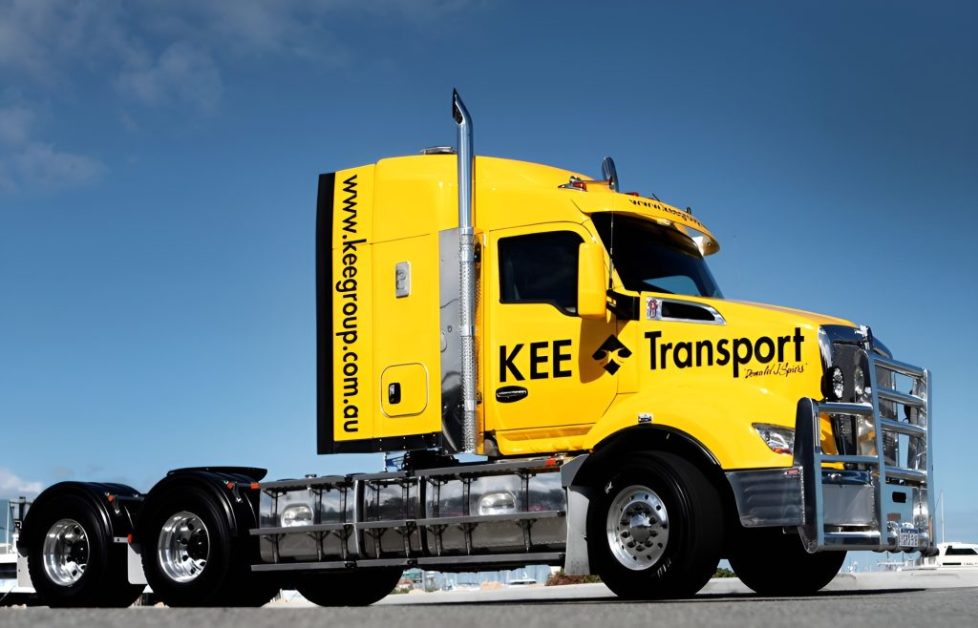
Unpacking the Concept of the Prime Mover in Technology
The term “prime mover” evokes an image of an initial, uncaused cause, a fundamental force that sets everything else in motion. In the context of technology, it’s not merely the first component in a chain, but rather the essential catalyst or foundational innovation that enables an entire class of subsequent technologies, applications, or even industries to flourish. It’s the breakthrough that unlocks new possibilities, defines new standards, and often becomes an indispensable building block for future progress.
From Philosophical Roots to Digital Drivers
Historically, Aristotle conceived of the “unmoved mover” as the ultimate source of all motion in the universe, itself unmoved. In engineering, a prime mover refers to an engine that converts energy from natural sources (like fuel or water) into mechanical work. While the technological prime mover doesn’t necessarily operate on philosophical or thermodynamic principles, it shares the essence of being a primary engine or a fundamental enabler. In the digital realm, a prime mover isn’t just a powerful piece of hardware or a groundbreaking piece of software; it’s the idea, the architecture, or the principle that provides the fundamental capability upon which entire ecosystems are built.
Consider the invention of the transistor. It wasn’t just a better vacuum tube; it was a miniaturized, energy-efficient, and highly reliable semiconductor device that became the fundamental building block for all modern electronics. Without it, microprocessors, memory chips, and indeed, all digital computing as we know it would not exist. The transistor is a classic example of a prime mover in technology, its impact rippling outwards to create industries, redefine communication, and empower the digital age.
More Than Just a Component: A Foundational Force
A prime mover is distinguished from a mere component or a popular product by its foundational nature. A successful smartphone is a product, but the underlying mobile operating system (like Android or iOS) and the robust cellular network infrastructure are closer to prime movers. They provide the platform and connectivity that enable smartphones to function and innovate. Similarly, a popular app leverages existing prime movers – it doesn’t usually become one.
The essence of a prime mover lies in its ability to:
- Enable Broad Application: Its utility extends far beyond its initial conception, becoming a versatile tool or platform.
- Facilitate Further Innovation: It acts as a springboard for countless other inventions and improvements.
- Establish New Paradigms: It fundamentally changes how we interact with technology or solve problems.
- Exhibit Longevity and Adaptability: While its manifestations evolve, its core principle often remains relevant for extended periods.
Identifying these prime movers helps us understand the true drivers of technological progress, allowing for more informed strategic decisions in development, investment, and policy.
The Diverse Manifestations of Tech’s Prime Movers
Prime movers in technology aren’t confined to a single form or discipline. They emerge across hardware, software, networking, and data, each serving as a critical cornerstone for distinct facets of our digital world. Their diversity reflects the multifaceted nature of technological progress itself.
Foundational Hardware: The Engines of Computation
Hardware prime movers are often the most tangible, acting as the physical engines that power digital capabilities.
- The Microprocessor (CPU): This tiny silicon chip is arguably the quintessential hardware prime mover. Invented in the early 1970s, it provided the central “brain” for all subsequent digital computers, from mainframes to PCs, and now smartphones and IoT devices. Its continuous evolution (driven by Moore’s Law) has been a primary engine for computational advancement.
- Memory Chips (RAM/NAND Flash): While the CPU computes, memory provides the essential workspace and storage. The development of reliable, high-density, and fast memory technologies has been critical for holding and accessing the data and instructions that CPUs process, enabling complex software and large datasets to function effectively.
- Graphics Processing Units (GPUs): Initially designed for rendering images in video games, GPUs have emerged as a critical prime mover for parallel computing, particularly in artificial intelligence and machine learning. Their ability to process massive amounts of data simultaneously makes them indispensable for training complex neural networks.
Algorithmic Innovations: The Brains of Software
Beyond physical components, certain algorithms or software architectures prove to be prime movers, dictating how information is processed, organized, and leveraged.
- The Internet Protocol Suite (TCP/IP): This set of communication protocols forms the fundamental language of the internet. It enables disparate networks and devices to communicate seamlessly, laying the groundwork for the World Wide Web, email, and virtually all modern networked applications.
- Search Algorithms: Early search engines, particularly Google’s PageRank algorithm, revolutionized information access. By effectively indexing and ranking vast amounts of web content, they transformed how we find information, making the internet truly usable and unleashing an explosion of online content and commerce.
- Machine Learning Algorithms (e.g., Backpropagation, Transformers): While AI has a long history, specific algorithmic breakthroughs have acted as prime movers, enabling the rapid advancements we see today. Backpropagation, for instance, made training deep neural networks feasible, while the more recent Transformer architecture has become a foundational element for large language models (LLMs) and generative AI, capable of understanding and generating human-like text and other data.
Network Architectures: Connecting the Digital World
The way we connect devices and transfer information across distances forms another crucial category of prime movers.
- Ethernet: For local area networks (LANs), Ethernet established a standard for high-speed, reliable data transmission within homes and offices, becoming the backbone for internal networking.
- Wireless Communication Standards (e.g., Wi-Fi, 5G): Wi-Fi untethered devices from physical cables, creating pervasive wireless connectivity. More recently, 5G isn’t just a faster cellular standard; its low latency and massive connectivity capabilities are poised to be a prime mover for the Internet of Things (IoT), autonomous vehicles, and real-time critical applications, enabling entirely new categories of services and devices.
Data as a Prime Mover: Fueling Intelligence
In the modern digital economy, data itself, and the infrastructure to manage it, increasingly functions as a prime mover.
- Relational Databases: The systematic organization and retrieval of data through relational databases provided the foundational structure for managing vast amounts of information, enabling business applications, enterprise resource planning, and more.
- Big Data Architectures (e.g., Hadoop, Spark): The ability to store, process, and analyze massive, unstructured datasets at scale has become a prime mover for modern data analytics, business intelligence, and especially artificial intelligence, providing the raw material for machine learning models to learn and improve.
The Imperative Role of Prime Movers in Technological Evolution
Prime movers are not just historical artifacts; they are active, dynamic forces that continue to shape the trajectory of technological advancement. Their influence extends beyond their initial application, fostering a cascade of innovation and creating entirely new paradigms.
Driving Innovation and Disrupting Industries

A true prime mover doesn’t just improve existing processes; it often creates entirely new ones, leading to significant disruption. The internet, built upon TCP/IP, didn’t just make communication faster; it created e-commerce, social media, cloud computing, and a global information economy. The smartphone, powered by mobile OSes and miniaturized hardware, didn’t just replace feature phones; it spawned the app economy, on-demand services, and mobile-first interactions that have reshaped industries from transportation to entertainment.
Prime movers provide the essential infrastructure or capability that allows innovators to build entirely new solutions without having to reinvent the fundamental underlying technology. This acceleration effect is critical for rapid technological progress.
Enabling New Paradigms and User Experiences
Beyond industry disruption, prime movers frequently enable entirely new ways for humans to interact with technology and the world. The graphical user interface (GUI), for instance, was a software prime mover that transformed computing from a command-line realm into an intuitive, visual experience accessible to a much broader audience, laying the groundwork for modern personal computing.
Similarly, advancements in virtual reality (VR) and augmented reality (AR) hardware and software architectures are poised to be prime movers for the next generation of spatial computing, potentially creating new paradigms for work, entertainment, and social interaction that move beyond the traditional screen.
The Ripple Effect: From Core to Ecosystem
The impact of a prime mover is rarely confined to its immediate application. It typically creates a “ripple effect,” fostering entire ecosystems of supporting technologies, services, and businesses. When a prime mover like a new microprocessor architecture emerges, it stimulates innovation in:
- Software Development: New operating systems, applications, and programming languages are developed to leverage the new capabilities.
- Peripheral Devices: New input/output devices, sensors, and accessories are created to interface with the prime mover.
- Infrastructure: New data centers, networks, and cloud services are built to support the increased demands and possibilities.
- Research and Education: Academic and industrial research focuses on optimizing and extending the prime mover’s potential, creating new knowledge and training a workforce.
This ecosystemic growth is a hallmark of a truly impactful prime mover, demonstrating its pervasive and transformative power.
Identifying and Cultivating the Next Generation of Prime Movers
The search for the next prime mover is a continuous quest, central to the strategies of tech giants, startups, and research institutions alike. Identifying these nascent technologies before they become mainstream is key to securing future growth and maintaining competitive advantage.
Recognizing Emerging Technologies with Foundational Potential
Distinguishing between a promising new product and a potential prime mover requires foresight and a deep understanding of technological fundamentals. Look for technologies that:
- Solve a Fundamental Bottleneck: Address a core limitation that has hindered previous advancements (e.g., quantum computing addressing current computational limits).
- Offer Unprecedented Capabilities: Provide a capability that was previously impossible or impractical (e.g., advanced gene-editing technologies).
- Have Broad Applicability: Show potential to be integrated into a wide range of disparate systems or industries, rather than being niche-specific.
- Possess Scalability and Efficiency: Can be scaled economically and efficiently to meet widespread demand.
Currently, areas like quantum computing, advanced AI architectures (beyond current LLMs), novel materials science (e.g., superconductivity at room temperature), and decentralized ledger technologies (blockchain, beyond cryptocurrencies, as a foundational trust layer) are being explored for their prime mover potential.
Investing in Research and Development
Cultivating prime movers demands significant, often long-term, investment in fundamental research and development (R&D). This isn’t just about iterating on existing products; it’s about exploring new scientific frontiers and engineering paradigms that may not have immediate commercial applications. Governments, universities, and large tech corporations play a vital role in funding this exploratory R&D, understanding that the breakthroughs from these efforts can yield revolutionary future technologies. This often involves supporting high-risk, high-reward projects that challenge conventional wisdom.
Fostering Collaboration and Open Innovation
Many prime movers, especially in the software and networking domains, have emerged from collaborative efforts and open standards. The internet itself is a testament to open collaboration. Fostering environments where researchers, developers, and even competitors can share ideas, build upon common platforms, and contribute to open-source projects can significantly accelerate the development and adoption of foundational technologies. Open-source prime movers tend to democratize access and encourage broader innovation, as more individuals and organizations can build upon the shared foundation.
The Enduring Legacy and Future Trajectory of Prime Movers
The concept of the prime mover highlights the cyclical nature of technological progress: foundational breakthroughs lead to widespread innovation, which in turn creates new challenges and opportunities for the next generation of prime movers. Understanding this cycle is crucial for navigating the future of technology.
Sustaining Progress Through Core Principles
While specific prime movers may eventually be supplanted by more advanced ones (e.g., vacuum tubes by transistors), the principles they embody often endure. The shift isn’t typically an abandonment of the underlying need or function, but an evolution in how that need is met. The desire for efficient computation, for reliable communication, or for intelligent data processing remains, driving continuous innovation in the foundational technologies that fulfill these roles. This continuity ensures that progress builds upon itself, rather than starting from scratch.
Ethical Considerations and Societal Impact
As prime movers become more powerful and pervasive, their societal and ethical implications grow exponentially. The internet, a prime mover for global connectivity, also brings challenges related to privacy, misinformation, and digital divide. AI algorithms, poised to be a prime mover for intelligent automation, raise questions about bias, accountability, and the future of work. Future prime movers, particularly in areas like synthetic biology or advanced brain-computer interfaces, will require profound ethical frameworks and societal dialogues to ensure responsible development and deployment. The power of a prime mover demands a commensurate level of scrutiny and ethical governance.

Adapting to a Future of Accelerating Change
The pace of technological change continues to accelerate, meaning the lifecycle of what constitutes a prime mover might also shorten, or new prime movers might emerge more frequently. This necessitates constant vigilance, continuous learning, and an adaptive mindset for individuals, businesses, and governments. The ability to identify, understand, and leverage emerging prime movers will be a critical differentiator in an increasingly complex and technologically driven world. Ultimately, “what is the prime mover” is a question not just of technological identification, but of strategic foresight, ethical responsibility, and the relentless pursuit of foundational innovation that propels humanity forward.
aViewFromTheCave is a participant in the Amazon Services LLC Associates Program, an affiliate advertising program designed to provide a means for sites to earn advertising fees by advertising and linking to Amazon.com. Amazon, the Amazon logo, AmazonSupply, and the AmazonSupply logo are trademarks of Amazon.com, Inc. or its affiliates. As an Amazon Associate we earn affiliate commissions from qualifying purchases.