
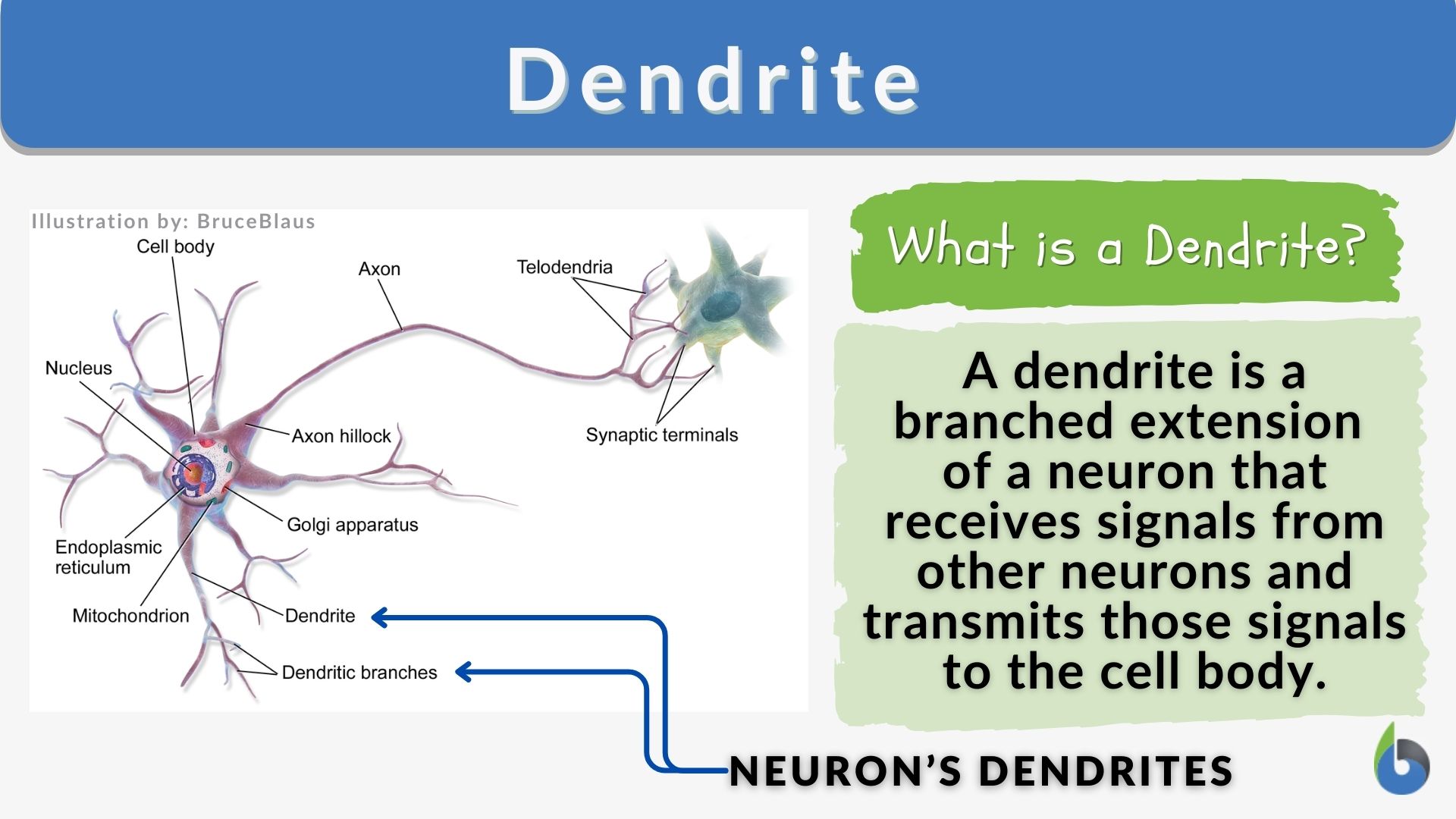
The intricate world of neuroscience often conjures images of complex electrical signals zipping through vast neural networks. While the axon, with its remarkable ability to transmit information, frequently takes center stage, the neuron’s dendrites, often depicted as tree-like branches, play an equally crucial and multifaceted role in this biological marvel. These specialized extensions of the neuron are not mere passive receivers of information; they are dynamic processing units, shaping neuronal activity and influencing the very essence of cognition and behavior. Understanding the function of dendrites is fundamental to unraveling the complexities of the brain, particularly in the context of how we process information, learn, and adapt – concepts that resonate deeply within the technological realm.

Dendrites: The Neuronal Information Receptors
At their core, dendrites are the primary sites where a neuron receives signals from other neurons. These signals are typically in the form of chemical neurotransmitters released by presynaptic neurons into specialized junctions called synapses. Each neuron can be connected to thousands of other neurons, and a significant portion of these connections terminate on the dendritic branches. This extensive connectivity highlights the dendrites’ role as the primary input channels for neuronal processing.
Synaptic Integration: The Sum of Incoming Signals
The most critical function of dendrites is synaptic integration. When neurotransmitters bind to receptors on the dendritic membrane, they cause small changes in the electrical potential of the dendrite. These changes are called postsynaptic potentials (PSPs). Excitatory postsynaptic potentials (EPSPs) make the neuron more likely to fire an action potential, while inhibitory postsynaptic potentials (IPSPs) make it less likely.
Dendrites are not passive conduits for these potentials. They exhibit remarkable electrical properties that influence how these signals are integrated. Crucially, PSPs decay as they propagate along the dendrite towards the soma (the neuron’s cell body). The distance of the synapse from the soma, as well as the passive electrical properties of the dendritic membrane (such as its resistance and capacitance), determine the strength of the signal that reaches the soma. This means that synapses located closer to the soma generally have a stronger influence on the neuron’s decision to fire.
However, the integration process is far more sophisticated than a simple summation of distances. Dendrites possess active properties, meaning they can generate their own electrical signals. This is achieved through the presence of voltage-gated ion channels, similar to those found on the axon. These channels allow for the generation of localized electrical events within the dendrite, such as dendritic spikes. These spikes can amplify weak signals, propagate them further along the dendrite, or even trigger action potentials directly within the dendrite itself. This “active computation” within dendrites allows for complex signal processing before the information even reaches the soma, contributing to the neuron’s ability to perform intricate calculations.
The Role of Dendritic Morphology: Shaping Neuronal Input
The physical structure of dendrites, their branching patterns and overall morphology, plays a profound role in determining which signals a neuron receives and how they are processed. Dendrites can be highly branched, creating a vast surface area to accommodate a multitude of synapses. The complexity of this branching, often described using fractal dimensions, is not random. It is precisely organized to maximize synaptic coverage and optimize signal integration.
Different types of neurons have distinct dendritic morphologies, reflecting their specialized functions. For instance, Purkinje cells in the cerebellum, which are involved in motor coordination, have incredibly elaborate and flattened dendritic trees, allowing them to receive a massive amount of input related to fine motor control. Conversely, neurons in areas involved in rapid sensory processing might have simpler dendritic structures.
Furthermore, the precise spatial arrangement of synapses on a dendritic tree is critical. Synapses on different branches or at different distances from the soma can have varying influences on the neuron’s output. This spatial organization allows for selective integration and processing of information, enabling neurons to respond to specific patterns of input. The concept of “dendritic compartments” emerges from this, suggesting that different branches of a dendrite can operate somewhat independently, processing distinct sets of inputs before their signals converge.
Dendrites in Learning and Memory: The Synaptic Plasticity Nexus
The remarkable ability of the brain to learn and form memories is intrinsically linked to the plasticity of neuronal connections, and dendrites are at the forefront of this process. Synaptic plasticity refers to the ability of synapses to strengthen or weaken over time in response to changes in their activity. This dynamic alteration of synaptic strength is considered the fundamental cellular mechanism underlying learning and memory.
Long-Term Potentiation (LTP) and Long-Term Depression (LTD): The Mechanisms of Memory Encoding
Dendrites are the primary sites where the key forms of synaptic plasticity, Long-Term Potentiation (LTP) and Long-Term Depression (LTD), occur. LTP is a persistent strengthening of synapses based on recent patterns of activity, effectively making it easier for the postsynaptic neuron to be activated by subsequent signals. LTD, conversely, is a persistent weakening of synapses, making them less likely to trigger a response.
At the molecular level, LTP and LTD involve complex cascades of intracellular signaling events triggered by the activation of receptors on the dendritic spine – small protrusions on dendrites that form the postsynaptic side of many excitatory synapses. For example, during LTP, the activation of NMDA receptors and AMPA receptors, coupled with calcium influx into the dendritic spine, leads to changes in the number and efficiency of AMPA receptors. More AMPA receptors on the spine mean a stronger postsynaptic response. Conversely, LTD involves mechanisms that remove AMPA receptors from the spine.
The dendritic spine itself is a highly dynamic structure. Its size and shape can change in response to synaptic activity, further contributing to plasticity. The ability of dendrites to undergo these persistent changes in synaptic efficacy is what allows the brain to store and retrieve information, forming the basis of our memories. Each dendrite, with its thousands of synapses, represents a sophisticated processing unit capable of encoding and refining information through these plastic modifications.
Structural Plasticity of Dendrites: Remodeling for Learning
Beyond the functional changes at individual synapses, dendrites themselves can undergo structural remodeling in response to experience and learning. This “structural plasticity” involves changes in the growth, branching, and elimination of dendritic spines and even entire dendritic branches. For instance, learning a new skill or acquiring new information can lead to the formation of new dendritic spines and the elaboration of existing dendritic arbors.
This structural plasticity provides a physical basis for the adaptation of neural circuits. As we learn, the physical architecture of our neurons changes, creating new pathways for information flow and strengthening existing ones. This dynamic reshaping of the dendritic tree allows the brain to adapt and optimize its processing capabilities in response to the demands of our environment and experiences. The intricate dendritic networks are not static blueprints but rather living, adaptable structures that constantly remodel themselves to facilitate learning and memory.
Dendrites in Neurological Disorders and Technological Applications
The crucial roles of dendrites in neuronal function and plasticity make them prime targets for understanding and treating neurological disorders, and their sophisticated processing capabilities offer compelling inspiration for technological advancements.
Dendrites and Disease: Insights into Neurodevelopmental and Neurodegenerative Conditions
Dysfunctions in dendritic structure and function are implicated in a wide range of neurological and psychiatric disorders. In neurodevelopmental disorders such as autism spectrum disorder and intellectual disability, abnormalities in dendritic branching patterns and spine density have been observed, suggesting impaired information processing from an early stage. The intricate wiring of the brain, heavily reliant on proper dendritic development, is disrupted, leading to cognitive and behavioral challenges.
Neurodegenerative diseases like Alzheimer’s and Parkinson’s disease also involve significant dendritic pathology. As neuronal health declines, dendrites can degenerate, leading to loss of synaptic connections and a subsequent decline in cognitive function and motor control. Understanding the mechanisms of dendritic degeneration in these diseases is crucial for developing effective therapeutic strategies. Research into how to preserve or even regenerate dendritic structures holds promise for combating these devastating conditions.

Dendrites as Inspiration for Artificial Neural Networks and AI
The complex computational capabilities of biological neurons, particularly the parallel processing and integrative functions of dendrites, have been a significant source of inspiration for the field of artificial intelligence (AI). Modern artificial neural networks (ANNs), the backbone of deep learning, are loosely modeled after the structure and function of biological neural networks.
While current ANNs often simplify neuronal models, there is a growing interest in incorporating more realistic dendritic computations into AI. Researchers are exploring how to design artificial neurons with dendritic compartments that can perform sophisticated local computations, similar to their biological counterparts. This could lead to more efficient and powerful AI systems capable of handling complex data patterns and learning more robustly. By mimicking the intricate signal processing that occurs within dendrites, AI could achieve new levels of intelligence and problem-solving ability. The goal is to move beyond simple summation of inputs and embrace the nuanced integration that dendrites enable, paving the way for AI that can learn, adapt, and generalize more like the human brain.
In conclusion, dendrites are far more than just passive receivers of neuronal signals. They are dynamic, information-processing hubs that play a vital role in synaptic integration, learning, memory, and cognitive function. Their intricate morphology, electrical properties, and capacity for plasticity make them central to the brain’s ability to adapt and learn. As our understanding of dendrites deepens, so too does our capacity to unravel the mysteries of the brain and to harness their principles for future technological innovations.
aViewFromTheCave is a participant in the Amazon Services LLC Associates Program, an affiliate advertising program designed to provide a means for sites to earn advertising fees by advertising and linking to Amazon.com. Amazon, the Amazon logo, AmazonSupply, and the AmazonSupply logo are trademarks of Amazon.com, Inc. or its affiliates. As an Amazon Associate we earn affiliate commissions from qualifying purchases.