
The prime lending rate is a fundamental benchmark in the financial world, serving as the basis for a vast array of variable-rate loans and credit products across the United States. For individuals and businesses alike, understanding its current level and the factors that influence it is crucial for making informed financial decisions. While the precise “now” of the prime rate is a moving target, directly linked to the actions of the Federal Reserve, grasping its mechanics and implications allows one to navigate the ever-shifting landscape of borrowing costs. In essence, the prime rate is not just a number; it’s a barometer of the economy and a direct determinant of how much it costs to borrow money.

Understanding the Prime Lending Rate: The Cornerstone of Borrowing Costs
To truly appreciate the significance of the prime lending rate, one must first understand its definition, its origins, and how it’s fundamentally derived. It is the lowest interest rate at which money can be borrowed commercially by the most creditworthy corporate customers. This simple definition belies its immense influence on the broader economy.
Defining the Prime Rate: More Than Just a Number
The prime lending rate, often simply called the “prime rate,” represents the interest rate that commercial banks charge their most creditworthy corporate clients. While theoretically determined by market forces and each bank’s internal cost of funds, in practice, the prime rate is almost universally linked to the Federal Funds Rate. Specifically, it is typically set at approximately 300 basis points (3 percentage points) above the upper target of the Federal Funds Rate. For instance, if the Federal Funds Rate target range is 5.25% to 5.50%, the prime rate will generally be 8.50%.
This relationship makes the prime rate a highly stable and widely published benchmark. When the Federal Reserve adjusts the Federal Funds Rate, the prime rate almost immediately follows suit, usually within a day. This immediate correlation ensures consistency across the banking system, allowing for transparency and predictability in the cost of borrowing for preferred customers, and by extension, for many other borrowers who pay a spread above or below prime, depending on their creditworthiness and loan type.
How the Prime Rate is Determined: The Fed’s Influence
The central force behind the prime lending rate is the Federal Reserve’s Federal Open Market Committee (FOMC). The FOMC sets a target range for the Federal Funds Rate, which is the interest rate at which banks lend reserve balances to other banks overnight. While the Fed doesn’t directly control the prime rate, its actions on the Federal Funds Rate have a direct and powerful ripple effect.
When the Fed raises the Federal Funds Rate, it makes it more expensive for banks to borrow money from each other. This increased cost of funds for banks is then passed on to their customers in the form of higher lending rates, including the prime rate. Conversely, when the Fed lowers the Federal Funds Rate, it reduces banks’ borrowing costs, leading to a decrease in the prime rate. The Fed uses these adjustments primarily to influence inflation, employment, and overall economic stability. A higher Federal Funds Rate is typically employed to cool down an overheating economy and combat inflation, while a lower rate is used to stimulate economic activity during a slowdown. Understanding this direct link is paramount, as monitoring Fed announcements and economic indicators provides the clearest insight into potential movements of the prime rate.
The Current Landscape: What’s Driving Today’s Prime Rate
The prime lending rate is not a static figure; it evolves in response to economic conditions and, most critically, the monetary policy decisions of the Federal Reserve. To comprehend its current standing, one must look at recent central bank actions and the broader economic environment.
Recent Fed Actions and Their Ripple Effects
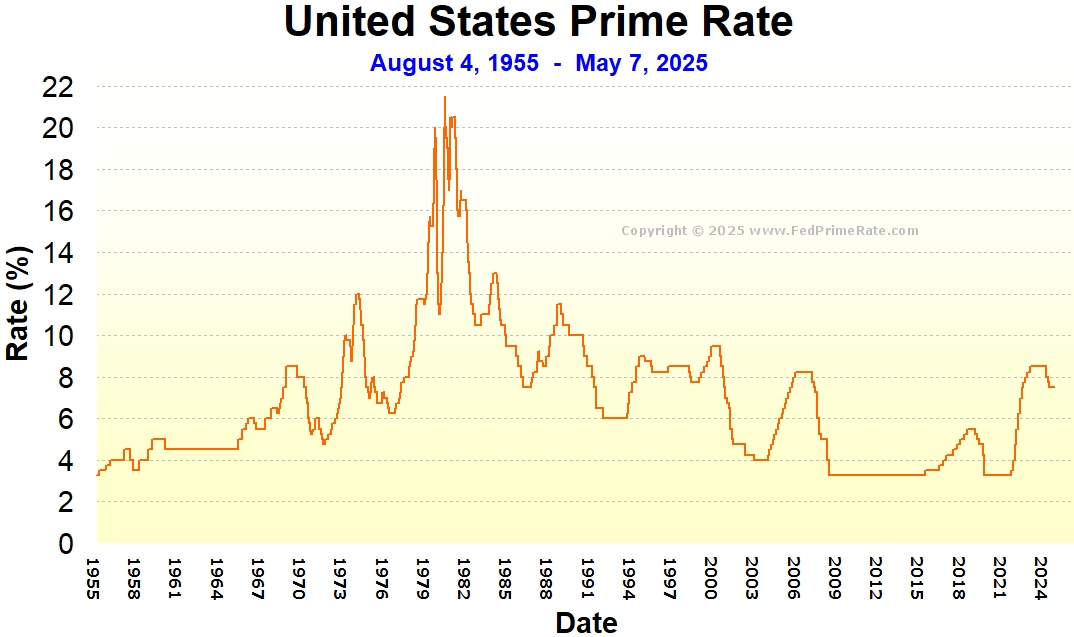
In recent years, the financial world has witnessed significant volatility in the prime rate, largely driven by the Federal Reserve’s aggressive monetary policy responses to inflation. Following a period of near-zero interest rates designed to stimulate the economy post-pandemic, the Fed embarked on a series of rapid interest rate hikes starting in early 2022. This tightening cycle was a direct response to soaring inflation, which reached multi-decade highs.
Each increase in the Federal Funds Rate, typically by 25 or 50 basis points (0.25% or 0.50%), led to an almost immediate and corresponding increase in the prime rate. For example, if the prime rate was at 3.25% at the beginning of a tightening cycle, a cumulative 500 basis points (5.00%) increase in the Federal Funds Rate would push the prime rate to 8.25%. This rapid escalation meant that anyone with variable-rate debt saw their interest payments climb significantly over a relatively short period. While the pace of hikes eventually slowed and then paused as inflation showed signs of moderating, the elevated prime rate remains a key feature of the current borrowing environment, reflecting the Fed’s commitment to price stability.
Key Economic Indicators Influencing Decisions
The Federal Reserve doesn’t make decisions in a vacuum; its policy choices, and thus the future trajectory of the prime rate, are heavily influenced by a range of economic indicators. These data points provide the Fed with a real-time pulse of the economy and inform their assessment of inflation, employment, and economic growth.
-
Inflation Data: Consumer Price Index (CPI) and Personal Consumption Expenditures (PCE) are paramount. If inflation remains stubbornly high, the Fed is more likely to maintain higher rates or even consider further increases. Conversely, clear signs of inflation cooling down might open the door for rate cuts.
-
Employment Data: The unemployment rate, non-farm payrolls, and wage growth are critical. A robust labor market with strong wage growth can be inflationary, while a weakening job market might prompt the Fed to consider easing monetary policy to prevent a recession.
-
GDP Growth: Gross Domestic Product figures indicate the overall health and growth trajectory of the economy. Slowing or negative GDP growth could signal an impending recession, potentially leading the Fed to lower rates.
-
Consumer Spending and Business Investment: Data on retail sales, consumer confidence, and business capital expenditures provide insight into demand and economic activity.
Analysts and investors closely watch these indicators, as their movements often signal the likely direction of future Fed policy and, by extension, the prime rate.
Where to Find the Most Up-to-Date Information
Given its dynamic nature, knowing where to find the most current prime lending rate is essential. While the precise rate can vary slightly by bank, the most widely accepted and accurate source for the prime rate is its direct relationship with the Federal Funds Rate.
-
Federal Reserve Website: The Federal Reserve’s official website (federalreserve.gov) publishes the target range for the Federal Funds Rate after each FOMC meeting. Once this is known, simply add 3% (300 basis points) to the upper end of the target range to derive the prevailing prime rate.
-
Major Financial News Outlets: Reputable financial news sources like The Wall Street Journal, Bloomberg, Reuters, and CNBC consistently report on the prime rate and the Fed’s decisions. They often have dedicated sections or articles tracking current rates.
-
Bank Websites: Most major banks will publish their current prime lending rate on their websites, particularly in sections related to loans or current rates. While they might vary minutely, they will almost always align with the Fed-derived rate.
-
Financial Data Providers: Services like FRED (Federal Reserve Economic Data) by the Federal Reserve Bank of St. Louis, provide historical and current data for various financial benchmarks, including the prime rate.
Regularly checking these sources ensures you have the most accurate and timely information, crucial for any financial planning involving variable interest rates.
The Far-Reaching Impact on Your Finances
The prime lending rate is not an abstract economic concept; it has tangible and often significant effects on the personal and business finances of millions. From the cost of your credit card debt to the viability of a business expansion, its movements ripple through various financial products.
Personal Loans and Lines of Credit
Many personal loans and most home equity lines of credit (HELOCs) are structured with variable interest rates directly tied to the prime rate. For example, a HELOC might be advertised as “prime + 0.50%.” When the prime rate increases, the interest rate on these products automatically rises, leading to higher monthly payments for borrowers. This can substantially impact household budgets, especially for those with large outstanding balances. Conversely, a decrease in the prime rate provides immediate relief, lowering payments and freeing up cash flow. Understanding this direct linkage is vital for individuals considering or holding variable-rate personal debt, as it highlights the exposure to interest rate fluctuations.
Credit Card Interest Rates
The vast majority of credit cards in the U.S. carry variable Annual Percentage Rates (APRs) that are explicitly tied to the prime rate. The terms and conditions of almost every credit card state that its APR is “Prime Rate + X%.” Therefore, every time the Federal Reserve adjusts the Federal Funds Rate, and consequently the prime rate, the interest rate on your credit card debt changes. If you carry a balance month-to-month, an increase in the prime rate means you’ll pay more in interest charges on that balance. This can make paying off credit card debt more challenging, as a larger portion of your minimum payment goes towards interest rather than principal. Managing credit card debt strategically during periods of rising prime rates, perhaps by aggressively paying down balances or consolidating debt, becomes even more critical.
Mortgages and Home Equity Products
While most traditional 30-year fixed-rate mortgages are not directly tied to the prime rate, adjustable-rate mortgages (ARMs) frequently are. The interest rate on an ARM typically adjusts after an initial fixed period (e.g., 5/1 ARM means fixed for 5 years, then adjusts annually) and is often indexed to the prime rate or another benchmark like the Secured Overnight Financing Rate (SOFR), which is also influenced by Fed policy. For homeowners with ARMs in their adjustment period, a rising prime rate translates to higher monthly mortgage payments, potentially straining housing budgets. Similarly, home equity lines of credit (HELOCs) are almost always variable-rate products tied directly to the prime rate, making them susceptible to immediate changes in borrowing costs.
Business Loans and Capital Access
For businesses, especially small and medium-sized enterprises (SMEs), the prime rate is a critical factor in the cost of capital. Many business loans, lines of credit, and working capital facilities are indexed to the prime rate. A higher prime rate means higher interest expenses for businesses with variable-rate debt, reducing profitability and potentially impacting cash flow. This can make expansion plans more expensive, reduce the appetite for new investments, or even lead to cutbacks. Conversely, a lower prime rate reduces borrowing costs, making it cheaper for businesses to finance operations, invest in growth, and manage inventory, thereby stimulating economic activity and employment. Access to affordable capital is often a lifeline for businesses, and the prime rate plays a pivotal role in this affordability.
Navigating a Dynamic Prime Rate Environment
Given the inherent volatility and influence of the prime rate, individuals and businesses need proactive strategies to manage its impact effectively. Adaptability and foresight are key to protecting one’s financial health.
Strategies for Variable-Rate Borrowers
For those holding variable-rate debt, such as HELOCs, personal lines of credit, or ARMs, a rising prime rate environment demands a strategic approach:
-
Aggressive Repayment: Prioritize paying down variable-rate debt, especially high-interest credit cards or personal loans. Reducing the principal balance mitigates the impact of rising interest rates.
-
Rate Locks or Conversions: Some HELOCs offer the option to convert a portion of the variable balance to a fixed rate. This can provide predictability and protection against future rate hikes. Similarly, borrowers with ARMs might consider refinancing into a fixed-rate mortgage if current fixed rates are favorable.
-
Budget Adjustment: If payments are increasing, review your budget to identify areas where you can reduce spending to accommodate higher debt service costs.
-
Understand Terms: Regularly review the terms of your variable-rate loans. Understand how often your rate adjusts, what caps (if any) are in place, and what the benchmark rate is.
When to Consider Refinancing
Refinancing can be a powerful tool for managing interest rate risk, especially in a dynamic prime rate environment.
-
From Variable to Fixed: If you have an ARM or a large HELOC balance and anticipate further prime rate increases, refinancing into a fixed-rate mortgage or a fixed-rate personal loan could lock in your interest rate and provide payment stability. This is particularly appealing if fixed rates are currently lower than your projected variable rates.
-
Debt Consolidation: If you have multiple high-interest variable-rate debts (like credit cards), consolidating them into a single loan with a lower, fixed interest rate can simplify payments and reduce overall interest costs. This is often done through a personal loan or a balance transfer credit card (though balance transfer offers often revert to variable rates after an introductory period).
-
Lower Current Rates: Even with fixed-rate debt, if the prime rate has fallen significantly and led to a general decline in overall interest rates, refinancing might allow you to secure a lower fixed rate, reducing your monthly payments and total interest paid over the life of the loan.
The decision to refinance should always involve a careful calculation of closing costs versus the potential savings in interest.
The Importance of Credit Health
Regardless of the prime rate’s direction, maintaining excellent credit health is a foundational strategy for all borrowers. A strong credit score (typically FICO scores above 760-800) offers several advantages:
-
Access to Best Rates: Lenders reserve their lowest interest rates, often a smaller spread above the prime rate, for borrowers with the highest credit scores. This directly translates to lower borrowing costs.
-
Greater Loan Options: A good credit score opens doors to a wider variety of loan products and lenders, providing more flexibility and choice.
-
Negotiating Power: With strong credit, you may have more leverage to negotiate better terms or avoid certain fees when applying for new credit.
-
Financial Resilience: In times of economic uncertainty or rising rates, good credit can provide a buffer, allowing you to access more favorable refinancing options or credit lines if needed.
Regularly monitoring your credit report, paying bills on time, keeping credit utilization low, and addressing any errors are crucial steps in maintaining robust credit health, which is your best defense against the vagaries of interest rate fluctuations.
Looking Ahead: Future Outlook and Expert Insights
Predicting the exact future of the prime lending rate is challenging, as it hinges on complex economic factors and the Federal Reserve’s evolving assessment of the economy. However, by understanding the underlying drivers and considering expert perspectives, individuals and businesses can better prepare.
Potential Scenarios for Fed Policy
The Federal Reserve’s primary mandate is to maintain maximum employment and price stability (i.e., control inflation). Future movements in the prime rate will directly reflect the Fed’s ongoing efforts to achieve these goals.
-
“Higher for Longer”: One scenario suggests that inflation, while moderating, may remain stickier than anticipated, forcing the Fed to keep interest rates elevated for an extended period. This would imply the prime rate stays relatively high, preventing any significant relief for variable-rate borrowers. This approach aims to ensure inflation is definitively brought down to the Fed’s 2% target.
-
Rate Cuts: If inflation shows sustained progress towards the 2% target, and especially if economic growth slows considerably or a recession looms, the Fed might begin to cut the Federal Funds Rate. This would lead to a decrease in the prime rate, offering relief to borrowers and potentially stimulating economic activity. The timing and pace of such cuts would depend heavily on incoming economic data.
-
Unforeseen Shocks: Geopolitical events, supply chain disruptions, or significant shifts in global economic conditions could introduce new inflationary pressures or economic downturns, forcing the Fed to react with unexpected policy shifts.
Monitoring official communications from the Federal Reserve, including FOMC statements and speeches by Fed officials, is the most direct way to gauge their thinking and potential future actions.
Economic Projections and Their Implications
Beyond the Fed’s direct actions, broader economic projections influence the future prime rate environment.
-
Inflation Outlook: Sustained disinflation (a slowing of inflation) is the most critical factor for potential rate cuts. If inflation unexpectedly re-accelerates, the Fed may be forced to hike rates again, pushing the prime rate higher.
-
Labor Market Health: A robust labor market that continues to add jobs and see wage growth might give the Fed less urgency to cut rates, as it could signal underlying economic strength that could reignite inflation. Conversely, a weakening labor market with rising unemployment would increase the pressure on the Fed to ease monetary policy.
-
Global Economic Conditions: Economic performance in major trading partners, geopolitical stability, and global supply chain health can all influence domestic inflation and growth, indirectly affecting the Fed’s decisions and the prime rate.
-
Fiscal Policy: Government spending and taxation policies can also impact the economy and inflation, potentially influencing the Fed’s path.
Economic forecasters from various financial institutions regularly publish their projections for these indicators, providing valuable context for anticipating prime rate movements.

Expert Advice for Financial Planning
In an environment where the prime lending rate is a key determinant of financial costs, expert advice often centers on prudence, preparedness, and strategic action:
-
Diversify Debt Management: Don’t put all your eggs in one basket. Balance fixed-rate and variable-rate debt where appropriate.
-
Build an Emergency Fund: A robust emergency fund provides a buffer against unexpected increases in debt payments or other financial shocks.
-
Consult a Financial Advisor: A qualified financial advisor can help assess your specific debt profile, risk tolerance, and long-term goals to create a personalized strategy for navigating interest rate changes.
-
Stay Informed: Continuously monitor economic news, Fed announcements, and prime rate trends. Knowledge is your most powerful tool in making timely financial adjustments.
Ultimately, while the “what is the prime lending rate now” question offers a snapshot, true financial acumen comes from understanding its context, its impact, and how to strategically adapt to its inevitable shifts. By staying informed and proactive, individuals and businesses can better manage their borrowing costs and secure their financial future.
aViewFromTheCave is a participant in the Amazon Services LLC Associates Program, an affiliate advertising program designed to provide a means for sites to earn advertising fees by advertising and linking to Amazon.com. Amazon, the Amazon logo, AmazonSupply, and the AmazonSupply logo are trademarks of Amazon.com, Inc. or its affiliates. As an Amazon Associate we earn affiliate commissions from qualifying purchases.