
In the world of modern finance, few tickers carry as much weight, history, and volume as “SPY.” Known formally as the SPDR S&P 500 ETF Trust, SPY is the oldest and most recognized exchange-traded fund in the United States. To the casual observer, asking “What is the price of SPY?” seems like a simple inquiry regarding the current market quote on a stock ticker. However, for the sophisticated investor, the “price” of SPY encompasses a much broader spectrum of costs, valuations, and strategic considerations. Understanding the price of SPY requires looking beyond the intraday numbers and into the mechanics of expense ratios, tracking errors, liquidity spreads, and the underlying value of the American economy.
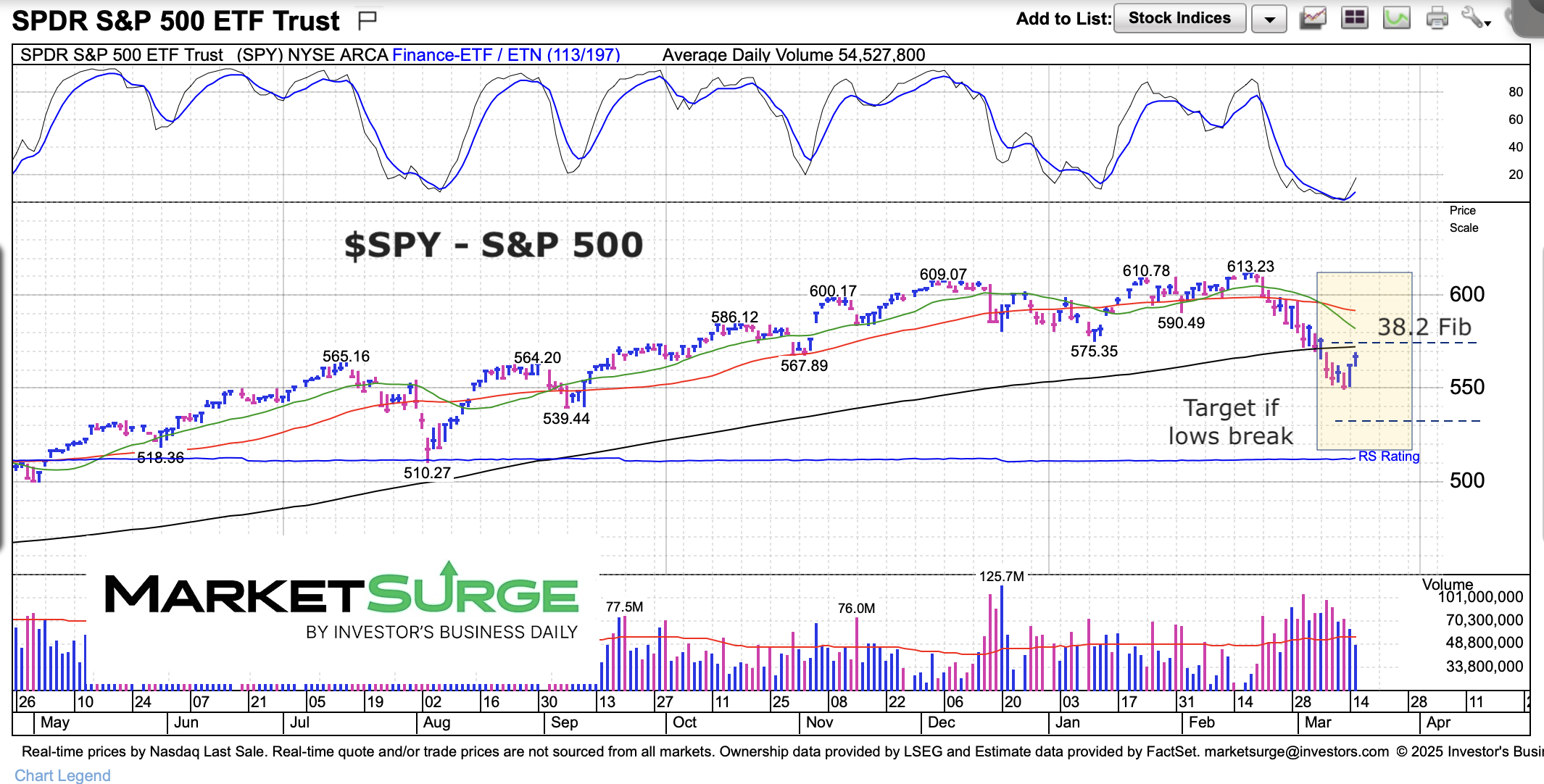
The Sticker Price: Understanding the Daily Valuation of the SPDR S&P 500 ETF
When an investor checks their brokerage app for the price of SPY, they are looking at the market price of a single share of the trust. Traditionally, SPY was designed to trade at approximately one-tenth the level of the S&P 500 Index. If the S&P 500 is trading at 5,000, SPY will typically hover around the $500 mark. This proportionality makes it an accessible tool for both retail investors and institutional giants to gain exposure to the broader equity market.
Tracking the Benchmark
The price of SPY is intrinsically linked to the performance of the S&P 500 Index, which tracks 500 of the largest publicly traded companies in the United States. Because the S&P 500 is a market-capitalization-weighted index, the price of SPY is heavily influenced by the “Magnificent Seven” and other mega-cap technology firms. When Apple, Microsoft, or Nvidia see significant price movement, the price of SPY shifts accordingly. This makes the price of SPY a definitive barometer for the health of the U.S. corporate sector.
Net Asset Value (NAV) vs. Market Price
It is essential to distinguish between the market price of SPY and its Net Asset Value (NAV). The NAV represents the total value of all the underlying stocks held by the trust, divided by the number of shares outstanding. In an efficient market, the market price and the NAV should be nearly identical. However, during periods of extreme market volatility or “flash crashes,” the market price can deviate slightly from the NAV. Authorized Participants (APs) engage in arbitrage to close these gaps, ensuring that the price you pay for SPY remains a fair reflection of the underlying assets.
The Hidden Costs: Expense Ratios and Management Fees
While the market price tells you what it costs to buy a share today, the “price of ownership” is determined by the expense ratio. For many years, SPY was the undisputed leader in the ETF space, but as the industry matured, cost competition became fierce. Understanding the management fees is crucial for long-term wealth accumulation, as even a few basis points can compound into significant sums over decades.
Analyzing the 0.0945% Expense Ratio
Currently, the expense ratio for SPY stands at 0.0945%. In practical terms, this means that for every $10,000 invested, State Street Global Advisors (the fund’s manager) charges $9.45 annually to manage the fund. This fee covers administrative costs, the legalities of the trust structure, and the logistical challenges of rebalancing a portfolio of 500 stocks. While 0.0945% is incredibly low compared to actively managed mutual funds—which often charge upwards of 1.00%—it is no longer the lowest price in the “beta” market.
SPY vs. VOO and IVV: A Cost Comparison
For the long-term “buy and hold” investor, the price of SPY might actually be considered high when compared to its primary rivals: the Vanguard S&P 500 ETF (VOO) and the iShares Core S&P 500 ETF (IVV). Both VOO and IVV carry expense ratios as low as 0.03%.
Why would someone pay three times the management fee for the same exposure? The answer lies in the structural differences. SPY is organized as a Unit Investment Trust (UIT), whereas VOO and IVV are structured as open-end funds. The UIT structure of SPY prevents it from reinvesting dividends internally or lending out securities to the same extent as its competitors. However, the slightly higher “price” of ownership in SPY is often offset by its unparalleled liquidity, which brings us to the transactional price.
Liquidity and the Transactional Price
For active traders, institutional hedgers, and options specialists, the “price” of SPY is defined by the ease of entry and exit. This is where SPY justifies its existence and its slightly higher expense ratio. It is the most liquid ETF in the world, often trading hundreds of millions of shares daily.
The Significance of the Bid-Ask Spread
The bid-ask spread is the difference between the highest price a buyer is willing to pay and the lowest price a seller is willing to accept. Because SPY has such massive trading volume, its spread is typically a single penny. For an investor moving millions of dollars, a narrow spread is far more important than a few basis points in an annual expense ratio.
If you are a day trader or an institutional fund manager, the “price” you pay is the transaction cost. In less liquid ETFs, a wide spread can act as a hidden “tax” on every trade. SPY’s dominance in the secondary market ensures that the “price of execution” is the lowest in the industry, making it the gold standard for tactical asset allocation.
The Options Market and Price Discovery
The price of SPY is also the foundation for the world’s most robust options market. Because SPY options are so deeply liquid and trade with high frequency, they provide a level of price discovery and risk management that other S&P 500 trackers cannot match. Traders use SPY options to hedge portfolios, speculate on volatility, and generate income through covered calls. The sheer depth of this ecosystem ensures that the price of SPY remains stable and transparent, even during periods of market stress.
The Dividend Factor and Total Return
When considering the price of SPY, one must also account for what the fund pays back to the investor. SPY pays out dividends quarterly, representing the combined dividends of the 500 companies within the index.
Yield Analysis and Income
The dividend yield of SPY generally fluctuates between 1.2% and 1.8%, depending on the market valuation of the underlying stocks. When an investor evaluates the “price” they are paying, they must look at the total return—capital appreciation plus dividends. Over long horizons, these dividends account for a massive portion of the S&P 500’s total wealth-building power.
The Impact of the UIT Structure on Dividends
Because SPY is a Unit Investment Trust, it must hold dividend payments in a non-interest-bearing account until they are distributed to shareholders. It cannot reinvest those dividends back into the S&P 500 stocks immediately upon receipt. In a bull market, this “cash drag” can cause SPY to slightly underperform the index compared to funds like VOO, which can reinvest dividends immediately. This is a subtle “price” of the SPY structure that long-term investors should keep in mind.
Strategic Considerations for the Long-Term Investor
Deciding whether the “price” of SPY is right for your portfolio depends entirely on your investment horizon and your specific financial goals. It is not merely a question of what the ticker says today, but how that ticker fits into a broader wealth-management strategy.
Dollar-Cost Averaging into SPY
For the individual investor, the current price of SPY is often less important than the consistency of the investment. Through dollar-cost averaging (DCA), an investor ignores the daily price fluctuations and buys a set dollar amount of SPY at regular intervals. This strategy mitigates the risk of “buying the top” and lowers the average cost basis over time. In this context, the “price” is an average of the market’s trajectory over years or decades.
The Cost of Market Timing
One of the highest prices an investor can pay is the opportunity cost of waiting for a “better price.” History shows that the S&P 500 spends a significant amount of time at or near all-time highs. Those who wait for a 10% or 20% correction to buy SPY often find that the price has already climbed 30% while they were sitting on the sidelines. In the world of SPY investing, “time in the market” almost always beats “timing the market.”

The Bottom Line for Investors
What is the price of SPY? It is $500-plus in market value; it is 9.45 basis points in management fees; it is a one-cent spread in the trading pits; and it is a reflection of the collective earnings power of America’s corporate titans.
For the long-term retirement saver who plans to hold for thirty years, a lower-cost alternative like VOO or IVV might be the “cheaper” price. But for the trader who needs instant execution, the hedger who needs deep options markets, or the institutional player moving billions of dollars, the price of SPY is a bargain for the liquidity and reliability it provides. Ultimately, the price of SPY is the entry fee for participating in the greatest wealth-creation engine in history: the United States stock market. Whether the price is perceived as high or low at any given moment, its value as a foundational tool for financial independence remains unparalleled.
aViewFromTheCave is a participant in the Amazon Services LLC Associates Program, an affiliate advertising program designed to provide a means for sites to earn advertising fees by advertising and linking to Amazon.com. Amazon, the Amazon logo, AmazonSupply, and the AmazonSupply logo are trademarks of Amazon.com, Inc. or its affiliates. As an Amazon Associate we earn affiliate commissions from qualifying purchases.