
The question “what is the price of Bitcoins?” is far more complex than a simple numerical answer. Bitcoin, the world’s first decentralized digital currency, operates in a global, 24/7 market, making its price a constantly fluctuating and captivating subject for investors, economists, and the general public alike. Unlike traditional assets whose values are often dictated by central banks, government policies, or corporate earnings, Bitcoin’s price is a dynamic reflection of a myriad of factors unique to its digital, decentralized nature. Understanding this price requires delving into the intricate interplay of supply and demand, macroeconomic forces, technological developments, regulatory landscapes, and profound shifts in global financial perception. For anyone looking to invest in, or simply comprehend, the digital economy, unraveling the mechanisms behind Bitcoin’s valuation is an essential first step.
Understanding Bitcoin’s Market Dynamics
Bitcoin’s price is fundamentally determined by the same forces that govern any other asset: supply and demand. However, the characteristics of Bitcoin’s design introduce unique nuances to this economic principle, creating a market unlike any other.
Supply and Demand Fundamentals in a Digital Scarcity
At its core, Bitcoin operates on a principle of programmed scarcity. The total supply of Bitcoin is capped at 21 million coins, a limit hardcoded into its protocol. This finite supply contrasts sharply with fiat currencies, which can be printed indefinitely by central banks. This inherent scarcity makes Bitcoin an attractive asset in an era of quantitative easing and inflation concerns, fostering a “digital gold” narrative.
On the demand side, the picture is far more multifaceted. Demand for Bitcoin stems from various sources:
- Speculative Investment: A significant portion of demand comes from individuals and institutions hoping to profit from future price appreciation, driven by the belief that Bitcoin will continue to gain adoption and value.
- Store of Value: Many view Bitcoin as a hedge against inflation and economic instability, similar to how gold has traditionally been perceived. In times of geopolitical uncertainty or monetary expansion, demand for Bitcoin as a “safe haven” asset can increase.
- Utility as a Medium of Exchange: While still nascent, Bitcoin’s use as a payment method, particularly for cross-border transactions, contributes to its demand.
- Institutional Adoption: The entry of large financial institutions, corporations adding Bitcoin to their balance sheets, and the creation of Bitcoin-related financial products (like ETFs) have significantly bolstered institutional demand, bringing more capital into the market.
- Retail Investment: Everyday investors, accessible through various exchanges and apps, contribute a broad base of demand, often influenced by media narratives and social sentiment.
The interaction of this fixed, deflationary supply with ever-evolving, multifaceted demand creates a highly sensitive price environment. Even relatively small shifts in sentiment or adoption can lead to significant price movements due to the inelasticity of supply.
Global Accessibility and 24/7 Trading
Unlike traditional stock markets that operate within specific hours and geographical boundaries, the Bitcoin market is truly global and operates 24 hours a day, 7 days a week. This continuous trading allows for immediate price discovery based on real-time news, events, and trading activity from any corner of the world. This constant liquidity can lead to rapid price swings, as there is no “closing bell” to pause activity and absorb new information. Price changes can occur at any hour, reflecting a truly international and decentralized market consensus.
Decentralization and Lack of Central Authority
One of Bitcoin’s most defining characteristics is its decentralization. There is no central bank, government, or single entity that controls its issuance or price. This starkly contrasts with fiat currencies, whose values are influenced by monetary policy decisions (e.g., interest rate changes, quantitative easing) made by central authorities. Bitcoin’s price is purely a product of market forces, dictated by the collective actions of millions of participants globally. This absence of a central guarantor means its value is purely derived from trust in its underlying technology, network security, and community consensus, making it susceptible to shifts in perception regarding these elements.
Key Factors Influencing Bitcoin’s Price
The actual numerical price of Bitcoin at any given moment is a snapshot of an incredibly complex and dynamic interplay of global forces. Understanding these factors is crucial for anyone attempting to analyze its potential trajectory or risks.
Macroeconomic Conditions
Bitcoin, while often touted as a decentralized alternative to traditional finance, is not entirely decoupled from global macroeconomic conditions.
- Inflation and Interest Rates: In periods of high inflation, investors may seek refuge in assets perceived as inflation hedges, and Bitcoin is increasingly being seen in this light. Conversely, rising interest rates globally can make “risk-on” assets like Bitcoin less attractive, as investors might prefer the safer returns offered by traditional bonds or savings accounts.
- Geopolitical Events: Wars, political instability, and global crises can prompt investors to move towards perceived safe havens. Depending on its current narrative, Bitcoin might benefit from this flight to safety or, conversely, be seen as too risky.
- Currency Devaluation: In countries experiencing hyperinflation or severe currency devaluation, Bitcoin can see increased adoption and price surges as citizens seek alternatives to their failing national currencies.
- Economic Growth/Recession: During robust economic growth, risk appetite often increases, benefiting speculative assets. In a recession, however, investors tend to pull back from riskier assets, potentially impacting Bitcoin negatively.
Regulatory Landscape
Government regulation, or the lack thereof, is perhaps one of the most potent non-market forces impacting Bitcoin’s price.
- Legal Tender Status/Bans: Countries declaring Bitcoin legal tender (like El Salvador) provide a significant boost to its legitimacy and adoption, positively impacting its price. Conversely, outright bans or severe restrictions (as seen in China’s crackdown on mining and trading) can cause drastic price drops due to reduced market access and increased uncertainty.
- Taxation and Compliance: Clear regulatory frameworks regarding taxation, KYC (Know Your Customer), and AML (Anti-Money Laundering) can foster greater institutional adoption by reducing compliance risks, thereby increasing demand. Ambiguous or overly burdensome regulations can deter investment.
- Spot Bitcoin ETFs: The approval of spot Bitcoin Exchange-Traded Funds (ETFs) in major markets like the US dramatically enhances accessibility for traditional investors, allowing them to gain exposure to Bitcoin without directly holding the asset. This institutional “on-ramp” has historically been a significant catalyst for price appreciation.
Technological Developments and Network Health
While less directly tied to daily price fluctuations, the underlying technology and health of the Bitcoin network are critical for long-term confidence and value.
- Network Upgrades: Improvements to the Bitcoin protocol (e.g., Taproot, SegWit) that enhance privacy, efficiency, or scalability can increase confidence in the network’s future viability and utility, thereby supporting its value.
- Security Concerns: Major hacks on exchanges, vulnerabilities discovered in wallets, or concerns about the network’s integrity (e.g., a 51% attack, though highly improbable for Bitcoin) can severely erode trust and lead to price declines.
- Transaction Fees and Speed: While Bitcoin is not primarily designed for micro-transactions, its ability to process transactions reliably and at a reasonable cost affects its utility as a medium of exchange, which in turn influences demand.
- Hash Rate: The network’s hash rate, a measure of its computational power and security, indicates the health and robustness of the mining ecosystem. A consistently high and increasing hash rate generally signals a secure network, which is positive for investor confidence.
Media Sentiment and Public Perception
The narrative surrounding Bitcoin can be incredibly powerful in influencing its price.
- News Cycles: Positive news (e.g., major company adoption, favorable regulatory developments) can spark rallies, while negative news (e.g., hacks, regulatory crackdowns, environmental concerns) can trigger sell-offs.
- Social Media and Influencers: Bitcoin’s market is highly susceptible to trends and sentiment amplified through social media. “Whales” (large holders) and influential figures can sometimes move markets with their pronouncements.
- FUD (Fear, Uncertainty, Doubt) and FOMO (Fear of Missing Out): These psychological factors play a significant role. Fear of missing out on gains can drive rapid price surges, while fear and uncertainty can lead to panic selling.
Institutional Adoption and Retail Investment
The increasing participation of both large institutional players and a broader base of retail investors is a critical driver.
- Institutional Inflows: When major investment funds, corporations, or even sovereign wealth funds allocate capital to Bitcoin, it injects significant liquidity and legitimacy into the market, often leading to substantial price increases.
- Retail Accessibility: The ease with which individuals can buy Bitcoin through user-friendly apps and exchanges expands the overall demand base. As more people worldwide gain access, the potential for sustained demand growth increases.
The Volatility Conundrum: Risks and Opportunities
Bitcoin’s price is notoriously volatile, a characteristic that both deters some investors and attracts others seeking high-risk, high-reward opportunities.
High Volatility as a Defining Characteristic

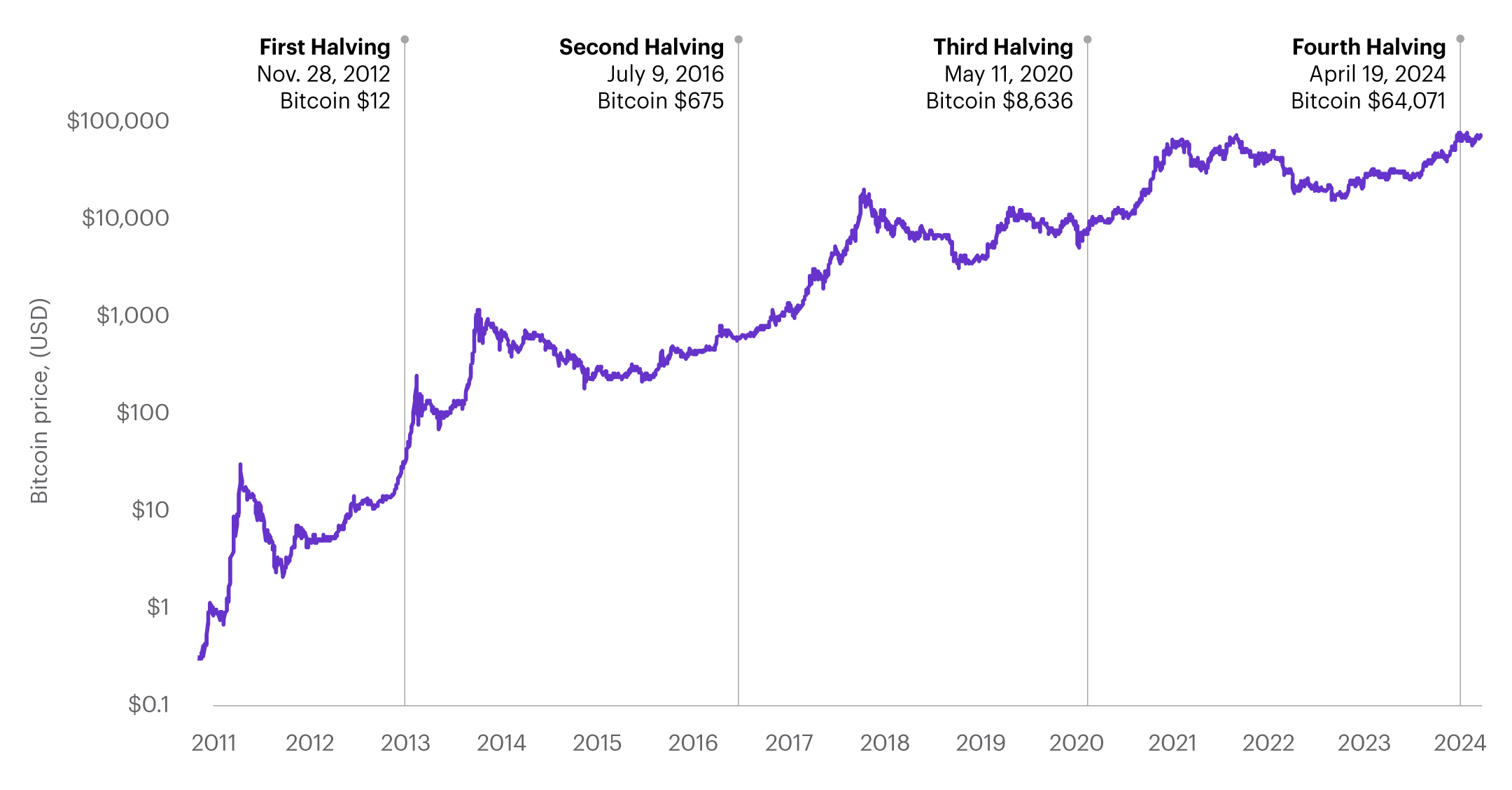
Bitcoin has experienced multiple dramatic bull and bear cycles, often seeing price swings of 20% or more in a single day, and hundreds of percent within a year. This volatility stems from several factors:
- Relatively Small Market Cap: Compared to traditional asset classes like gold or global equities, Bitcoin’s market capitalization, while growing, is still relatively small, making it more susceptible to large buy or sell orders.
- Lack of Long-Term Price History: Being a relatively young asset (launched in 2009), Bitcoin lacks the decades of price data that help stabilize traditional markets.
- Concentrated Ownership: A significant portion of Bitcoin is held by a relatively small number of “whales,” whose trading decisions can have outsized impacts.
- Speculative Nature: A large part of Bitcoin’s demand is speculative, meaning investors are buying based on anticipated future price increases rather than intrinsic value, making it prone to sentiment-driven bubbles and corrections.
Investment Implications
This extreme volatility means Bitcoin is not suitable for all investors.
- Risk Management: Investors in Bitcoin must have a high tolerance for risk and be prepared for substantial paper losses. Effective risk management, including only investing what one can afford to lose, is paramount.
- Dollar-Cost Averaging (DCA): Many investors adopt a strategy of dollar-cost averaging, buying a fixed dollar amount of Bitcoin at regular intervals regardless of the price. This strategy helps mitigate the risk of buying at a market peak by averaging out the purchase price over time.
- Long-Term Horizon: Given its cyclical nature, many Bitcoin investors advocate for a long-term investment horizon, believing that the asset’s fundamental value and adoption will grow over many years, outweighing short-term fluctuations.
Bitcoin as a Store of Value vs. Medium of Exchange
The volatility complicates Bitcoin’s role as a medium of exchange. While some merchants accept Bitcoin, its fluctuating value makes it challenging for day-to-day transactions – a coffee costing $5 one day might cost $6 worth of Bitcoin the next. This has led to the prominent narrative of Bitcoin primarily being a “store of value” or “digital gold” – an asset to be held rather than spent, valued for its scarcity and potential for appreciation. Its use as a medium of exchange is more prevalent in jurisdictions with unstable fiat currencies or for specific cross-border transactions where its advantages outweigh volatility concerns.
How to Track Bitcoin’s Price and Make Informed Decisions
For those interested in Bitcoin, whether as an investor or simply an observer, knowing how and where to track its price is fundamental to staying informed and making prudent decisions.
Reliable Price Tracking Platforms
The first step is to use trustworthy sources for real-time and historical price data:
- Cryptocurrency Exchanges: Platforms like Coinbase, Binance, Kraken, and Gemini display the current trading price of Bitcoin on their respective order books. However, minor price discrepancies can exist between exchanges.
- Price Aggregators: Websites like CoinMarketCap, CoinGecko, and CryptoCompare consolidate data from numerous exchanges, providing an averaged, real-time global price, along with market capitalization, trading volume, and historical charts. These are excellent resources for a comprehensive overview.
- Financial News Outlets: Major financial news organizations (e.g., Bloomberg, Reuters, The Wall Street Journal) often include Bitcoin prices and market analysis, though these may not always be real-time to the second.
- Crypto Wallets: Many self-custody or managed wallet services integrate price tracking directly into their interfaces, allowing users to monitor their holdings.
Understanding Market Capitalization and Trading Volume
Beyond the spot price, two key metrics offer deeper insights into Bitcoin’s market health:
- Market Capitalization (Market Cap): This is calculated by multiplying the current price of a single Bitcoin by the total number of Bitcoins in circulation. It represents the total value of the Bitcoin network and is a key indicator of its size and dominance within the broader crypto market. A higher market cap generally implies greater stability and liquidity.
- Trading Volume: This refers to the total amount of Bitcoin traded over a specific period (e.g., 24 hours). High trading volume indicates strong liquidity and active market participation, suggesting that the current price is robust and widely accepted. Low volume, conversely, can make the price more susceptible to manipulation and larger swings.
Technical Analysis vs. Fundamental Analysis
Investors often employ different methodologies to interpret price movements and forecast future trends:
- Technical Analysis (TA): This involves studying historical price charts, patterns, and trading indicators (e.g., moving averages, relative strength index – RSI, MACD) to predict future price action. TA assumes that all relevant information is already reflected in the price and that past patterns can repeat.
- Fundamental Analysis (FA): This approach focuses on the underlying factors that affect an asset’s value. For Bitcoin, this includes analyzing network health (hash rate, transaction count), adoption rates, regulatory developments, macroeconomic trends, and competitor activity. FA seeks to determine an asset’s “intrinsic” value rather than just its market price.
A balanced approach often combines insights from both technical and fundamental analysis to form a comprehensive investment thesis.
The Importance of Due Diligence
Given the unregulated and often speculative nature of the crypto market, thorough due diligence is paramount. This includes:
- Researching Projects: Understanding Bitcoin’s whitepaper, its community, and its long-term vision.
- Understanding Risks: Being aware of volatility, regulatory changes, potential scams, and technological vulnerabilities.
- Security Practices: Ensuring robust security for holdings (e.g., using hardware wallets, strong passwords, two-factor authentication).
- Reputable Sources: Relying on credible news, analysis, and data providers rather than unsubstantiated claims on social media.
The Future Outlook for Bitcoin’s Price
Predicting the precise future price of Bitcoin is speculative, given its inherent volatility and the multitude of influencing factors. However, several trends and narratives suggest continued evolution in its valuation.
Continued Adoption and Mainstream Integration
The trajectory of Bitcoin’s price will largely hinge on its continued integration into mainstream finance and global economies.
- Institutional Embrace: Further adoption by corporations, pension funds, and sovereign wealth funds, coupled with the expansion of regulated financial products (like ETFs and futures), will likely introduce more capital and potentially greater stability to the market.
- Technological Maturation: Ongoing developments in scaling solutions (e.g., Lightning Network) and user-friendly interfaces could enhance Bitcoin’s utility for payments, driving organic demand.
- Emerging Market Demand: As digital payments become more prevalent and fiat currencies in some nations face increasing instability, Bitcoin could see accelerated adoption as a practical alternative for saving and transacting.
Evolving Regulatory Frameworks
Clearer and more consistent global regulatory frameworks are crucial. As governments develop more sophisticated approaches to cryptocurrency, it could reduce uncertainty, lower barriers to entry for institutions, and foster responsible innovation. However, overly restrictive regulations could also stifle growth or push activity into less transparent channels. The path to comprehensive global regulation is complex and will undoubtedly continue to shape Bitcoin’s price movements.
Potential Headwinds
Despite its bullish prospects, Bitcoin faces potential challenges:
- Competition: Other cryptocurrencies, particularly those focused on specific utility or scalability, could draw investment away from Bitcoin.
- Technological Obsolescence: While unlikely given its robust network and continuous development, a black swan event involving a fundamental flaw or a superior technological alternative could theoretically pose a long-term threat.
- Global Economic Downturns: Severe and prolonged global recessions could dampen investor appetite for all risk assets, including Bitcoin.
- Quantum Computing: The long-term threat of quantum computing breaking current cryptographic standards is a theoretical concern, though the Bitcoin community is already exploring quantum-resistant solutions.
Long-Term Value Proposition
Many proponents believe Bitcoin’s long-term value proposition as “digital gold” remains strong. Its finite supply, decentralized nature, censorship resistance, and growing network effects position it as a unique asset in the modern financial landscape. It represents a potential hedge against traditional financial system risks and a powerful tool for financial sovereignty. Over time, as more capital flows into the digital asset space and as the world moves further into a digitally native economy, its role as a foundational digital asset may solidify, supporting its price over the decades.
In conclusion, the price of Bitcoin is a multi-faceted phenomenon, a product of economic fundamentals, technological innovation, global politics, and human psychology. It is a constantly moving target, reflecting the cutting edge of digital finance. For investors, understanding these complexities, embracing prudent risk management, and maintaining a long-term perspective are vital when navigating the dynamic world of Bitcoin.
aViewFromTheCave is a participant in the Amazon Services LLC Associates Program, an affiliate advertising program designed to provide a means for sites to earn advertising fees by advertising and linking to Amazon.com. Amazon, the Amazon logo, AmazonSupply, and the AmazonSupply logo are trademarks of Amazon.com, Inc. or its affiliates. As an Amazon Associate we earn affiliate commissions from qualifying purchases.