
The question “What is the price of Bitcoin?” is one of the most frequently searched queries in the financial world. However, for the serious investor, the answer is far more complex than a single numerical value flashing on a digital exchange. The price of Bitcoin represents the real-time intersection of global macroeconomics, technological adoption, and a fundamental shift in how humanity perceives value. Unlike traditional fiat currencies backed by governments or stocks backed by corporate earnings, Bitcoin’s price is determined by a pure, decentralized market 24 hours a day, 7 days a week.
To understand the price of Bitcoin, one must look beyond the ticker symbol and delve into the mechanics of digital scarcity, the psychology of market cycles, and its evolving role as a cornerstone of the modern financial portfolio.
1. The Fundamentals of Bitcoin Valuation
At its core, Bitcoin’s price is a reflection of its unique economic properties. Unlike the US Dollar or the Euro, which can be printed in unlimited quantities by central banks, Bitcoin operates on a protocol of absolute scarcity. This “hard money” characteristic is the primary driver of its long-term valuation.
Scarcity and the Halving Cycle
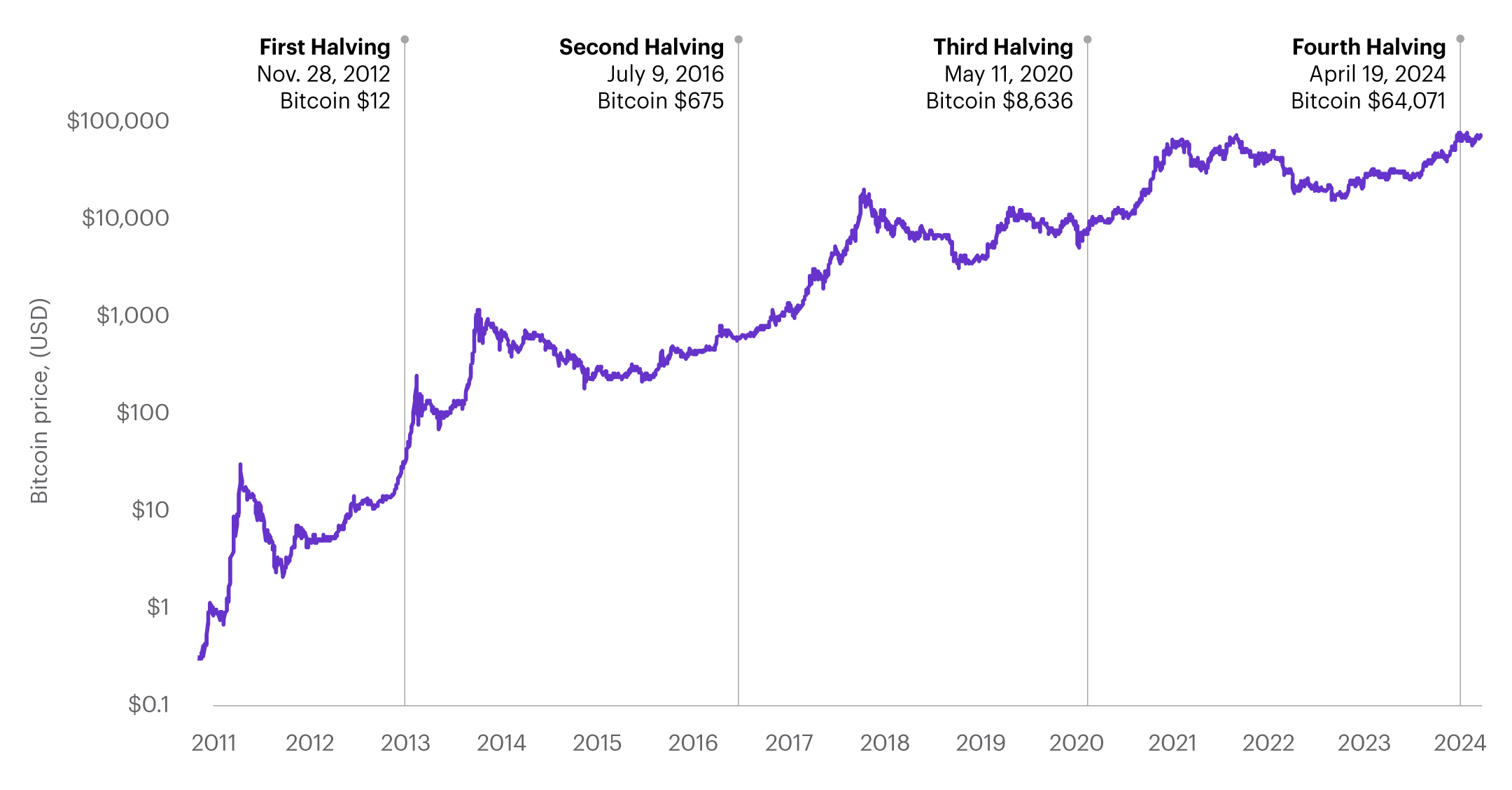
The most critical factor in Bitcoin’s supply-side economics is the “Halving.” Approximately every four years, the reward given to Bitcoin miners is cut in half, effectively reducing the rate at which new Bitcoin enters circulation. Historically, these halving events have acted as catalysts for significant price appreciation. By tightening the supply while demand remains steady or grows, the protocol creates a programmed supply shock. Investors view these cycles as milestones, often pricing in the anticipated scarcity months before the event actually occurs.
Demand Drivers: Institutional vs. Retail
In the early years, Bitcoin’s price was driven primarily by retail speculators and tech enthusiasts. Today, the landscape has shifted toward institutional “smart money.” The approval of Spot Bitcoin ETFs (Exchange-Traded Funds) has opened the floodgates for pension funds, insurance companies, and sovereign wealth funds to allocate capital toward the asset. This institutional demand provides a level of price support and liquidity that was absent in previous years, fundamentally changing how the market reacts to volatility.
Market Capitalization and Liquidity
When discussing price, we must also consider market capitalization—the total value of all Bitcoins in circulation. As the market cap grows, Bitcoin becomes less prone to the extreme “flash crashes” seen in its infancy. However, liquidity—the ease with which Bitcoin can be bought or sold without affecting the price—remains vital. High liquidity on major global exchanges ensures that large “whale” transactions do not cause unnecessary price distortions, leading to a more stable valuation environment over time.
2. Factors Influencing Short-Term Price Volatility
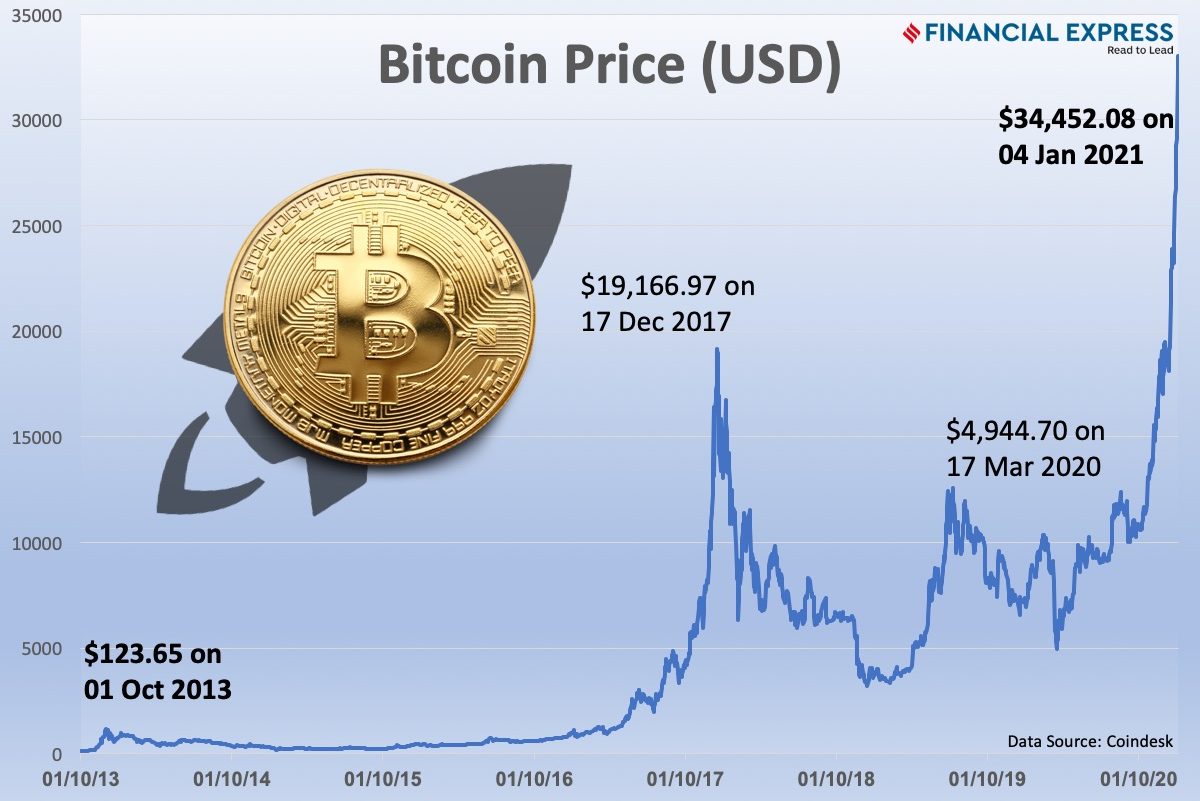
While the long-term trend of Bitcoin has historically been upward, its short-term price action is notoriously volatile. This volatility is not random; it is the result of specific economic and psychological triggers that influence participant behavior in the financial markets.
Macroeconomic Indicators and Interest Rates
Bitcoin does not exist in a vacuum. It is increasingly sensitive to global macroeconomic shifts, particularly the monetary policy of the Federal Reserve. In a “risk-on” environment, where interest rates are low and liquidity is high, Bitcoin often thrives as investors seek higher returns. Conversely, when central banks raise interest rates to combat inflation, “risk-off” sentiment takes over, and investors may move capital out of Bitcoin and into “safer” assets like Treasury bonds. Therefore, the Consumer Price Index (CPI) reports and Federal Open Market Committee (FOMC) meetings are now high-impact events for Bitcoin’s price.
Regulatory Announcements and Legal Frameworks
Because Bitcoin operates globally, it is subject to a patchwork of different regulatory environments. Positive regulatory news—such as a country adopting Bitcoin as legal tender or a major economy passing clear “pro-crypto” legislation—can send prices surging. On the other hand, threats of bans, restrictive tax policies, or crackdowns on major exchanges can lead to sharp sell-offs. For the investor, staying informed about the legal status of digital assets in key markets like the US, the EU, and East Asia is essential for understanding price fluctuations.
Sentiment and the “Fear and Greed” Index
The cryptocurrency market is highly emotional. Because Bitcoin is a relatively new asset class, it is prone to periods of “irrational exuberance” and extreme panic. Financial analysts often use the “Fear and Greed Index” to gauge market sentiment. When the index shows “Extreme Greed,” the price may be overextended and due for a correction. When it shows “Extreme Fear,” it often represents a potential buying opportunity for contrarian investors who believe in the long-term value proposition of the asset.
3. Methods for Tracking and Analyzing Bitcoin’s Price
To answer “What is the price of Bitcoin?” with precision, investors utilize various analytical frameworks. These methods help distinguish between “noise” (short-term fluctuations) and “signals” (meaningful price movements).
Technical Analysis vs. Fundamental Analysis
In the world of finance, there are two primary schools of thought. Technical Analysis (TA) involves studying historical price charts and volume to predict future movements. Traders use indicators like Moving Averages, the Relative Strength Index (RSI), and Fibonacci retracement levels to identify support and resistance zones.
Fundamental Analysis (FA), however, ignores the charts and looks at the underlying value. In the context of Bitcoin, FA involves looking at network security (hash rate), the number of active wallet addresses, and the total value locked in related protocols. A discrepancy between a rising network adoption (FA) and a falling price (TA) is often seen as a significant investment signal.
On-Chain Metrics and Exchange Liquidity
One of the most powerful tools unique to the “Money” aspect of Bitcoin is on-chain analysis. Since the Bitcoin blockchain is a public ledger, we can see exactly how coins are moving. Analysts track “Exchange Inflows” (Bitcoin moving onto exchanges to be sold) and “Exchange Outflows” (Bitcoin moving into cold storage for long-term holding). A high volume of outflows generally signals a “supply crunch,” which is a bullish indicator for the price.
The Role of Derivatives and Leverage
The price of Bitcoin is also heavily influenced by the derivatives market, including futures and options. Many traders use “leverage”—borrowing money to take larger positions. While this can amplify gains, it also leads to “liquidation cascades.” If the price drops slightly, leveraged “long” positions are forced to sell, which pushes the price down further, triggering more liquidations. Understanding the “Open Interest” in the futures market is key to predicting these sudden, sharp movements in price.
4. Bitcoin’s Role in a Modern Investment Portfolio
As Bitcoin matures, the conversation has shifted from “Is it a scam?” to “How much should I own?” The price of Bitcoin is now a standard metric in diversified wealth management.
Risk Management and Asset Allocation
Financial advisors who once dismissed Bitcoin now often suggest a small allocation—typically 1% to 5% of a total portfolio. Because Bitcoin has a low correlation with traditional assets like stocks and bonds, it can actually reduce the overall risk of a portfolio while potentially increasing returns. This is known as the “efficient frontier” in modern portfolio theory. However, because of the price volatility, “Money” management strategies like Dollar Cost Averaging (DCA)—buying a fixed dollar amount at regular intervals—are highly recommended to mitigate the risk of buying at a local price peak.
The Concept of “Digital Gold”
A major driver of Bitcoin’s price is its growing reputation as “Digital Gold.” Like physical gold, Bitcoin is scarce, durable, and censorship-resistant. However, it is superior to gold in terms of portability and divisibility. As the world faces rising sovereign debt and currency devaluation, many investors see the price of Bitcoin as a hedge against the traditional financial system. If Bitcoin were to reach the market capitalization of gold, its price per coin would exceed several hundred thousand dollars, a calculation that many long-term “HODLers” use to justify their investment.
Emerging Financial Tools: Lending and Yield
The ecosystem surrounding Bitcoin has expanded to include sophisticated financial tools. Investors can now use their Bitcoin as collateral for loans or earn a yield on their holdings through various decentralized finance (DeFi) platforms. These “Money” tools change the opportunity cost of holding Bitcoin. When an investor can earn a return on their BTC, they are less likely to sell, further reducing the circulating supply and putting upward pressure on the price over time.
Conclusion
What is the price of Bitcoin? It is a number that represents the collective belief of millions of people in a new form of digital sovereignty. While the price may fluctuate wildly on a daily basis due to macroeconomic shifts, regulatory news, or market liquidations, the underlying trend is driven by a mathematical certainty of scarcity and a growing global demand.
For the modern investor, the price is not just a figure to be watched, but a signal to be analyzed. By understanding the halving cycles, the impact of institutional capital, and the tools of on-chain analysis, one can move past the volatility and view Bitcoin for what it truly is: a revolutionary financial asset that is redefining the very nature of money in the 21st century. Whether viewed as a speculative tool, a hedge against inflation, or “Digital Gold,” Bitcoin’s price remains the most watched barometer in the new era of digital finance.
aViewFromTheCave is a participant in the Amazon Services LLC Associates Program, an affiliate advertising program designed to provide a means for sites to earn advertising fees by advertising and linking to Amazon.com. Amazon, the Amazon logo, AmazonSupply, and the AmazonSupply logo are trademarks of Amazon.com, Inc. or its affiliates. As an Amazon Associate we earn affiliate commissions from qualifying purchases.