
In the intricate world of business, few concepts are as fundamental yet often misunderstood as the “parent company.” Far from a mere technicality, the existence and structure of a parent company represent a cornerstone of modern corporate finance, investment strategy, and business operations. It’s a concept that dictates ownership, influences financial reporting, shapes strategic decisions, and profoundly impacts an entity’s financial health and market perception. For investors, entrepreneurs, and anyone navigating the financial landscape, a clear grasp of what constitutes a parent company is not just beneficial—it’s essential for informed decision-making and robust analysis.
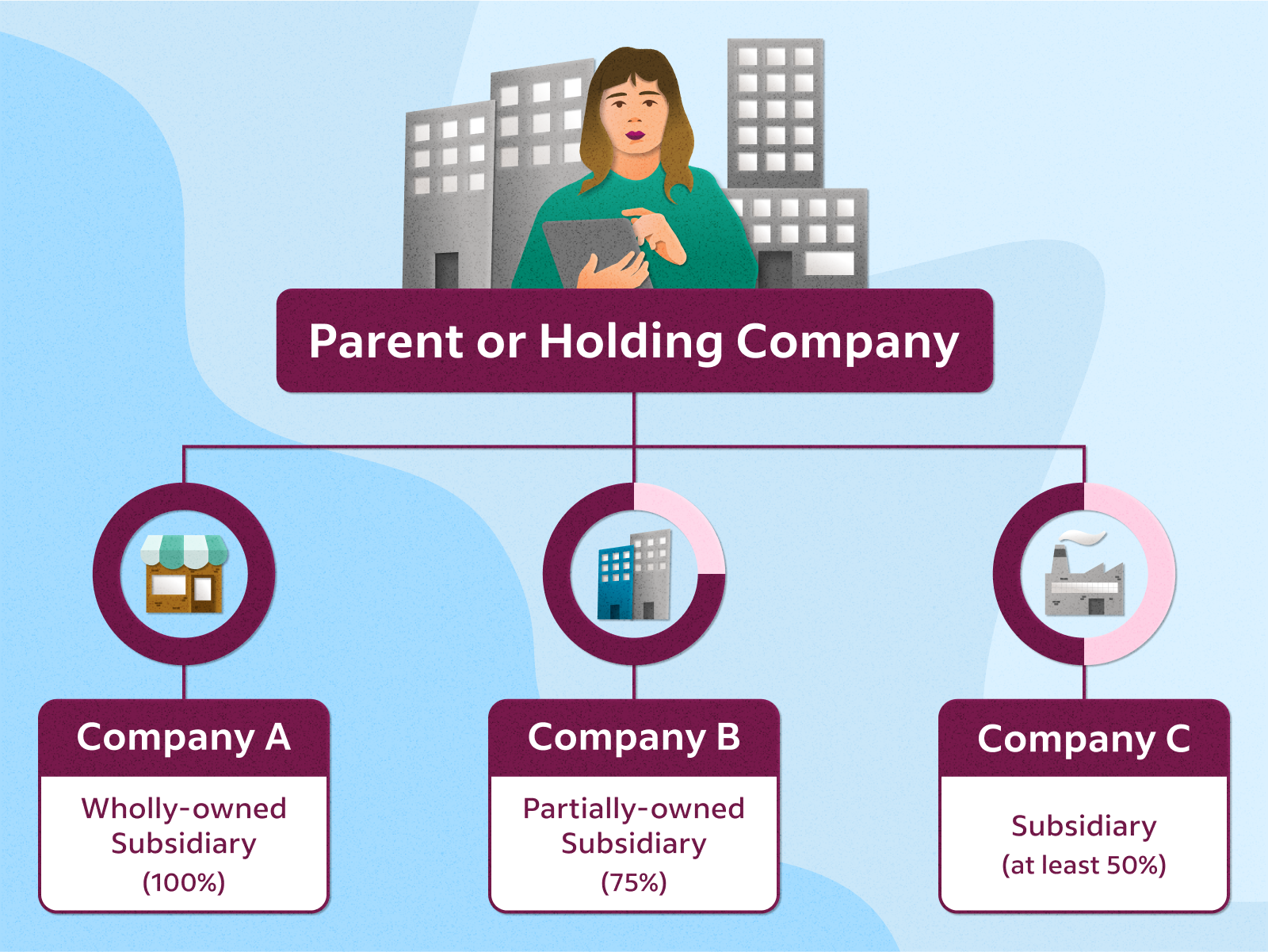
At its core, a parent company is an entity that owns a controlling stake in another company. This controlling stake typically translates to more than 50% of the voting shares, granting the parent company the power to appoint the subsidiary’s board of directors and, by extension, dictate its operational and financial policies. This relationship isn’t just about hierarchical dominance; it’s a sophisticated arrangement with profound financial, legal, and strategic implications that ripple through markets globally.
Unpacking the Corporate Structure: Defining a Parent Company
To truly understand the “parent company,” we must delve into the specifics of its definition, its relationship with its offspring, and the nuances of control that extend beyond simple share ownership.
The Core Concept: Ownership and Control
A parent company, often referred to as a holding company, is a corporate entity that possesses sufficient ownership in another company (or multiple companies) to exert significant influence over its management and operations. The most common form of this control is through the ownership of a majority of the subsidiary’s outstanding voting stock. This majority stake ensures the parent company can appoint the subsidiary’s leadership, approve major strategic decisions, and guide its overall direction. This isn’t just passive investment; it’s active governance, with the parent often setting the financial and operational framework for its subsidiaries. The rationale behind such a structure is deeply rooted in financial strategy, enabling centralized control while allowing for operational decentralization.
Subsidiaries: The Entities Under the Umbrella
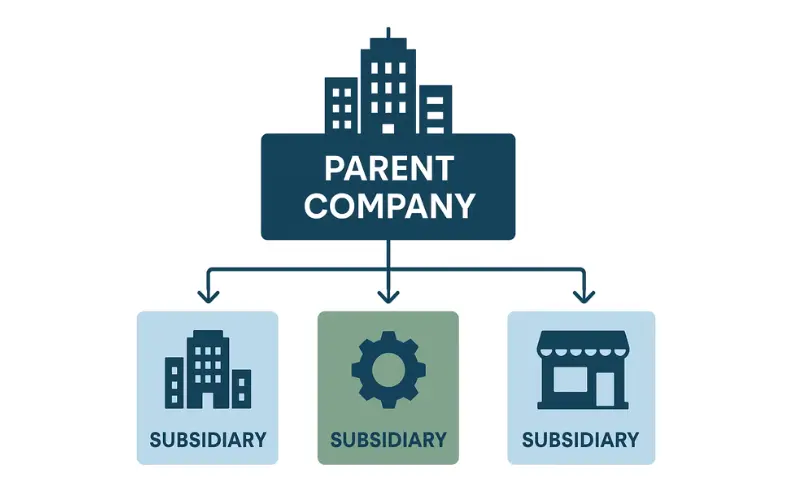
Conversely, a subsidiary is a company that is either partially or wholly owned and controlled by a parent company. Subsidiaries maintain their own legal identity, assets, liabilities, and operational structures, distinguishing them from divisions or branches, which are typically integrated parts of a single legal entity. This independent legal status is a critical financial and legal advantage. It allows subsidiaries to enter into contracts, incur debt, and conduct business in their own name, often sheltering the parent company from certain direct liabilities and legal exposures. From a financial perspective, understanding the individual financial health of subsidiaries, alongside their contribution to the parent’s consolidated performance, is key for accurate valuation and risk assessment.
Legal vs. Economic Control: A Nuance
While owning more than 50% of voting shares is the most straightforward path to establishing a parent-subsidiary relationship, control can sometimes be more nuanced. “Economic control” refers to the ability to direct the relevant activities of another entity, even without owning a majority of its voting shares. This could stem from contractual agreements, the ability to appoint a majority of the board through preferred shares, or even significant influence through substantial, though minority, equity stakes. From a financial reporting perspective, accounting standards often mandate consolidation when a company has economic control, even if legal control (majority ownership) is not explicitly present. This distinction is crucial for investors, as it dictates which entities are included in the consolidated financial statements, thereby impacting the parent company’s reported revenues, expenses, assets, and liabilities.
Why Form a Parent Company? Strategic Financial Advantages
The formation of a parent company structure is rarely accidental; it’s a deliberate strategic choice driven by compelling financial and operational advantages. These benefits often relate to risk mitigation, facilitating growth, and optimizing financial performance.
Risk Management and Asset Protection
One of the primary financial motivators for establishing a parent-subsidiary structure is enhanced risk management and asset protection. By housing different business units or ventures within separate legal subsidiaries, the parent company can insulate itself from the financial and legal liabilities of any single subsidiary. Should a subsidiary face bankruptcy, litigation, or significant financial distress, its creditors typically have recourse only against the assets of that specific subsidiary, protecting the parent company’s core assets and other successful ventures. This ring-fencing of risk is invaluable, particularly in industries with high operational risks or regulatory scrutiny, allowing diversified portfolios without exposing the entire enterprise to undue financial peril.
Facilitating Mergers & Acquisitions (M&A) and Divestitures
Parent companies are instrumental in the M&A landscape. They serve as a flexible framework for acquiring new businesses and integrating them into a larger corporate portfolio. When a parent company acquires a target, it can absorb it as a new subsidiary, maintaining its operational identity while benefiting from the parent’s resources. This structure also simplifies future divestitures; if a specific business unit no longer aligns with the parent’s strategic objectives, the subsidiary (or a portion of it) can be sold off as a distinct entity, streamlining the transaction and minimizing disruption to the remaining operations. This modularity in corporate finance allows for dynamic portfolio management, enabling rapid expansion or strategic retraction based on market conditions and financial goals.
Optimizing Tax Strategies and Regulatory Compliance
The parent-subsidiary model offers significant opportunities for tax optimization and simplified regulatory compliance across various jurisdictions. Companies can establish subsidiaries in specific countries or regions to leverage favorable tax laws, credits, or incentives. While complex, proper structuring can reduce the overall tax burden of the conglomerate. Additionally, by operating through distinct legal entities, parent companies can navigate diverse regulatory environments more efficiently. A subsidiary can adhere to local regulations without necessarily imposing those same rules on the entire global enterprise, offering flexibility and reducing compliance costs associated with multi-jurisdictional operations. This compartmentalization is a key financial advantage for global corporations.
Capital Allocation and Investment Management
A parent company structure provides a powerful mechanism for centralized capital allocation and investment management. The parent can raise capital at a group level, often benefiting from a stronger credit rating and lower borrowing costs, and then strategically distribute these funds to subsidiaries based on performance, growth potential, or strategic priorities. This allows for efficient deployment of resources across the portfolio, ensuring that capital flows to where it can generate the highest returns. Furthermore, it simplifies treasury functions, cash management, and intercompany lending, optimizing working capital and liquidity across the entire corporate family.
The Financial Dynamics of Parent-Subsidiary Relationships
The financial interplay between a parent company and its subsidiaries is complex, requiring specific accounting practices and careful consideration for financial analysis.
Consolidated Financial Reporting: A Unified View

For external reporting purposes, generally accepted accounting principles (GAAP) and International Financial Reporting Standards (IFRS) typically require a parent company to prepare consolidated financial statements. These statements combine the assets, liabilities, revenues, and expenses of the parent and its subsidiaries into a single set of financial reports, presenting a unified financial picture of the entire economic entity. This consolidation is critical for investors, as it provides a holistic view of the group’s financial performance and position, rather than just the parent’s standalone operations. Analysts must understand the consolidation process, particularly minority interests, which represent the portion of a subsidiary’s equity not owned by the parent company.
Intercompany Transactions and Transfer Pricing
Within a parent-subsidiary structure, transactions between affiliated entities are common—e.g., a parent selling goods to a subsidiary, or a subsidiary providing services to another. These “intercompany transactions” must be meticulously recorded and, for consolidated reporting, eliminated to avoid inflating revenues or expenses. A critical aspect of these transactions is “transfer pricing,” which refers to the pricing of goods, services, and intellectual property exchanged between related entities. Transfer pricing is a significant area of financial and tax scrutiny, as improperly set prices can be used to shift profits to lower-tax jurisdictions, leading to potential disputes with tax authorities worldwide. Accurate transfer pricing is essential for both tax compliance and fair financial reporting within the conglomerate.
Debt Financing and Credit Ratings
The presence of a parent company can significantly impact the debt financing capabilities and credit ratings of its subsidiaries. Often, a parent company will provide guarantees for its subsidiaries’ debt, or the subsidiaries may borrow under a master credit facility established by the parent. This can enable subsidiaries to access capital at more favorable terms than they might achieve individually. Conversely, the financial health of a subsidiary can influence the parent’s overall credit rating. Lenders and rating agencies assess the entire corporate group, factoring in the consolidated debt load, cash flow generation, and overall risk profile when assigning credit ratings.
Valuation Implications for Investors
For investors, understanding the parent-subsidiary structure is paramount for accurate valuation. When valuing a publicly traded parent company, analysts must assess not only its direct operations but also the value and performance of each significant subsidiary. This involves analyzing segment reporting, understanding intercompany eliminations, and evaluating the strategic contribution of each part to the whole. The sum-of-the-parts valuation approach is often used, where individual subsidiaries or business units are valued separately and then aggregated to derive an estimate for the parent company. This approach helps to identify potential undervaluation or overvaluation of the parent company’s stock relative to its underlying assets.
Parent Companies in the Investment Landscape
The existence of parent companies profoundly shapes how investors approach market analysis, risk assessment, and portfolio construction.
Analyzing Conglomerates: Opportunities and Challenges
Many of the world’s largest companies are, in fact, conglomerates—parent companies that own a diverse array of businesses, often across unrelated industries (e.g., a parent owning food brands, media companies, and financial services). While conglomerates can offer diversification benefits and stability through varying economic cycles, they also present unique challenges for investors. Analyzing a conglomerate requires a deep understanding of each subsidiary’s market, competitive landscape, and financial performance. Opportunities lie in identifying undervalued subsidiaries within a larger, less appreciated parent. Challenges include the potential for “conglomerate discount,” where the market values the sum of the parts less than if they were independent entities, due to complexity or lack of strategic focus.
Due Diligence: Understanding the Full Corporate Picture
For investors, conducting due diligence on a parent company necessitates looking beyond the headline figures. It requires scrutinizing the financial statements of significant subsidiaries, understanding the nature of intercompany transactions, and assessing the legal and regulatory risks associated with each entity. A thorough due diligence process involves evaluating the governance structure, potential for conflicts of interest between the parent and subsidiaries, and the overall management philosophy regarding capital allocation across the group. This holistic view is crucial for uncovering hidden risks or opportunities that might not be apparent from the consolidated statements alone.
Impact on Stock Performance and Investor Confidence
The financial strength and strategic decisions of a parent company directly influence the stock performance of its publicly traded shares and investor confidence. A well-managed parent company that effectively allocates capital, fosters subsidiary growth, and manages risk can command a premium in the market. Conversely, issues within a single subsidiary (e.g., a product recall, significant litigation, or underperformance) can cascade and negatively impact the parent’s stock price, even if the parent’s other businesses are thriving. Investor confidence is also tied to transparency in reporting and a clear understanding of the financial health and future prospects of the entire corporate family.
Navigating the Complexities: Challenges and Considerations
While offering numerous financial benefits, the parent-subsidiary structure also presents its own set of complexities and potential pitfalls that demand careful management.
Managing Governance and Autonomy
A significant challenge lies in striking the right balance between centralized control by the parent and granting sufficient operational autonomy to subsidiaries. Too much control can stifle innovation and responsiveness at the subsidiary level, while too little can lead to a fragmented strategy and a lack of synergy. Financially, this impacts resource allocation, performance measurement, and accountability within the group. Effective governance frameworks and clear reporting lines are essential for optimizing performance across the entire organization.
Potential for Conflicts of Interest
Conflicts of interest can arise when the parent company’s objectives diverge from those of a particular subsidiary or its minority shareholders. Decisions regarding intercompany pricing, dividend policies, or strategic investments might favor the parent’s overall financial health at the expense of a subsidiary’s immediate interests. Robust governance, independent oversight, and transparent internal policies are crucial to mitigate these conflicts and ensure fair dealings, safeguarding the interests of all stakeholders, including minority investors in partially owned subsidiaries.
Regulatory Scrutiny and Anti-Trust Concerns
The vast scale and influence of large parent companies, particularly conglomerates, often attract significant regulatory scrutiny. Authorities are keen to ensure fair competition and prevent monopolistic practices. Mergers and acquisitions involving parent companies and their subsidiaries are frequently reviewed by anti-trust bodies to assess their impact on market competition. From a financial perspective, non-compliance with anti-trust laws or other regulations can lead to substantial fines, forced divestitures, and significant reputational damage, posing a considerable financial risk to the entire group.
In conclusion, the parent company is far more than a simple descriptor of ownership; it is a sophisticated financial and legal construct that underpins much of the global economy. For businesses, it offers strategic advantages in risk management, capital allocation, and market expansion. For investors, understanding this structure is paramount for accurate financial analysis, informed valuation, and navigating the opportunities and challenges presented by complex corporate entities. A deep dive into “what is the parent company” reveals a fascinating interplay of finance, strategy, and governance that continues to shape the landscape of commerce and investment.
aViewFromTheCave is a participant in the Amazon Services LLC Associates Program, an affiliate advertising program designed to provide a means for sites to earn advertising fees by advertising and linking to Amazon.com. Amazon, the Amazon logo, AmazonSupply, and the AmazonSupply logo are trademarks of Amazon.com, Inc. or its affiliates. As an Amazon Associate we earn affiliate commissions from qualifying purchases.