
In the modern digital landscape, every interaction we have—from sending an urgent email to authorizing a multi-million dollar bank transfer—relies on a silent, invisible guardian: Public Key Cryptography (PKC). Also known as asymmetric cryptography, this technology is the bedrock upon which the entire security of the internet is built. Without it, the digital economy would collapse under the weight of identity theft and data interception.
To understand public key cryptography, one must first look at the problem it solved. In the early days of computing, encryption was “symmetric.” This meant that if two people wanted to share a secret message, they both needed the exact same key to lock and unlock it. The problem was obvious: how do you share the key without someone stealing it during the exchange? Public key cryptography solved this “key distribution” problem, ushering in the era of secure global communication.
1. Understanding the Mechanics: The Concept of Asymmetric Keys
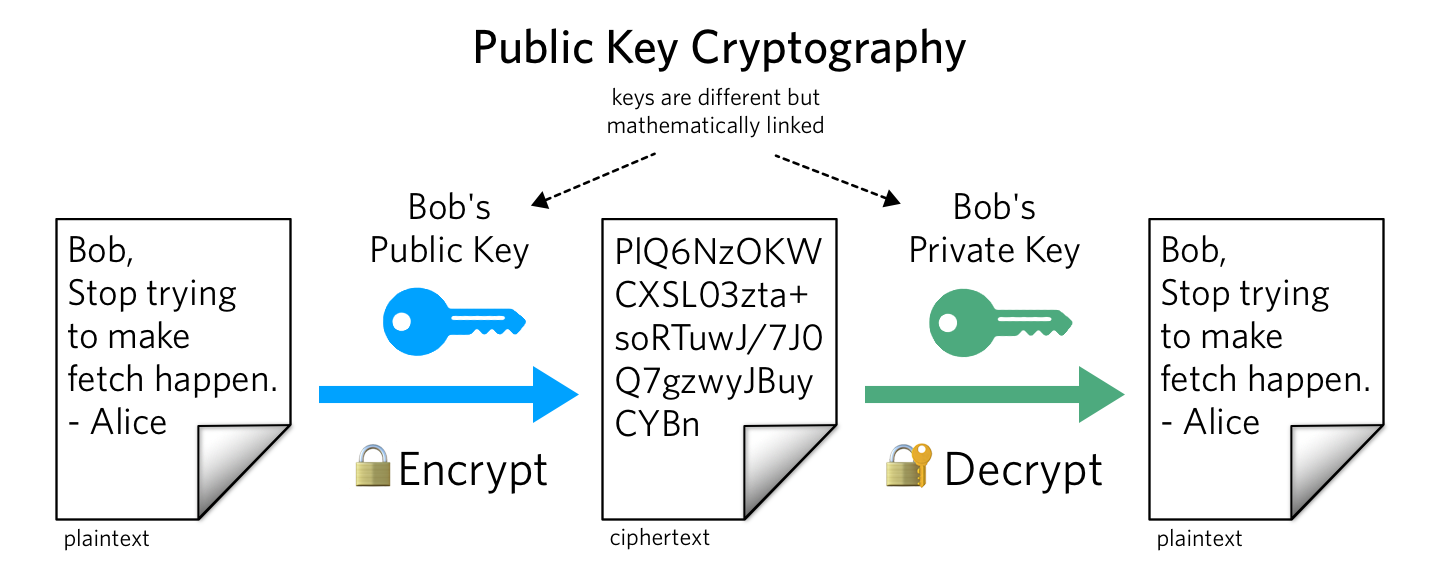
The defining feature of public key cryptography is the use of two distinct but mathematically related keys: the Public Key and the Private Key. This pair is generated using complex mathematical algorithms that ensure while the keys are linked, one cannot be practically derived from the other.
The Public and Private Key Dynamic
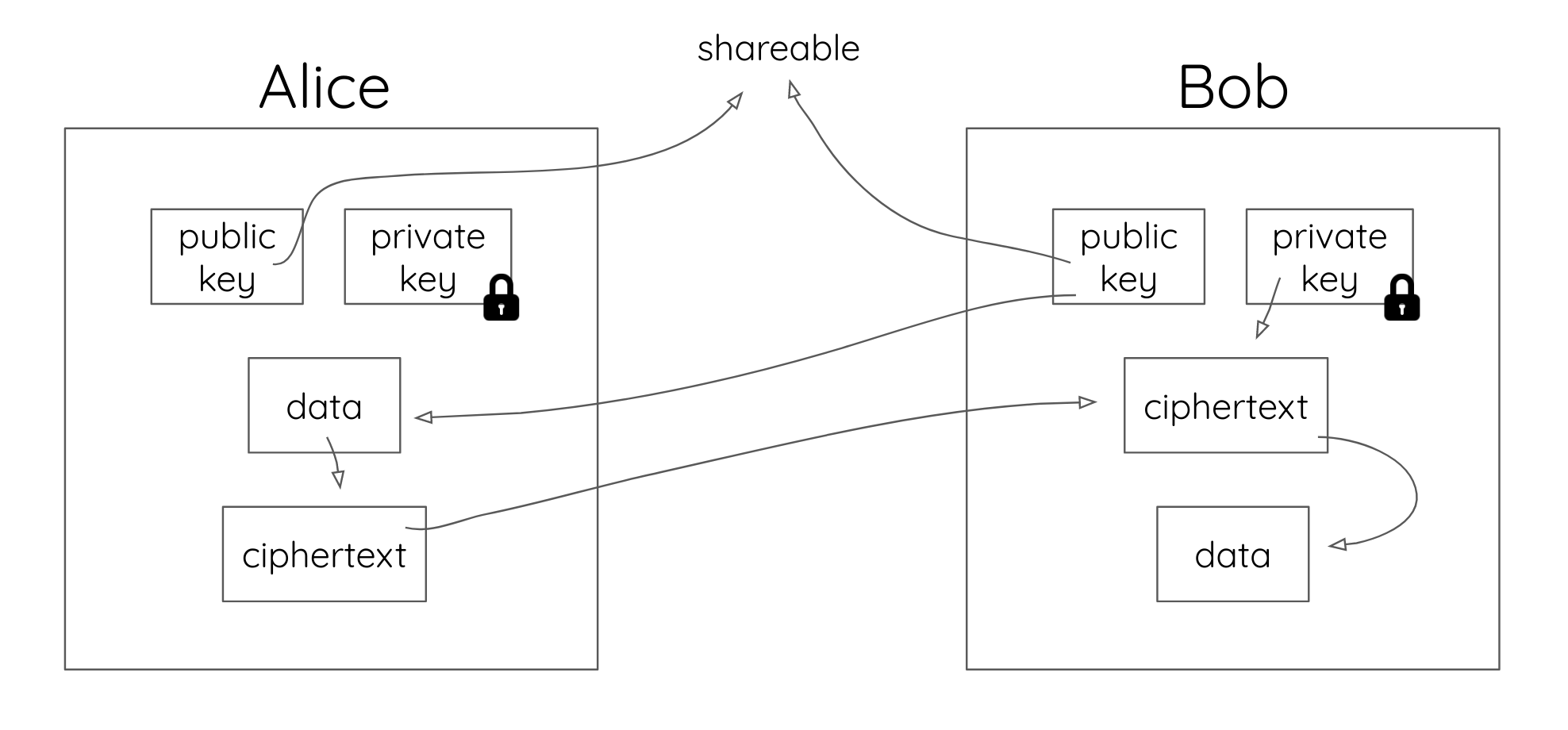
Think of the public key as your digital mailbox address. Anyone can have this address, and anyone can drop a letter (data) into the slot. However, once the letter is inside the box, it is locked. Only the person who holds the private key—the physical key to the back of the mailbox—can open it and read the contents.
In a technical sense, the public key is used to encrypt data, transforming it into an unreadable string of characters called ciphertext. The private key, which must be kept secret by the owner at all times, is the only tool capable of decrypting that specific ciphertext back into its original, readable format.
The Trapdoor Function
The magic of this system lies in what mathematicians call a “trapdoor function.” This is a mathematical operation that is easy to perform in one direction but virtually impossible to reverse without a specific piece of information (the private key).
For example, many PKC systems rely on the difficulty of factoring extremely large prime numbers. It is easy for a computer to multiply two 500-digit prime numbers together. However, even the world’s most powerful supercomputers would take billions of years to figure out which two prime numbers were used to create that product. This mathematical asymmetry is what keeps your encrypted data safe from brute-force attacks.
2. How Public Key Cryptography Functions in Practice
While the primary function of PKC is data encryption, its utility extends far beyond just hiding information. It is also the primary mechanism for verifying identity and ensuring data integrity through digital signatures.
Encryption for Privacy
When you visit a website with an “HTTPS” prefix, your browser uses public key cryptography to establish a secure connection. The website provides its public key to your browser, which then uses that key to encrypt the data you send (like passwords or credit card numbers). Only the website’s server, which holds the corresponding private key, can decrypt and process your information. This ensures that even if a hacker intercepts the data while it travels across the internet, they see nothing but gibberish.
Digital Signatures and Authentication
Beyond privacy, we need to know that the person sending a message is who they say they are. This is where digital signatures come in. In this process, the roles of the keys are reversed.
If I want to “sign” a document, I use my private key to create a unique digital fingerprint of that document. Anyone who has my public key can use it to verify the signature. Because only I have the private key, the successful verification proves that the message originated from me and that it has not been altered since I signed it. This provides “non-repudiation,” meaning the sender cannot later claim they didn’t send the message.
The Role of Certificate Authorities (CAs)
In a world of billions of users, how do you know a public key actually belongs to the person or company it claims to? This is the role of the Public Key Infrastructure (PKI) and Certificate Authorities. CAs are trusted third-party organizations that verify the identity of entities and issue digital certificates. These certificates bind a public key to an identity, acting like a digital passport for the internet.
3. Critical Use Cases in the Modern Tech Ecosystem

Public key cryptography is not just a theoretical concept; it is the engine powering the most significant technological advancements of the 21st century.
Securing the Web (SSL/TLS)
The most common application of PKC is the Transport Layer Security (TLS) protocol, formerly known as SSL. Every time you see a padlock icon in your browser’s address bar, PKC is at work. It facilitates the “handshake” between your device and the server, allowing for the secure exchange of symmetric keys that are then used for high-speed data transfer.
End-to-End Encrypted (E2EE) Messaging
Apps like Signal, WhatsApp, and iMessage have brought public key cryptography to the palms of our hands. Through end-to-end encryption, these platforms ensure that only the sender and the recipient can read a message. Not even the service provider (Meta or Apple) can see the content because they do not possess the private keys stored on the users’ individual devices. This has revolutionized privacy for journalists, activists, and everyday citizens alike.
Blockchain and Cryptocurrency
The entire $2 trillion cryptocurrency market is built on the back of public key cryptography. When you own Bitcoin or Ethereum, you don’t actually “hold” coins; you hold a private key.
- Your Wallet Address is a hashed version of your public key.
- To send funds, you use your private key to sign a transaction.
This system allows for a decentralized financial network where ownership can be proven and assets can be transferred without the need for a central bank or intermediary.
4. The Benefits and Challenges of Asymmetric Encryption
While public key cryptography solved the massive problem of key distribution, it is not a perfect solution for every scenario. It is often used in tandem with other technologies to balance security and performance.
Scalability and Key Management
The greatest benefit of PKC is scalability. In a symmetric system, if 1,000 people want to communicate privately, they would need nearly 500,000 unique keys. In an asymmetric system, those same 1,000 people only need 1,000 pairs of keys. This makes it feasible to secure a global network of billions of users.
The Computational Overhead
The primary drawback of public key cryptography is its speed. Because the mathematical operations involved (like large-scale modular exponentiation) are incredibly complex, they require significant computational power.
To solve this, modern systems use a “hybrid” approach. They use PKC to securely exchange a short-lived symmetric key, and then use that symmetric key—which is much faster—to encrypt the actual bulk of the data. This provides the security of asymmetric encryption with the efficiency of symmetric encryption.
The Risk of Private Key Loss
In a PKC-based system, the private key is the single point of failure. If a user loses their private key, they lose access to their encrypted data or their digital assets forever. There is no “forgot password” button for a private key in a decentralized system. Conversely, if a private key is stolen, the attacker has total control over the user’s identity and assets.
5. The Future of Cryptography: The Quantum Threat
As we look toward the future, the tech world is bracing for a potential “cryptographic apocalypse” brought about by the advent of quantum computing.
The Threat to RSA and ECC
Current public key algorithms, such as RSA (Rivest-Shamir-Adleman) and ECC (Elliptic Curve Cryptography), rely on the fact that classical computers are very bad at factoring large numbers. However, a sufficiently powerful quantum computer could use “Shor’s Algorithm” to break these codes in a matter of minutes. This would render almost all current internet security obsolete.
Post-Quantum Cryptography (PQC)
In response, the tech community and organizations like NIST (National Institute of Standards and Technology) are already developing “Post-Quantum Cryptography.” These are new types of algorithms based on different mathematical problems—such as lattice-based cryptography—that are believed to be resistant to both classical and quantum attacks.
The transition to PQC will be one of the most significant technological migrations in history, requiring updates to every server, browser, and digital device on the planet.
Conclusion
Public key cryptography is the unsung hero of the digital age. It has transformed the internet from a simple information-sharing tool into a secure platform for global commerce, private communication, and decentralized finance. By leveraging the elegant complexity of mathematics, it allows two strangers to communicate with total privacy without ever having met or shared a secret code beforehand.
As we move toward a future defined by AI, the Internet of Things (IoT), and quantum computing, the principles of public key cryptography will continue to evolve, remaining the essential shield that protects our digital identities in an increasingly connected world. Understanding how it works is no longer just for developers and cryptographers; it is essential knowledge for anyone navigating the modern tech landscape.
aViewFromTheCave is a participant in the Amazon Services LLC Associates Program, an affiliate advertising program designed to provide a means for sites to earn advertising fees by advertising and linking to Amazon.com. Amazon, the Amazon logo, AmazonSupply, and the AmazonSupply logo are trademarks of Amazon.com, Inc. or its affiliates. As an Amazon Associate we earn affiliate commissions from qualifying purchases.