
The concept of oxidation numbers is fundamental to understanding chemical reactions. It provides a standardized way to track electron transfer between atoms in a compound or element. While seemingly straightforward, the oxidation number of diatomic elements like O₂ can sometimes cause confusion. This article delves into the specific case of oxygen (O₂) to clarify its oxidation number, its underlying principles, and its implications in various chemical contexts. By dissecting the rules and exceptions surrounding oxidation numbers, we aim to provide a comprehensive understanding for students, chemists, and anyone seeking to deepen their knowledge of chemical reactivity.

The Fundamental Principles of Oxidation Numbers
Oxidation numbers, also known as oxidation states, are hypothetical charges assigned to an atom in a molecule or ion. These assignments are based on a set of rules that assume ionic bonding, even in covalent compounds. The primary goal is to determine the degree of oxidation or reduction an element has undergone in a chemical reaction. Understanding these foundational rules is crucial before we can accurately determine the oxidation number of O₂.
Defining Oxidation and Reduction
At its core, oxidation is defined as the loss of electrons, while reduction is the gain of electrons. These processes always occur simultaneously in a redox (reduction-oxidation) reaction. The change in oxidation number directly reflects this electron transfer. An increase in oxidation number signifies oxidation, and a decrease signifies reduction.
The Hierarchy of Oxidation Number Rules
A hierarchical set of rules is employed to assign oxidation numbers. These rules are applied in a specific order of precedence.
-
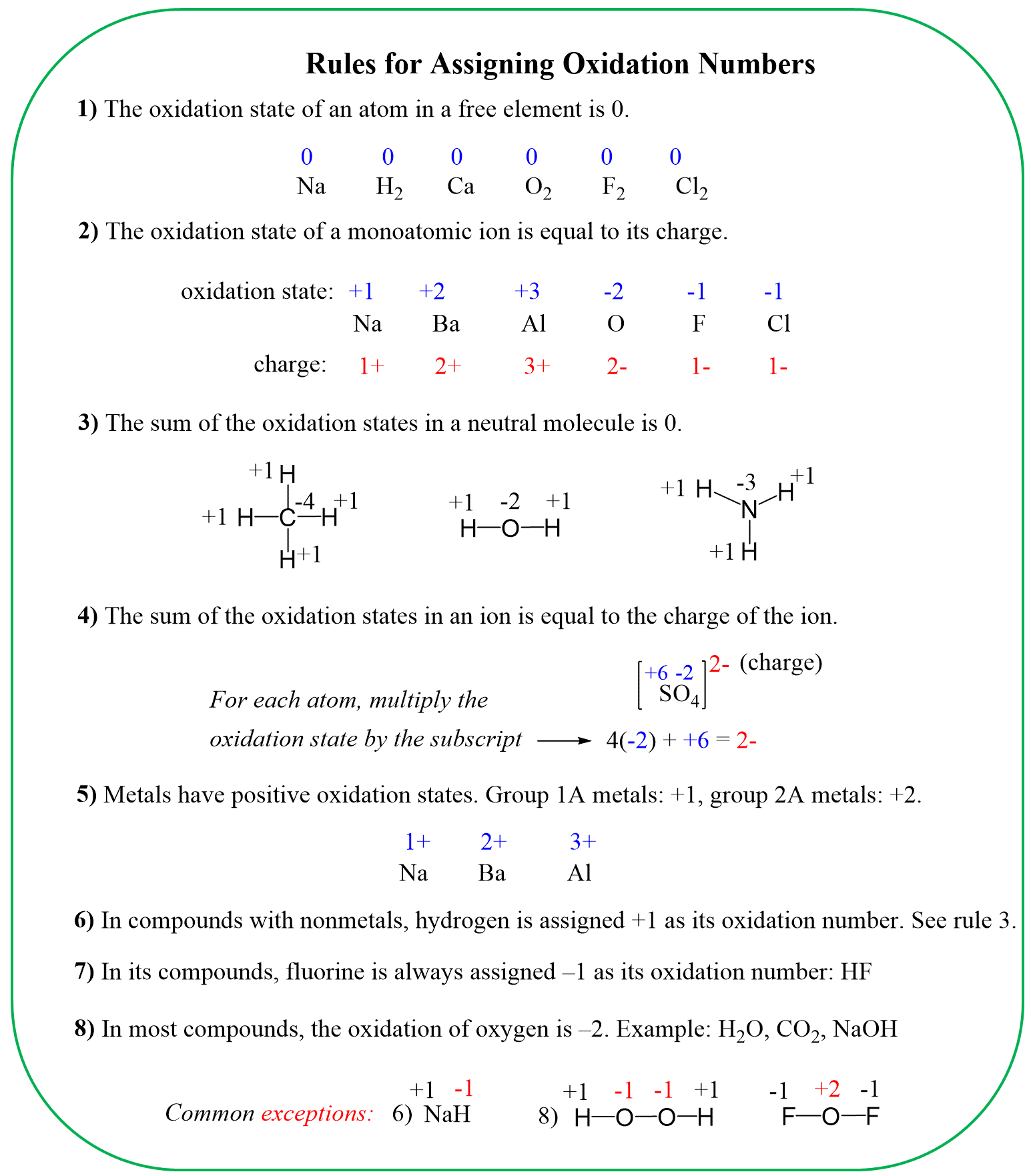
Rule 1: Elements in their elemental form have an oxidation number of zero. This is perhaps the most critical rule for understanding O₂. An element in its elemental form exists as pure atoms or molecules of that element, uncombined with other elements. Examples include O₂, N₂, H₂, Fe, Cu, and S₈. In these cases, there is no net transfer of electrons between different types of atoms, as all atoms are identical. Therefore, their oxidation numbers are assigned as zero.
-
Rule 2: The oxidation number of a monatomic ion is equal to its charge. For example, in Na⁺, sodium has an oxidation number of +1. In Cl⁻, chlorine has an oxidation number of -1.
-
Rule 3: Fluorine always has an oxidation number of -1 in its compounds. Fluorine is the most electronegative element, meaning it strongly attracts electrons.
-
Rule 4: Hydrogen usually has an oxidation number of +1 in its compounds. Exceptions occur when hydrogen is bonded to a metal (metal hydrides), where it has an oxidation number of -1.
-
Rule 5: Oxygen usually has an oxidation number of -2 in its compounds. There are several important exceptions to this rule:
- In peroxides (compounds containing the O₂²⁻ ion, such as H₂O₂), oxygen has an oxidation number of -1.
- In superoxides (compounds containing the O₂⁻ ion, such as KO₂), oxygen has an oxidation number of -1/2.
- When bonded to fluorine (e.g., OF₂), oxygen has a positive oxidation number because fluorine is more electronegative. In OF₂, oxygen has an oxidation number of +2.
-
Rule 6: The sum of the oxidation numbers in a neutral compound is zero.
-
Rule 7: The sum of the oxidation numbers in a polyatomic ion is equal to the charge of the ion.
By adhering to this hierarchy, chemists can systematically determine the oxidation number of any atom in a given chemical species.
The Oxidation Number of O2: A Clear Case of Elemental Form
Applying the fundamental rules of oxidation numbers directly to O₂ provides a clear and unambiguous answer. Oxygen in its elemental form, O₂, exists as a molecule composed solely of oxygen atoms bonded to each other.
Applying Rule 1: The Elemental State
As per Rule 1: Elements in their elemental form have an oxidation number of zero, O₂ fits this description perfectly. It is oxygen in its pure, uncombined state. There are no other elements present to which electrons could have been transferred. Therefore, each oxygen atom within an O₂ molecule is assigned an oxidation number of 0.
This principle extends to other diatomic elements like nitrogen (N₂), hydrogen (H₂), chlorine (Cl₂), bromine (Br₂), iodine (I₂), and fluorine (F₂), all of which have an oxidation number of 0 when they exist in their elemental forms.
Contrast with Oxygen in Compounds
It is crucial to differentiate the oxidation number of O₂ from that of oxygen when it is part of a compound. For instance, in water (H₂O), oxygen has an oxidation number of -2. This is because oxygen is more electronegative than hydrogen, and in the context of the compound, it is considered to have gained electrons from the hydrogen atoms. Similarly, in carbon dioxide (CO₂), oxygen has an oxidation number of -2. The sum of the oxidation numbers in CO₂ must be zero: (2 x oxidation number of O) + (oxidation number of C) = 0. Since oxygen is typically -2, then (2 x -2) + oxidation number of C = 0, meaning the oxidation number of carbon is +4.

These examples highlight that the oxidation number is context-dependent, but for elements in their natural, unbonded state, the oxidation number is always zero.
Significance of O2’s Zero Oxidation State
The fact that O₂ has an oxidation number of zero has profound implications in chemistry, particularly in the study of redox reactions and the overall behavior of oxygen. Understanding this zero oxidation state is key to predicting how O₂ will participate in chemical transformations.
O2 as an Oxidizing Agent
Despite having an oxidation number of zero, O₂ is a potent oxidizing agent. This might seem counterintuitive, but it stems from its high electronegativity and its tendency to readily gain electrons when reacting with other elements or compounds. When O₂ acts as an oxidizing agent, its oxygen atoms are reduced, meaning their oxidation numbers decrease from zero.
For example, in the combustion of methane (CH₄):
CH₄ + 2O₂ → CO₂ + 2H₂O
In this reaction:
- The oxidation number of oxygen in O₂ is 0.
- The oxidation number of oxygen in CO₂ is -2.
- The oxidation number of oxygen in H₂O is -2.
Here, the oxygen atoms in O₂ have been reduced from an oxidation state of 0 to -2, signifying the gain of electrons. This is a classic example of O₂ acting as an oxidizing agent, facilitating the oxidation of methane.
O2 in Biological and Environmental Processes
The zero oxidation state of O₂ is central to life on Earth. Aerobic respiration, the process by which organisms extract energy from food, relies heavily on the reduction of O₂. In this biological context, O₂ acts as the final electron acceptor, being reduced to water. The initial state of oxygen as O₂ (oxidation number 0) is critical for this highly efficient energy-generating pathway.
Similarly, atmospheric O₂ plays a vital role in various environmental processes, including weathering and the formation of oxides. Its reactivity, stemming from its electronegativity, allows it to participate in these transformations, where it is typically reduced to a more stable, lower oxidation state (e.g., -2) in various oxides.
Common Misconceptions and Clarifications
Despite the straightforward application of the rules, there are instances where the oxidation number of O₂ can be a source of confusion, particularly when compared to oxygen in its compounds. Addressing these common misconceptions is essential for a solid understanding.
O2 vs. Oxides
A frequent point of confusion arises from the distinction between elemental oxygen (O₂) and oxygen within oxide compounds. As established, O₂ has an oxidation number of 0. However, in most oxides, oxygen has an oxidation number of -2. This difference is due to the presence of another element to which oxygen is bonded. In O₂, all atoms are identical, so there’s no electronegativity difference driving electron transfer. In oxides, the more electronegative oxygen atom attracts electrons from the less electronegative element, leading to its negative oxidation state.
Peroxides and Superoxides
The exceptions to oxygen’s typical -2 oxidation state in compounds, namely peroxides and superoxides, can also lead to confusion.
- Peroxides: Contain the O₂²⁻ ion. For example, hydrogen peroxide (H₂O₂). To find the oxidation number of oxygen, we know that hydrogen is +1. So, 2(+1) + 2(oxidation number of O) = 0. This gives 2(oxidation number of O) = -2, meaning the oxidation number of each oxygen atom is -1.
- Superoxides: Contain the O₂⁻ ion. For example, potassium superoxide (KO₂). Potassium (K) is an alkali metal and typically has an oxidation number of +1. So, +1 + 2(oxidation number of O) = 0. This gives 2(oxidation number of O) = -1, meaning the oxidation number of each oxygen atom is -1/2.
While these are important exceptions for oxygen in compounds, they do not alter the fundamental rule for elemental oxygen, O₂. The oxidation number of O₂ remains 0.
The Role of Electronegativity
Electronegativity is the underlying principle that explains why oxygen usually adopts a negative oxidation number in compounds. Oxygen is the second most electronegative element (after fluorine). This means it has a strong pull on electrons in a chemical bond. When bonded to less electronegative elements (like carbon, hydrogen, or metals), oxygen effectively “takes” electrons, resulting in a negative oxidation number. In O₂, however, both atoms have the same electronegativity, so the electrons are shared equally, and there is no net gain or loss of electrons from any individual atom relative to its elemental state.
Conclusion: A Consistent Zero for Elemental Oxygen
In conclusion, the oxidation number for O₂, oxygen in its elemental form, is unequivocally zero. This is a direct consequence of the established rules for assigning oxidation numbers, specifically the rule that elements in their elemental state are assigned an oxidation number of zero. This zero oxidation state is not indicative of inertness; rather, it represents a baseline from which oxygen can undergo oxidation or reduction when it participates in chemical reactions.
Understanding this fundamental concept is crucial for grasping a wide array of chemical phenomena, from simple combustion reactions to complex biological processes. While oxygen exhibits various oxidation numbers in its compounds, its inherent state as O₂ is consistently represented by an oxidation number of zero, a foundational piece of knowledge in the field of chemistry. Mastery of this principle empowers a deeper appreciation for the intricate dance of electrons in the molecular world.
aViewFromTheCave is a participant in the Amazon Services LLC Associates Program, an affiliate advertising program designed to provide a means for sites to earn advertising fees by advertising and linking to Amazon.com. Amazon, the Amazon logo, AmazonSupply, and the AmazonSupply logo are trademarks of Amazon.com, Inc. or its affiliates. As an Amazon Associate we earn affiliate commissions from qualifying purchases.