
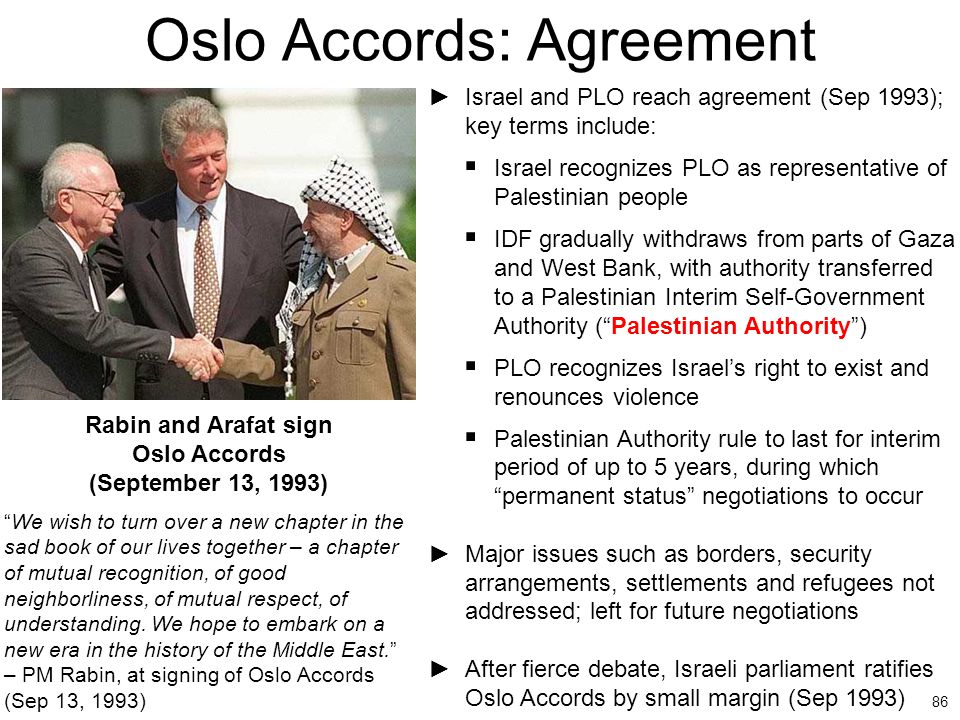
In the realm of global finance and international business, few geopolitical events have shaped regional markets and investment risk profiles as profoundly as the Oslo Agreement. While often viewed through a historical or diplomatic lens, the Oslo Accords—and specifically the economic frameworks they established—represent a critical case study for anyone involved in personal finance, institutional investing, or international business finance. Understanding the Oslo Agreement is not merely a lesson in history; it is a lesson in how structured economic cooperation, trade protocols, and geopolitical shifts dictate the flow of capital in emerging markets.
From a financial perspective, the Oslo Agreement was designed to transition a region from a state of perpetual conflict to a state of economic integration. For investors, this meant the potential for a “peace dividend”—a surge in economic growth and market stability resulting from reduced military spending and increased foreign direct investment (FDI). To grasp the full scope of what the Oslo Agreement means for the world of money, one must look past the handshakes and examine the technical financial protocols that still govern the region’s economic reality today.
The Financial Architecture: The Paris Protocol
The core of the Oslo Agreement’s economic impact lies in the Protocol on Economic Relations, commonly known as the Paris Protocol. Signed in 1994, this document serves as the fiscal and monetary backbone of the relationship between Israel and the Palestinian Authority. For those interested in business finance and trade, the Paris Protocol is a fascinating example of a “customs union” that sought to balance political sovereignty with economic necessity.
A Unified Customs Envelope
Under the Paris Protocol, a unified customs envelope was established. This meant that goods imported into the region were subject to the same tariff structures, regardless of whether their final destination was Tel Aviv or Ramallah. For businesses, this was designed to streamline logistics and reduce the friction of trade. From a financial management standpoint, it centralized the collection of import duties and Value Added Tax (VAT). Israel, possessing the more developed port infrastructure, became the primary collector of these taxes on behalf of the Palestinian Authority, creating a complex system of “clearance revenues” that remains a central pillar of Palestinian public finance.
Monetary Policy and Currency Integration
One of the most unique aspects of the Oslo Agreement from a personal finance perspective is the absence of a distinct Palestinian currency. The Paris Protocol effectively integrated the Palestinian economy into the Israeli monetary sphere. The New Israeli Shekel (NIS) became—and remains—the primary medium of exchange, alongside the Jordanian Dinar and the U.S. Dollar. For local entrepreneurs and investors, this lack of monetary sovereignty eliminated the risk of hyperinflation seen in other post-conflict zones but introduced a heavy dependence on the monetary policy of the Bank of Israel. Investors in the region must therefore analyze Israeli interest rate hikes and currency fluctuations as the primary drivers of Palestinian purchasing power.
Labor Market Dynamics and Income Flow
The Oslo Agreement also formalized the flow of labor. Thousands of workers were granted permits to work in the Israeli construction, agriculture, and service sectors. From a macro-financial perspective, the remittances sent home by these workers became a significant driver of household income and consumer spending. This creates a high correlation between regional political stability and the health of the local retail and real estate markets. When the borders are open and labor flows freely, the “Money” niche in the region thrives; when tensions rise and permits are frozen, the liquidity crunch is felt instantly throughout the economy.
Geopolitical Risk and the Investor’s Perspective
For the global investor, the Oslo Agreement serves as a benchmark for measuring geopolitical risk. The period following the initial 1993 signing saw a dramatic shift in how international markets viewed the Middle East. It was an era characterized by the “Peace Dividend,” where the reduction of systemic risk led to a surge in market capitalization and foreign interest.
The Rise of the Peace Dividend
In the mid-1990s, the Tel Aviv Stock Exchange (TASE) and regional investment funds saw significant inflows as the Oslo Agreement signaled a move toward normalization. When geopolitical risk declines, the “discount rate” applied to a region’s future cash flows also drops, which naturally inflates asset prices. Investors who understood the financial implications of the Oslo Agreement were able to capitalize on this re-rating of regional assets. Real estate values in cities like Amman and Tel Aviv surged as the prospect of regional trade hubs became more tangible.
Volatility as a Constant Variable
However, the Oslo Agreement also teaches a harsh lesson in market volatility. The “Oslo era” was marked by cycles of hope and setbacks. For a financial analyst, the period proved that geopolitical agreements are not static; they are dynamic processes that require constant monitoring. The breakdown of certain aspects of the agreement in the late 1990s and early 2000s led to “risk-off” environments where capital fled to safer havens. This teaches modern investors that in emerging or frontier markets, the political “floor” of an agreement is often more important than its “ceiling.”
Impact on Foreign Direct Investment (FDI)
The Oslo Agreement opened the door for multinational corporations to view the region as a unified market rather than a fragmented war zone. Companies in the tech and manufacturing sectors began to look at the Levant through the lens of supply chain optimization. The agreement facilitated the creation of “Qualifying Industrial Zones” (QIZs), particularly in Jordan, which allowed for duty-free access to the U.S. market for goods produced with regional cooperation. For a business finance professional, the Oslo Agreement was the catalyst for complex cross-border manufacturing deals that utilized the strengths of different labor markets.
Institutional Finance and the Role of International Aid
Beyond trade and market speculation, the Oslo Agreement established a massive framework for institutional finance and international developmental aid. This is a crucial area of “Business Finance” that involves the World Bank, the International Monetary Fund (IMF), and various “Ad Hoc Liaison Committees” (AHLC) of donor nations.
The World Bank and Infrastructure Investment
Following the Oslo Accords, the international community pledged billions of dollars to build the infrastructure of a nascent state. This included the funding of telecommunications, water management systems, and transport networks. For private contractors and engineering firms, the Oslo Agreement represented a decade-long “side hustle” on a grand scale, as international aid contracts became a primary source of business revenue in the region. The financial oversight provided by the World Bank ensured that these projects met international standards, providing a layer of security for private-sector partners.
The Donor-Dependent Model
One of the most debated financial legacies of the Oslo Agreement is the creation of a donor-dependent economy. The Palestinian Authority’s budget is heavily reliant on foreign aid and the timely transfer of clearance revenues from Israel. For a financial strategist, this represents a significant “counterparty risk.” If a donor nation changes its foreign policy or if the revenue transfer process is stalled due to political friction, the entire economic ecosystem faces a liquidity crisis. This reliance on external funding has shaped the regional banking sector, which must maintain high capital buffers to withstand the periodic shocks of delayed aid.
Banking and Microfinance Growth
The Oslo Agreement paved the way for the establishment of the Palestinian Monetary Authority (PMA), which, while not a central bank with its own currency, acts as a robust regulator for the commercial banking sector. This period saw the rise of local banks that specialized in microfinance and small business loans, aiming to foster an entrepreneurial class. For the “Personal Finance” enthusiast, this era marked the beginning of modern credit systems in the region, allowing individuals to access mortgages and car loans that were previously unavailable.
Lessons for Modern Portfolio Management and Global Markets
The financial history of the Oslo Agreement offers several universal truths for today’s investors, business owners, and financial planners. Whether you are trading stocks on a global exchange or managing a startup’s cross-border finances, the lessons of Oslo remain highly relevant.
Assessing the “Geopolitical Alpha”
The “Oslo Agreement” phenomenon proves that “Geopolitical Alpha”—the extra return an investor gets by correctly predicting the outcome of a political event—is real but incredibly difficult to capture. Investors who bet on the success of the accords in the early 90s saw massive gains, but those who failed to hedge against the potential for stagnation lost significant capital. The lesson here is that in any portfolio, exposure to regions governed by complex international agreements must be balanced with a deep understanding of the underlying legal and financial protocols (like the Paris Protocol), not just the headlines.
The Importance of Institutional Strength
One of the key takeaways from the Oslo Agreement’s economic legacy is that financial markets require institutional stability to thrive. The parts of the agreement that focused on building a central monetary authority and a transparent tax system were the most successful in attracting investment. For a business owner looking to expand into new markets, the Oslo experience suggests looking for “institutional footprints”—clear evidence that the rules of trade and finance are codified and respected by all parties.

Supply Chain Resilience in High-Risk Zones
Finally, the Oslo Agreement highlights the fragility of supply chains that rely on political goodwill. The integrated customs union under the Paris Protocol was efficient on paper but vulnerable to border closures and “security-related” delays. In modern business finance, this underscores the need for redundancy. Businesses operating under the umbrella of such agreements must account for the “cost of friction” in their financial models, ensuring they have enough cash on hand to survive periods of market isolation.
In conclusion, the Oslo Agreement is far more than a diplomatic document; it is an enduring economic framework that defines the financial life of millions. For the investor, it is a masterclass in risk management, market volatility, and the profound impact that geopolitics has on the world of money. Understanding its technical nuances—from the Paris Protocol to donor-driven liquidity—is essential for anyone navigating the complexities of global finance and emerging market investment.
aViewFromTheCave is a participant in the Amazon Services LLC Associates Program, an affiliate advertising program designed to provide a means for sites to earn advertising fees by advertising and linking to Amazon.com. Amazon, the Amazon logo, AmazonSupply, and the AmazonSupply logo are trademarks of Amazon.com, Inc. or its affiliates. As an Amazon Associate we earn affiliate commissions from qualifying purchases.