
In the fast-paced world of digital media and software-driven consumption, the acronym “AOTY” has transcended its literal meaning to become a cornerstone of tech-based music discovery and data aggregation. While the literal translation is “Album of the Year,” its significance in the modern technology landscape refers to a sophisticated ecosystem of review aggregators, database management systems, and community-driven platforms that quantify cultural value through complex algorithms.
To understand what AOTY means today, one must look past the glittering trophies of the Grammy Awards and toward the digital platforms that have institutionalized the term. Sites like Album of the Year (albumoftheyear.org) and its contemporaries represent a massive shift in how metadata and user-generated content (UGC) are used to organize the world’s artistic output. In this context, AOTY is a technological benchmark—a data point that helps users navigate the overwhelming volume of content produced in the streaming era.

The Technical Architecture of Review Aggregation
At its core, the digital definition of AOTY is rooted in the tech stack of review aggregation. Much like Rotten Tomatoes does for film or Metacritic does for gaming, AOTY platforms utilize specialized software to scrape, normalize, and weigh critical opinions from across the web. This process is a marvel of modern data engineering, requiring a robust backend to handle thousands of disparate sources.
Normalization and Weighting Algorithms
One of the primary technical challenges these platforms face is “score normalization.” Different publications use different rating scales: some use a 10-point system, others use five stars, and some use letter grades or percentages. The software driving AOTY platforms must employ precise algorithms to convert a “B+” or a “4 out of 5” into a standardized numerical value, typically on a scale of 0 to 100.
Furthermore, not all reviews are weighted equally. Sophisticated aggregation engines often apply a “weighting” factor based on the publication’s historical influence, consistency, and reach. This ensures that a review from a major technological and cultural authority carries more significant mathematical weight than an obscure blog. This algorithmic hierarchy is what allows an “AOTY” score to carry weight in the industry, influencing everything from Spotify playlist placements to label marketing budgets.
Data Scraping and Real-Time Updates
The “AOTY” ecosystem relies heavily on automated data scraping. As soon as a review is published on a major digital outlet, web crawlers identify the score and the accompanying text, feeding it into the central database. This requires high-performance API integrations and natural language processing (NLP) to ensure the data is categorized correctly under the right artist and album entry. For the tech-savvy user, the “AOTY” isn’t just a title; it is a real-time reflection of a global data set.
Data-Driven Discovery and the User Experience
For the average consumer, AOTY functions as a sophisticated filter. In an era where over 100,000 songs are uploaded to streaming services every day, the “paradox of choice” is a significant hurdle. Technology has stepped in to solve this through curated discovery tools and user-centric interfaces that prioritize the highest-rated content.
Integrating with Streaming APIs
Most modern AOTY platforms do not exist in a vacuum. They are deeply integrated with the APIs of Spotify, Apple Music, and Tidal. This allows for a seamless user experience (UX) where a consumer can read the aggregated “AOTY” score and immediately launch the album in their preferred high-fidelity player. This technical synergy has turned the concept of AOTY into a functional tool for music management and library curation.
Personalization and Recommendation Engines
Beyond simple aggregation, these platforms use machine learning to provide personalized “AOTY” recommendations. By analyzing a user’s rating history and comparing it with global data sets, the software can predict which upcoming releases a user might consider their personal “Album of the Year.” This predictive modeling is a hallmark of modern software-as-a-service (SaaS) design, moving away from static lists and toward dynamic, personalized feeds.
The Role of Metadata in Organization
The “AOTY” concept is also a triumph of metadata management. Every entry in a digital music database requires precise tagging: genre, sub-genre, release date, record label, and production credits. This structured data allows users to filter for the “AOTY in Synthwave” or the “AOTY in Technical Death Metal.” Without rigorous database maintenance and schema standardization, the sheer volume of musical data would be unnavigable.

Social Features and Community Moderation Tech
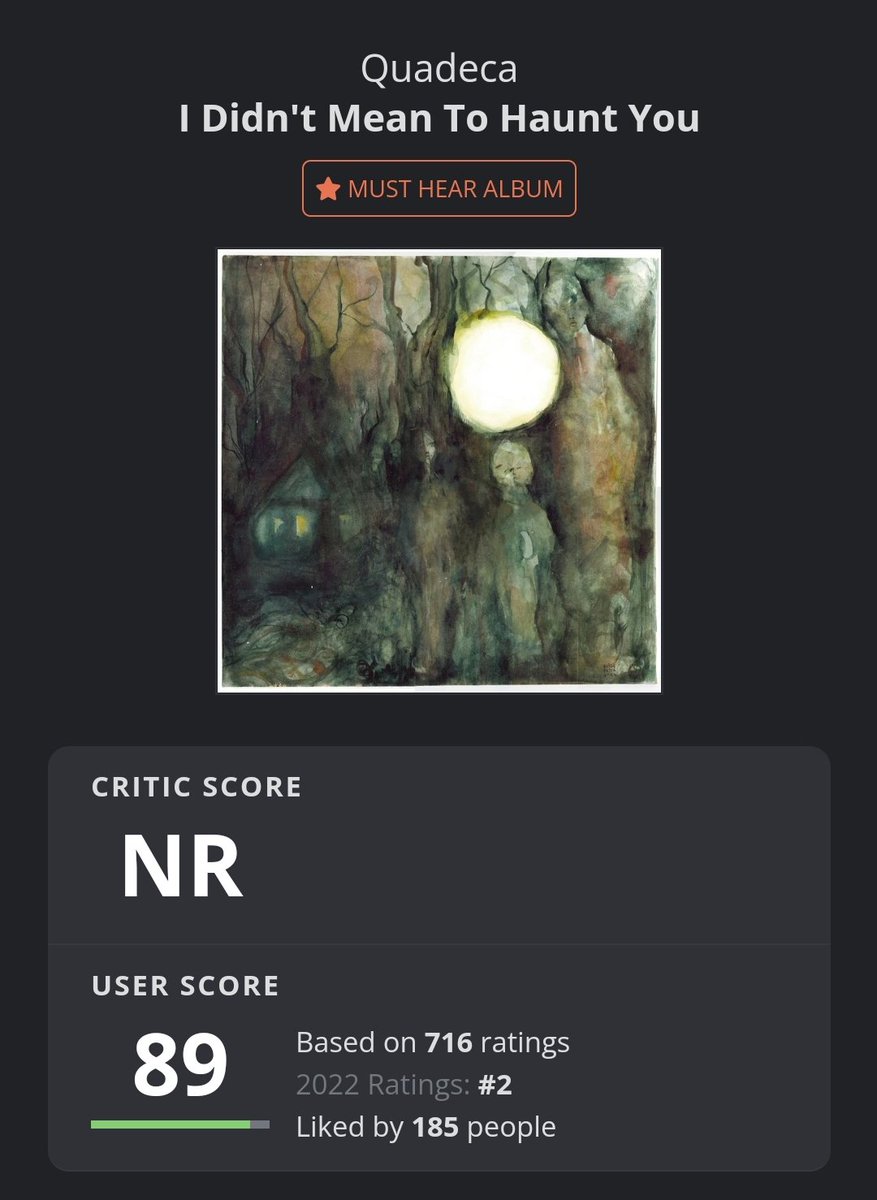
A critical component of what AOTY means in the digital space is the “User Score.” This democratizes the process of music criticism, but it also introduces significant technical hurdles regarding digital security and community management.
Combating Review Bombing and Bot Activity
Just as in the gaming and movie industries, music platforms are susceptible to “review bombing”—the practice of coordinated groups or bots deflating an artist’s score for non-musical reasons. To maintain the integrity of an “AOTY” score, developers must implement sophisticated anti-spam measures. This includes CAPTCHA systems, account age requirements, and anomaly detection algorithms that flag suspicious spikes in rating activity.
The UI/UX of Interactive Rankings
Modern AOTY platforms are designed with high-engagement user interfaces. Features like “Year-End List Makers” allow users to drag and drop album art into custom grids, which are then sharable via social media. This is more than just a visual gimmick; it is a front-end implementation of complex sorting algorithms. These tools allow users to interact with the database, creating their own “AOTY” rankings which, in turn, provide more data back to the platform to refine its global rankings.
Moderation and Digital Safety
As these platforms grow into social networks, the tech behind community moderation becomes vital. Automated sentiment analysis tools help moderators identify abusive language in reviews, while robust user-reporting systems ensure a safe environment for discourse. The “AOTY” community is thus a microcosm of the broader challenges facing social media platforms today: balancing free expression with automated safety protocols.
The Future of AOTY: AI and Predictive Modeling
As we look toward the future of technology, the meaning of AOTY is set to evolve once again, driven by Artificial Intelligence and decentralized data structures.
AI in Music Criticism
We are already seeing the emergence of AI tools that can analyze the sonic characteristics of an album—its tempo, harmonic complexity, and lyrical sentiment—to “predict” its critical reception. In the future, an “AOTY” score might be generated by an AI that compares a new release against decades of historical data to determine its “innovativeness score.” While this may seem clinical, it represents the ultimate convergence of art and data science.
Blockchain and Decentralized Databases
There is a growing movement toward using blockchain technology to manage music metadata. A decentralized “AOTY” platform would be immune to the whims of a single corporate entity. Every review, every score, and every “Album of the Year” designation could be recorded on a ledger, providing a permanent and transparent history of cultural reception. This would also allow for “smart contracts” where artists are directly rewarded based on their standing in these aggregated rankings.
Visualizing Trends through Data Science
Data visualization is becoming an increasingly important part of the music tech landscape. Future AOTY platforms will likely offer more interactive ways to view music history, such as heat maps of genre popularity or 3D clusters showing how different artists influence one another over time. This turns “AOTY” from a simple list into a multidimensional map of the cultural zeitgeist.
Conclusion: AOTY as a Digital Standard
What does AOTY mean? In the current technological climate, it is far more than a superlative. It is a sophisticated metric born from the intersection of big data, software engineering, and community interaction. It represents the transition from a world where “Album of the Year” was decided by a handful of industry executives to one where it is calculated by algorithms, refined by millions of data points, and accessible to anyone with an internet connection.
As platforms continue to evolve, the tech behind AOTY will only become more integrated into our digital lives. Whether through more advanced recommendation engines, AI-driven analysis, or blockchain-based transparency, AOTY will remain a vital tool for anyone looking to navigate the vast and ever-expanding ocean of digital music. It is a testament to how technology can take a subjective human experience—the love of an album—and turn it into a structured, searchable, and highly functional global standard.
aViewFromTheCave is a participant in the Amazon Services LLC Associates Program, an affiliate advertising program designed to provide a means for sites to earn advertising fees by advertising and linking to Amazon.com. Amazon, the Amazon logo, AmazonSupply, and the AmazonSupply logo are trademarks of Amazon.com, Inc. or its affiliates. As an Amazon Associate we earn affiliate commissions from qualifying purchases.