
In the fast-paced, ever-evolving world of technology, the ability to make rapid, effective decisions isn’t just an advantage—it’s a fundamental requirement for survival and success. From agile software development teams responding to user feedback to cybersecurity specialists thwarting sophisticated threats in real-time, the need for quick, precise action is paramount. Enter the OODA Loop: a powerful decision-making framework that provides a structured yet flexible approach to navigating complex and uncertain environments. Developed by U.S. Air Force fighter pilot and military strategist Colonel John Boyd, the OODA Loop (Observe, Orient, Decide, Act) has transcended its military origins to become an indispensable tool in the tech industry, offering a blueprint for agility, responsiveness, and strategic foresight.
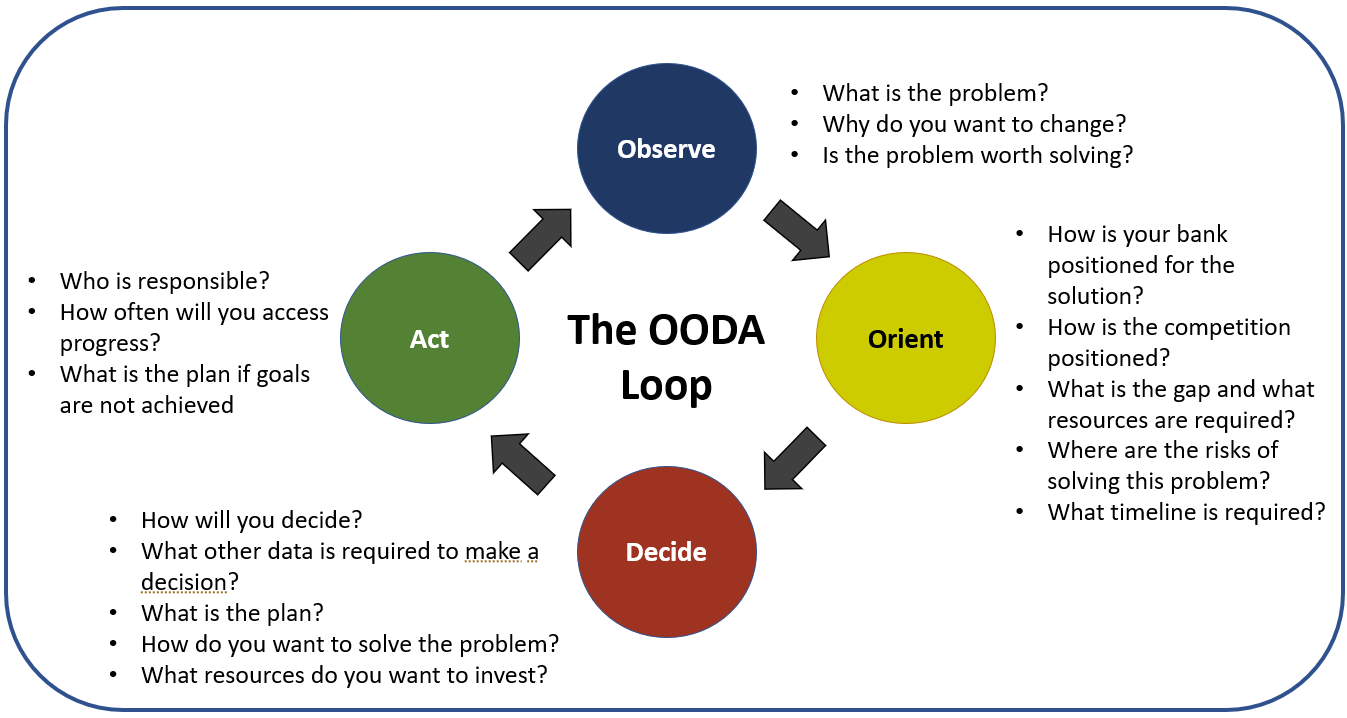
At its core, the OODA Loop describes a continuous cycle of engaging with an environment, processing information, making a choice, and executing that choice, then observing the new state of affairs. In an era defined by big data, artificial intelligence, and unprecedented connectivity, understanding and implementing this loop can mean the difference between leading innovation and being left behind. This article delves into the OODA Loop’s mechanics, explores its profound applications within the technology sector, and offers insights into leveraging its power for competitive advantage.
The Genesis of Agility: From Dogfights to Digital Dominance
The OODA Loop emerged from the crucible of aerial combat, where split-second decisions often determined life or death. Colonel John Boyd, observing the superior performance of American fighter pilots in the Korean War despite theoretically inferior aircraft, sought to understand the underlying cognitive processes that enabled their success. His research led to the groundbreaking realization that victory wasn’t just about faster planes or more powerful weapons, but about operating inside an adversary’s decision cycle—making decisions and acting upon them faster than the opponent.
Colonel John Boyd and the Fighter Pilot’s Edge
Boyd’s initial work focused on energy-maneuverability theory, but his most enduring contribution was the OODA Loop. He posited that effective decision-making in chaotic environments involves a continuous, iterative cycle. This framework wasn’t merely descriptive; it was prescriptive, suggesting that by consciously accelerating one’s own OODA Loop while disrupting an opponent’s, one could gain a significant advantage. The principles derived from air combat — rapid information processing, adaptability, and decisive action — found uncanny relevance in the dynamic nature of modern technology, where “adversaries” might be competitors, market shifts, or emerging security threats.
Deconstructing the Cycle: Observe, Orient, Decide, Act
To truly grasp the OODA Loop’s power, it’s essential to understand each of its four interconnected stages:
- Observe: This initial stage involves collecting raw data from the environment. In a tech context, this could mean gathering market intelligence, monitoring system performance metrics, collecting user feedback, scanning for security vulnerabilities, or tracking competitor activities. It’s about being acutely aware of the current situation and the external factors influencing it. The quality and timeliness of observation directly impact the subsequent stages.
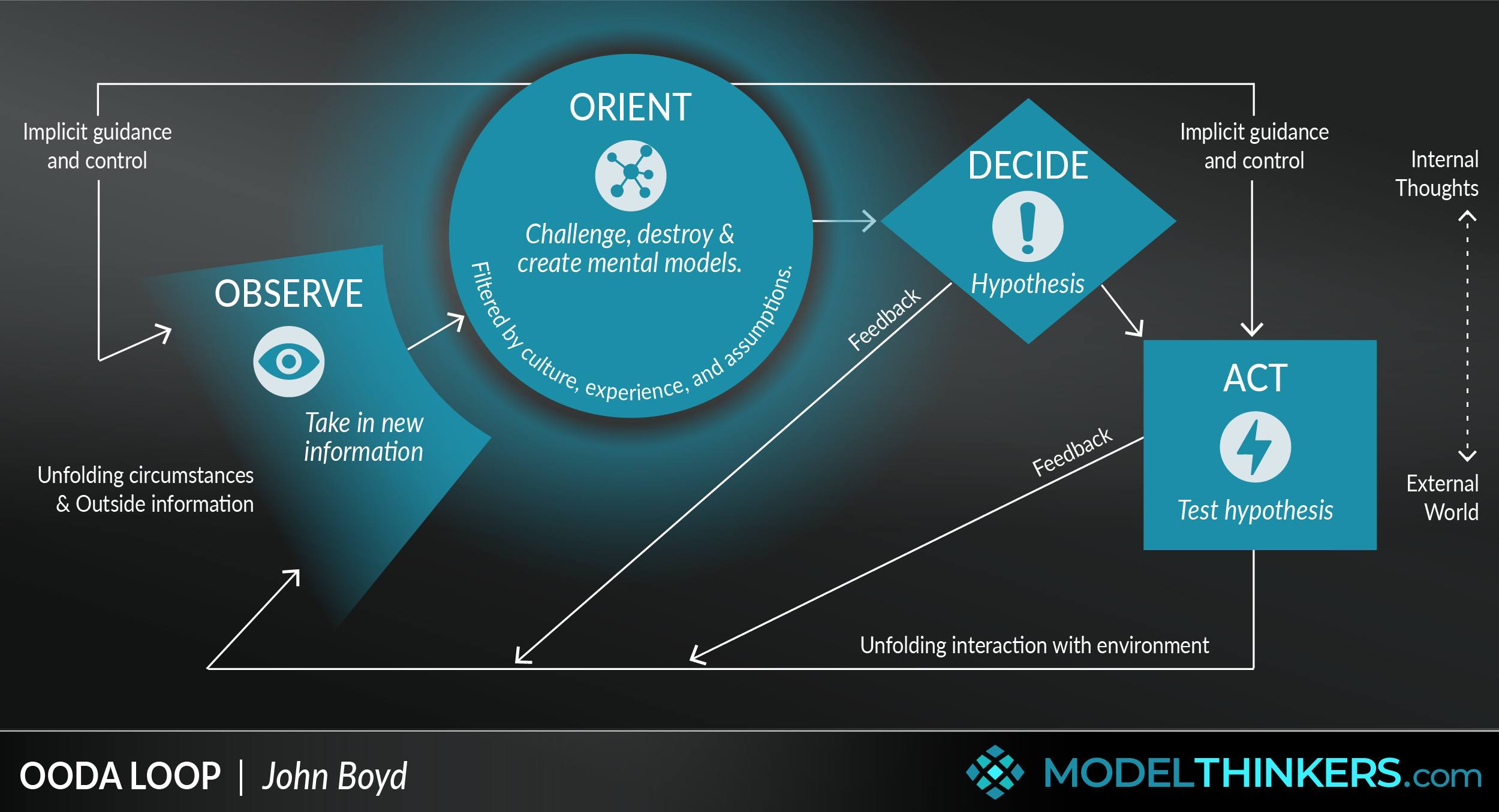
- Orient: Often considered the most crucial and complex stage, “Orient” is where raw data transforms into actionable insight. It involves filtering, interpreting, and making sense of the observed information within the context of one’s own experiences, culture, genetic heritage, and prior analyses. This stage shapes how we perceive reality and influences our hypotheses about what’s happening and what might happen next. It’s not just about what you see, but how you frame it and what meaning you derive.
- Decide: Based on the orientation, a hypothesis or course of action is chosen. This isn’t necessarily a perfect, fully optimized decision, but rather the best available decision given the current understanding and constraints. In a rapidly changing environment, the emphasis is often on making a “good enough” decision quickly, rather than waiting for perfect information, which may never arrive.
- Act: This is the execution phase, where the chosen decision is implemented. This could involve deploying a software update, launching a marketing campaign, mitigating a cyber threat, or adjusting a strategic plan. The act then changes the environment, providing new data for the next “Observe” phase, thus perpetuating the loop.
The OODA Loop is not a linear process but a recursive and interlinked cycle, where information from each stage can feed back into previous ones. For instance, an initial act might immediately lead to a new observation that refines the orientation or necessitates a new decision.
Navigating the Tech Landscape with OODA: Applications and Advantages
The principles of the OODA Loop resonate deeply within various facets of the technology industry, providing a framework for managing complexity, fostering innovation, and building resilience.
Agile Software Development and DevOps
Perhaps one of the most natural fits for the OODA Loop is in agile software development and DevOps practices. Agile methodologies, with their emphasis on iterative cycles, continuous feedback, and rapid adaptation, are essentially structured OODA Loops.
- Observe: Teams gather user feedback, monitor application performance, and identify bugs or new requirements.
- Orient: Product owners, developers, and designers interpret this data, understand user needs, prioritize features, and refine the product vision.
- Decide: Sprints are planned, backlog items are selected, and architectural choices are made for the next iteration.
- Act: Code is written, tested, and deployed, creating a new version of the software for users to interact with.
This continuous cycle allows teams to quickly respond to changing market demands, validate hypotheses, and deliver value incrementally, staying ahead of competitors and evolving user expectations. DevOps extends this by integrating operations, ensuring rapid deployment and constant monitoring which feeds directly back into the ‘Observe’ phase.
Cybersecurity Incident Response
In the realm of digital security, where threats evolve at breakneck speed, the OODA Loop is critical for effective incident response.
- Observe: Security teams continuously monitor networks for anomalies, alerts, and indicators of compromise (IOCs).
- Orient: Analysts interpret these observations, assessing the nature, scope, and potential impact of a threat, understanding attacker tactics, techniques, and procedures (TTPs).
- Decide: Based on the orientation, a response strategy is formulated—e.g., isolate infected systems, block malicious IPs, or deploy patches.
- Act: The chosen actions are executed to contain, eradicate, and recover from the incident.
The speed at which an organization can cycle through its OODA Loop in a cybersecurity crisis directly impacts its ability to minimize damage and restore normal operations. Delaying any stage can give attackers more time to establish persistence or exfiltrate data.
AI and Autonomous Systems
As artificial intelligence and autonomous systems become more prevalent, the OODA Loop provides a foundational concept for designing intelligent agents capable of operating in dynamic environments.
- Observe: AI sensors gather data from their surroundings (e.g., cameras, lidar, microphones).
- Orient: Algorithms process this raw data, creating a situational awareness model, identifying objects, predicting trajectories, or interpreting commands.
- Decide: Based on the orientation and predefined goals, the AI selects the optimal action (e.g., turn left, apply brakes, generate a response).
- Act: The system executes the chosen action through its effectors (e.g., steering, braking, speaking).
For AI to operate effectively in real-world scenarios, it must be able to complete this loop rapidly and reliably, continually refining its understanding and actions. This framework is vital for self-driving cars, robotic automation, and even sophisticated AI-driven decision support systems.
Strategic Planning in Tech Businesses
Beyond individual projects, the OODA Loop offers a robust framework for strategic planning and competitive analysis in the tech industry. Businesses can use it to anticipate market shifts, react to competitor moves, and pivot their strategies.
- Observe: Monitor market trends, technological advancements, regulatory changes, and competitor product launches.
- Orient: Analyze how these observations impact the business’s position, opportunities, and threats, leveraging internal strengths and weaknesses.
- Decide: Formulate strategic initiatives, product roadmaps, or investment decisions.
- Act: Implement the strategy through product development, market entry, or organizational restructuring.
This continuous strategic OODA Loop enables companies to remain adaptable and innovative, preventing stagnation and fostering long-term growth in a volatile marketplace.

The Power of Orientation: The Critical Junction
While all stages of the OODA Loop are vital, Boyd himself emphasized that Orientation is the most critical and often overlooked stage. It’s the engine of the entire cycle, shaping how we perceive reality and, consequently, our decisions and actions.
Beyond Data Collection: Why “Orient” is More Than Just Analysis
In the digital age, we are awash in data. However, simply collecting vast amounts of information (Observe) and then reacting to it without proper context and interpretation is a recipe for error. Orientation involves synthesis—it’s the process by which we construct a mental model of reality. This isn’t purely logical; it’s heavily influenced by:
- Cultural Traditions: The prevailing norms and values within a team or organization.
- Genetic Heritage: Innate cognitive biases and predispositions.
- Previous Experience: Lessons learned from past successes and failures.
- New Information: The raw data collected in the “Observe” phase.
- Analysis and Synthesis: The deliberate effort to connect disparate pieces of information and form a coherent understanding.
A robust orientation allows for creative destruction—the ability to discard old, less effective mental models in favor of new ones that better fit the current reality. It allows tech professionals to not just see what is, but to understand what could be and what should be.
Cognitive Biases and Their Impact on Orientation
The “Orient” phase is also highly susceptible to cognitive biases, which can distort our perception and lead to flawed decisions. Confirmation bias, for instance, might lead a team to only seek out information that validates their existing beliefs, ignoring contradictory evidence. Availability heuristic might cause over-reliance on easily recalled examples rather than thorough analysis. Groupthink can stifle dissenting opinions, leading to a collectively flawed orientation.
Recognizing and actively mitigating these biases is crucial. Diverse teams, critical thinking frameworks, and a culture that encourages respectful challenge are essential for fostering a healthy and accurate orientation process. Without a well-calibrated orientation, teams might observe correctly but misinterpret the data, leading to incorrect decisions and ineffective actions.
Implementing OODA: Challenges and Best Practices
Adopting the OODA Loop isn’t merely about understanding its stages; it’s about embedding its principles into an organization’s culture and processes. While its benefits are immense, implementation comes with its own set of challenges.
Fostering a Culture of Rapid Iteration
Successfully implementing OODA requires a significant cultural shift, moving away from rigid, hierarchical decision-making to a more fluid, empowered, and iterative approach. This involves:
- Decentralization of Authority: Empowering front-line teams to make decisions and act quickly, rather than waiting for top-down directives.
- Psychological Safety: Creating an environment where failure is seen as a learning opportunity, not a reason for blame, encouraging experimentation and rapid feedback.
- Continuous Learning: Emphasizing ongoing skill development, knowledge sharing, and post-action reviews to refine the “Orient” phase.
Organizations must consciously design their structures and incentives to support fast decision cycles and adaptive behavior.
The Importance of Information Flow and Feedback Loops
An efficient OODA Loop relies heavily on seamless information flow. Data gathered in the “Observe” phase must be quickly and accurately transmitted to those who need to “Orient” and “Decide.” This means:
- Effective Communication Channels: Implementing tools and processes for rapid information sharing across teams (e.g., Slack, dedicated dashboards, stand-ups).
- Robust Monitoring and Telemetry: Ensuring systems are instrumented to provide rich, real-time data for observation.
- Closed Feedback Loops: Designing systems where the impact of an “Act” can be immediately observed and fed back into the cycle, accelerating learning and adaptation.
Breaking down silos between departments (e.g., development, operations, security, marketing) is critical to ensure that relevant information is shared and understood across the organization.
Avoiding Analysis Paralysis: Balancing Speed and Thoroughness
A common pitfall in the “Orient” and “Decide” phases is analysis paralysis—the tendency to over-analyze a situation, endlessly seeking more data or the “perfect” solution, thereby delaying action. While thoroughness is important, the OODA Loop emphasizes speed in competitive, dynamic environments.
Best practices to mitigate this include:
- Timeboxing Decisions: Setting strict deadlines for decision-making.
- Defining Acceptable Risk Levels: Understanding when a “good enough” decision is preferable to a delayed “perfect” one.
- Embracing Experimentation: Viewing initial “Acts” as hypotheses to be tested, rather than irreversible commitments.
- Focusing on Key Information: Prioritizing data that is most relevant to the immediate decision, rather than trying to process everything.
The goal is to operate at a tempo that allows one to cycle through the OODA Loop faster than the environment changes or faster than competitors, creating a “time advantage.”
The OODA Loop in Action: Case Studies and Future Implications
The OODA Loop’s influence, though sometimes unacknowledged, is woven into the fabric of successful tech organizations and products.
Real-World Examples in Tech
Many tech giants implicitly or explicitly leverage OODA principles. Companies known for their rapid innovation cycles and ability to pivot, like Amazon or Netflix, constantly observe customer behavior and market trends, orient their strategy, decide on new features or content, and act through continuous deployment. In the startup world, the lean startup methodology, with its Build-Measure-Learn feedback loop, is a direct manifestation of the OODA Loop, emphasizing rapid experimentation and iteration. Cybersecurity companies, in particular, often structure their threat intelligence and incident response teams around OODA principles to effectively counter evolving cyber threats. For example, a security operations center (SOC) continuously observes network traffic, orientates on suspicious patterns, decides on an alert escalation path, and acts to mitigate.
Preparing for an Unpredictable Future
As technology continues its relentless march forward, introducing unprecedented levels of complexity and uncertainty, the OODA Loop becomes an even more vital framework. The rise of quantum computing, advanced AI, and pervasive IoT devices promises to reshape our world in ways we can only begin to imagine. Organizations that master the OODA Loop will be better equipped to:
- Adapt to disruption: Quickly integrate new technologies and adapt to unforeseen market shifts.
- Innovate continuously: Maintain a competitive edge by rapidly developing and deploying new solutions.
- Build resilience: Effectively respond to crises, from cyberattacks to supply chain disruptions, minimizing impact and ensuring continuity.
The OODA Loop isn’t a static methodology but a dynamic mindset, urging individuals and organizations to remain perpetually engaged with their environment, constantly learning, evolving, and acting decisively.
In conclusion, the OODA Loop is more than just an acronym; it’s a profound strategic framework that underpins successful navigation of dynamic environments. Its transition from military doctrine to a core tenet of modern tech operations highlights its universal applicability in contexts demanding rapid, informed decision-making. By embracing its principles—fostering acute observation, insightful orientation, decisive action, and continuous iteration—tech companies and professionals can not only keep pace with the accelerating digital world but also lead its charge, transforming uncertainty into opportunity. Mastering the OODA Loop is not just about moving fast; it’s about moving smart, with purpose, and with an unwavering commitment to continuous adaptation.
aViewFromTheCave is a participant in the Amazon Services LLC Associates Program, an affiliate advertising program designed to provide a means for sites to earn advertising fees by advertising and linking to Amazon.com. Amazon, the Amazon logo, AmazonSupply, and the AmazonSupply logo are trademarks of Amazon.com, Inc. or its affiliates. As an Amazon Associate we earn affiliate commissions from qualifying purchases.