
In the world of high-stakes finance, venture capital, and personal wealth management, we often get bogged down by complex terminology. We speak of “alpha,” “ebitda,” and “stochastic modeling.” However, the most profound insights in finance rarely come from the complexity of the jargon, but rather from the fundamental math that underpins it. At the heart of every balance sheet, every stock valuation, and every budget sits a simple fraction.
To understand financial health, one must answer a deceptively simple question: What is the numerator and the denominator? While a third-grade student might tell you they are merely the top and bottom of a fraction, a Chief Financial Officer will tell you they are the levers of corporate destiny. In the context of money and investing, these two components represent the relationship between what we gain and what we risk, or what we earn and what we own.
The Fundamental Logic of Financial Fractions: Defining the Terms
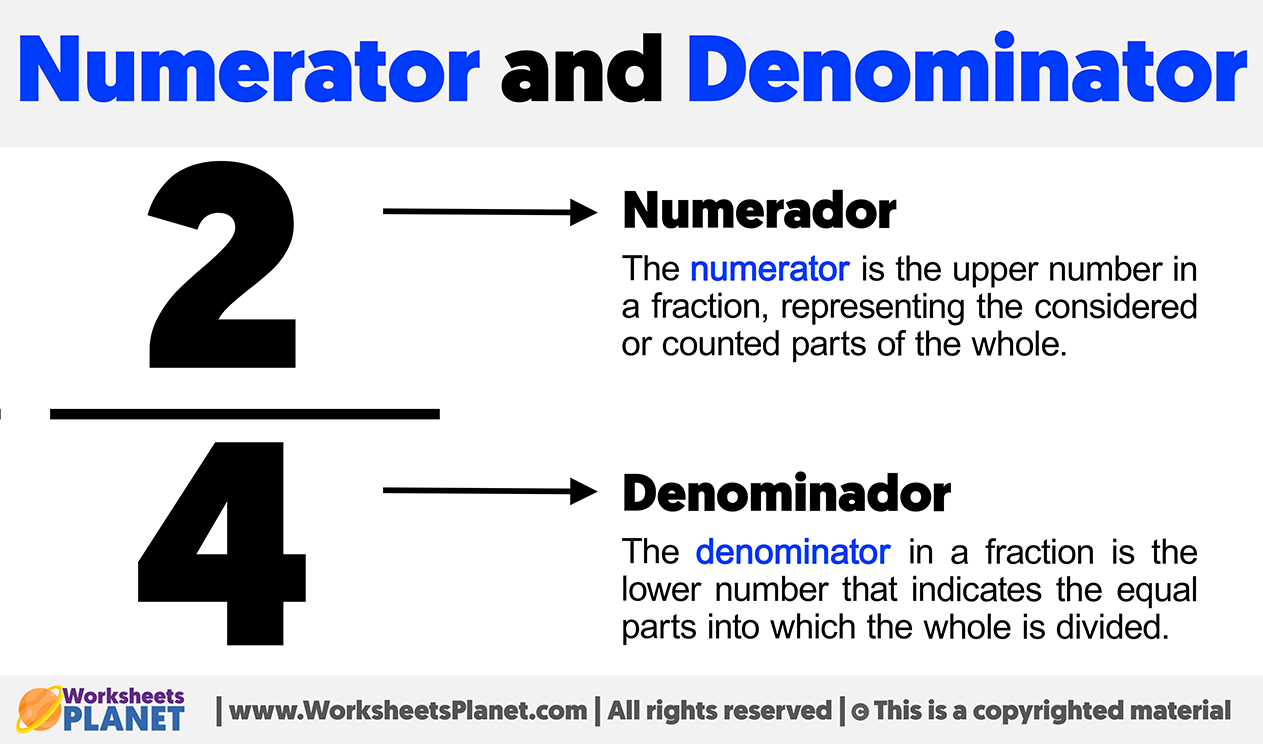
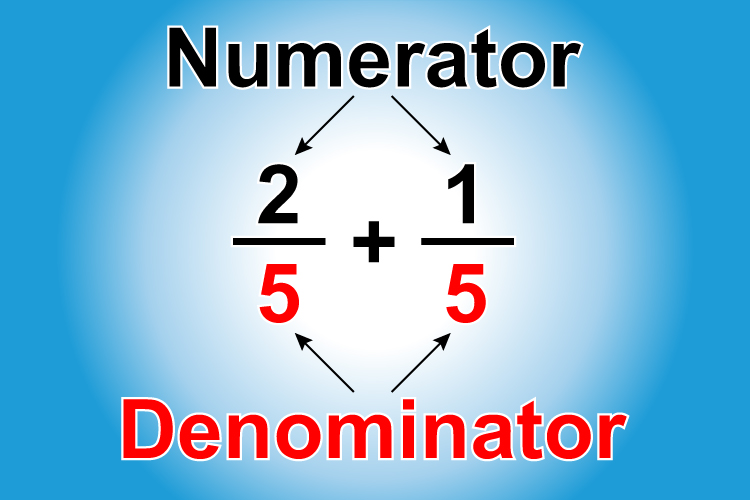
In a purely mathematical sense, the numerator represents how many parts of a whole we have, while the denominator represents how many parts make up that whole. In the niche of finance, this relationship is transformed into a measure of efficiency, risk, and value.
The Numerator: Your Output and Profit Driver
In almost every financial ratio, the numerator is the “reward” or the “output.” It is the figure we generally want to see grow. When we look at Return on Investment (ROI), the numerator is the “Net Profit.” When we look at Earnings Per Share (EPS), the numerator is the “Net Income.”
The numerator is the active engine of a business or a personal portfolio. It represents the results of labor, strategy, and market conditions. If you are a freelancer, your numerator might be your monthly billings. If you are a dividend investor, your numerator is the total payout received in a fiscal year. Because the numerator sits on top, any increase in its value—provided the denominator stays the same—results in a higher overall value for the fraction. This is the primary goal of most growth-oriented financial strategies.
The Denominator: Your Input and Base Foundation
The denominator is arguably the more critical, yet often overlooked, component of the financial equation. It represents the “cost,” the “base,” the “investment,” or the “risk.” It is the foundation upon which the numerator is built.
In business, the denominator often represents the resources deployed to achieve a result. In the Return on Assets (ROA) formula, the denominator is “Total Assets.” In a Debt-to-Income ratio, the denominator is your “Gross Income.” The denominator provides the necessary context for the numerator. Without a denominator, a numerator is just a raw number with no meaning. Earning $100,000 (numerator) is impressive if your investment (denominator) was $10,000, but it is a catastrophic failure if your investment was $10,000,000.
Key Financial Ratios: When the Numerator Meets the Denominator
To truly master the “Money” niche, one must move beyond definitions and into application. Professionals use the relationship between the numerator and denominator to peel back the layers of a company’s performance.
Profitability Ratios: Measuring Efficiency
Efficiency is the art of maximizing the numerator while minimizing or stabilizing the denominator. Consider the Gross Profit Margin. Here, the numerator is “Gross Profit” (Revenue minus Cost of Goods Sold), and the denominator is “Total Revenue.” This ratio tells an investor how much of every dollar earned is actually kept as profit before overhead.
Another vital metric is Return on Equity (ROE). In this case, the numerator is “Net Income,” and the denominator is “Shareholder’s Equity.” This is a favorite for investors like Warren Buffett because it measures how effectively a management team is using the money shareholders have invested. If the denominator (equity) stays small while the numerator (income) grows, the company is a “compounding machine.”
Liquidity and Solvency: Assessing Risk
While profitability focuses on growth, liquidity ratios use the numerator and denominator to measure survival. The Current Ratio is a classic example. The numerator is “Current Assets” (cash and things that can be turned into cash quickly), and the denominator is “Current Liabilities” (debts due within a year).
If the numerator is significantly larger than the denominator (a ratio above 1.0), the business is healthy. However, if the denominator begins to outweigh the numerator, the business faces an existential threat. In personal finance, this is mirrored in the Emergency Fund Ratio, where your “Liquid Savings” (numerator) is divided by your “Monthly Expenses” (denominator). The goal is to ensure the denominator is covered for several months.
Strategic Optimization: Playing with the Fractions for Growth

Financial engineering often comes down to manipulating these two numbers. To improve a financial outcome, a strategist has only two choices: increase the numerator or decrease the denominator.
The “Denominator Effect” in Portfolio Management
In the world of institutional investing, there is a phenomenon known as the “Denominator Effect.” This occurs when the value of one part of an investment portfolio (the denominator) decreases sharply, causing other parts of the portfolio to represent a disproportionately large percentage of the total.
For example, if a pension fund decides that private equity should only make up 10% of its total portfolio, and the public stock market (the denominator) crashes, the private equity portion suddenly looks much larger than 10% on paper—even if its value hasn’t changed. This forces the fund to sell assets. Understanding this relationship helps investors anticipate market movements and liquidity crunches.
Increasing Value by Shrinking the Base
Corporate executives frequently focus on the denominator to boost stock prices. This is the logic behind Share Buybacks. When a company buys back its own stock, it reduces the total number of shares outstanding.
In the EPS (Earnings Per Share) equation, “Net Income” is the numerator and “Total Shares” is the denominator. If the company cannot easily increase its Net Income (the numerator), it can simply shrink the number of shares (the denominator). As the denominator gets smaller, the Earnings Per Share automatically increases, often driving the stock price higher. This is a clear example of how understanding the mathematical relationship between these two terms can lead to sophisticated wealth-building strategies.
Common Pitfalls in Financial Ratio Analysis
While ratios are powerful tools, they can be misleading if the analyst does not scrutinize what exactly is being placed in the numerator and the denominator.
Comparing Incompatible Fractions
A common mistake in personal finance and business analysis is comparing ratios that have different “ingredients.” For example, comparing the P/E (Price-to-Earnings) ratio of a technology company to that of a utility company is often a fool’s errand.
The tech company has a denominator (earnings) that is expected to explode in the future, justifying a massive numerator (price). The utility company has a stable, predictable denominator, leading to a much lower ratio. If you don’t understand the nature of the denominator in your specific industry, the resulting fraction is meaningless.
The Danger of “Window Dressing”
Companies sometimes engage in “window dressing” to make their fractions look better for year-end reports. They might delay paying a bill to keep their cash numerator high or sell off a productive asset to temporarily lower their debt denominator. Insightful investors look beyond the surface level of the fraction. They ask: “Is this numerator sustainable?” and “Is this denominator artificially suppressed?”
Real wealth is built on the integrity of these numbers. When analyzing an online income stream or a side hustle, one must be honest about the denominator—which, in this case, is often “Time Invested.” If your numerator (income) is $5,000 a month, but your denominator (time) is 300 hours, your “Hourly Value” fraction might actually be lower than a traditional job.
Building a Numerator-Focused Mindset for Personal Wealth
The ultimate goal of understanding these concepts is to apply them to one’s own financial life. To build wealth, you must obsess over the relationship between your efforts and your results.
In personal finance, we often focus too much on the denominator—cutting expenses, reducing the cost of coffee, or shrinking our lifestyle. While reducing the denominator is a valid way to increase the overall value of your “Savings Rate” fraction, it has a floor. You can only cut expenses to zero.
The numerator, however, has no theoretical ceiling. Your “Income” numerator can grow infinitely through investing, scaling a business, or developing high-value skills. The most successful financial minds focus on “Numerator Growth” while maintaining “Denominator Discipline.” They keep their lifestyle costs (denominator) stable while aggressively expanding their revenue streams (numerator).
By viewing every financial decision through the lens of the numerator and the denominator, you gain a level of clarity that raw numbers cannot provide. You begin to see the world not just in terms of dollars and cents, but in terms of ratios, efficiency, and scalable growth. Whether you are analyzing a Fortune 500 company or your own bank statement, the question remains the same: What is the top, what is the bottom, and how can you optimize the space between them?
aViewFromTheCave is a participant in the Amazon Services LLC Associates Program, an affiliate advertising program designed to provide a means for sites to earn advertising fees by advertising and linking to Amazon.com. Amazon, the Amazon logo, AmazonSupply, and the AmazonSupply logo are trademarks of Amazon.com, Inc. or its affiliates. As an Amazon Associate we earn affiliate commissions from qualifying purchases.