
The microscope, an indispensable tool across countless scientific disciplines, from biology to material science, is a marvel of optical engineering. While its objective lenses often capture the spotlight for their magnification capabilities, and the eyepiece for providing the final view, there’s a crucial, often overlooked component that facilitates the entire observational process: the nosepiece. Far more than a mere mount, the nosepiece is the rotational heart of a microscope’s optical system, enabling seamless transitions between different levels of magnification and playing a pivotal role in the precision and clarity of microscopic examination.
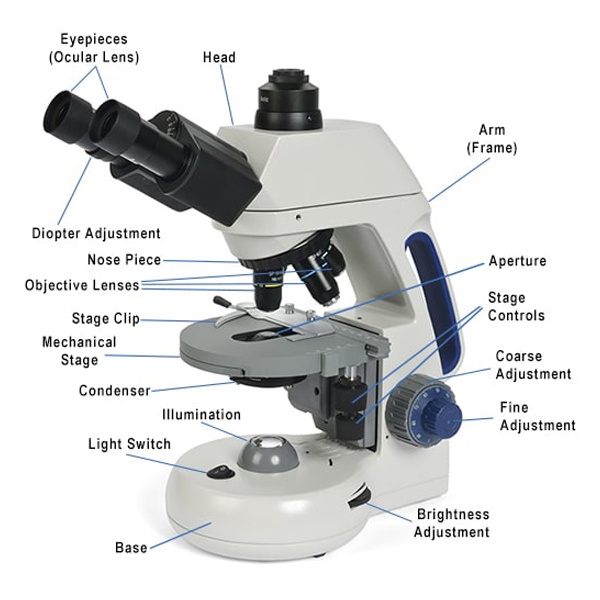
This article delves into the intricacies of the nosepiece, exploring its fundamental design, critical functions, types, maintenance, and its broader significance within the complex ecosystem of a microscope. Understanding this component is not just about knowing a part’s name; it’s about appreciating the engineering ingenuity that allows scientists, students, and enthusiasts alike to explore the hidden worlds beyond the naked eye with efficiency and accuracy.
The Core Function and Design of the Revolving Nosepiece
At its most fundamental, the nosepiece is the component of a compound microscope to which the objective lenses are attached. Its distinguishing feature, however, is its ability to rotate, allowing the user to switch between different objective lenses quickly and efficiently. This revolving mechanism is central to its utility, making it an engineering solution designed for both convenience and precision.
Defining the Revolving Nosepiece
The full name, “revolving nosepiece” or “rotating nosepiece,” accurately describes its primary characteristic. It is typically a circular plate, sometimes called a turret, mounted on the lower end of the microscope head. This plate contains multiple threaded openings, known as ports, into which the various objective lenses are screwed. The number of ports can vary, with common student or basic laboratory microscopes featuring three to four ports, while more advanced research-grade instruments might have five, six, or even seven. Each port is designed to perfectly seat and align an objective lens, ensuring that when an objective is rotated into the viewing position, it is precisely centered in the optical path.
Mechanical Design and Materiality
The mechanical design of the nosepiece is crucial for its reliable operation. It typically incorporates a sturdy, precisely machined metal construction, often made from brass, aluminum, or a durable alloy. This ensures stability and longevity, resisting wear and tear from constant rotation. Inside, a detent mechanism is universally employed. This mechanism provides distinct, tactile “clicks” as the nosepiece rotates, locking each objective lens into a precise viewing position. These clicks are not merely for user feedback; they are vital for ensuring accurate alignment of the objective lens with the optical axis of the microscope, guaranteeing that the specimen remains in focus (or nearly so) and centered as magnification changes. This feature is often referred to as “parfocal” and “parcentric” capabilities, meaning the microscope requires minimal refocusing and recentering when switching objectives.
The smooth rotation is facilitated by precision bearings or well-lubricated surfaces, allowing for effortless movement while maintaining the necessary rigidity. The threading of the ports themselves is standardized (RMS thread, or Royal Microscopical Society thread, is common), allowing for interchangeability of objective lenses across different microscope brands, though some manufacturers use proprietary systems.
Its Role in Optical Alignment
Beyond simply holding the objectives, the nosepiece’s most critical design feature is its contribution to optical alignment. The precise machining and the detent mechanism ensure that each objective lens, when clicked into place, is perfectly perpendicular to the specimen stage and perfectly centered within the microscope’s optical axis. Any deviation in this alignment can lead to image distortion, poor resolution, and difficulty in focusing. For high-magnification observation, where tolerances are incredibly tight, this precision is paramount. The nosepiece effectively acts as the precision interface between the stationary body of the microscope and its interchangeable magnification elements.
Interacting with Objective Lenses: The Nosepiece’s Primary Role
The nosepiece’s primary utility stems from its intimate relationship with the objective lenses, dictating how the user interacts with different magnification levels. This synergy is what makes a compound microscope so versatile and powerful.
Housing Multiple Magnifications
A standard compound microscope employs multiple objective lenses, typically ranging from low power (e.g., 4x or 10x) to high power (e.g., 40x or 100x). Each objective lens has a specific magnification power, numerical aperture (NA), and working distance. The nosepiece provides a convenient and secure housing for these lenses, making them readily accessible. Instead of manually screwing and unscrewing objectives for each magnification change, which would be time-consuming, prone to error, and risk damage, the nosepiece allows for a quick turn of the turret. This immediate access to a range of magnifications is fundamental to the workflow of microscopic examination, allowing users to quickly locate an area of interest at low power and then progressively zoom in for detailed inspection.
Seamless Switching for Enhanced Observation
The ability to seamlessly switch between objectives is a hallmark of an efficient microscope. As mentioned, the parfocal design facilitated by the nosepiece means that when you change objectives, the image remains largely in focus, requiring only minor adjustments with the fine focus knob. Similarly, the parcentric design ensures the specimen stays centered in the field of view. This greatly enhances the user experience, making observation smoother, faster, and less fatiguing. Imagine having to re-focus and re-center the specimen every time you changed magnification – the process would be arduous and significantly impede research or learning. The nosepiece, through its precise detent mechanism and construction, eliminates this frustration.
The Critical Relationship with Working Distance
Each objective lens has a specific working distance – the distance between the front lens of the objective and the top of the specimen when it is in sharp focus. Lower magnification objectives typically have longer working distances, while higher magnification objectives have shorter ones. The nosepiece’s design must accommodate these varying lengths without causing objectives to collide with the specimen stage or with each other during rotation. Proper objective selection and mounting ensure that there’s always sufficient clearance, preventing accidental damage to valuable objective lenses or the specimen. Furthermore, when the 100x oil immersion objective is used, the nosepiece must hold it securely and precisely for the immersion oil to form a proper optical bridge between the objective and the coverslip, crucial for achieving maximum resolution at such high magnifications.
Types of Nosepieces and Their Applications
While the fundamental concept of a revolving nosepiece remains consistent, variations exist, often tailored to specific applications or microscope designs.
Standard Revolving Nosepieces
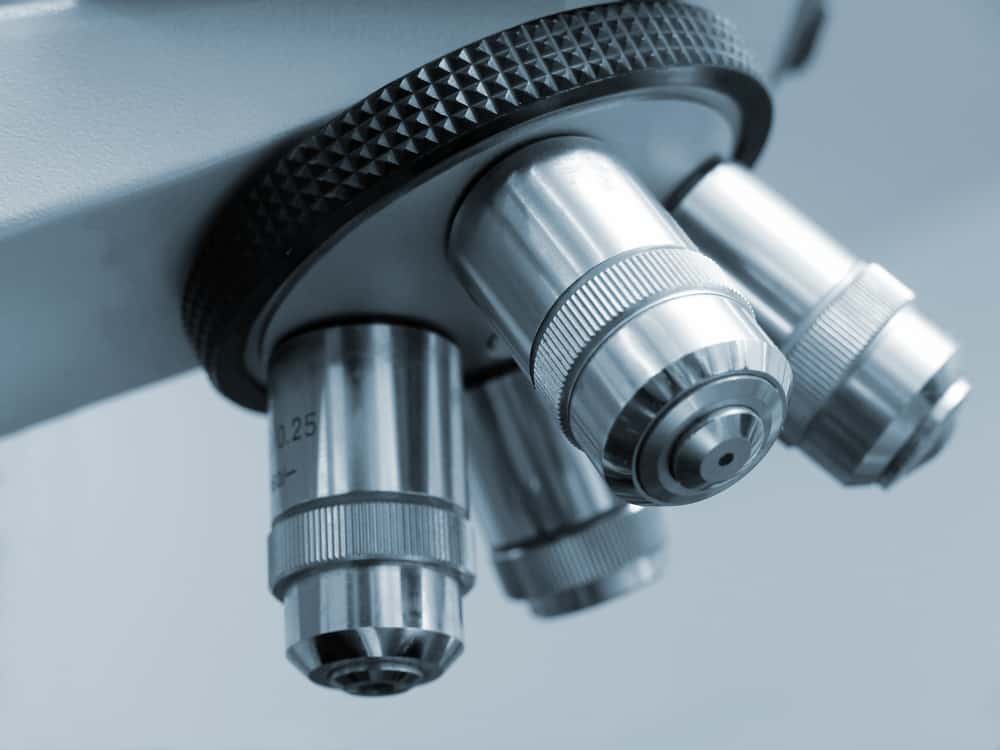
The most common type is the simple, inwardly facing revolving nosepiece, where the objective lenses point downwards towards the stage. These are found on the vast majority of upright compound microscopes. They are robust, straightforward to manufacture, and highly reliable. Their primary function is to facilitate magnification changes on a standard transmitted light microscope, suitable for viewing stained slides of biological samples, thin sections of materials, and similar specimens.
Specialized Nosepieces for Advanced Microscopy
For more specialized microscopy techniques, nosepieces might incorporate additional features or designs:
- Phase Contrast Nosepieces: Microscopes equipped for phase contrast microscopy often require special phase contrast objectives. The nosepiece itself doesn’t change significantly, but its ports must be configured to accept these specialized objectives, and the overall optical system must be designed to align with a phase annulus in the condenser.
- Polarizing Microscope Nosepieces: In polarizing microscopes, the nosepiece might be designed to hold objectives that are “strain-free” to prevent interference with polarization measurements. Sometimes, specific nosepiece designs allow for the insertion of compensator plates or prisms directly into the optical path near the objectives.
- Inverted Microscope Nosepieces: Inverted microscopes, where the objectives are positioned below the specimen stage looking upwards, feature nosepieces designed to accommodate this orientation. While still revolving, their mechanical mounting is inverted relative to an upright microscope, necessitating different clearance considerations, especially for bulky objectives.
- Motorized Nosepieces: Found in high-end research microscopes or automated imaging systems, motorized nosepieces can be controlled via software. This allows for automated objective switching, critical for multi-point imaging, time-lapse experiments, and integration into robotic microscopy platforms. This enhances experimental reproducibility and throughput, minimizing human error.
Ergonomics and User Experience Considerations
The design of the nosepiece also impacts user ergonomics. A smoothly rotating nosepiece with clearly audible and tactile detents contributes to a positive user experience, reducing eye strain and physical discomfort during long observation sessions. The spacing between objective lenses on the nosepiece also matters; sufficient clearance prevents users from accidentally bumping one objective while rotating another, especially when handling oil immersion objectives. Thoughtful design in these aspects ensures that the nosepiece is not just functional, but also user-friendly.
Maintenance, Care, and Troubleshooting
Like any precision instrument component, the nosepiece requires proper care to ensure its long-term functionality and accurate performance. Neglecting maintenance can lead to sticking, misalignment, and ultimately, compromised image quality.
Keeping it Clean: Preventing Dust and Debris
The exposed nature of the nosepiece and its objectives makes them susceptible to dust and debris accumulation. Dust particles can settle on the objective lenses, leading to blurry images or artifacts in the field of view. More critically, dust or grit can get into the revolving mechanism of the nosepiece itself, causing it to stiffen or grind, potentially damaging the internal detent system or the bearing surfaces. Regular cleaning with a soft brush or compressed air (used carefully to avoid dislodging internal components) is essential. For objective lenses, specialized lens cleaning solution and lens paper should be used to remove smudges or oil.
Smooth Rotation: Lubrication and Adjustment
A well-functioning nosepiece should rotate smoothly and effortlessly, with distinct clicks at each objective position. If the rotation becomes stiff, jerky, or if the detents feel loose, it might indicate a need for lubrication or adjustment. However, this is often a task best left to qualified microscope technicians. Using incorrect lubricants can attract dust or damage internal components. Technicians have specialized tools and knowledge to disassemble, clean, lubricate with appropriate, non-migrating greases, and reassemble the nosepiece, ensuring optimal performance. Improper amateur adjustments can lead to permanent misalignment.
Common Issues and Simple Fixes
- Sticking or Jerky Rotation: Often due to accumulated dust or dried lubricant. Gentle cleaning of external surfaces might help, but internal issues usually require professional service.
- Loose Detents/Misalignment: If objectives don’t click firmly into place, or if the image shifts significantly when changing objectives, the detent mechanism might be worn or out of adjustment. This is a clear indicator for professional servicing to restore parfocality and parcentricity.
- Difficulty Screwing in Objectives: This could be due to damaged threads on the objective or the nosepiece port. Never force an objective; inspect the threads for damage. Cross-threading can permanently damage both components.
- Oil Residue on Nosepiece: Especially with 100x oil immersion objectives, oil can sometimes seep onto the nosepiece surface. This should be gently wiped away immediately with lens paper to prevent it from attracting dust or entering the internal mechanism.
The Nosepiece in the Broader Microscope Ecosystem
The nosepiece, while seemingly a simple mechanical part, is inextricably linked to the overall performance of the microscope. Its integrity directly impacts the user’s ability to extract meaningful data from their samples.
Connecting to the Optical Path
The nosepiece is a critical juncture in the microscope’s optical path. It precisely aligns each objective lens with the condenser below the stage and the eyepiece above. Any deviation from this alignment—even fractions of a millimeter—can introduce aberrations, reduce resolution, and distort the image. It ensures that light rays from the specimen travel cleanly and unhindered through the chosen objective, through the microscope body, and ultimately to the observer’s eye or camera. This precise mechanical coupling is what allows a complex series of lenses to function as a cohesive system.
Impact on Image Quality and Clarity
A perfectly functioning nosepiece ensures that the optical elements are always in their ideal positions, leading to crisp, clear, and well-resolved images. Conversely, a faulty or misaligned nosepiece can severely degrade image quality. If an objective is not perfectly perpendicular or centered, the image might appear unevenly focused, exhibit spherical or chromatic aberrations, or display poor contrast. In critical research applications, where subtle cellular structures or minute details are being analyzed, such imperfections can lead to misinterpretation of data, highlighting the nosepiece’s importance beyond mere mechanics.

A Foundation for Advanced Microscopy Techniques
For advanced microscopy techniques like fluorescence, confocal microscopy, or super-resolution imaging, the demands on optical and mechanical precision are even higher. In these systems, the nosepiece must maintain incredibly tight tolerances, as even minor misalignments can lead to significant loss of signal, photobleaching, or inaccurate spatial reconstruction. In many automated high-throughput systems, motorized nosepieces are integrated with sophisticated software that calibrates each objective’s position with extreme accuracy, showcasing how this seemingly basic component remains fundamental even at the cutting edge of scientific instrumentation.
In conclusion, the nosepiece on a microscope is far more than a simple holder for objective lenses. It is a precisely engineered, mechanically critical component that serves as the pivotal interface for magnification changes. Its robust design, precise detent mechanism, and contribution to optical alignment are indispensable for efficient observation, reliable performance, and ultimately, for unlocking the microscopic wonders of our world. Understanding its function and ensuring its proper care are fundamental steps for anyone who regularly engages with this essential piece of scientific technology.
aViewFromTheCave is a participant in the Amazon Services LLC Associates Program, an affiliate advertising program designed to provide a means for sites to earn advertising fees by advertising and linking to Amazon.com. Amazon, the Amazon logo, AmazonSupply, and the AmazonSupply logo are trademarks of Amazon.com, Inc. or its affiliates. As an Amazon Associate we earn affiliate commissions from qualifying purchases.