
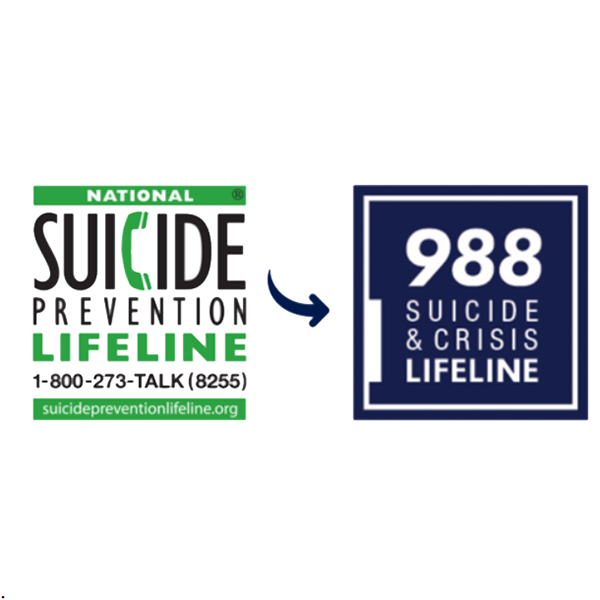
The National Suicide Prevention Lifeline, now simplified and rebranded as the 988 Suicide & Crisis Lifeline, represents one of the most significant technological and telecommunications overhauls in the history of public health in the United States. While often viewed through the lens of social services, the infrastructure powering this 24/7 service is a complex web of cloud computing, telecommunications routing, and data-driven logistics designed to bridge the gap between a person in crisis and life-saving intervention.
Launched in its 988 format in July 2022, the system transitioned from a traditional 10-digit sequence to a streamlined three-digit N11 code, placing it on the same technical tier as 911. This shift was not merely a change in phone numbers; it necessitated a massive synchronization effort across wireless carriers, Voice over Internet Protocol (VoIP) providers, and landline infrastructures to ensure that every digital and analog point of contact could route signals to a centralized but geographically distributed network.
The Digital Evolution of Crisis Response: Transitioning to 988
The transition to 988 was a response to the digital age’s demand for immediacy and accessibility. For decades, the National Suicide Prevention Lifeline operated via the number 1-800-273-8255. From a technical standpoint, managing a toll-free number of that length across hundreds of local crisis centers required sophisticated Intelligent Voice Response (IVR) systems. However, as the digital landscape shifted toward mobile-first communication, the legacy systems faced challenges in latency and routing accuracy.
The Telecommunications Overhaul and the FCC
The Federal Communications Commission (FCC) played a pivotal role in the technical rollout of the 988 hotline. By designating 988 as the universal code for mental health emergencies, the FCC required all telecommunications providers to implement “10-digit dialing” in areas where 988 was already a local exchange prefix. This backend reconfiguration was a massive undertaking, requiring software updates at thousands of switching stations across the country to ensure that the network could distinguish between a local phone call and an emergency crisis signal.
Geolocation and the Routing Challenge
One of the most complex technical hurdles in the current 988 infrastructure is geolocation. Unlike 911, which uses Enhanced 911 (E911) technology to pin a caller’s physical location via GPS or cell tower triangulation, the 988 lifeline originally routed calls based on the caller’s area code. In a mobile-centric society where individuals frequently move across state lines while keeping their original phone numbers, this created a technical mismatch.
Current tech initiatives are focused on implementing georouting. Unlike geolocating, which provides a precise address, georouting uses cellular signals to identify the nearest cell tower, allowing the system to route the call to a local crisis center without compromising the caller’s granular privacy. This ensures that the digital handoff between the national network and local responders is as fast as the hardware allows.
The Technology Stack Behind the 988 Lifeline
The 988 Suicide & Crisis Lifeline is not a single call center but a distributed network of over 200 local-level facilities. Managing this at scale requires a robust technology stack that can handle high-bandwidth traffic, provide 99.99% uptime, and integrate various communication channels into a single dashboard for counselors.
Cloud Infrastructure and Distributed Networks
The backbone of the lifeline relies on cloud-based contact center as a service (CCaaS) platforms. These platforms allow for dynamic load balancing. If one crisis center in a specific region is experiencing a surge in traffic—perhaps due to a local disaster or high-demand periods—the system’s algorithms automatically reroute the overflow to a national backup center. This is achieved through sophisticated SIP (Session Initiation Protocol) trunking, which manages voice, video, and messaging sessions over IP networks, ensuring that no digital signal is dropped.
SMS and Chat Integration: Scaling Beyond Voice
A critical component of the 988 tech upgrade was the full integration of text and chat services. Statistical data shows that younger demographics—specifically Gen Z and Millennials—are significantly more likely to utilize text-based support than voice calls. To meet this demand, the lifeline utilizes secure API integrations that connect SMS gateways to the counselor’s interface.
This omni-channel approach requires high-level synchronization. When a user sends a text, it isn’t just a simple SMS; it is routed through a secure platform that encrypts the data in transit, assigns it to a queue based on available bandwidth, and provides the counselor with a suite of digital tools, including quick-response templates and resource databases.
AI and Machine Learning in Suicide Prevention
As the volume of data flowing through crisis hotlines increases, the role of Artificial Intelligence (AI) and Machine Learning (ML) has become more prominent. These tools are not intended to replace human counselors but to augment their capabilities and improve the speed of intervention.
Predictive Analytics and Risk Assessment
Machine learning algorithms are currently being developed to assist in risk stratification. By analyzing the metadata of incoming sessions (and in some research environments, the linguistic patterns used in text chats), AI can help prioritize the queue. For example, if a certain combination of keywords or a specific pace of typing indicates an imminent threat, the system can flag that session for immediate attention by a senior supervisor.
Natural Language Processing (NLP) in Crisis Text Lines
Natural Language Processing is a subset of AI that allows computers to understand and interpret human language. In the context of the national suicide hotline, NLP is used to power automated “front-door” experiences. When a user first texts 988, an NLP-driven bot can handle the initial intake process—gathering basic information, explaining privacy policies, and determining the nature of the crisis. This automation reduces the administrative burden on human staff, allowing them to focus entirely on the clinical aspect of the interaction.
Digital Security and Data Privacy in High-Stakes Environments
Given the sensitive nature of the data shared on the 988 lifeline, the technological infrastructure must adhere to the highest standards of cybersecurity. Protecting the anonymity and confidentiality of users is a technical requirement that influences every layer of the software stack.
HIPAA Compliance and Encryption Protocols
While the 988 lifeline is a public service, it often operates within the framework of healthcare regulations such as the Health Insurance Portability and Accountability Act (HIPAA). This means that all data at rest and in transit must be encrypted using advanced standards (such as AES-256). The databases housing call logs and chat transcripts are segmented, ensuring that personally identifiable information (PII) is decoupled from the clinical notes of the session to prevent unauthorized access in the event of a security breach.
The Ethical Dilemma of Data Tracking
From a technical standpoint, there is a fine line between gathering enough data to save a life and infringing on a user’s digital privacy. The 988 system utilizes “ephemeral data” practices in many of its text and chat functions. This means that once a session is concluded, certain identifiers are purged from the active system. Tech developers working on these platforms must continuously balance the need for “warm handoffs” (transferring a caller to a local hospital) with the digital right to privacy, a debate that is currently shaping the development of the next generation of crisis software.
The Future of Crisis Tech: Wearables and Real-Time Monitoring
Looking forward, the National Suicide Hotline is expected to integrate more deeply with the broader Internet of Things (IoT) ecosystem. We are entering an era where wearable technology—such as smartwatches and fitness trackers—can monitor physiological markers of distress, such as heart rate variability or sleep disruptions.
Integration with Health Data Ecosystems
The next frontier for 988 is the potential for “proactive outreach” through tech. Imagine a scenario where a wearable device detects a physiological spike indicative of a panic attack and prompts the user with a direct link to a 988 chat session. While this requires navigating significant ethical and consent hurdles, the technical capability to link biometrics with crisis intervention is already being prototyped in private digital health sectors.
VR and AR Counselor Training
Behind the scenes, Virtual Reality (VR) and Augmented Reality (AR) are being used to train the counselors who staff the 988 lines. Using immersive simulations, counselors can practice de-escalation techniques in high-pressure digital environments. This technological application ensures that when a counselor answers a 988 call, they have been trained using the most advanced pedagogical tools available, resulting in a higher quality of care.
The 988 Suicide & Crisis Lifeline is more than a social safety net; it is a sophisticated telecommunications and software platform that leverages the best of modern technology to solve a human crisis. Through cloud computing, AI-driven triage, and rigorous digital security, the system continues to evolve, proving that tech trends can be directed toward the most essential of all human needs: the preservation of life.
aViewFromTheCave is a participant in the Amazon Services LLC Associates Program, an affiliate advertising program designed to provide a means for sites to earn advertising fees by advertising and linking to Amazon.com. Amazon, the Amazon logo, AmazonSupply, and the AmazonSupply logo are trademarks of Amazon.com, Inc. or its affiliates. As an Amazon Associate we earn affiliate commissions from qualifying purchases.