
To understand what the Nasdaq is doing right now, one must look beyond the simple green or red numbers flickering on a ticker tape. The Nasdaq, particularly the Nasdaq-100, serves as the global pulse for growth-oriented investing. In the current economic climate, the index is navigating a complex intersection of generational technological shifts, evolving monetary policy, and shifting investor sentiment. As the premier destination for the world’s most innovative companies, the Nasdaq’s movement provides a roadmap for where the “smart money” is flowing and how the broader financial markets are pricing in future productivity gains.
The Dominance of the Magnificent Seven and the AI Catalyst
Currently, the Nasdaq’s performance is inextricably linked to a handful of mega-cap technology stocks often referred to as the “Magnificent Seven.” These entities—Apple, Microsoft, Alphabet, Amazon, Nvidia, Meta Platforms, and Tesla—wield disproportionate influence over the index due to its market-capitalization-weighted structure. When an investor asks what the Nasdaq is doing, they are often inadvertently asking how these seven companies are being perceived by the market.
The Generative AI Arms Race
The primary engine driving the Nasdaq right now is the massive capital expenditure related to Artificial Intelligence (AI). We are witnessing a fundamental revaluation of companies that provide the “picks and shovels” for the AI era. Nvidia, as the primary provider of high-end GPUs, has become a bellwether for the entire index. Its earnings reports are now treated with the same gravity as Federal Reserve announcements. The market is currently grappling with the question of sustainability: is the current spending on AI infrastructure a bubble, or is it the foundation of a new industrial revolution? So far, the Nasdaq’s upward trajectory suggests that investors are betting on the latter, rewarding companies that demonstrate clear AI integration and monetization strategies.
Concentration Risk and Market Breadth
While the top-tier names have driven significant gains, a key aspect of what the Nasdaq is doing right now involves “market breadth.” Analysts are closely watching whether the rally is expanding to the other 93 companies in the Nasdaq-100 or the thousands in the broader Nasdaq Composite. When the index rises on the backs of only two or three stocks, it is often viewed as a fragile move. Conversely, when mid-cap tech and biotech firms begin to participate in the upward trend, it signals a healthier, more robust bull market. Currently, we are seeing a tug-of-war between the safety of mega-cap balance sheets and the high-growth potential of smaller, more specialized tech firms.
Macroeconomics: Interest Rates and the “Higher for Longer” Reality
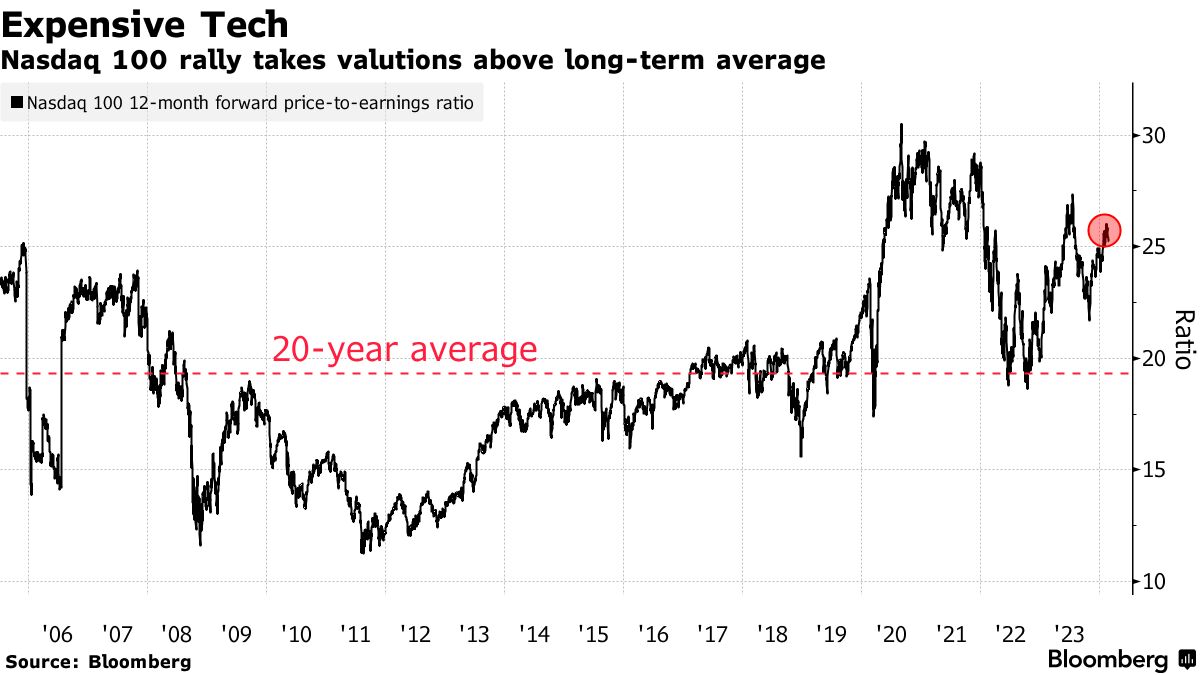
The Nasdaq is notoriously sensitive to interest rates. Because many of the companies listed on the exchange are valued based on their future cash flows, high interest rates act as a “discount factor.” When rates are high, a dollar earned ten years from now is worth less today, which can compress the price-to-earnings (P/E) multiples of growth stocks.
The Federal Reserve’s Shadow
The Federal Reserve’s stance on inflation and the federal funds rate is the single most important external factor affecting the Nasdaq right now. Investors are currently in a “wait and see” mode, parsing every speech from central bank officials for clues about potential rate cuts. If the Fed signals a pivot toward lower rates, the Nasdaq typically reacts with a surge, as lower borrowing costs benefit high-growth companies that need to fund expansion. However, if inflation remains “sticky” and the Fed maintains a “higher for longer” policy, the Nasdaq faces valuation pressure, leading to periods of horizontal consolidation or sharp corrections.
The Yield Curve and Equity Risk Premium
Another critical component is the behavior of the 10-year Treasury yield. There is often an inverse correlation between the 10-year yield and the Nasdaq’s performance. When yields rise, tech stocks often sell off as investors rotate into the “risk-free” return of government bonds. Right now, the Nasdaq is attempting to find an equilibrium where it can grow despite elevated yields, driven by the belief that corporate earnings growth will outpace the cost of capital. This tension is creating pockets of volatility, particularly on days when economic data—like the Consumer Price Index (CPI) or jobs reports—is released.
Technical Analysis: Support, Resistance, and Momentum
From a technical perspective, the Nasdaq is currently testing significant psychological and mathematical levels. Traders and institutional investors use these levels to determine entry and exit points, which in turn creates self-fulfilling prophecies in price action.
Moving Averages and Trendlines
Active investors are currently monitoring the 50-day and 200-day moving averages of the Nasdaq-100 (NDX). These indicators provide a smoothed view of the index’s direction. Currently, the index is striving to stay above these key moving averages to maintain its “bullish” posture. If the Nasdaq dips below its 50-day moving average, it often triggers algorithmic selling, leading to a quick drawdown. On the other hand, holding these levels provides a “floor” that gives long-term investors the confidence to hold through short-term turbulence.
Volatility and the VIXN
The CBOE Nasdaq-100 Volatility Index (VIXN) measures the market’s expectation of 30-day volatility. Right now, the VIXN is telling a story of cautious optimism. While it isn’t at the “panic” levels seen during the 2022 bear market, it is high enough to suggest that investors are hedging their bets using options. This hedging activity itself can influence the Nasdaq’s price action, as market makers adjust their positions to remain “delta neutral,” often amplifying moves in either direction.
Earnings Season: Performance vs. Guidance
The Nasdaq is fundamentally a collection of businesses, and nothing matters more in the long run than corporate earnings. We are currently in a phase where “beating” expectations is no longer enough; companies must also provide “pristine guidance.”
The Bar is High
Because many Nasdaq stocks trade at premium valuations, the market expects perfection. If a company reports record profits but warns of a slight slowdown in cloud computing growth or consumer hardware demand for the next quarter, its stock price can plummet. Right now, the Nasdaq is punishing any sign of weakness or deceleration. This has created a bifurcated market where “winners” who execute flawlessly see their shares soar, while “losers” who miss even one metric are sold off aggressively.
The Health of the Consumer and Enterprise Spending
The Nasdaq is also reflecting the state of the broader economy through the lens of spending. Since many Nasdaq companies rely on enterprise software contracts (SaaS) or consumer discretionary spending (gadgets and streaming), the index acts as a real-time report card on economic health. Currently, enterprise spending remains resilient, driven by the need for digital transformation and cybersecurity. However, there are emerging signs of “subscription fatigue” among consumers, which is weighing on certain segments of the index.
Strategic Positioning: How Investors are Responding
In light of what the Nasdaq is doing right now, investors are adjusting their portfolios to balance the potential for high rewards with the inherent risks of a tech-heavy index.
The Shift Toward Quality
There is a visible flight to quality within the Nasdaq. Investors are prioritizing “Quality Growth”—companies with strong cash flows, low debt-to-equity ratios, and defensible “moats.” This is why the largest tech names continue to hit all-time highs while speculative, non-profitable tech companies (often found in the ARK-style portfolios) have struggled to regain their 2021 peaks. The current market is discerning; it is no longer a “rising tide lifts all boats” scenario.
Diversification and Rebalancing
Many institutional investors are using the current strength in the Nasdaq to rebalance their portfolios. After a period of significant outperformance, tech weightings can become bloated. As a result, we are seeing periodic “sector rotations” where money flows out of the Nasdaq and into “value” sectors like energy, financials, or industrials. This rotation is a normal part of a healthy market cycle and explains why the Nasdaq might stay flat or dip slightly even when the overall S&P 500 is rising.
Looking Ahead: The Future Path of the Index
What the Nasdaq is doing right now is setting the stage for the next decade of financial growth. It is transitioning from a period of “easy money” and low interest rates to a “high-performance” era where earnings must justify valuations.
The index is currently acting as a filtration system, separating companies with real utility and pricing power from those that relied on cheap credit to survive. As AI moves from the “hype” phase to the “implementation” phase, the Nasdaq will likely continue to be the primary theater for this evolution. For the individual investor, the Nasdaq’s current behavior serves as a reminder that while volatility is a constant, the long-term trend of the index has historically rewarded those who understand the fundamental drivers of innovation and the inescapable influence of macroeconomic cycles. Whether it is navigating the nuances of a Fed meeting or analyzing the latest semiconductor breakthrough, the Nasdaq remains the most dynamic and essential barometer of the modern financial world.
aViewFromTheCave is a participant in the Amazon Services LLC Associates Program, an affiliate advertising program designed to provide a means for sites to earn advertising fees by advertising and linking to Amazon.com. Amazon, the Amazon logo, AmazonSupply, and the AmazonSupply logo are trademarks of Amazon.com, Inc. or its affiliates. As an Amazon Associate we earn affiliate commissions from qualifying purchases.