
In the rapidly evolving landscape of digital finance, Ripple and its native digital asset, XRP, represent a significant shift from the speculative nature of early cryptocurrencies toward a functional, utility-driven financial ecosystem. While the broader market often views digital assets as volatile instruments for retail trading, Ripple was engineered with a specific institutional purpose: to revolutionize the way money moves across borders. For the modern investor, understanding Ripple requires moving beyond the surface-level price action and delving into its role as a bridge between traditional banking systems and the future of decentralized finance.

Understanding the Fundamentals: Ripple vs. XRP
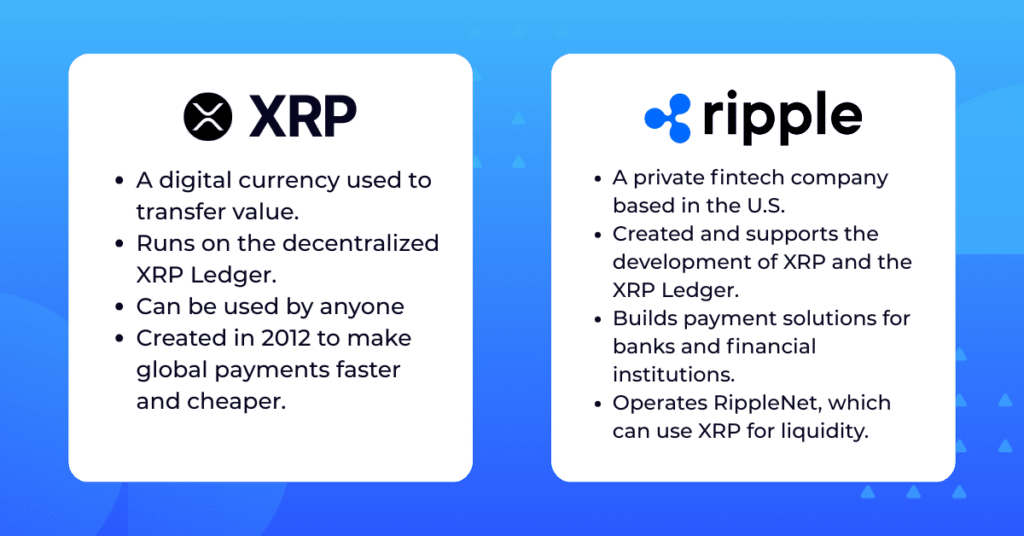
To navigate this asset class effectively, one must first distinguish between Ripple, the technology company, and XRP, the independent digital asset. This distinction is critical for any financial analysis, as the value of the asset is tied both to its independent market dynamics and its adoption within the company’s enterprise solutions.
The Institutional Architect: Ripple Labs
Ripple Labs Inc. is a US-based technology company that develops software for the financial sector. Its primary mission is to create an “Internet of Value,” allowing money to move as quickly and seamlessly as information does today. Unlike Bitcoin, which was designed to bypass banks, Ripple was built to empower them. The company’s suite of products, primarily known as RippleNet, provides a decentralized global network of banks and payment providers that use Ripple’s distributed ledger technology to clear and settle transactions instantly.
The Bridge Asset: XRP
XRP is the native cryptocurrency of the XRP Ledger (XRPL), an open-source, permissionless, and decentralized blockchain technology. Within the Ripple ecosystem, XRP serves as a “bridge currency.” In a traditional international wire transfer, a bank might need to hold pre-funded accounts in local currencies (known as Nostro/Vostro accounts) in various countries to facilitate a trade. This ties up trillions of dollars in stagnant capital globally. XRP solves this liquidity problem by acting as a universal medium of exchange, allowing for the near-instant conversion of one fiat currency to another without the need for intermediary accounts.
The Consensus Mechanism
Unlike Bitcoin, which relies on an energy-intensive Proof of Work (PoW) system, or Ethereum’s Proof of Stake (PoS), the XRP Ledger utilizes a unique consensus algorithm. A network of independent nodes validates transactions by reaching an agreement. This makes the ledger incredibly efficient, processing transactions in three to five seconds at a fraction of the cost of traditional methods or other major cryptocurrencies. From an investment perspective, this efficiency equates to lower operational overhead and higher scalability.
The Value Proposition: Why Financial Institutions Choose Ripple
The financial industry is currently plagued by legacy systems like SWIFT, which can take several days to settle international payments and involve high fees and high failure rates. Ripple addresses these pain points through its enterprise-grade solutions, creating a compelling case for its long-term viability in the global financial infrastructure.
On-Demand Liquidity (ODL)
The most significant financial tool offered by Ripple is On-Demand Liquidity (ODL). ODL uses XRP to source liquidity during cross-border transactions, eliminating the need for pre-funding. When a financial institution wants to send money from the United States to Mexico, ODL converts USD into XRP on a digital asset exchange, sends the XRP to a destination exchange where it is instantly converted into Mexican Pesos, and deposits it into the recipient’s account. This process takes seconds, whereas traditional methods could take up to five days.
Cost Efficiency and Scalability
For any business or financial institution, the bottom line is dictated by transaction costs. The average cost of a transaction on the XRP Ledger is roughly $0.0002. For high-volume payment providers, these savings are monumental. Furthermore, the XRP Ledger is capable of handling 1,500 transactions per second (TPS), a throughput that rivals Visa’s network and far exceeds Bitcoin’s 7 TPS or Ethereum’s 15-30 TPS. This scalability makes it a viable candidate for the backbone of global remittances.
Sustainability in Finance
As Environmental, Social, and Governance (ESG) criteria become increasingly important to institutional investors, the “green” aspect of XRP cannot be ignored. Because it does not require mining, the XRP Ledger is significantly more energy-efficient than PoW blockchains. In an era where corporate mandates require carbon neutrality, XRP’s low energy footprint provides a competitive edge over more resource-intensive digital assets.
Navigating the Regulatory Landscape and Market Performance
For the past several years, the narrative surrounding Ripple and XRP has been dominated by its legal battle with the U.S. Securities and Exchange Commission (SEC). This case has provided a landmark study in how digital assets are classified and regulated in the United States, carrying massive implications for the financial markets.
The SEC vs. Ripple Lawsuit
In December 2020, the SEC filed a lawsuit against Ripple Labs, alleging that the sale of XRP constituted an unregistered securities offering. This legal cloud caused several US-based exchanges to delist the token, leading to a period of high volatility and suppressed price action compared to other major assets. However, a pivotal summary judgment in July 2023 ruled that XRP, in and of itself, is not a security. The court distinguished between institutional sales (which were deemed securities contracts) and programmatic sales on public exchanges (which were not).
Market Liquidity and Volatility
Despite the regulatory headwinds, XRP has consistently maintained its position as one of the top ten cryptocurrencies by market capitalization. This longevity suggests deep-rooted liquidity and a resilient investor base. For an investor, XRP represents a “blue-chip” digital asset—one that has survived multiple market cycles and significant legal scrutiny. However, like all digital assets, it remains subject to market volatility influenced by macroeconomic trends, interest rate shifts, and broader crypto market sentiment.
Institutional Adoption and Partnerships
The strength of Ripple’s market position is bolstered by its partnerships. The company has collaborated with hundreds of financial institutions worldwide, including names like Santander, Standard Chartered, and SBI Holdings. These are not merely speculative partnerships; they involve the integration of Ripple’s technology into real-world banking infrastructure. This level of institutional integration provides a “moat” that many other blockchain projects lack.
Strategic Considerations for XRP Investors
When incorporating XRP into a diversified financial portfolio, it is essential to view it through the lens of utility and infrastructure rather than just as a digital currency. Its role in the financial ecosystem is unique, and its risks and rewards differ from those of Bitcoin or decentralized finance (DeFi) tokens.
Risk Management and Diversification
While the 2023 court ruling provided much-needed clarity, the regulatory environment for digital assets remains in flux globally. Investors should consider the potential for further legislative changes in the US and abroad. Furthermore, competition from Central Bank Digital Currencies (CBDCs) and other fintech solutions like J.P. Morgan’s JPM Coin presents a competitive risk. A balanced approach involves treating XRP as a high-growth infrastructure play within a broader portfolio that includes traditional equities, bonds, and other digital assets.
The Role of CBDCs
Ripple is actively positioning itself as a platform for the issuance and management of Central Bank Digital Currencies. Several nations have already engaged Ripple to pilot CBDC projects. If the XRP Ledger becomes the underlying rail for national digital currencies, the demand for XRP as a neutral bridge asset could grow exponentially. This represents a “macro-upside” scenario where Ripple’s technology becomes a standard protocol for global central banking.
Long-term Outlook: The Internet of Value
The ultimate goal of Ripple is to make the movement of value as frictionless as the movement of data. In this future, the XRP Ledger acts as a foundational layer of the global economy. Investors who believe in the inevitable digitization of all assets—from stocks and real estate to carbon credits—often see XRP as a key beneficiary of this transition. As the financial world moves toward “atomic settlement” (instantaneous exchange and settlement), the demand for high-speed, low-cost settlement assets like XRP is likely to remain a central theme in fintech.
The Future of Digital Assets in Global Finance
The story of Ripple and XRP is ultimately a story about the modernization of the global financial system. We are currently witnessing a transition from outdated, siloed banking networks to open, interoperable digital ledgers. Ripple stands at the forefront of this shift, offering a proven technology that balances the transparency of blockchain with the compliance requirements of the traditional financial sector.
For those looking to understand “what is Ripple crypto,” it is best defined as a financial tool designed for the institutional age. It is an asset built for utility, a network built for speed, and a company built for the integration of two worlds: the legacy of traditional finance and the innovation of the digital frontier. As the dust settles on regulatory debates and institutional adoption continues to accelerate, Ripple’s role in the “Internet of Value” will likely remain a focal point for the next decade of financial evolution. Whether viewed as a hedge against the inefficiencies of the current system or a direct bet on the future of banking, XRP remains one of the most significant and strategically important assets in the modern financial landscape.
aViewFromTheCave is a participant in the Amazon Services LLC Associates Program, an affiliate advertising program designed to provide a means for sites to earn advertising fees by advertising and linking to Amazon.com. Amazon, the Amazon logo, AmazonSupply, and the AmazonSupply logo are trademarks of Amazon.com, Inc. or its affiliates. As an Amazon Associate we earn affiliate commissions from qualifying purchases.