
In the global marketplace, “popularity” is a metric often measured by two competing standards: volume of consumption and brand valuation. When asking what the most popular alcoholic beverage in the world is, the answer shifts dramatically depending on whether you are looking through the lens of a logistics manager or a brand strategist. From a purely volume-based perspective, beer remains the undisputed king of the social landscape. However, from the perspective of corporate identity and market capitalization, the answer lies within the prestigious and often guarded world of high-end spirits.

The battle for the title of “most popular” is a masterclass in brand strategy. It is an industry where perception frequently outweighs product composition, and where the ability to craft a compelling narrative can transform a fermented liquid into a global cultural icon.
The Battle for the Pint: Global Beer Dominance and Brand Positioning
Beer is the most widely consumed alcoholic beverage on the planet. Its popularity is rooted in its accessibility, lower price points, and deep-seated cultural integration across almost every continent. However, within the beer category, the fight for market share is a brutal game of scale and psychological positioning.
Snow and Budweiser: Volume vs. Identity
For years, the title of the world’s best-selling beer has belonged to Snow, a Chinese brand that many Western consumers have never even tasted. Snow’s popularity is a result of a masterful “local-first” brand strategy. By prioritizing mass-market distribution and maintaining an ultra-affordable price point within the world’s most populous country, CR Beer (the parent company) leveraged sheer scale to dominate the global leaderboard. However, Snow’s brand identity is largely functional; it is a commodity brand built on availability rather than aspirational lifestyle marketing.
In contrast, Budweiser—often referred to as the “King of Beers”—utilizes a vastly different corporate identity strategy. Owned by Anheuser-Busch InBev, Budweiser is a case study in “Heritage Branding.” Even as consumer tastes shift toward craft alternatives, Budweiser maintains its popularity through massive investments in sports sponsorships, such as the FIFA World Cup and the NFL. Their strategy is to associate the brand with the “global moment,” ensuring that whenever a consumer thinks of celebration or community, the red-and-white label is top-of-mind.
The Heineken Strategy: Consistent Global Recognition
While Budweiser plays on American heritage, Heineken has positioned itself as the world’s most international premium beer. Their brand strategy is focused on “Consistency and Premiumization.” No matter where you are in the world—be it a high-end hotel in Dubai or a street stall in Vietnam—the green bottle and red star signify a specific standard of quality.
Heineken’s marketing avoids the “everyman” tropes of its competitors, instead leaning into a sophisticated, urban, and cinematic brand persona. By aligning with the James Bond franchise and UEFA Champions League, Heineken has successfully occupied a space that feels more “premium” than domestic lagers while remaining accessible enough for the mass market.
The Spirits Sector: Creating Heritage and Premium Value
While beer wins on volume, the “most popular” alcoholic beverage in terms of financial power and brand equity is found in the spirits category. This is where brand strategy moves away from mass-market utility and into the realm of luxury, scarcity, and corporate identity.
Kweichow Moutai: The Pinnacle of Corporate Identity and Scarcity
If we define popularity by brand value and market capitalization, the most popular alcoholic beverage in the world is undoubtedly Kweichow Moutai. This Chinese Baijiu producer has, at various points, held a higher market cap than any other beverage company in the world, including Coca-Cola.
The Moutai brand strategy is a fascinating study in “National Identity and Artificial Scarcity.” As the “national liquor” of China, Moutai is more than a drink; it is a status symbol used in high-level political and business dealings. The brand does not market itself through traditional digital ads or influencer campaigns. Instead, it relies on its deep historical ties to the Chinese state and a controlled supply chain that keeps prices high and demand insatiable. Moutai’s corporate identity is built on the idea that to own a bottle is to own a piece of cultural history.
Jinro Soju: Mastering Local Loyalty and Global Expansion
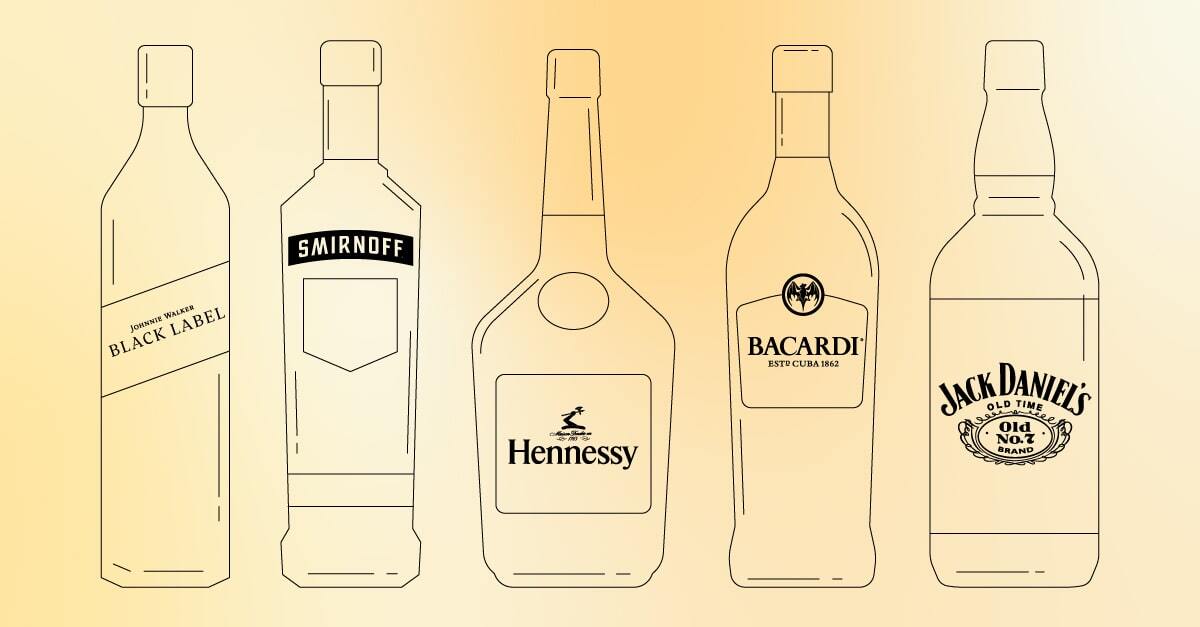
In terms of sheer volume in the spirits category, the leader is consistently Jinro Soju. The South Korean brand has been the world’s best-selling spirit for decades. Jinro’s popularity is a byproduct of “Micro-Market Dominance.” By becoming the default beverage for South Korea’s dining culture, Jinro established a foundation so strong that it could fund a massive global expansion.
Their branding strategy has evolved from a traditional spirits approach to a lifestyle-centric model, heavily utilizing K-Pop stars and “Hallyu” (the Korean Wave) to reach younger, international audiences. Jinro’s ability to pivot its brand identity from a domestic staple to a global “cool” factor is one of the most successful marketing transformations in the industry.
Marketing the Experience: How Consumer Perception Shapes Popularity
In the modern era, the popularity of an alcoholic beverage is no longer determined solely by its taste or its history. It is determined by the “Brand Experience.” As consumers—particularly Millennials and Gen Z—move toward “drinking less but better,” the most popular brands are those that offer a sense of identity.
The Celebrity Brand Revolution
One of the most significant shifts in brand strategy over the last decade has been the rise of celebrity-owned or endorsed spirits. The popularity of Casamigos Tequila (co-founded by George Clooney) and Teremana (The Rock) demonstrates how personal branding can disrupt traditional market leaders.
These brands do not rely on centuries of history. Instead, they leverage the “borrowed equity” of a celebrity’s personal brand. When a consumer buys Casamigos, they aren’t just buying tequila; they are buying into the perceived lifestyle of its founders. This strategy has proven so effective that Diageo and other conglomerates have spent billions acquiring these celebrity-backed ventures, recognizing that in the digital age, a massive social media following is often more valuable than a traditional advertising budget.
Rebranding for the Next Generation: The Rise of RTDs
The rapid ascent of “Ready-to-Drink” (RTD) beverages, such as White Claw or High Noon, has redefined popularity in the Western market. The brand strategy here is “Simplicity and Health-Consciousness.” By branding these products as low-calorie, gluten-free, and convenient, they have captured a segment of the market that felt alienated by the complexity of craft beer or the intensity of hard spirits.
The popularity of RTDs is a lesson in “Agile Branding.” These companies identified a gap in the market—the need for a portable, “guilt-free” social lubricant—and built a brand identity around minimalism. The clean, white cans of White Claw became a meme, a fashion statement, and a lifestyle choice, proving that visual identity and social positioning are just as important as the liquid inside.
The Evolution of Beverage Brand Identity in a Digital World
As we look toward the future, the most popular alcoholic beverages will be those that can successfully navigate the complexities of digital security, social responsibility, and direct-to-consumer (DTC) engagement.
Sustainability as a Brand Pillar
Modern brand strategy now requires a “Purpose-Driven” approach. Popular brands like Patrón or Absolut are increasingly focusing their marketing on sustainability, ethical sourcing, and community support. In a market where consumers are highly skeptical of corporate motives, a brand’s identity must include a clear commitment to social and environmental values. This is no longer just “good PR”—it is a core component of maintaining market share among younger demographics.
The Non-Alcoholic Pivot
Perhaps the most interesting trend in the beverage industry is the rise of the “Most Popular Non-Alcoholic Alcoholic Brand.” Brands like Seedlip and Athletic Brewing Co. are using the visual language of the alcohol industry—sophisticated bottles, complex flavor profiles, and premium pricing—to market to people who aren’t actually drinking alcohol.
This is the ultimate evolution of brand strategy: the product itself has changed (the alcohol is gone), but the brand identity remains rooted in the social rituals and prestige of the alcohol world. This “Ghost Branding” allows companies to capture the market of “sober curious” consumers without losing the premium image they have built over decades.
In conclusion, the most popular alcoholic beverage in the world is a moving target. If you value volume, it is a race between Snow Beer and Jinro Soju. If you value brand equity and corporate power, Kweichow Moutai sits on the throne. However, for most consumers, the most popular beverage is the one that best reflects their own desired identity—whether that is the rugged heritage of a Kentucky bourbon, the cinematic cool of a Dutch lager, or the health-conscious minimalism of a hard seltzer. In this industry, the glass is never just half full; it is a canvas for the world’s most sophisticated brand strategies.
aViewFromTheCave is a participant in the Amazon Services LLC Associates Program, an affiliate advertising program designed to provide a means for sites to earn advertising fees by advertising and linking to Amazon.com. Amazon, the Amazon logo, AmazonSupply, and the AmazonSupply logo are trademarks of Amazon.com, Inc. or its affiliates. As an Amazon Associate we earn affiliate commissions from qualifying purchases.