
When we think about value, we are almost always bound by the terrestrial limits of currency, supply, and demand. We measure worth in gold bars, real estate portfolios, or the market capitalization of global technology giants. However, when we expand our scope to the cosmic scale, the traditional metrics of finance and asset management undergo a radical transformation. To determine the most expensive thing in the universe, we must pivot from the language of bank accounts to the language of physics, energy density, and astronomical scarcity.
The Price of Antimatter: The Ultimate Commodity
If one were to attempt to purchase the most costly substance known to science, the bill would exceed the collective wealth of every human who has ever lived. Antimatter, the mirror image of ordinary matter, holds the title for the most expensive material on Earth, and by extension, the most valuable commodity in existence.
The Physics of Cost
Antimatter is not “expensive” in the sense of gold or diamonds, which derive value from aesthetic rarity and market demand. Instead, antimatter’s value is a reflection of the insurmountable energetic cost required to produce it. At the European Organization for Nuclear Research (CERN), scientists generate antimatter through high-energy particle collisions. The process is inefficient, requiring massive amounts of electricity to run particle accelerators that produce only nanogram quantities of positrons and antiprotons.
Why It Is Beyond Financial Reach
Current estimates place the cost of producing just one gram of antihydrogen at approximately $62.5 trillion. To put this in perspective, that single gram—a quantity so small it would be invisible to the naked eye—costs more than the combined annual GDP of the entire planet. Because antimatter annihilates upon contact with ordinary matter, storing it requires sophisticated electromagnetic traps and a vacuum environment that represents the pinnacle of modern engineering. From a financial standpoint, it is a liability that defies the standard rules of investment; it is an asset whose cost of production is so astronomically high that it renders commercial trade impossible.
The Economic Paradox of Scarcity: Exotic Matter and Vacuum Energy
Beyond materials we can synthesize in a lab, we encounter the theoretical “assets” of the universe—substances that may possess infinite value, yet remain entirely out of reach. In the study of theoretical physics, specifically regarding the expansion of the universe, we encounter the concept of dark energy and vacuum energy.
The Valuation of the Void
Dark energy is believed to make up roughly 68% of the universe. If we were to calculate its value based on its utility as an energy source, we would be looking at an energy density so vast that it dwarfs the total energy potential of all the stars in the visible cosmos. If humanity could figure out how to harness vacuum energy, the “market cap” of a cubic centimeter of empty space would effectively be infinite.
Investing in the Theoretical
In the world of finance, we often talk about “blue-chip” investments—assets that are reliable and enduring. In the universe, the only true blue-chip investment is energy. While dark energy currently exists as a theoretical construct, it represents the largest potential store of wealth in existence. Much like early venture capital, the “return” on understanding and controlling such fundamental forces would be the ability to rewrite the laws of physics, effectively turning the user into the ultimate market maker of reality itself.

Rare Earth Elements and Cosmic Rarity
While antimatter occupies the top tier of cosmic pricing, we must also consider the terrestrial-adjacent assets that drive global financial markets. Gold, platinum, and rhodium are often touted as the most valuable commodities on Earth, yet their value is a localized phenomenon, dictated by geological scarcity and historical perception.
The Commodity Market vs. Universal Abundance
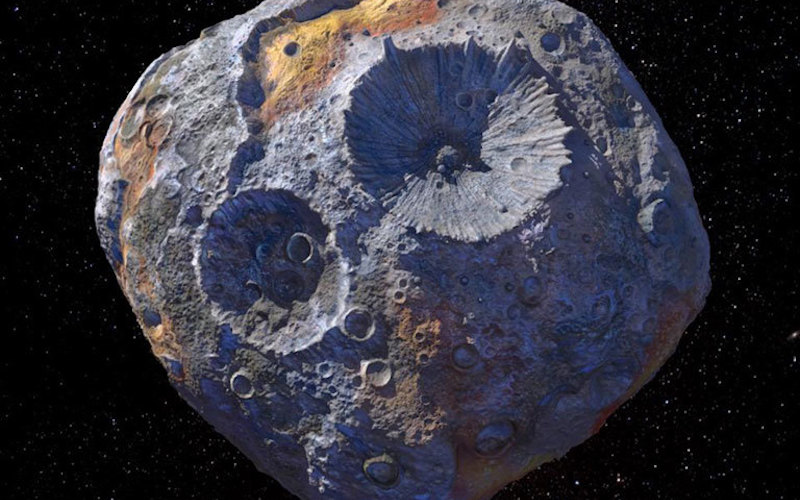
Gold is rare on Earth, but in the context of the universe, it is merely the byproduct of neutron star collisions. If a private equity firm could develop the infrastructure to mine asteroids or harvest celestial debris, the current market pricing for precious metals would collapse overnight. The “expense” of these items is essentially a tax on our current inability to access extraterrestrial resources.
The Financial Future of Space Mining
The next frontier of wealth creation is not found in traditional currency but in the logistics of resource extraction. Companies exploring asteroid mining are effectively betting that the cost of space logistics will eventually drop below the market value of the minerals those asteroids contain. This transition from “rare on Earth” to “plentiful in space” will serve as a case study for future financial students on how technological disruption renders entire asset classes obsolete. The “most expensive thing” today is often just the thing we do not yet have the infrastructure to reach.
The Intangible Asset: Knowledge as Universal Currency
If we strip away the physics of mass and energy, we are left with the final, and perhaps most valuable, element of the universe: information. In economic theory, the most valuable asset is often the one that reduces the cost of transaction and uncertainty.
The Cost of Discovery
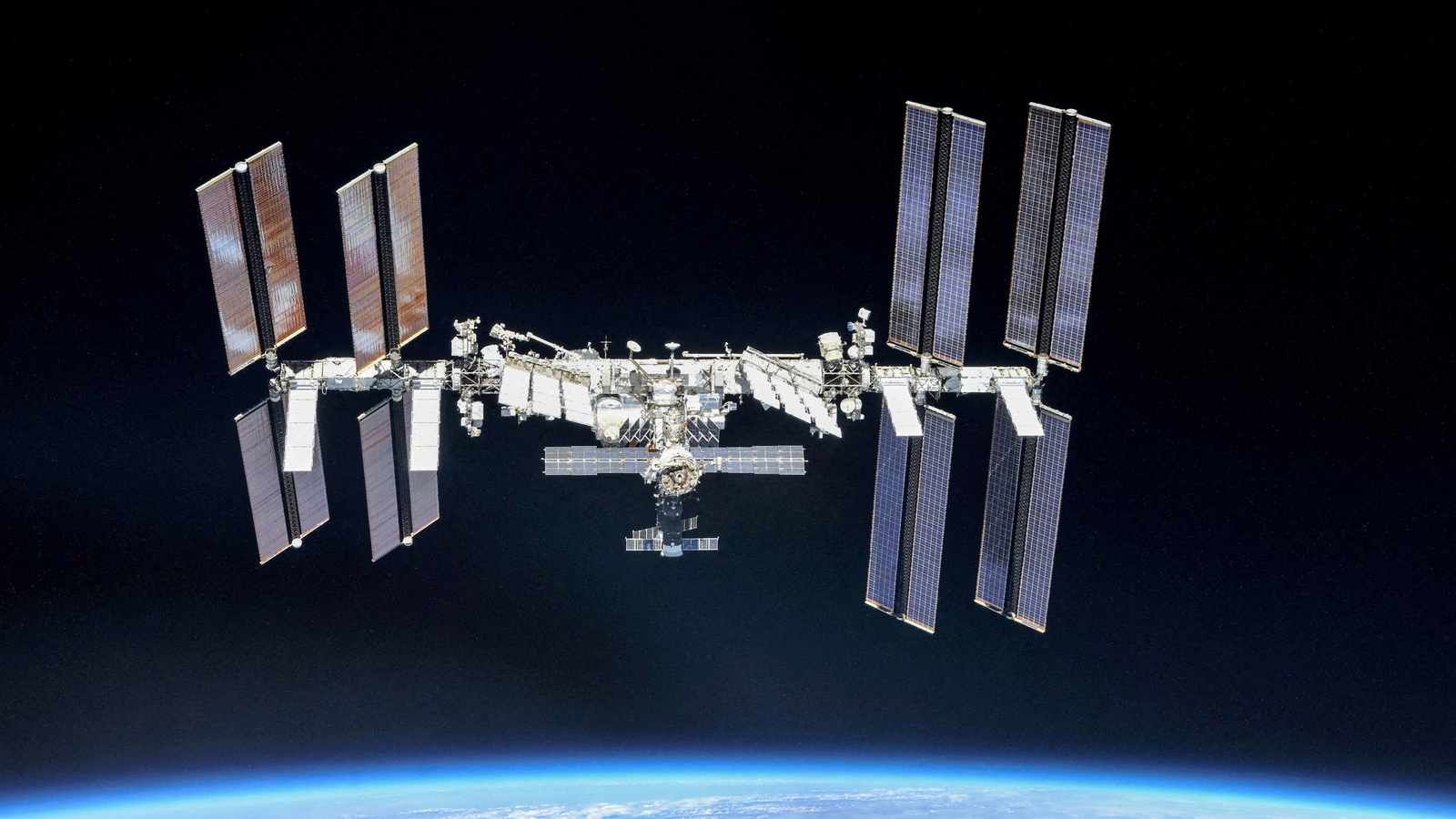
The Large Hadron Collider, the James Webb Space Telescope, and the myriad of deep-space probes represent the most expensive projects humanity has ever undertaken. Why do we spend trillions of dollars to look into the void? Because information is the only asset that scales infinitely without being depleted. Unlike gold, which is finite, or antimatter, which is fleeting, knowledge about the fundamental nature of the universe provides a permanent increase in our collective “market value.”
Investing in the Long-Term
When we ask what the most expensive thing in the universe is, we often look for a tangible object. However, the true answer is the state of human progress. The price tag attached to our scientific endeavors is not just a sunk cost; it is an investment in the ultimate yield: survival and expansion. By spending trillions to understand the universe, we are effectively buying an insurance policy on the future of our species.
Conclusion: The Horizon of Value
The search for the most expensive thing in the universe brings us to a stark realization about the nature of money itself. Whether we are discussing the trillions of dollars required to manufacture a gram of antimatter, the theoretical wealth of dark energy, or the immense capital required to explore the stars, value is consistently determined by the gap between human desire and technical capability.
We live in a universe where the most expensive substances are those we are currently furthest from mastering. As our technological sophistication grows, the price of the impossible drops. Today’s most expensive, unattainable substance may become tomorrow’s fuel source. True value, therefore, is not found in the material itself, but in the ingenuity required to harness it. We are not just participants in a global economy; we are explorers in a universal market where the currency is curiosity, and the return on investment is the mastery of the cosmos. As we continue to push the boundaries of what is possible, we redefine not just what is expensive, but what is essential for the next chapter of human history.
aViewFromTheCave is a participant in the Amazon Services LLC Associates Program, an affiliate advertising program designed to provide a means for sites to earn advertising fees by advertising and linking to Amazon.com. Amazon, the Amazon logo, AmazonSupply, and the AmazonSupply logo are trademarks of Amazon.com, Inc. or its affiliates. As an Amazon Associate we earn affiliate commissions from qualifying purchases.