
Understanding the minimum wage in Western Australia (WA) is crucial for both employees navigating their financial landscape and businesses managing their operational costs. Unlike most other Australian states and territories, WA operates a dual industrial relations system, which adds a layer of complexity to determining the applicable minimum wage. This article delves into the specifics of WA’s minimum wage, its economic implications, and essential considerations for individuals and enterprises alike.
Understanding Western Australia’s Dual Industrial Relations System
Western Australia uniquely operates two distinct industrial relations systems: the state system and the national system. This distinction is paramount when determining the minimum wage an employee is entitled to, as each system sets its own rates and conditions.
The State Industrial Relations System
The state system covers employees who work for businesses that are not constitutional corporations. This typically includes sole traders, partnerships, and some state government entities. The minimum wage for these employees is set annually by the Western Australian Industrial Relations Commission (WAIRC). The WAIRC conducts a comprehensive review each year, taking into account economic factors such as inflation, the cost of living, and the capacity of businesses to pay, alongside social considerations like the needs of low-paid workers. Decisions are usually handed down in May or June, with new rates coming into effect on 1 July each year.
The WAIRC also establishes state awards, which are legally binding documents containing minimum terms and conditions of employment for specific industries or occupations within the state system. These awards often specify higher minimum rates than the general state minimum wage, along with other entitlements such like penalty rates, allowances, and leave provisions. If an employee is covered by a state award, the award rate will apply. For employees not covered by an award, the general state minimum wage applies.
The National Industrial Relations System
The national system, administered by the Fair Work Commission (FWC), covers the majority of employees in Australia. In WA, this primarily includes employees of constitutional corporations, which are typically Pty Ltd companies and other incorporated entities. The FWC conducts its own annual wage review, separate from the WAIRC, and sets the National Minimum Wage. This national wage applies to employees not covered by a modern award or enterprise agreement under the national system.
Most employees under the national system are covered by a modern award. Modern awards are industry or occupation-based instruments that provide a safety net of minimum terms and conditions, including minimum pay rates, for employees in a particular industry or occupation. Like state awards, modern awards can specify higher minimum rates than the National Minimum Wage. If an employee is covered by a modern award, the pay rate specified in that award will apply. Enterprise agreements, negotiated directly between employers and employees (or their representatives), can also set minimum pay rates, provided they are no less than what an employee would receive under the relevant modern award or the National Minimum Wage.
The presence of these two systems means that employers in WA must correctly identify which system they operate under to ensure compliance, and employees need to understand which system governs their employment to ascertain their entitlements.
Current Minimum Wage Rates and Their Application
Determining the exact minimum wage applicable to an individual in Western Australia requires knowing which industrial relations system applies to their employer and whether an award or enterprise agreement covers their employment. While specific rates are subject to annual reviews, understanding the framework is key.
State System Minimum Wage
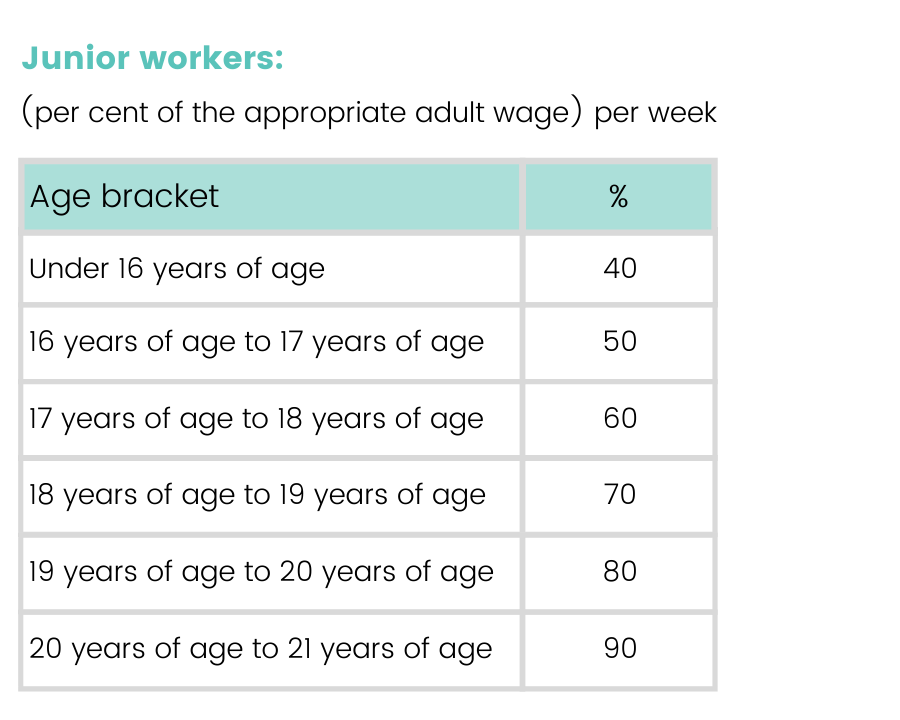
As of the most recent WAIRC decision, the state minimum wage applies to adult employees not covered by a state award. Employees covered by a state award will have their minimum rates set by that specific award, which may be higher. Junior employees, apprentices, and trainees in the state system also have specific rates, usually calculated as a percentage of the adult minimum wage. These rates are crucial for businesses operating as sole traders or partnerships, and for their employees.
For example, the WAIRC’s 2023-2024 State Wage Case decision increased the state minimum wage to $868.50 per week, or $22.86 per hour, effective from 1 July 2023. These figures serve as a baseline for non-award employees in the state system. Employers must diligently track these annual changes to ensure continuous compliance.
National System Minimum Wage
For employees covered by the national system and not by a modern award or enterprise agreement, the National Minimum Wage set by the Fair Work Commission applies. The FWC’s 2023-2024 Annual Wage Review decision set the National Minimum Wage at $882.80 per week, or $23.23 per hour, also effective from 1 July 2023. This rate applies to adults, with specific provisions for junior employees, apprentices, and employees with disability.
The vast majority of employees under the national system are covered by one of over 120 modern awards. Each modern award specifies minimum pay rates, often broken down by classification, experience level, and age. These award rates are typically higher than the National Minimum Wage. For instance, a retail employee under the General Retail Industry Award will have different minimum rates based on their classification (e.g., Retail Employee Level 1, Level 2) and whether they are full-time, part-time, or casual. Casual employees also receive a casual loading, usually 25%, on top of their base hourly rate to compensate for the lack of paid leave entitlements.

Businesses must identify the correct award or enterprise agreement that covers their employees and apply the rates stipulated therein. Tools like the Fair Work Ombudsman’s Pay and Conditions Tool (PACT) can assist in determining the correct rates under the national system, while the WAIRC provides similar resources for the state system.
Financial Planning and Economic Impact
The minimum wage is more than just a figure; it’s a cornerstone of financial stability for many individuals and a significant cost consideration for businesses. Its level has far-reaching implications for personal finance, the broader economy, and the overall social fabric of Western Australia.
Impact on Personal Finance
For individuals working at or near the minimum wage, every cent counts. Their income directly dictates their ability to cover essential living costs such as rent, groceries, utilities, transportation, and healthcare. A robust minimum wage can lift individuals and families out of poverty, reduce financial stress, and enable a basic standard of living. However, in regions like Perth, which consistently ranks among the most expensive cities in Australia, minimum wage earners often struggle to make ends meet, particularly when facing rising housing costs and inflation.
Financial planning for minimum wage earners often involves stringent budgeting, seeking affordable housing options, and meticulously tracking expenses. It can limit opportunities for saving, investing, or participating in leisure activities, impacting long-term financial security and quality of life. Access to financial literacy resources and support services becomes even more critical for this demographic to navigate economic challenges. The annual minimum wage reviews, therefore, represent a significant event, determining whether these individuals will see their purchasing power increase, stagnate, or even decline relative to the cost of living.
Impact on Businesses and the Economy
For businesses, particularly small and medium-sized enterprises (SMEs), the minimum wage represents a fundamental component of their labour costs. An increase in the minimum wage can lead to higher operational expenses, potentially impacting profitability. Businesses may respond to these increases in various ways: by adjusting pricing, seeking efficiencies, reducing staff hours, or investing in automation.
While higher wages can reduce profit margins in the short term, they can also yield long-term benefits. Increased worker morale, reduced staff turnover, and enhanced productivity often accompany fair remuneration. Employees earning a living wage are more likely to be engaged, loyal, and productive, contributing positively to a business’s reputation and bottom line. Moreover, higher wages can boost consumer spending, as low-income earners are more likely to spend additional income, injecting money back into the local economy. This can stimulate demand for goods and services, supporting local businesses and fostering economic growth.
Conversely, some argue that significant increases in the minimum wage can lead to job losses, particularly in industries with tight margins, as businesses may struggle to absorb the higher costs. The WAIRC and FWC carefully weigh these economic considerations during their annual reviews, striving to balance the needs of employees with the capacity of businesses to sustain operations and create employment.
Employer Obligations and Employee Rights
Navigating the minimum wage landscape requires a clear understanding of both employer obligations and employee rights. Compliance is not just a legal requirement but also a fundamental aspect of ethical business practice and fair employment.
Employer Obligations
Employers in Western Australia have a legal and ethical duty to pay their employees at least the applicable minimum wage rate. This obligation extends to all employees, whether full-time, part-time, or casual, and includes appropriate penalty rates for evenings, weekends, and public holidays, as well as allowances where applicable.
Key responsibilities for employers include:
- Determining the Correct System: Identifying whether their business falls under the state or national industrial relations system.
- Identifying the Correct Award/Agreement: Ascertaining if an award (state or modern) or enterprise agreement covers their employees and applying the correct classification and pay rates.
- Staying Updated: Regularly monitoring annual wage review decisions from the WAIRC and FWC, typically effective from 1 July each year, and adjusting pay rates accordingly.
- Record Keeping: Maintaining accurate and comprehensive employment records, including timesheets, pay slips, and details of annual leave, sick leave, and superannuation contributions.
- Issuing Pay Slips: Providing employees with detailed pay slips within one working day of paying wages, outlining gross pay, deductions, net pay, and superannuation contributions.
- Superannuation: Contributing superannuation on behalf of eligible employees, as per current Superannuation Guarantee (SG) rates.
Failure to comply with minimum wage obligations can result in significant penalties, including fines, back-pay orders, and reputational damage. Ignorance of the law is not an excuse, making it imperative for businesses to seek professional advice if unsure about their obligations.
Employee Rights and Avenues for Assistance
Employees in Western Australia have the right to be paid at least the minimum wage applicable to their employment. If an employee suspects they are being underpaid, they have several avenues for seeking assistance and rectifying the situation.
Key rights and support channels for employees include:
- Fair Work Ombudsman (FWO): For employees under the national system, the FWO provides free advice, information, and assistance. Their website offers a comprehensive Pay and Conditions Tool (PACT) to check award rates, and they can investigate complaints of underpayment and help mediate disputes.
- Wageline (Department of Mines, Industry Regulation and Safety): For employees under the state system, Wageline provides free information and advice on state industrial laws, including minimum wage rates, awards, and entitlements. They can also assist with underpayment claims.
- Unions: Membership in a relevant union can provide employees with representation, advocacy, and support in disputes regarding pay and conditions.
- Legal Advice: In complex cases, seeking independent legal advice from an employment lawyer may be necessary.
It is illegal for an employer to dismiss an employee or take adverse action against them for inquiring about their pay or making a complaint about underpayment. Employees are protected from such retribution, ensuring they can confidently pursue their entitlements without fear of reprisal. Understanding these rights empowers employees to advocate for fair remuneration and ensures a level playing field in the employment relationship.
aViewFromTheCave is a participant in the Amazon Services LLC Associates Program, an affiliate advertising program designed to provide a means for sites to earn advertising fees by advertising and linking to Amazon.com. Amazon, the Amazon logo, AmazonSupply, and the AmazonSupply logo are trademarks of Amazon.com, Inc. or its affiliates. As an Amazon Associate we earn affiliate commissions from qualifying purchases.