
Understanding the landscape of labor compensation in Georgia requires a deep dive into a unique dual-layered system. For business owners, financial planners, and employees alike, the question “What is the minimum wage in GA?” is rarely answered with a single number. Instead, it involves navigating the intersection of decades-old state statutes and federal mandates that dictate the economic reality of the Peach State’s workforce.
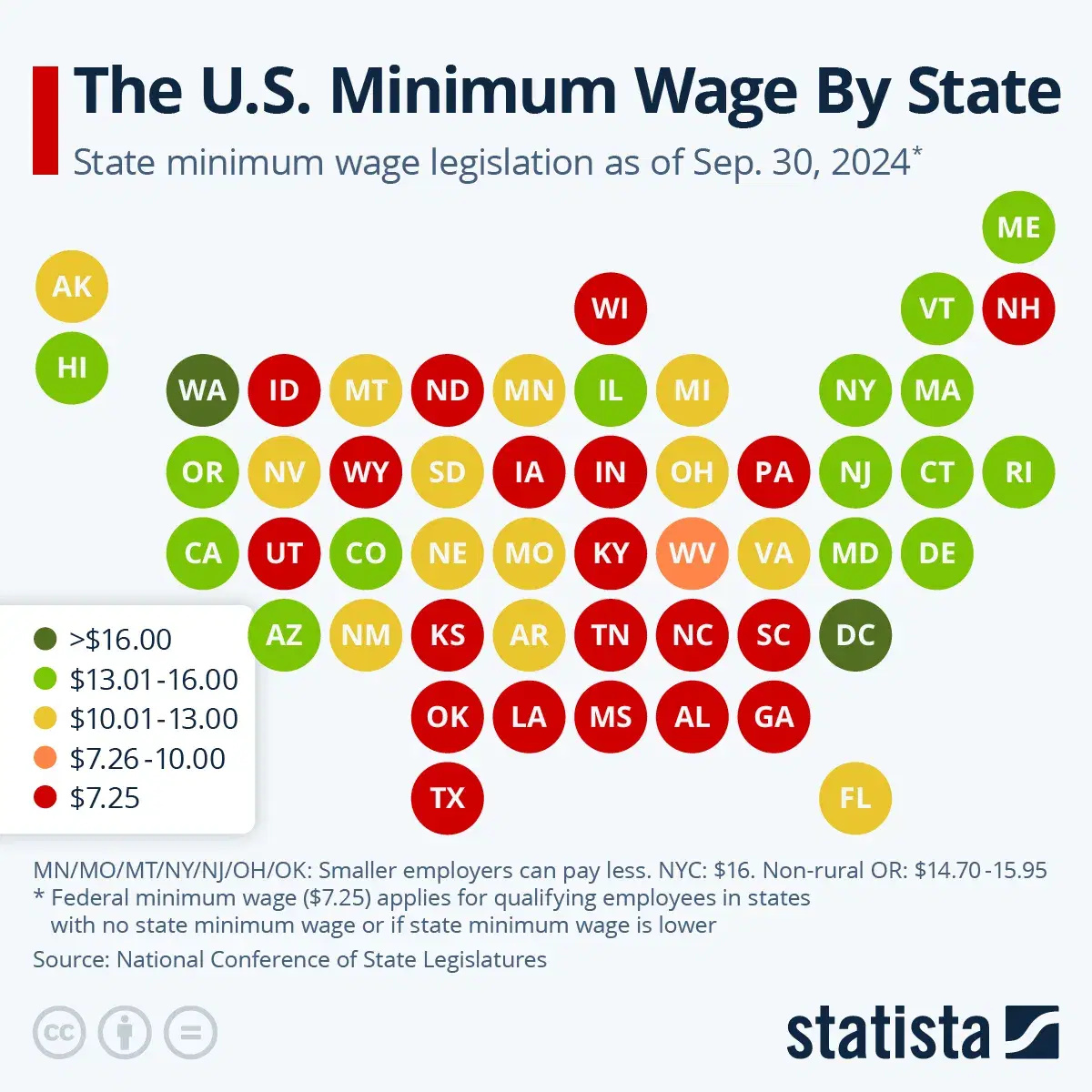
As of 2024, Georgia remains one of the few states in the Union with a state-level minimum wage that sits significantly below the federal threshold. While the official Georgia state minimum wage is technically $5.15 per hour, the practical reality for the vast majority of workers is governed by the federal Fair Labor Standards Act (FLSA), which mandates a rate of $7.25 per hour. This discrepancy creates a complex environment for business finance management and personal budgeting.

Understanding the Dual System: State vs. Federal Minimum Wage in Georgia
The financial architecture of Georgia’s wage system is built upon two primary pillars: the Georgia Minimum Wage Law and the federal Fair Labor Standards Act. To understand the financial implications for a business or an individual, one must first determine which law takes precedence.
The $5.15 State Minimum vs. the $7.25 Federal Rate
Georgia’s state minimum wage of $5.15 per hour has not been adjusted since 2001. Under the state law, certain small businesses that are not covered by federal law are technically permitted to pay this rate. However, the federal minimum wage of $7.25 per hour, established by the U.S. government in 2009, supersedes state law in almost every instance where a business is involved in interstate commerce or meets specific revenue thresholds.
For financial planning purposes, almost all Georgia employers should budget for at least the $7.25 federal rate. In cases where an employee is subject to both state and federal minimum wage laws, the employer is legally obligated to pay the higher of the two rates.
Who is Covered by the Fair Labor Standards Act (FLSA)?
The FLSA applies to “enterprise coverage” and “individual coverage.” From a business finance perspective, an enterprise is generally covered if it has at least two employees and an annual dollar volume of sales or business done of at least $500,000. Additionally, hospitals, businesses providing medical or nursing care, schools, and government agencies are covered regardless of their revenue.
Even if a business does not meet the $500,000 threshold, individual employees may be covered if their work regularly involves them in commerce between states. This includes producing goods that will be sent out of state, making phone calls to other states, or handling records of interstate transactions. In the modern digital economy, where credit card processing and online software tools are ubiquitous, the vast majority of Georgia workers fall under FLSA protection, making the $7.25 rate the effective minimum.
Exemptions and Special Pay Rates Under Georgia Law
In the realm of business finance and payroll management, understanding exemptions is critical for maintaining compliance and optimizing labor costs. Both Georgia and federal law allow for specific variations in pay for certain types of workers.
The Tipped Employee Credit
One of the most significant variations in Georgia’s wage structure applies to tipped employees, such as restaurant servers and bartenders. Under the FLSA, employers may pay a “cash wage” of as little as $2.13 per hour, provided that the employee’s tips combined with that cash wage equal at least the federal minimum wage of $7.25 per hour.
If an employee’s tips do not bring them up to the $7.25 threshold during a specific workweek, the employer is financially responsible for making up the difference. This requires rigorous bookkeeping and payroll oversight to ensure that tip credits are applied correctly and that the business remains compliant with Department of Labor regulations.
Student-Learners and Seasonal Workers
Georgia law and federal regulations also provide provisions for “sub-minimum” wages in specific educational or training contexts. High school students or vocational students may, under certain certifications, be paid a percentage of the minimum wage for a limited period while they gain on-the-job experience. Similarly, seasonal recreational establishments and certain agricultural operations may have different wage requirements depending on their size and the nature of their production.
Exempt Professional and Executive Roles
From a corporate strategy standpoint, it is important to distinguish between hourly “non-exempt” workers and salaried “exempt” workers. Employees in executive, administrative, or professional roles who earn a salary above a certain threshold (currently $844 per week or $43,888 annually as of mid-2024, with scheduled increases) are typically exempt from minimum wage and overtime requirements. For businesses, moving employees into exempt status can simplify payroll, but it requires meeting strict “duties tests” to avoid costly misclassification penalties.
The Economic Impact of the Minimum Wage on Georgia’s Business Landscape

While the legal minimum remains $7.25, the actual economic floor in Georgia has shifted dramatically over the last few years. Market forces, inflation, and competition for talent have created a scenario where very few businesses can successfully recruit or retain staff at the federal minimum.
Labor Shortages and Market-Driven Wage Increases
In metropolitan hubs like Atlanta, Savannah, and Augusta, the “market minimum wage” has effectively risen to between $13 and $17 per hour for entry-level roles in retail, logistics, and food service. Major employers like Amazon, Target, and various health systems have set internal minimum wages far above the state and federal requirements.
For small to medium-sized businesses (SMBs) in Georgia, this creates a competitive pressure. Financial directors must balance the need to remain profitable with the necessity of offering competitive wages. Paying only the legal minimum of $7.25 often results in higher turnover costs, which can be more expensive in the long run than offering a higher starting salary.
Operational Costs and Profit Margin Management
For businesses operating on thin margins, particularly in the hospitality and service sectors, any potential talk of raising the state minimum wage is a significant financial concern. Increasing the wage floor impacts not just the lowest-paid workers but also creates “wage compression,” where the wages of supervisors and mid-level employees must also be raised to maintain an equitable pay structure.
Georgia businesses frequently utilize tax credits, such as the Work Opportunity Tax Credit (WOTC), to offset labor costs. By hiring individuals from certain target groups, businesses can claim a federal tax credit, effectively subsidizing the cost of wages and helping to maintain healthy profit margins in a high-cost labor market.
Personal Finance Strategies for Low-Wage Earners in Georgia
For individuals earning at or near the minimum wage in Georgia, financial management is a disciplined exercise in budgeting and resource allocation. The gap between the minimum wage and the “living wage”—the amount needed to cover basic necessities without government assistance—is substantial.
The Gap Between Minimum Wage and the Living Wage
According to various living wage calculators, a single adult in Georgia typically needs to earn significantly more than $7.25 per hour to cover housing, food, transportation, and healthcare. In high-cost counties like Fulton or Gwinnett, the disparity is even more pronounced.
For those on a minimum wage income, personal finance strategy often involves leveraging state-level programs such as the Georgia PeachCare for Kids or the Supplemental Nutrition Assistance Program (SNAP). Furthermore, many workers seek to increase their income through “side hustles” or gig economy work, which provides the flexibility to supplement a primary low-wage job.
Leveraging Georgia’s Lower Cost of Living
One financial advantage of working in Georgia compared to states like New York or California is the relatively lower cost of living in rural areas. While the minimum wage remains low, the purchasing power of $7.25 (or the more common $10–$12 entry-level wage) goes further in Middle or South Georgia than in urban centers. Smart financial planning for Georgia workers often involves searching for housing in “commuter belts” where rents are lower, though this must be balanced against the increased cost of fuel and vehicle maintenance.
Future Outlook: Will Georgia See a Minimum Wage Hike?
The debate over Georgia’s minimum wage is a constant fixture in the state legislature. As neighboring states like Florida have moved toward a $15 minimum wage through ballot initiatives, Georgia’s static rate has become a point of significant economic and political discussion.
Legislative Activity and Political Climate
In recent years, several bills have been introduced in the Georgia General Assembly aimed at raising the state minimum wage to $15 per hour or allowing local municipalities to set their own higher rates. Currently, Georgia has a “preemption” law, which prevents cities like Atlanta from mandating a higher minimum wage within their city limits.
From a business finance perspective, the lack of local wage hikes provides a sense of predictability and stability. However, proponents of a higher wage argue that it would stimulate the local economy by increasing consumer spending power.
Comparing Georgia to Regional Competitors
When evaluating Georgia as a place for business investment, corporations look at the total “cost of doing business.” While Georgia’s low minimum wage is attractive on paper, the state must compete with North Carolina, Tennessee, and South Carolina for manufacturing and tech jobs. In these industries, wages are almost always driven by specialized skills rather than minimum wage laws.
Ultimately, the future of wages in Georgia will likely be driven more by the “invisible hand” of the market than by legislative action in the short term. As long as the cost of living continues to rise, businesses will be forced to adjust their financial models to accommodate higher labor costs, regardless of what is written in the Georgia Code. For now, the answer to “what is the minimum wage in GA” remains a tale of two numbers: the $5.15 on the books and the $7.25 in the wallets of the workforce.
aViewFromTheCave is a participant in the Amazon Services LLC Associates Program, an affiliate advertising program designed to provide a means for sites to earn advertising fees by advertising and linking to Amazon.com. Amazon, the Amazon logo, AmazonSupply, and the AmazonSupply logo are trademarks of Amazon.com, Inc. or its affiliates. As an Amazon Associate we earn affiliate commissions from qualifying purchases.