
Navigating the complexities of Social Security benefits can be daunting, especially when trying to understand what your potential income might be in retirement. For many Americans, Social Security represents a vital component of their financial security in their later years. The question of a “minimum” payment at age 65 is common, but the answer is nuanced, as Social Security benefits are highly individualized and depend on a person’s unique work history and claiming decisions. While there isn’t a single, fixed minimum payment for everyone turning 65, understanding the program’s mechanics, including a seldom-used “special minimum benefit” and the impact of early claiming, is crucial for financial planning.
Understanding Social Security Basics and Eligibility
Social Security is a federal insurance program designed to provide income to retirees, people with disabilities, and survivors of deceased workers. Eligibility for retirement benefits hinges on accumulating “work credits” throughout your career.
How Social Security Benefits Are Calculated
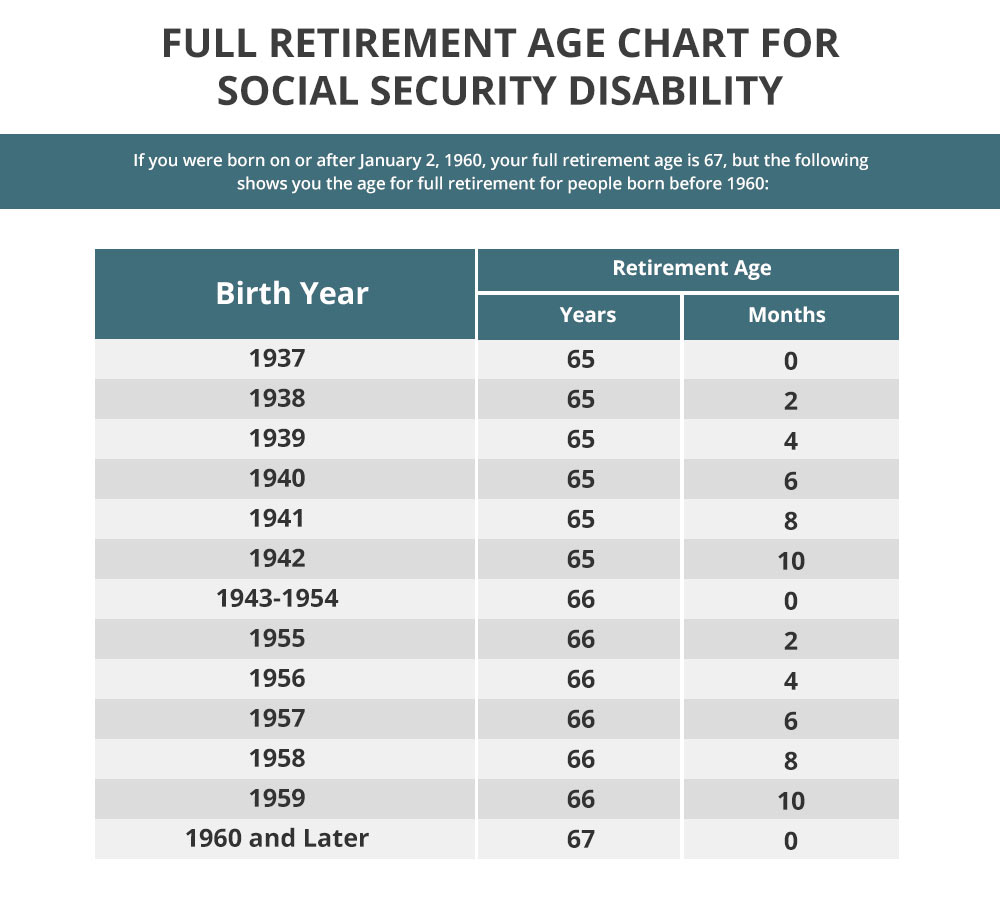
Your basic Social Security retirement benefit, known as your Primary Insurance Amount (PIA), is determined by a formula that averages your highest 35 years of earnings, adjusted for inflation (indexed earnings). This average is called your Average Indexed Monthly Earnings (AIME). The PIA is the amount you would receive if you began collecting benefits at your Full Retirement Age (FRA). The FRA varies based on your birth year, ranging from 66 for those born between 1943 and 1954, gradually increasing to 67 for those born in 1960 or later.
The Importance of Work Credits
To qualify for Social Security retirement benefits, you generally need 40 work credits. You can earn up to four credits each year. In 2024, you earn one credit for every $1,730 in earnings, meaning you need to earn at least $6,920 to get all four credits for the year. This effectively means you need to have worked and paid Social Security taxes for at least 10 years over your lifetime, though these years don’t need to be consecutive. Without these 40 credits, you are not eligible for Social Security retirement benefits based on your own earnings record.
Full Retirement Age (FRA) vs. Claiming Early
The age at which you choose to start receiving benefits significantly impacts your monthly payment. While you can begin collecting Social Security as early as age 62, doing so results in a permanent reduction of your monthly benefit amount compared to your PIA. Conversely, delaying collection past your FRA, up to age 70, can earn you Delayed Retirement Credits, increasing your monthly payment.
Claiming benefits at age 65 means you are collecting before your FRA if you were born in 1943 or later. For example, someone with an FRA of 67 who claims at 65 will receive approximately 86.7% of their PIA. This reduction is permanent, affecting every payment for the rest of their life.
The Concept of a “Minimum” Benefit at Age 65
When discussing a “minimum” Social Security payment, it’s important to distinguish between the general calculation for individuals with low earnings and the specific “special minimum benefit” program designed for very long-term, low-wage workers.
The Special Minimum Benefit Program
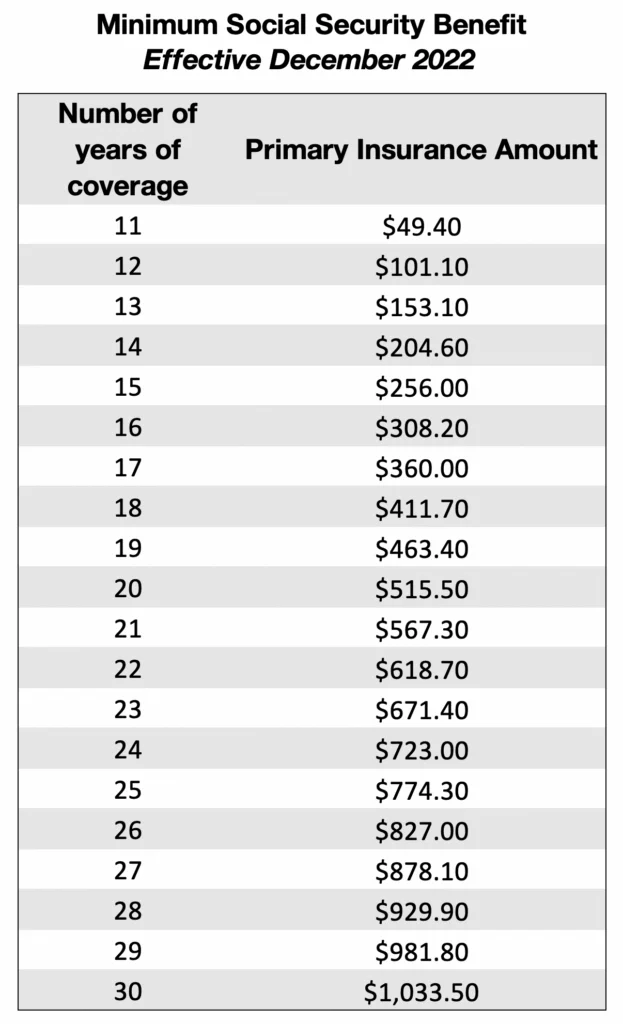
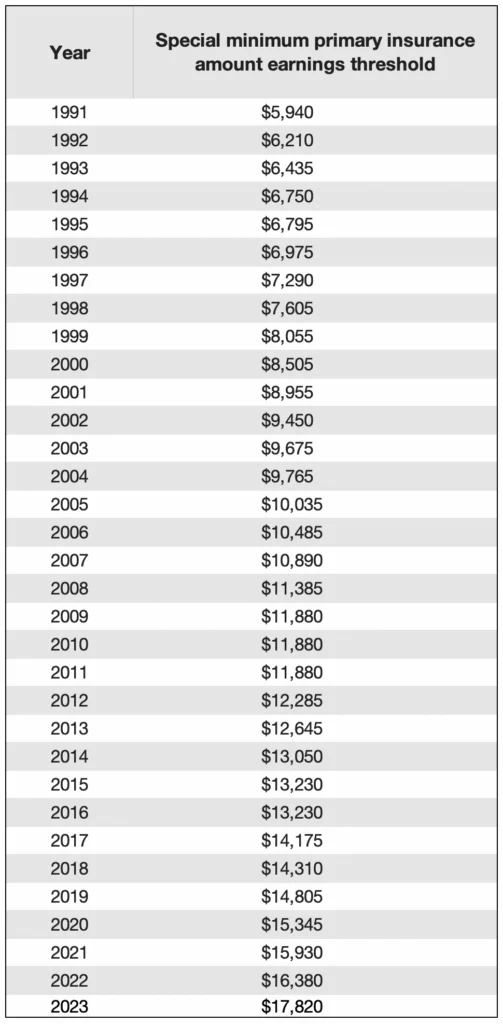
The Social Security Administration (SSA) does have a provision for a “special minimum benefit.” This benefit is designed to help long-term, low-wage workers who may not have accumulated substantial indexed earnings throughout their careers but have contributed to Social Security for many years. It’s calculated based on “Years of Coverage” (YOCs), which are years in which your earnings exceeded a certain threshold.
To qualify for the special minimum benefit, you need at least 11 YOCs. The actual benefit amount depends on the number of YOCs, with higher benefits for more years of covered employment. For instance, in 2024, a worker with 11 YOCs would receive a special minimum benefit of $50.30 per month, while a worker with 30 or more YOCs would receive $1,033.50 per month. If your calculated PIA (based on your average indexed monthly earnings) is higher than the special minimum benefit you would qualify for, you receive the PIA. Most beneficiaries receive a benefit based on their PIA, not the special minimum benefit, because their average indexed earnings are high enough.
Why the “Minimum” Isn’t Always Straightforward
For the vast majority of individuals, there is no set “minimum” monthly Social Security payment that they are guaranteed to receive at age 65. Instead, their benefit is determined by their earnings history and their chosen claiming age.
Even if you only worked the minimum 10 years (40 credits) and earned very little in those years, your benefit would be calculated based on those low earnings, then reduced because you’re claiming at 65 (before your FRA). This calculated amount could be quite low, but it’s not a pre-defined “minimum” in the same way the special minimum benefit is. It’s simply the result of the standard benefit formula applied to a limited or low-wage work history combined with early claiming.
For example, someone with 40 work credits and very low average indexed monthly earnings might have a PIA of only a few hundred dollars. If their FRA is 67, claiming at age 65 would reduce this already low PIA by approximately 13.3%, resulting in an even smaller monthly payment.
Impact of Claiming at Age 65 on Benefit Reductions
As previously mentioned, claiming at age 65 means you are initiating benefits prior to your Full Retirement Age (FRA) for anyone born in 1943 or later. This results in a permanent reduction in your monthly benefit.
-
For someone with an FRA of 66: Claiming at age 65 results in a 6.67% reduction.
-
For someone with an FRA of 66 and 2 months: Claiming at age 65 results in an 8.89% reduction.
-
For someone with an FRA of 66 and 4 months: Claiming at age 65 results in an 11.11% reduction.
-
For someone with an FRA of 66 and 6 months: Claiming at age 65 results in a 12.5% reduction.
-
For someone with an FRA of 66 and 8 months: Claiming at age 65 results in a 13.89% reduction.
-
For someone with an FRA of 66 and 10 months: Claiming at age 65 results in a 15.28% reduction.
-
For someone with an FRA of 67 (born 1960 or later): Claiming at age 65 results in a 13.3% reduction.
These percentages highlight that even if your PIA is substantial, claiming early at 65 means foregoing a portion of your potential full benefit.
Factors Influencing Your Social Security Payout
Beyond the general concepts, several key factors directly dictate the amount of your monthly Social Security check. Understanding these is vital for anyone planning their retirement income.
Your Earnings History: The AIME Calculation
Your Average Indexed Monthly Earnings (AIME) is the cornerstone of your benefit calculation. The SSA considers your 35 highest-earning years, adjusted for historical wage growth (indexing), to arrive at this average. If you have fewer than 35 years of earnings, years with no earnings are counted as zero in the calculation, which can significantly lower your AIME and, consequently, your PIA. Working longer, especially in your highest-earning years, can improve your AIME and ultimately lead to a higher benefit.
Your Claiming Age: Early vs. Delayed Retirement Credits
The decision of when to start receiving benefits is arguably the most critical factor under your control.
-
Early Claiming (Age 62-FRA): As discussed, claiming before your FRA results in a permanent reduction. The earlier you claim, the greater the reduction. This reduction is applied monthly, so claiming at 62 results in the largest reduction (up to 30% for those with an FRA of 67).
-
Full Retirement Age (FRA): Claiming at your FRA means you receive 100% of your calculated PIA.
-
Delayed Retirement Credits (FRA-Age 70): For each year you delay claiming past your FRA, up to age 70, you earn Delayed Retirement Credits. These credits permanently increase your benefit by 8% per year (for those born 1943 or later). This means delaying until age 70 could result in a monthly benefit that is 24% to 32% higher than your PIA.
The choice of claiming age involves a careful consideration of your health, life expectancy, current financial needs, and other retirement income sources.
Spousal and Survivor Benefits
Social Security also offers benefits to spouses and survivors, which can significantly impact household retirement income.
-
Spousal Benefits: A spouse can claim up to 50% of their partner’s PIA if they wait until their own FRA. If they claim spousal benefits early, their own spousal benefit is also reduced. If a spouse has their own work record, they generally receive their own higher benefit, but they can’t receive both full benefits simultaneously.
-
Survivor Benefits: Widows or widowers can receive benefits based on their deceased spouse’s earnings record. The benefit can be up to 100% of the deceased worker’s benefit if the survivor claims at their own FRA. These benefits also have early claiming reductions.
These benefits can provide a crucial safety net, especially for a lower-earning spouse or after the loss of a partner.
Taxation of Social Security Benefits
It’s important to remember that Social Security benefits may be subject to federal income tax, depending on your “provisional income.” Provisional income includes your adjusted gross income, tax-exempt interest, and half of your Social Security benefits.
-
If your provisional income is between $25,000 and $34,000 (for individuals) or $32,000 and $44,000 (for married couples filing jointly), up to 50% of your benefits may be taxable.
-
If your provisional income exceeds $34,000 (individual) or $44,000 (married filing jointly), up to 85% of your benefits may be taxable.
Some states also tax Social Security benefits, so it’s wise to consider this when planning your retirement budget.
Strategies for Maximizing Your Social Security Income
While you can’t instantly generate a “minimum” payment, you can certainly take steps to maximize your benefits, regardless of your starting point.
Working Longer and Earning More
The most direct way to increase your Social Security benefit is to enhance your earnings record. If you have fewer than 35 years of high earnings, working additional years (especially if they are higher-earning years) can replace lower-earning or zero-earning years in your AIME calculation, thereby increasing your PIA. Even if you already have 35 years of earnings, replacing a lower-earning year with a higher one will also boost your AIME.
Strategic Claiming Decisions
The decision of when to claim benefits is critical.
-
Understand Your FRA: Know your Full Retirement Age and the implications of claiming before or after it.
-
Assess Health and Life Expectancy: If you anticipate a long life, delaying benefits can significantly increase your lifetime payout. If health issues suggest a shorter lifespan, claiming earlier might be more advantageous.
-
Spousal Coordination: Married couples have more options. They can coordinate their claiming strategies to maximize their combined lifetime benefits. For instance, the higher-earning spouse might delay claiming to boost their benefit (and potential survivor benefit), while the lower-earning spouse might claim earlier.
Coordinating Benefits with a Spouse
Married couples can often optimize their benefits by carefully coordinating their claiming ages. One common strategy is for the higher-earning spouse to delay claiming until age 70 to maximize their benefit, which will also result in a larger survivor benefit for the lower-earning spouse if the higher earner passes away first. The lower-earning spouse might claim their own benefit earlier, or claim a spousal benefit once the higher earner begins collecting. It’s crucial for couples to run various scenarios through the SSA’s online tools or with a financial advisor to determine the optimal strategy for their unique situation.
Integrating Social Security into Your Overall Retirement Plan
Social Security should be viewed as one piece of your broader retirement income puzzle, alongside pensions, 401(k)s, IRAs, and other savings. It provides a stable, inflation-adjusted income stream, which is invaluable. However, it’s generally not sufficient to cover all retirement expenses for most people. A comprehensive retirement plan considers how Social Security income complements withdrawals from savings and investments, helping to ensure a sustainable income throughout your retirement years.
The Broader Context: Social Security’s Role in Retirement Planning
Social Security serves as a fundamental safety net and an important source of guaranteed income for millions of Americans, but it is rarely intended to be the sole source of retirement funds.
Social Security as a Foundation, Not the Sole Source
Financial experts often refer to Social Security as one leg of a “three-legged stool” of retirement income, with personal savings (401(k)s, IRAs, brokerage accounts) and pensions (if applicable) forming the other two legs. For most retirees, Social Security benefits replace only about 40% of their pre-retirement income, and less for higher earners. This underscores the importance of saving and investing independently throughout your working life to achieve financial security in retirement.
The Future of Social Security: Projections and Reforms
Like any large government program, Social Security faces ongoing challenges, particularly regarding its long-term solvency. Demographic shifts, such as lower birth rates and increased life expectancies, mean fewer workers are contributing per beneficiary. The Social Security Administration’s Trustees project that the program will be able to pay 100% of promised benefits until around the mid-2030s, after which it will be able to pay about 80% of scheduled benefits if no legislative changes are made.
While these projections can cause concern, it’s important to understand that “insolvent” does not mean “bankrupt” or that benefits will cease entirely. Rather, it indicates that without adjustments, the system might not be able to pay 100% of scheduled benefits. Historically, Congress has acted to address these challenges through various reforms, such as increasing the full retirement age, adjusting the tax rate, or modifying the benefit formula. These discussions highlight the importance of staying informed and continuing to plan your personal finances with the understanding that adjustments to the system are always a possibility.
aViewFromTheCave is a participant in the Amazon Services LLC Associates Program, an affiliate advertising program designed to provide a means for sites to earn advertising fees by advertising and linking to Amazon.com. Amazon, the Amazon logo, AmazonSupply, and the AmazonSupply logo are trademarks of Amazon.com, Inc. or its affiliates. As an Amazon Associate we earn affiliate commissions from qualifying purchases.