
In the vast lexicon of the English language, few words carry as much weight or as many definitions as the word “set.” However, when we transition from general linguistics into the specialized world of technology, the term “set” sheds its ambiguity and becomes a cornerstone of logic, data management, and software architecture. Whether you are a developer writing complex algorithms, a database administrator managing millions of records, or an AI researcher training models, the concept of a “set” is foundational to your work.
Understanding the meaning of a “set” in tech requires more than a dictionary definition; it requires an exploration of how we organize data, ensure efficiency, and maintain the integrity of digital systems. From its mathematical roots to its implementation in high-level programming languages, the “set” is the primary tool for managing collections of unique information.

1. The Mathematical Foundation: Set Theory in Computing
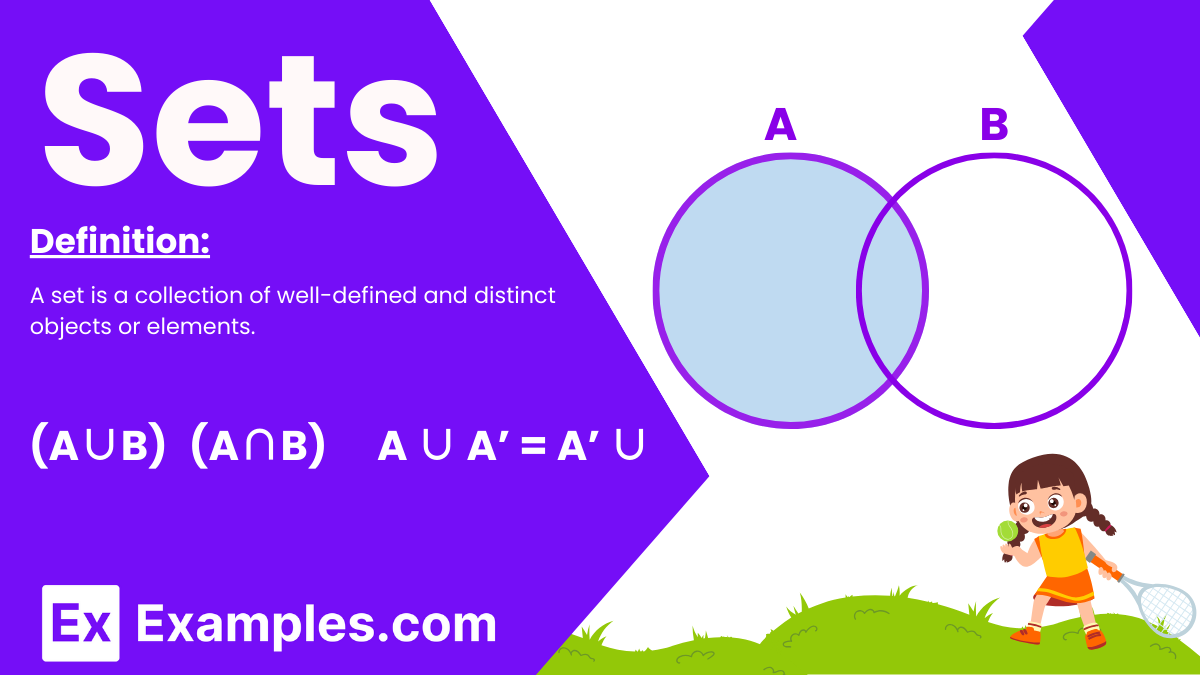
To understand what a set means in technology, one must first look at its origins in Discrete Mathematics. Set theory, pioneered by Georg Cantor in the late 19th century, provides the logical framework upon which modern computer science is built. In tech, a set is defined as a collection of distinct objects, considered as an object in its own right.
The Principle of Uniqueness
The most critical characteristic of a set in technology is that it contains no duplicate elements. Unlike a “list” or an “array,” which can hold the same value multiple times, a set inherently enforces uniqueness. If you attempt to add an item to a set that already contains that item, the set remains unchanged. This property is vital in tech for tasks such as filtering unique user IDs, managing IP addresses in a network, or ensuring that a database does not contain redundant entries.
Set Operations: Union, Intersection, and Difference
Much of software logic relies on how different groups of data interact. Tech professionals use classical set operations to solve complex problems:
- Union: Combining two sets to find all unique elements in both.
- Intersection: Finding only the elements that exist in both sets (e.g., finding mutual friends on a social media platform).
- Difference: Identifying elements that exist in one set but not the other (e.g., identifying users who have signed up for a service but have not yet completed their profile).
Relational Algebra
In the realm of databases, set theory evolves into relational algebra. Every time a developer writes a query to retrieve data, they are essentially performing set operations. The “meaning” of a set here is the relational group of data points that satisfy a specific condition, allowing for the structured retrieval and manipulation of information.
2. Sets as a Fundamental Data Structure in Programming
In software development, a “Set” is a built-in data structure provided by almost every major programming language, including Python, Java, C++, and JavaScript. Understanding how these sets function is crucial for writing efficient, high-performance code.
Membership Testing and Performance
One of the primary reasons developers use sets is for “membership testing.” If you need to check whether a specific item exists within a massive collection of data, using a list would require the computer to look at every single item one by one (O(n) time complexity). However, a set uses a mechanism called “hashing.” This allows the computer to jump directly to the location of the item, making the search nearly instantaneous (O(1) time complexity). In high-speed applications, this difference can mean the difference between a seamless user experience and a lagging interface.
The Python and Java Implementations
In Python, a set is an unordered collection of items where every element is unique and immutable. Developers use them to perform fast mathematical operations or to de-duplicate lists instantly. In Java, the HashSet and TreeSet serve similar purposes but offer different performance trade-offs. A HashSet offers the fastest performance, while a TreeSet keeps the elements sorted. The “meaning” of a set in this context is efficiency—it is the choice of data structure when speed and uniqueness are the top priorities.
Immutable Sets and Thread Safety
In advanced software architecture, we often encounter “FrozenSets” or “Immutable Sets.” These are sets that cannot be changed after they are created. In multi-threaded programming—where multiple parts of a program are running simultaneously—immutable sets are essential. They ensure that data remains consistent across the entire application, preventing the “race conditions” that often lead to software crashes and security vulnerabilities.
3. The “SET” Operator in Database Management and SQL

Beyond data structures in code, the word “set” takes on a functional meaning in the world of databases. If you work with SQL (Structured Query Language), “SET” is a command that changes the very state of your data.
The SET Clause in Data Updates
When a database administrator or a backend developer needs to modify existing records, they use the UPDATE statement combined with the SET clause. For example, UPDATE Users SET last_login = '2023-10-27' WHERE user_id = 505. In this context, “set” means “to assign a value.” It is the bridge between a static piece of data and a dynamic update, allowing systems to reflect real-world changes in real-time.
Set-Based vs. Procedural Processing
Modern databases are designed to operate on “sets” of data rather than individual rows. This is known as set-based processing. Instead of telling the computer how to loop through every user to check their subscription status (procedural), a developer tells the database what set of users to target. This allows the database engine to optimize the operation, handling millions of rows in seconds. Understanding this “set-centric” mindset is what separates amateur coders from expert data engineers.
Handling Nulls and Constraints
In database theory, the meaning of a set also extends to how we handle “nothingness.” A set in a database must adhere to certain constraints (like Primary Keys or Unique Constraints). These constraints are the technical enforcement of the mathematical definition of a set. They ensure that the data remains a “set” (a collection of unique objects) rather than a “multiset” (where duplicates are allowed), preserving the integrity of the entire system.
4. Practical Applications in Software Engineering and AI
The theoretical and structural meanings of a set converge in practical applications that we use every day. From the apps on your phone to the AI models generating text, sets are working behind the scenes.
De-duplication and Data Cleaning
In the era of Big Data, we are constantly bombarded with redundant information. Data scientists use sets to “clean” their data. By converting a massive dataset into a set, they can instantly remove duplicates, ensuring that their analysis is based on unique, high-quality information. This is a vital step in “Data Preprocessing,” which is 80% of the work in any machine learning project.
Access Control and Security
Security protocols often rely on set logic. Consider a “Role-Based Access Control” (RBAC) system. A user might belong to a “set” of roles (e.g., Editor, Admin, Viewer). When they try to access a file, the system checks if the “set” of required permissions for that file has an “intersection” with the “set” of roles the user possesses. If the intersection is not empty, access is granted. Here, the meaning of a set is security and authorization.
Sets in Machine Learning and Vector Databases
With the rise of Artificial Intelligence, the concept of a “set” has evolved into “Vector Sets.” AI models represent words, images, and concepts as points in a multi-dimensional space. To find similar concepts, the AI looks for “Nearest Neighbors” within a set of vectors. This is the technology that powers recommendation engines on Netflix or search results on Google. In this high-tech frontier, a set is no longer just a collection of numbers; it is a collection of meanings and relationships.
5. The Evolution of “Set” in the Digital Era
As technology continues to advance, the definition of a “set” expands. We are moving beyond simple collections of integers or strings into the management of complex objects and distributed data.
Distributed Sets in Cloud Computing
In cloud environments like AWS or Azure, data is often spread across multiple servers. Tools like Apache Spark use “Distributed Datasets.” These are sets that are partitioned across a cluster of computers. Even though the data is physically in different locations, it is treated as a single logical “set.” This allows for “Parallel Processing,” enabling tech companies to process petabytes of data at speeds that were unthinkable a decade ago.
The Role of Sets in UX/UI Design
Even in front-end development, “sets” play a role. A “set of components” in a design system (like Google’s Material Design) ensures that a user interface remains consistent. Developers use a “set” of standardized buttons, fonts, and colors. This organizational meaning of a set helps teams scale their products without losing visual or functional coherence.
Conclusion: Why the Definition Matters
To answer “what is the meaning of set” in the context of technology is to describe the framework of order in a digital world. A set is the enforcement of uniqueness, the engine of computational efficiency, and the logic behind data integrity.
For the tech professional, a set is more than just a collection; it is a strategic tool. Whether you are optimizing a search algorithm, updating a database, or securing a network, you are operating within the rules of set theory. As we move further into the age of AI and distributed computing, the humble “set” remains perhaps the most powerful and enduring concept in the technologist’s toolkit. Understanding its nuances is not just a matter of vocabulary—it is a requirement for anyone looking to build, manage, or innovate in the modern digital landscape.
aViewFromTheCave is a participant in the Amazon Services LLC Associates Program, an affiliate advertising program designed to provide a means for sites to earn advertising fees by advertising and linking to Amazon.com. Amazon, the Amazon logo, AmazonSupply, and the AmazonSupply logo are trademarks of Amazon.com, Inc. or its affiliates. As an Amazon Associate we earn affiliate commissions from qualifying purchases.