
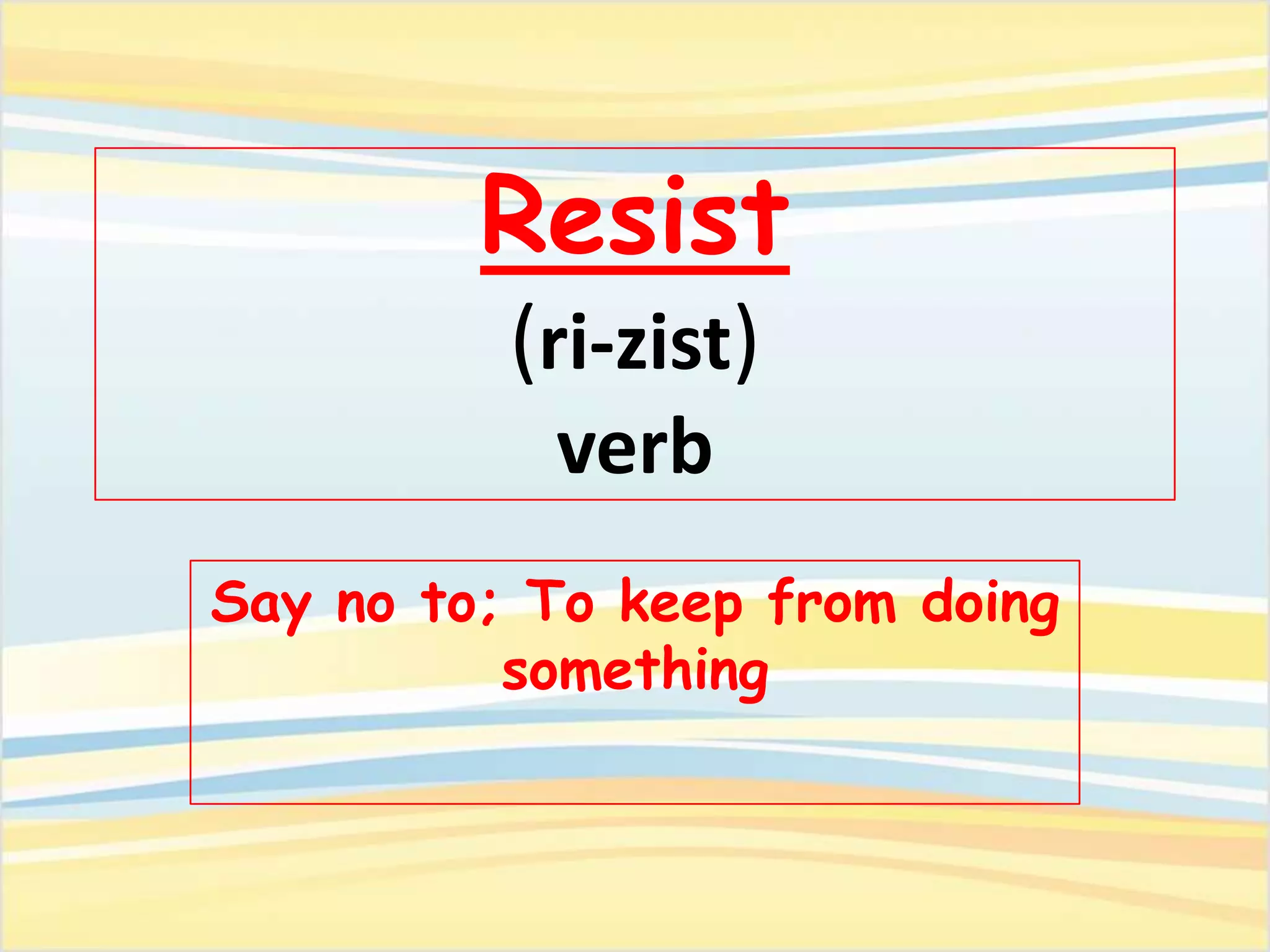
In a world driven by instant gratification, relentless marketing, and an ever-present current of economic flux, the concept of “resist” might seem counterintuitive. Often associated with defiance or opposition, when applied to the realm of money, “resist” transforms into a powerful synonym for discipline, foresight, and strategic resilience. It’s not merely about saying “no,” but about making deliberate, informed choices that safeguard and grow your financial well-being against internal impulses, external pressures, and unforeseen challenges. Understanding what it truly means to resist in a financial context is fundamental to achieving security, independence, and long-term prosperity. It’s about building a robust financial fortress, brick by brick, against the forces that seek to erode it.
Resisting Impulses: The Cornerstone of Personal Financial Discipline
The most immediate and pervasive form of financial resistance lies within ourselves: the struggle against our innate desire for instant gratification. In a consumer-driven society, every click, every advertisement, and every social media feed is designed to provoke desire and encourage immediate action. Resisting these impulses is not about deprivation, but about intentionality and aligning spending with long-term financial goals.
The Psychology of Instant Gratification vs. Long-Term Gain
Human psychology is wired for immediate rewards. Our brains release dopamine when we acquire something new or experience pleasure, creating a powerful feedback loop that can undermine rational financial planning. This is the core challenge in personal finance: choosing the delayed gratification of saving, investing, or debt repayment over the immediate satisfaction of a new purchase or an indulgent experience. Behavioral economics highlights how present bias often leads us to discount future benefits in favor of current desires, making it difficult to stick to budgets or investment plans. Understanding this psychological battle is the first step toward winning it. Recognizing the “dopamine hit” for what it is—a fleeting pleasure—allows us to consciously choose a more enduring sense of financial control and progress.
Strategies for Resisting Unnecessary Spending
Effective resistance against unnecessary spending requires a multi-faceted approach. Firstly, robust budgeting frameworks, such as the 50/30/20 rule (50% needs, 30% wants, 20% savings/debt repayment) or zero-based budgeting, provide a clear roadmap for where your money should go. They transform abstract saving goals into concrete, actionable plans. Secondly, mindful consumption encourages you to differentiate between needs and wants, critically evaluating each potential purchase. Asking questions like “Do I truly need this?” or “Will this bring lasting value?” can be powerful resistance mechanisms. Implementing a “waiting period”—for example, 24 to 48 hours—before making non-essential purchases can diffuse impulse buying and allow for more rational decision-making. Lastly, cultivating hobbies and activities that are low-cost or free can help satisfy the desire for engagement and pleasure without resorting to retail therapy.
Overcoming Lifestyle Creep
Lifestyle creep is the insidious phenomenon where an increase in income leads to a proportional, or even disproportionate, increase in spending rather than savings or investments. As salaries rise, so too do expectations for a “better” lifestyle—a bigger house, a fancier car, more expensive vacations, and designer goods. Resisting lifestyle creep means consciously deciding to save or invest a significant portion of any pay raise or bonus. It requires maintaining a relatively constant standard of living while allowing your financial assets to grow exponentially. This act of resistance ensures that increased earnings translate into increased wealth and financial security, rather than just increased consumption. It’s about breaking the cycle of constantly chasing the next upgrade and finding contentment in what you already have, while strategically building for the future.
Resisting Market Volatility and Herd Mentality in Investing
The financial markets are a crucible of emotions, where fear and greed often drive collective behavior, leading to booms and busts. For investors, “resist” means standing firm against these emotional currents and adhering to a well-thought-out strategy, even when instinct screams otherwise.
The Emotional Rollercoaster of Investing
Investing is as much about managing emotions as it is about analyzing numbers. When markets are surging, FOMO (Fear Of Missing Out) can tempt investors to chase speculative assets or deviate from their risk tolerance. Conversely, during market downturns, panic selling can lead to realizing losses and abandoning a long-term plan just when opportunities might be emerging. This emotional rollercoaster is a primary obstacle to successful investing. Understanding that market fluctuations are normal and often cyclical is crucial. Resisting the urge to react impulsively to daily news or short-term volatility is a hallmark of disciplined investing. It requires a calm, detached perspective, recognizing that market noise is often just that—noise.
Building a Resilient Investment Strategy
The most effective way to resist market volatility is to build a resilient investment strategy grounded in long-term principles. This involves diversification across different asset classes (stocks, bonds, real estate), geographies, and industries to mitigate risk. Dollar-cost averaging, where you invest a fixed amount regularly regardless of market conditions, allows you to buy more shares when prices are low and fewer when they are high, effectively averaging out your purchase price and resisting the temptation to time the market. Regular rebalancing ensures your portfolio stays aligned with your original asset allocation, trimming winners and adding to underperformers. Most importantly, having a clearly defined investment plan based on your financial goals, risk tolerance, and time horizon provides a robust framework to resist emotional reactions during market swings. Sticking to this plan, even through periods of doubt, is a profound act of financial resistance.
Guarding Against Speculative Fads and Scams
The allure of “get-rich-quick” schemes and speculative fads is a constant danger in the investment world. Whether it’s the latest meme stock, an unregulated cryptocurrency promising unrealistic returns, or outright Ponzi schemes, the financial landscape is littered with temptations designed to exploit greed and impatience. Resisting these requires critical thinking, due diligence, and a healthy skepticism towards anything that seems too good to be true. Investors must educate themselves, understand the risks involved in any investment, and only put money into instruments they fully comprehend. Avoiding the herd mentality that rushes into unproven or highly volatile assets based on hype, rather than fundamentals, is a vital form of resistance that protects capital and preserves long-term growth potential.
Resisting the Siren Song of Debt and Financial Traps
Debt, particularly high-interest consumer debt, can be a destructive force, eroding financial freedom and creating a cycle of dependency. Resisting its allure and strategically managing its impact is a critical aspect of financial well-being.
The Slippery Slope of High-Interest Debt

Credit cards, personal loans, and payday loans often offer immediate access to funds, but at a steep price. The compounding effect of high interest rates can quickly turn a small balance into an overwhelming burden, trapping individuals in a cycle of minimum payments that barely scratch the principal. Resisting the temptation to use debt for discretionary spending, or as a continuous fallback for living beyond one’s means, is paramount. Understanding the true cost of debt—not just the principal, but the accumulated interest over time—highlights why it’s a financial drain that must be actively resisted. Each dollar spent on interest is a dollar not available for savings, investments, or achieving financial goals.
Strategic Debt Management and Avoidance
For those already facing debt, resistance means taking proactive steps to manage and eliminate it. Strategies like the “debt snowball” (paying off smallest balance first for psychological wins) or the “debt avalanche” (paying off highest interest rate first for maximum financial efficiency) provide structured approaches to regaining control. More importantly, resistance involves adopting habits that prevent future debt accumulation: living strictly within your means, prioritizing essential expenses, and building a robust emergency fund. An emergency fund acts as a critical buffer, allowing you to resist the need to incur debt during unforeseen events like job loss, medical emergencies, or car repairs. It’s a powerful act of proactive resistance against financial shocks.
Identifying and Resisting Financial Scams
The digital age has opened new avenues for sophisticated financial scams, ranging from phishing emails and investment fraud to identity theft. Resisting these traps requires constant vigilance and an understanding of common red flags. Unsolicited requests for personal information, promises of guaranteed high returns with little risk, pressure to act quickly, or demands for payment in unusual forms (e.g., gift cards, cryptocurrency) are all signs of potential fraud. Protecting personal information, using strong, unique passwords, and verifying the legitimacy of any financial proposition are acts of resistance that shield your assets from malicious actors. Educating yourself on current scam trends and maintaining a healthy dose of skepticism are essential defenses.
Resisting Economic Shocks: Building Financial Resilience
Beyond personal habits and market dynamics, “resist” also applies to preparing for broader economic downturns and unforeseen life events. This involves building a financial infrastructure that can withstand significant external pressures.
The Imperative of an Emergency Fund
As mentioned, an emergency fund is arguably the most critical component of financial resilience. It is your first line of defense against job loss, unexpected medical bills, major home repairs, or any other sudden financial demand. Resisting the temptation to dip into this fund for non-emergencies, and diligently building it up to cover 3-6 months (or more) of living expenses, is an act of foresight and self-preservation. It provides a safety net that allows you to navigate crises without resorting to high-interest debt or liquidating long-term investments at inopportune times.
Diversifying Income Streams
Reliance on a single source of income—whether a salary from a job or revenue from a single product line for a business—creates a significant vulnerability. Resisting this single-point-of-failure risk involves actively seeking and cultivating diversified income streams. For individuals, this might mean pursuing side hustles, freelance work, rental properties, or dividends from investments. For businesses, it means diversifying product offerings, customer bases, and revenue models. This diversification acts as a hedge, ensuring that if one income source diminishes or disappears, others can help maintain financial stability. It’s a strategic move that enhances overall financial robustness.
Continuous Learning and Adaptation
The economic landscape is dynamic, constantly reshaped by technological advancements, geopolitical events, and evolving consumer behaviors. Resisting stagnation means committing to continuous learning and adaptation. This applies to personal finance (staying informed about new financial tools, tax laws, or investment opportunities) and business finance (understanding market trends, optimizing operational efficiency, and exploring new business models). Acquiring new skills, re-skilling, and adapting professional capabilities make individuals more resilient in the job market, while agile business practices allow companies to weather economic shifts. This active pursuit of knowledge and flexibility is a powerful form of resistance against irrelevance and vulnerability.
The Broader Meaning: Cultivating a Mindset of Financial Resistance
Ultimately, the meaning of “resist” in the financial world extends beyond specific actions; it embodies a holistic mindset—a philosophy that prioritizes long-term well-being and independence over fleeting desires and external pressures.
Financial Independence as an Act of Resistance
For many, achieving financial independence (FI) is the ultimate act of resistance. It’s a conscious rejection of the conventional “rat race”—the cycle of working solely to pay bills and fund an ever-escalating lifestyle. FI is about building enough passive income or accumulated wealth to cover living expenses, thereby freeing oneself from the necessity of traditional employment. This freedom allows individuals to resist the pressures of a demanding job, pursue passions, or dedicate time to causes they believe in, rather than being dictated by financial obligations. It’s a powerful statement of autonomy and control.
The Power of Delayed Gratification and Patience
At its core, financial resistance champions delayed gratification and patience. It’s the understanding that true wealth is not built overnight, nor is it acquired through shortcuts. It’s the result of consistent, disciplined effort over time—the patient accumulation of savings, the compounding growth of investments, and the steady repayment of debt. This mindset resists the instant-gratification culture and embraces the long game, recognizing that the most valuable rewards often require the longest wait.

Empowering Yourself Through Financial Knowledge
Perhaps the most fundamental form of financial resistance is the active pursuit of knowledge. Resisting ignorance and misinformation empowers individuals to make sound decisions, challenge conventional wisdom, and protect themselves from exploitation. Understanding how money works—how to earn it, save it, invest it, and protect it—is the ultimate defense mechanism. It allows you to resist manipulative marketing, unprincipled financial advice, and the fear-mongering tactics that often accompany market downturns. Financial literacy is the key to unlocking true financial power and enduring resistance.
In conclusion, “resist” in the context of money is a profound and multifaceted concept. It signifies a proactive stance against internal impulses, market volatility, debt traps, and economic shocks. It’s about cultivating discipline, foresight, and resilience. By embracing this philosophy, individuals and businesses can navigate the complexities of the financial world with confidence, build lasting wealth, and ultimately achieve a deeper sense of security and freedom. It’s not just about what you resist, but about what you proactively create and protect through that resistance.
aViewFromTheCave is a participant in the Amazon Services LLC Associates Program, an affiliate advertising program designed to provide a means for sites to earn advertising fees by advertising and linking to Amazon.com. Amazon, the Amazon logo, AmazonSupply, and the AmazonSupply logo are trademarks of Amazon.com, Inc. or its affiliates. As an Amazon Associate we earn affiliate commissions from qualifying purchases.