
In the realm of modern technology, the concept of regrouping in mathematics serves as the silent engine driving everything from basic calculator functions to complex cryptographic algorithms. While most people encounter regrouping—historically referred to as “carrying” and “borrowing”—in elementary arithmetic, its technical implications in the digital age are profound. For developers, hardware engineers, and data scientists, understanding how numbers regroup is not just a matter of sums; it is the foundation of computational logic, binary processing, and digital precision.
The Architectural Logic of Regrouping in Digital Systems
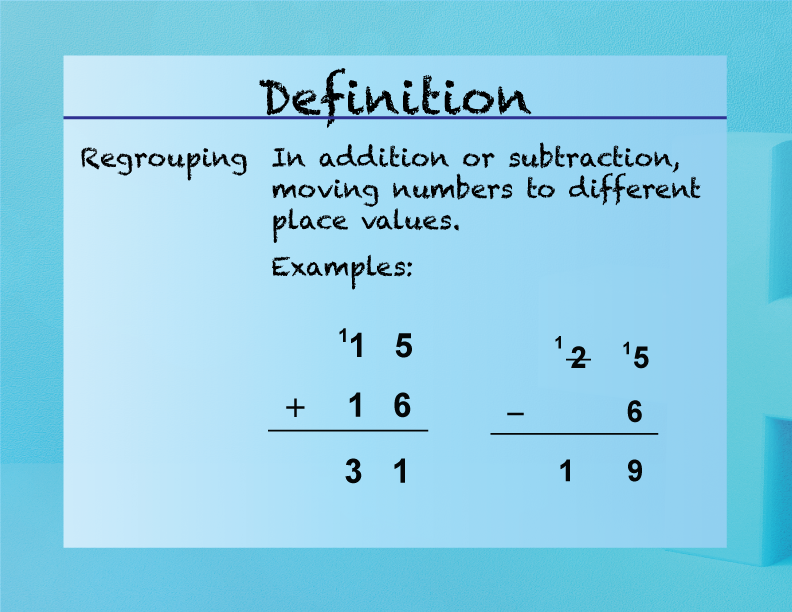
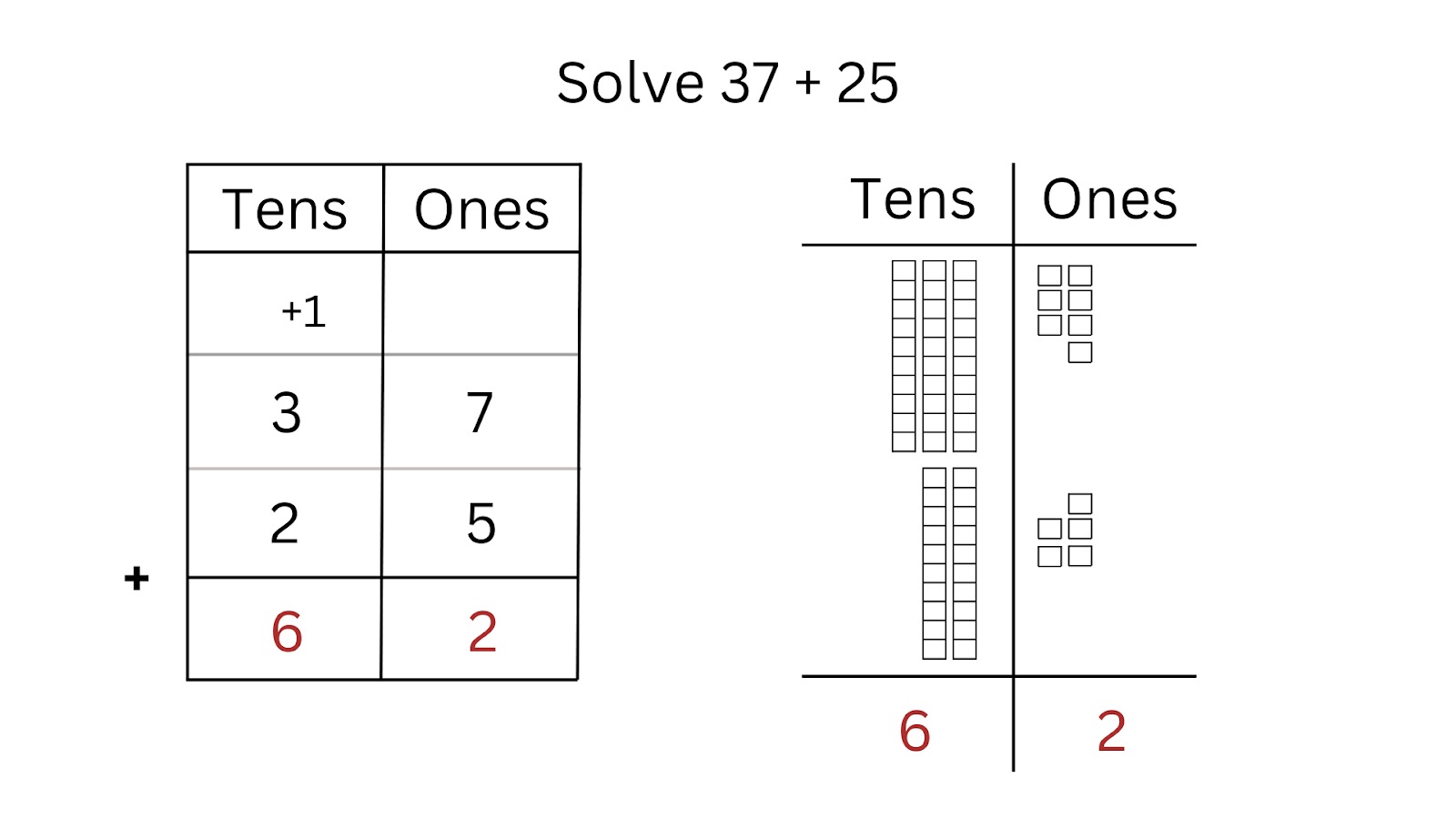
At its core, regrouping is the process of making groups of tens (or other bases) when performing addition or subtraction. In the context of technology, this process is formalized within the Arithmetic Logic Unit (ALU) of a Central Processing Unit (CPU). When a computer adds two numbers, it doesn’t just “know” the answer; it follows a rigorous circuit-based logic that mirrors the regrouping we do on paper.
Binary Regrouping and the Carry Flag
In the decimal system (Base-10), we regroup when a column exceeds nine. In the binary system (Base-2), which governs all modern computing, regrouping occurs much more frequently—every time a sum exceeds one. When a processor adds 1 + 1, the result is 10 in binary. The “1” is moved to the next bit position through a mechanism known as a “carry.”
In low-level programming and assembly language, this is tracked by the “Carry Flag” in the processor’s status register. If an operation results in a value that exceeds the capacity of the current register (for example, adding two 8-bit numbers that result in a 9-bit value), the regrouping logic triggers the carry flag. This signal tells the software that the value has “regrouped” beyond its current container, necessitating either an overflow error or the allocation of more memory.
The Half-Adder and Full-Adder Circuits
To understand the meaning of regrouping in tech, one must look at the physical hardware. Hardware engineers design “Half-Adders” and “Full-Adders” to handle regrouping. A Half-Adder can add two bits but cannot handle a carry-in from a previous operation. A Full-Adder, however, is the pinnacle of mathematical regrouping logic; it accepts two bits plus a “carry bit” from a lower-order operation, processes them, and outputs a sum and a new carry bit. By chaining these circuits together, engineers create “Ripple Carry Adders” that perform multi-bit regrouping at the speed of light.
Regrouping in Software Development and Data Types
Beyond the hardware level, regrouping dictates how software handles data and prevents errors. In high-level programming, developers must account for how numerical values are regrouped to ensure the integrity of financial transactions, scientific simulations, and database management.
Floating-Point Math and Precision Errors
One of the most significant challenges in technology is how computers handle the regrouping of fractional numbers. The IEEE 754 standard for floating-point arithmetic defines how computers represent real numbers. When numbers are very large or very small, the “decimal point” (or radix point) must move, effectively regrouping the significand and the exponent.
However, because computers work in binary, certain decimal fractions cannot be perfectly regrouped into binary sets. This is why, in languages like JavaScript or Python, 0.1 + 0.2 might result in 0.30000000000000004. The software is struggling with the regrouping logic between Base-10 human input and Base-2 machine processing. For tech professionals, “regrouping” in this context is a lesson in precision and the limitations of digital approximation.
BigInt and Arbitrary-Precision Arithmetic
In fields like blockchain technology and deep-space navigation, standard 64-bit integers are often insufficient. When a number becomes too large to be contained in a standard register, the software must implement “arbitrary-precision arithmetic.” This involves a sophisticated software-level regrouping where numbers are stored as arrays of digits. The software manually performs the carry and borrow operations across these arrays, mimicking the manual regrouping taught in schools but at a scale involving thousands of digits. This ensures that even when numbers exceed the “natural” regrouping capacity of the hardware, the mathematical logic remains sound.
The Role of Regrouping in Cryptography and Security
In digital security, regrouping takes on a strategic mathematical form known as modular arithmetic. This is perhaps the most advanced application of the “regrouping” concept, forming the backbone of RSA encryption, Elliptic Curve Cryptography (ECC), and the hashing algorithms that secure the internet.
Modular Arithmetic: The Infinite Regroup
In modular arithmetic, numbers “wrap around” or regroup when they reach a certain value, called the modulus. Think of a clock: after 12:00, we regroup back to 1:00. In cryptography, this “circular regrouping” is used to create “one-way functions.”
For example, it is computationally easy to calculate a large power of a number and then find the remainder after regrouping it through a massive modulus. However, it is nearly impossible to work backward to find the original number. Here, regrouping is not just a way to organize units; it is a cryptographic shield that protects data by making the original values irrecoverable without a specific key.
Bitwise Operations and Shifting
Security professionals also use regrouping through bitwise shifting. By shifting bits to the left or right, they effectively regroup the value by powers of two. A left shift (<<) is a form of rapid regrouping that multiplies a value, while a right shift (>>) divides it. In the context of digital security, these shifts are used in “S-boxes” (Substitution-boxes) to scramble data. The “meaning” of regrouping here is the intentional reorganization of data to achieve obfuscation and entropy.
Advanced Data Science: Tensors and Multidimensional Regrouping
In the world of Artificial Intelligence and Machine Learning, the concept of regrouping evolves into “reshaping” and “tiling” within tensor operations. Tensors—multidimensional arrays of numbers—are the primary data structures for training AI models like Large Language Models (LLMs).
Reshaping Tensors for Neural Networks
When an AI model processes an image, it views the image as a grid of pixels (a matrix). To process this data through a neural network, the grid often needs to be “regrouped” into a single long vector or a different set of dimensions. This process, known as “tensor reshaping,” is functionally identical to mathematical regrouping. The underlying data remains the same, but the way it is grouped and structured changes to allow the mathematical functions of the neural network to perform matrix multiplication.
Data Normalization and Scaling
Machine learning also relies on “normalizing” data, which is a form of regrouping values into a specific range (usually 0 to 1). If one input feature is in the thousands and another is a decimal, the model’s weightings will be skewed. By regrouping these values into a standardized scale, data scientists ensure that the mathematical “weight” of each input is handled correctly by the algorithm. Without this regrouping, the “math” of the AI would fail to converge on an accurate solution.
The Future of Regrouping: Quantum Computing
As we look toward the horizon of quantum computing, the meaning of regrouping in math undergoes its most radical transformation yet. In classical tech, a bit is either 0 or 1, and regrouping is a linear, deterministic process. In quantum computing, qubits exist in superposition, representing multiple states simultaneously.
Quantum Superposition and Probabilistic Regrouping
In a quantum system, regrouping isn’t just about moving a carry bit from one column to the next. It involves “entanglement,” where the state of one qubit is inextricably linked to another. When a quantum algorithm performs an operation, the regrouping of “states” happens across a probabilistic landscape.
While we are still in the early stages of this technology, quantum regrouping promises to solve mathematical problems that would take classical computers billions of years. For the tech industry, this represents the ultimate evolution of the concept: moving from the rigid, mechanical regrouping of silicon chips to the fluid, multi-dimensional regrouping of subatomic particles.
Conclusion: The Ubiquity of Numerical Reorganization
To ask “what is the meaning of regrouping in math” from a technical perspective is to uncover the fundamental blueprint of the digital world. It is the logic that allows a pocket calculator to function, the precision that prevents a banking app from losing a cent, and the complexity that allows an encryption algorithm to keep private data safe.
Whether it is the physical carry bit in a CPU, the complex reshaping of a tensor in an AI model, or the modular wrap-around of a security key, regrouping is the process of managing information density. As technology continues to scale, our methods of regrouping will become faster and more sophisticated, but the underlying mathematical principle—the systematic reorganization of value to maintain logic and order—will remain the bedrock of every innovation.
aViewFromTheCave is a participant in the Amazon Services LLC Associates Program, an affiliate advertising program designed to provide a means for sites to earn advertising fees by advertising and linking to Amazon.com. Amazon, the Amazon logo, AmazonSupply, and the AmazonSupply logo are trademarks of Amazon.com, Inc. or its affiliates. As an Amazon Associate we earn affiliate commissions from qualifying purchases.