
In the vast and intricate world of finance, seemingly simple mathematical concepts often form the bedrock of complex strategies and everyday transactions. Among these fundamental building blocks, the concept of a “fraction” stands out not merely as an academic exercise, but as an indispensable tool for understanding, analyzing, and navigating the financial landscape. While a fraction might conjure images of school mathematics, its practical application extends far beyond the classroom, permeating every aspect of personal finance, investing, and business operations.
At its core, a fraction represents a part of a whole. It signifies division, proportion, and ratio. In the financial realm, this seemingly straightforward definition unlocks a universe of insights, from calculating interest rates and understanding stock ownership to budgeting income and evaluating business performance. Without a solid grasp of fractions, individuals and institutions alike would struggle to make informed decisions, comprehend market dynamics, or even manage their basic financial affairs. This article will delve into the profound meaning of fractions within the context of money, demonstrating their critical role in empowering financial literacy and strategic decision-making.

The Foundational Role: Understanding Fractions at a Glance
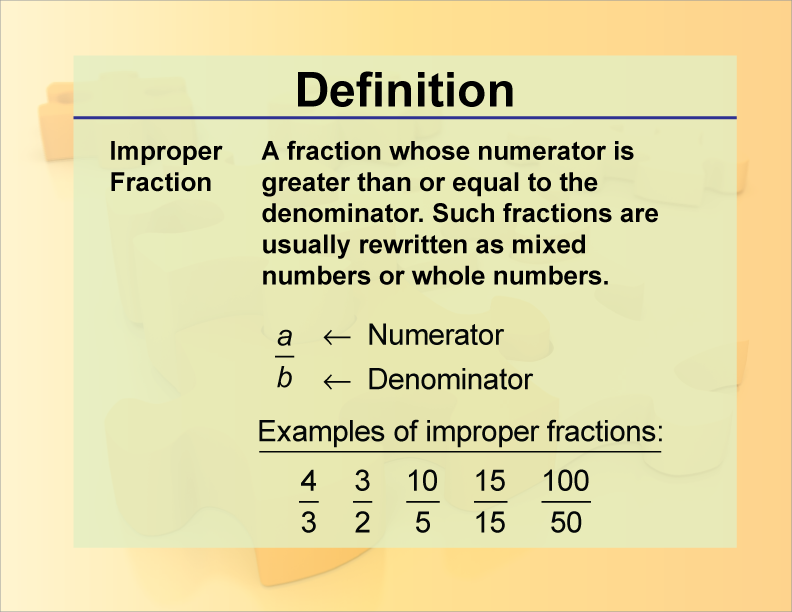
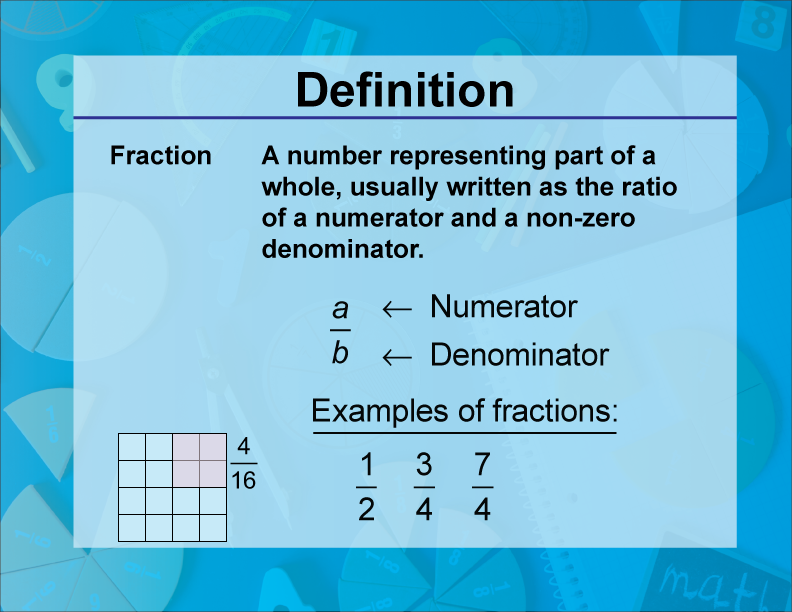
Before exploring its nuanced financial applications, it’s crucial to solidify the basic understanding of a fraction. A fraction is typically expressed as a numerator over a denominator (e.g., 1/2, 3/4, 7/10). The denominator tells us how many equal parts the whole is divided into, while the numerator indicates how many of those parts we are considering. This simple division of a whole into constituent parts is the very essence of many financial operations.
Beyond the Basic Definition: Parts of a Whole in the Financial World
In finance, “the whole” can represent a multitude of things: an entire company, your total income, a complete investment portfolio, or even a full year’s budget. Fractions allow us to dissect these wholes into manageable, understandable segments. For instance, when you own a share of a company, you own a fraction of that company’s equity. When you allocate a portion of your income to savings, you are setting aside a fraction of your earnings. This ability to quantify and compare parts against a total is indispensable for financial clarity.
The Ubiquity of Percentages: Fractions in Disguise
Perhaps the most common manifestation of fractions in finance is the percentage. A percentage is simply a fraction where the denominator is always 100. For example, 50% is equivalent to the fraction 50/100, which simplifies to 1/2. Interest rates, discount rates, tax rates, profit margins, and investment returns are almost universally expressed as percentages. Understanding that 25% annual interest means you pay 1/4 of the principal in interest over a certain period or that a 10% investment gain means you’ve earned 1/10 of your initial capital, demystifies these figures. Recognizing percentages as specialized fractions simplifies calculations and enhances comprehension of their actual impact on your money.
Navigating Personal Finance with Fractional Savvy
For individuals, a strong understanding of fractions is not merely academic; it’s a practical skill that underpins effective personal financial management. From managing daily expenses to planning for long-term goals, fractions provide the framework for sound decision-making.
Budgeting and Allocation: Dividing Your Income
At the heart of personal finance lies budgeting – the strategic allocation of income to various expenditures and savings. This process is inherently fractional. Many financial advisors recommend frameworks like the “50/30/20 rule,” which dictates that 50% of your income goes to needs, 30% to wants, and 20% to savings and debt repayment. These percentages are direct applications of fractions (1/2, 3/10, 1/5, respectively). Understanding these proportions helps individuals visualize how their money is being distributed and identify areas for adjustment to meet financial goals. Without grasping what “20% for savings” truly means in terms of the whole income, effective budgeting becomes a guessing game.
Debt Management and Interest Rates: The Cost of Borrowing
Debt is a ubiquitous aspect of modern finance, whether it’s a mortgage, student loan, or credit card balance. Understanding the cost of this debt requires a firm grasp of fractions, particularly through interest rates. An annual percentage rate (APR) is a fraction that indicates the yearly cost of borrowing. For example, a 15% APR on a credit card means that for every dollar borrowed, you pay an additional $0.15 (15/100) in interest over a year, not accounting for compounding. Calculating monthly interest payments, understanding the principal portion versus the interest portion of a loan payment, and evaluating the long-term cost of debt all rely on fractional calculations. This knowledge empowers borrowers to make smarter choices, negotiate better terms, and accelerate debt repayment.
Savings and Future Planning: Compounding Growth
Fractions also play a crucial role in understanding the power of compounding interest, the engine of long-term wealth creation. When you earn interest on your savings or investments, that interest then starts earning interest itself. The rate at which your money grows is expressed as a fraction (a percentage). Over time, even small fractions of returns can accumulate significantly. Understanding concepts like compound annual growth rate (CAGR) – a fractional representation of average annual growth – helps individuals project future wealth, plan for retirement, and set realistic savings targets.
Fractions in the Investment Landscape
The world of investing is deeply interwoven with fractional concepts. From owning shares of a company to diversifying a portfolio and measuring returns, fractions are fundamental to understanding market mechanics and making informed investment decisions.
Stock Ownership and Share Values: Fractional Stakes
When you buy a stock, you are purchasing a fractional ownership in a company. Each share represents a small, equal part of the company’s equity. The price of a share, for example, might be $50.50, where the “point five zero” represents a fraction of a dollar (50/100 or 1/2). Understanding the number of shares you own relative to the total outstanding shares gives you a clear picture of your fractional stake in the company. Dividends, too, are often expressed per share, requiring fractional calculation to determine your total payout based on your fractional ownership.
Portfolio Diversification: Spreading Risk Across Fractions
Diversification is a cornerstone of prudent investing, aiming to reduce risk by spreading investments across various asset classes, industries, and geographies. This strategy is inherently fractional. An investor might allocate 40% of their portfolio to stocks, 30% to bonds, 20% to real estate, and 10% to commodities. Each of these percentages is a fraction of the total portfolio (2/5, 3/10, 1/5, 1/10). Understanding how these fractional allocations contribute to overall risk and return is vital for constructing a resilient investment portfolio. It allows investors to assess their exposure to different market segments and rebalance their holdings to maintain desired proportions.
Understanding Returns and Yields: Measuring Performance
Investment performance is almost universally measured using fractional concepts. Return on investment (ROI) is calculated as a fraction: (Gain from Investment – Cost of Investment) / Cost of Investment, often expressed as a percentage. Yields on bonds, rental properties, or dividend stocks are also fractions, representing the income generated relative to the asset’s price or value. For instance, a dividend yield of 3% means you receive $0.03 (3/100) in dividends for every dollar invested in the stock. Accurately interpreting these fractions is crucial for comparing investment opportunities and assessing the efficiency of capital deployment.
Risk Assessment and Ratios: Quantifying Exposure
Sophisticated investors and financial analysts use various ratios to assess the risk and volatility of investments, many of which are based on fractions. For example, the Beta coefficient, a measure of an investment’s volatility in relation to the overall market, is a fractional value. A Beta of 1.5 suggests the investment is 50% more volatile than the market. Understanding these fractional risk measures helps investors align their portfolios with their risk tolerance and anticipate potential fluctuations.
Business Finance: From Ownership to Profitability
In the corporate world, fractions are the language of financial reporting, ownership structures, and operational analysis. They provide the quantitative framework for understanding a company’s health, efficiency, and value.
Equity and Ownership Structures: Who Owns What?
Similar to individual stock ownership, the entire equity of a company is divided into shares, representing fractional ownership. For private companies, ownership stakes are often explicitly stated as fractions or percentages. For example, three partners might own 1/3, 1/3, and 1/3 of the company, or one founder might retain 51% (51/100) for controlling interest, while investors hold the remaining 49%. Mergers, acquisitions, and equity financing deals frequently involve intricate fractional calculations to determine new ownership distributions and valuations.
Profit Sharing and Revenue Distribution: Dividing the Pie
Businesses often employ profit-sharing models for employees, partners, or even within joint ventures. These agreements specify how a fraction (or percentage) of the company’s profits will be distributed. Similarly, revenue-sharing agreements dictate the fractional split of income generated from collaborations or partnerships. Understanding these fractional arrangements is vital for transparent financial management and ensuring equitable distribution among stakeholders.
Key Financial Ratios: Interpreting Business Health
Financial ratios are powerful analytical tools used by investors, creditors, and management to gain insights into a company’s performance and financial health. These ratios are all fractions, comparing one financial metric to another.
- Profitability Ratios: Gross Profit Margin (Gross Profit / Revenue), Net Profit Margin (Net Income / Revenue) – indicating what fraction of revenue turns into profit.
- Liquidity Ratios: Current Ratio (Current Assets / Current Liabilities) – showing a company’s ability to cover short-term obligations using a fraction of its assets.
- Solvency Ratios: Debt-to-Equity Ratio (Total Debt / Shareholder Equity) – revealing what fraction of a company’s assets are financed by debt versus equity.
- Efficiency Ratios: Inventory Turnover (Cost of Goods Sold / Average Inventory) – measuring how many times a company sells and replaces its inventory over a period, a fractional measure of operational efficiency.
Each of these fractional ratios tells a story about the business, allowing for comparisons against industry benchmarks and historical performance to identify strengths and weaknesses.
Valuation and Mergers: Assessing Fractional Values
When companies are bought and sold, or when new investments are made, valuation techniques heavily rely on fractions. Discounted cash flow (DCF) models, for instance, involve discounting future cash flows back to a present value, often using fractional discount rates. Comparable company analysis (CCA) involves comparing a target company’s financial ratios (fractions) to those of similar publicly traded companies to derive a valuation multiple. Mergers and acquisitions involve assessing the fractional value of each entity and determining fair exchange ratios for shares, ensuring that the fractional ownership in the newly formed entity reflects the contributions of each party.
Empowering Financial Decisions Through Fractional Mastery
The intrinsic meaning of a fraction—a part of a whole—is not just an abstract mathematical concept but a concrete lens through which to view and interact with the financial world. From personal budgeting to global market analysis, fractions provide the foundational logic and quantitative tools necessary for clarity and control.
Critically Evaluating Financial Products and Services
An understanding of fractions empowers consumers to critically evaluate the terms and conditions of various financial products. Whether it’s dissecting the fee structure of an investment fund (expressed as expense ratios—a fraction of assets), comparing interest rates on loans, or understanding the fractional costs embedded in insurance premiums, fractional literacy allows individuals to see beyond superficial numbers and grasp the true financial implications. This insight enables smarter choices, avoids hidden fees, and ensures fair value.
Optimizing the Use of Financial Tools and Calculators
Modern finance offers an array of calculators and digital tools for budgeting, investment planning, and debt management. While these tools automate calculations, the user’s ability to interpret the inputs and outputs effectively hinges on an understanding of the underlying fractional principles. Knowing what a “return percentage” or “debt-to-income ratio” signifies allows users to leverage these tools to their full potential, rather than blindly trusting the numbers generated. It fosters a deeper engagement with one’s financial data and promotes informed scenario planning.
Building a Strong Foundation for Lifelong Financial Literacy
Ultimately, understanding the meaning of a fraction in a financial context is a cornerstone of lifelong financial literacy. It cultivates an analytical mindset, enabling individuals and businesses to:
- Quantify and compare: Easily weigh different financial options.
- Break down complex information: Deconstruct large financial figures into understandable components.
- Identify relationships: See how different financial elements are proportionally connected.
- Predict outcomes: Make educated forecasts based on rates and proportions.
In a world increasingly driven by data and quantitative analysis, the ability to comprehend and apply fractional thinking is not just an advantage; it’s a necessity for achieving financial wellness, making strategic investments, and ensuring robust business health. The meaning of a fraction, therefore, transcends its simple definition, emerging as a vital skill for anyone seeking to master their monetary destiny.
aViewFromTheCave is a participant in the Amazon Services LLC Associates Program, an affiliate advertising program designed to provide a means for sites to earn advertising fees by advertising and linking to Amazon.com. Amazon, the Amazon logo, AmazonSupply, and the AmazonSupply logo are trademarks of Amazon.com, Inc. or its affiliates. As an Amazon Associate we earn affiliate commissions from qualifying purchases.