
The 2017 Manchester Arena incident remains a somber milestone in modern history, but from a technological and digital security perspective, it represents a critical turning point. When analysts ask “what is the Manchester attack” in a technical context, they are often referring to the catalyst for a massive overhaul in how smart cities, digital surveillance, and encrypted communications are managed. This event accelerated the transition from passive security measures to proactive, AI-driven digital ecosystems designed to protect high-density “soft targets.”
Understanding the technological ramifications of the Manchester attack requires looking beyond the immediate physical event and examining the digital infrastructure that failed, the communication hurdles that followed, and the subsequent innovations in security software that have since redefined urban safety.

The Evolution of Smart City Surveillance and AI Integration
In the immediate aftermath of the Manchester event, the primary technological critique centered on the limitations of traditional CCTV systems. At the time, surveillance was largely retrospective—used to identify suspects after an incident occurred rather than preventing it in real-time. This led to a global shift toward AI-integrated surveillance and “Smart City” frameworks.
Behavioral Analytics and Pattern Recognition
One of the most significant tech trends following the event was the integration of behavioral analytics into public camera networks. Modern digital security systems now utilize machine learning algorithms to identify “anomalous behavior.” This includes identifying individuals who are loitering in restricted zones, detecting abandoned objects through computer vision, or recognizing aggressive physical movements that deviate from the norm of a crowd.
Unlike human operators, who are subject to fatigue and cognitive bias, these AI tools scan thousands of video feeds simultaneously. They translate visual data into actionable metadata, allowing security personnel to receive automated alerts before a situation escalates. In the context of Manchester, the tech industry responded by developing high-definition thermal imaging and 3D mapping that allows security teams to monitor “dead zones” in large venues.
Facial Recognition and Biometric Databases
The Manchester attack also accelerated the deployment of Live Facial Recognition (LFR) technology. By connecting public surveillance to centralized biometric databases, security agencies can now cross-reference individuals against watchlists in milliseconds. While this technology has sparked significant debate regarding digital privacy and civil liberties, from a pure tech-security standpoint, it represents the pinnacle of identity verification in high-traffic environments.
The Encryption Debate: Security vs. Data Privacy
Perhaps the most enduring technological legacy of the Manchester attack is its role in the global debate over end-to-end encryption (E2EE). In the years following the event, the “Manchester Attack” became a frequent case study for governments advocating for “backdoors” into encrypted messaging apps like WhatsApp and Signal.
The Challenge of Dark Data
Digital security experts highlight that the coordination of modern threats often occurs within encrypted silos. Following the investigation in Manchester, tech regulators in the UK and beyond began pushing for legislative frameworks—such as the Online Safety Act—that would require tech companies to provide access to encrypted messages under specific national security warrants.
The technical challenge lies in the “Going Dark” phenomenon, where intelligence agencies lose visibility into digital communications. The debate remains a central theme in digital security: how can a society maintain the integrity of personal data through encryption while ensuring that the same technology does not shield malicious coordination?
Client-Side Scanning and Hashing Technology
As a response to the encryption impasse, new technological proposals have emerged, such as client-side scanning. This tech would involve software on a user’s device scanning messages for specific “hashes” or signatures of known threats before they are encrypted and sent. While tech advocates argue this undermines the very principle of E2EE, it represents the cutting edge of how software developers are attempting to balance privacy with the preventive demands of modern digital security.
Crisis Communication and the Role of Real-Time Data
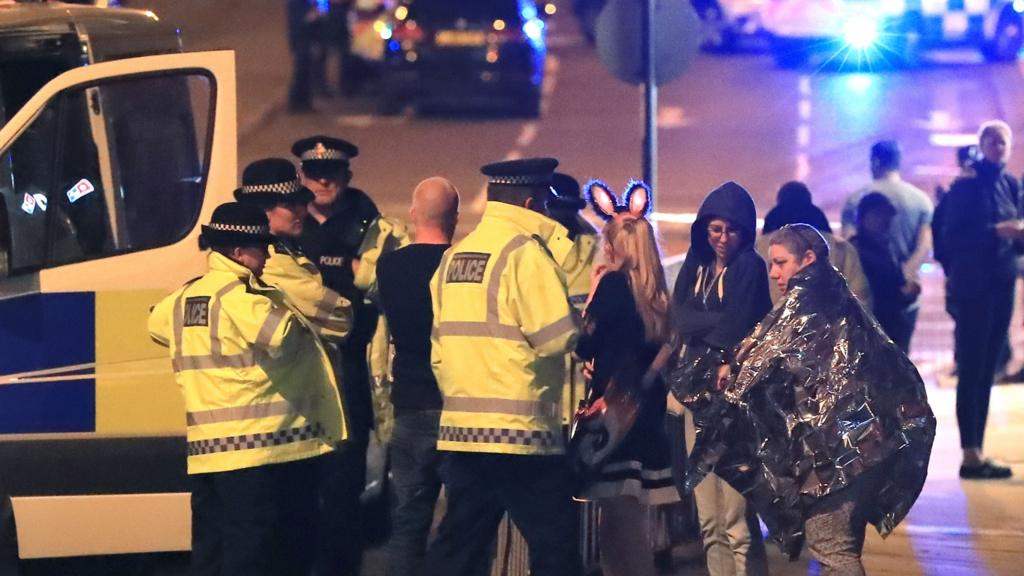
When we analyze the technical failures during the Manchester attack, the breakdown in interoperability between emergency services stands out. This has led to a revolution in “Emergency Response Management” (ERM) software and the way data is shared between disparate tech platforms.
Interoperability and Mesh Networking
In 2017, different agencies—police, fire, and ambulance—often operated on communication systems that could not seamlessly share data or live locations. Today, the tech industry has prioritized “interoperability protocols.” Modern ERM platforms utilize cloud-based dashboards that provide a “single pane of glass” view for all responders.
Furthermore, the development of mesh networking technology ensures that even if local cellular towers are overwhelmed—a common occurrence during major incidents—security devices and emergency personnel can maintain a localized digital network to relay coordinates and medical data.
Social Media as a Sensor Network
The Manchester attack demonstrated that social media platforms often act as the first “sensors” of a crisis. However, they also became breeding grounds for misinformation. In the years since, AI tools have been developed to perform real-time sentiment analysis and “crisis mapping.” By scraping geolocation data from public posts, emergency software can now identify the exact epicenter of a crisis and the flow of crowd movement before official reports are even filed.
Tech companies have also implemented “Safety Check” features and prioritized authoritative information through algorithmic boosting, ensuring that digital noise does not interfere with the dissemination of life-saving instructions.
The Future of Preventive Tech: Predictive Analytics and IoT
Looking forward, the answer to “what is the Manchester attack” in a professional tech context is increasingly about predictive prevention. We are moving away from reactive security and toward a proactive model powered by the Internet of Things (IoT) and predictive analytics.
Digital Twins for Venue Management
One of the most exciting trends in digital security is the use of “Digital Twins.” These are virtual replicas of physical venues like the Manchester Arena. By running simulations within these digital twins, security experts can use AI to predict how a crowd would react to various scenarios. This allows for the optimization of exit routes, the placement of digital signage, and the strategic positioning of security sensors.
These models take into account variables such as crowd density, acoustic signatures (to detect the sound of an incident), and even environmental factors. This level of technological preparation was non-existent a decade ago but is now becoming a standard in the “Brand-Safe” management of major global events.
Cybersecurity for Physical Infrastructure
Finally, we must recognize that modern physical security is inextricably linked to cybersecurity. The Manchester attack underscored the need to protect the digital “nervous system” of public spaces. From the Wi-Fi networks used by attendees to the SCADA systems that control lighting and automated locks, every component is a potential vulnerability.
The integration of “Zero Trust” architectures into public venue management ensures that even if a peripheral device is compromised, the core security infrastructure remains intact. This convergence of physical and digital security is perhaps the most significant technological evolution of the last several years.

Conclusion: A Digital Resilience Framework
The Manchester attack was a catalyst that forced the technology industry to confront the realities of modern urban vulnerability. From the implementation of AI-driven behavioral analytics and the complex debate over encrypted communications to the rise of interoperable emergency software and digital twins, the technological landscape has been fundamentally reshaped.
For digital security professionals and tech innovators, the event serves as a constant reminder that innovation must be dual-purpose: it must protect the privacy and freedom that define modern society while providing the robust, invisible infrastructure necessary to keep public spaces safe. As we continue to integrate AI, IoT, and high-speed data into the fabric of our cities, the lessons learned from Manchester remain at the heart of our digital security strategies. The goal is no longer just to respond to an “attack” but to build a digital environment where such threats are identified, mitigated, and neutralized by the very technology that connects us.
aViewFromTheCave is a participant in the Amazon Services LLC Associates Program, an affiliate advertising program designed to provide a means for sites to earn advertising fees by advertising and linking to Amazon.com. Amazon, the Amazon logo, AmazonSupply, and the AmazonSupply logo are trademarks of Amazon.com, Inc. or its affiliates. As an Amazon Associate we earn affiliate commissions from qualifying purchases.