
In the modern digital landscape, the terms “4G” and “LTE” are frequently used interchangeably, appearing in the corner of smartphone screens and across the marketing materials of every major telecommunications provider. However, for the tech-savvy consumer and the industry professional alike, understanding the distinction between these two terms is crucial for grasping how mobile networks function. The “LTE” in 4G LTE stands for “Long Term Evolution,” a technical standard that represents one of the most significant leaps in the history of wireless communication.
To understand LTE, one must first understand the framework of mobile generations. The International Telecommunication Union Radiocommunication Sector (ITU-R) sets the standards for mobile networks. Each “G” stands for a generation, and each generation must meet specific criteria regarding data speed, latency, and reliability. When 4G was first conceptualized, the jump from 3G was so significant that few technologies could actually meet the “True 4G” requirements. LTE emerged as the bridge—a roadmap designed to bring mobile technology toward those high-performance benchmarks.
Defining the Terms: The Distinction Between 4G and LTE
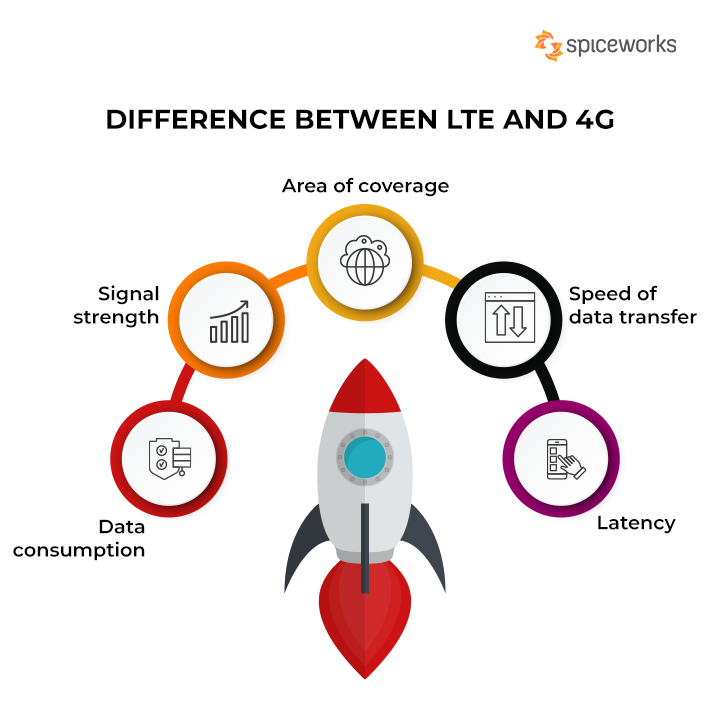
The distinction between 4G and LTE is often blurred by marketing departments, but in the realm of network engineering, they serve different roles. 4G is a set of specifications, while LTE is the specific technology used to pursue those specifications.
The Fourth Generation Standard
The ITU-R established the IMT-Advanced (International Mobile Telecommunications-Advanced) requirements to define what qualified as 4G. To be considered true 4G, a network needed to provide peak data rates of approximately 100 megabits per second (Mbps) for high-mobility communication (such as users in cars or trains) and 1 gigabit per second (Gbps) for low-mobility communication (such as users standing still or walking).
When these standards were first released, no existing cellular technology could reach them. The jump from 3G—which topped out at speeds measured in kilobits or low single-digit megabits—was massive. If the industry had waited until 1 Gbps was achievable to use the 4G label, the transition would have been delayed by years.
Long Term Evolution: The Roadmap to the Goal
LTE was developed by the 3rd Generation Partnership Project (3GPP). Its name, “Long Term Evolution,” reflects its purpose: it was not a single, finished product, but an evolving architecture designed to improve network capacity and speed over a decade or more.
Because LTE provided a significant improvement over 3G, the ITU-R eventually allowed carriers to market LTE as “4G.” This led to the branding “4G LTE,” which essentially tells the consumer they are using a network that is significantly faster than 3G and is moving toward the ultimate technical goals of the fourth generation. In essence, LTE is the engine that powers the 4G experience for the vast majority of global users.
The Engineering Behind the Speed: How LTE Functions
The shift from 3G to LTE was not just about faster hardware; it involved a fundamental redesign of how data is transmitted over the air. While 3G relied on older circuit-switching technology for voice calls and packet-switching for data, LTE moved the entire architecture to an All-IP (Internet Protocol) system.
Packet Switching vs. Circuit Switching
In older generations, when you made a phone call, the network opened a dedicated “circuit” for that conversation. This was inefficient, as the resources remained tied up even during silence. LTE treats everything—including voice—as data packets. By using packet switching, the network can send small bursts of data across the most efficient paths available, reassembling them at the destination. This allows for more users to occupy the same amount of spectrum without a drop in quality.
MIMO and Spectral Efficiency
One of the most critical technologies within the LTE framework is MIMO, or Multiple Input Multiple Output. This involves using multiple antennas at both the transmitter (the cell tower) and the receiver (your phone) to send and receive more than one data signal simultaneously over the same radio channel.
By utilizing spatial multiplexing, LTE can double, triple, or even quadruple data throughput without needing more frequency bandwidth. This spectral efficiency is the reason modern smartphones can stream high-definition video while 3G devices struggled to load a basic webpage.

Orthogonal Frequency Division Multiplexing (OFDM)
LTE also utilizes OFDM for its downlink (the data coming from the tower to your phone). OFDM splits a single high-speed data stream into many slower sub-streams that are transmitted simultaneously on different frequencies. These frequencies are “orthogonal,” meaning they do not interfere with each other despite being packed closely together. This makes LTE highly resistant to interference and signal fading, which are common issues in urban environments with many buildings and obstacles.
The User Experience: Bridging the Gap Between Mobile and Fiber
The introduction of LTE changed the way society interacts with technology. Before LTE, mobile internet was a secondary experience—a “lite” version of the web used only when a computer wasn’t available. LTE brought mobile speeds into the same realm as home fiber-optic or cable connections.
Streaming, Gaming, and Low Latency
Latency refers to the delay between a command being sent and the network responding. High latency makes video calls lag and online gaming impossible. LTE significantly reduced latency from the 100-150 millisecond range of 3G down to under 30-50 milliseconds. This shift enabled the rise of real-time mobile applications, from competitive mobile gaming to high-quality Zoom calls on the go. It also provided the bandwidth necessary for the “app economy,” allowing services like Uber, Instagram, and TikTok to thrive by relying on the constant, high-speed transfer of location data and video files.
The Integration of VoLTE
For a long time after LTE was introduced, voice calls still dropped back to 3G or 2G networks because LTE was initially a data-only standard. This changed with VoLTE (Voice over LTE). VoLTE allows voice calls to be carried over the LTE data network as high-quality data packets. This not only results in “HD Voice” with much clearer audio but also allows the phone to stay on the high-speed LTE network for data tasks while a call is in progress. Without VoLTE, your data speeds would often plummet the moment you answered the phone.
LTE Advanced and the Transition to 5G
As the “Long Term Evolution” name suggests, the technology did not stop at its initial release. To finally meet the “True 4G” standards set by the ITU-R, the industry introduced LTE Advanced (LTE-A) and LTE Advanced Pro.
Iterative Improvements: LTE-A and Carrier Aggregation
LTE Advanced introduced a feature called Carrier Aggregation. This allows a device to combine multiple frequency bands into a single, wider “pipe.” For example, a phone might pull data from a 700 MHz band (which has great range) and a 2100 MHz band (which has high capacity) at the exact same time. This pushed peak speeds into the gigabit range, finally satisfying the original 4G requirements defined a decade earlier.
The Infrastructure for the Future
LTE is not becoming obsolete with the arrival of 5G; rather, it serves as the essential foundation. Most early 5G networks are “Non-Standalone” (NSA), meaning they use an LTE core to manage the connection while using 5G frequencies to boost data speeds. Without the robust, widespread coverage of LTE, the rollout of 5G would be much slower and more prone to connection drops. LTE acts as the “safety net” that keeps users connected when they move out of the smaller, more sensitive 5G coverage zones.
The Future Outlook: The Longevity of LTE
While 5G is the current focus of the technology world, LTE remains the most widely deployed mobile network technology on the planet. Its journey from a theoretical roadmap to a global standard has redefined digital accessibility.
Coverage and Reliability
For many parts of the world, and even rural areas in developed nations, 5G infrastructure is years away. LTE remains the workhorse of the industry because it offers an ideal balance of range and speed. Low-frequency LTE bands can travel long distances and penetrate deep into buildings, making it indispensable for maintaining a consistent connection in varied environments.
LTE for IoT and Specialized Devices
Beyond smartphones, LTE has found a second life in the Internet of Things (IoT). Specific versions of LTE, such as LTE-M and NB-IoT (Narrowband IoT), are designed for low-power devices like smart meters, wearable health monitors, and industrial sensors. These devices don’t need gigabit speeds; they need to stay connected for years on a single battery charge while sending small amounts of data. The flexibility of the LTE standard allows it to serve these diverse needs simultaneously.
In conclusion, the “LTE” in 4G LTE represents more than just a speed boost. It represents a fundamental shift in telecommunications engineering—a move toward an all-digital, IP-based world where data and voice are unified. By acting as the bridge between the limitations of the past and the possibilities of the future, LTE has become the invisible backbone of the modern mobile experience. Whether it is facilitating a high-definition video stream or providing the critical link for an emergency call, LTE remains a masterpiece of technological evolution that continues to shape our digital lives.
aViewFromTheCave is a participant in the Amazon Services LLC Associates Program, an affiliate advertising program designed to provide a means for sites to earn advertising fees by advertising and linking to Amazon.com. Amazon, the Amazon logo, AmazonSupply, and the AmazonSupply logo are trademarks of Amazon.com, Inc. or its affiliates. As an Amazon Associate we earn affiliate commissions from qualifying purchases.