
The question “what is the lotto at right now” is often the first thought that enters the public consciousness when multi-state lottery jackpots like Powerball or Mega Millions cross the psychological threshold of $500 million. In the world of personal finance and wealth management, these astronomical figures represent more than just a game of chance; they represent a significant cultural and economic phenomenon. To understand what the lottery “is at” requires looking beyond the flashing numbers on a gas station billboard and examining the underlying financial structures, tax implications, and the reality of sudden wealth management.

The Financial Anatomy of a Massive Jackpot
When we ask what the lottery is at, we are usually referring to the estimated annuity value. However, the headline number is rarely the amount a winner actually sees. Understanding the mechanics of how these jackpots grow and how they are paid out is the first step in a professional assessment of the lottery’s financial impact.
Annuity vs. Cash Value
The advertised jackpot is typically an estimated total of 30 payments distributed over 29 years. This annuity option includes an initial immediate payment followed by 29 annual payments that increase by 5% each year. The reason the “lotto” looks so high right now is often tied to interest rates. When interest rates are high, the lottery can invest the cash on hand to generate the much larger advertised annuity.
The cash value, or the “lump sum,” is the actual amount of liquid currency the lottery has in its prize pool from ticket sales and previous rollovers. This is the amount most winners choose to take. From a wealth management perspective, taking the lump sum is often preferred because it allows for immediate reinvestment in more diverse assets, though it requires significantly more disciplined financial planning.
The Rollover Effect and Participation Rates
The current status of a jackpot is driven by the rollover effect. When no one matches all six numbers, the prize pool carries over to the next drawing. As the jackpot grows, the “fear of missing out” (FOMO) drives higher ticket sales, which in turn accelerates the growth of the jackpot. This creates a feedback loop. At a certain point, usually around the $400 million mark, the growth becomes exponential rather than linear because casual players begin to participate alongside regular players.
The Tax Reality: What You Actually Keep
If the lotto is at a staggering $1 billion, the winner is not a billionaire. In the realm of personal finance, the most critical calculation is the “after-tax net.” The gap between the headline figure and the money that hits a bank account is substantial, often consuming more than half of the total win.
Federal Withholdings and Brackets
The Internal Revenue Service (IRS) considers lottery winnings as ordinary income. Immediately upon winning a large jackpot, the lottery commission is required to withhold 24% for federal taxes. However, because a massive win will instantly put the winner in the highest federal tax bracket (37%), the winner will owe an additional 13% when they file their tax return for the year. This means that more than one-third of the lump sum is destined for federal coffers before the winner can even buy a home or invest in a portfolio.
State and Local Variations
The geographic location where the ticket was purchased plays a massive role in the final payout. States like Florida, Texas, and Washington do not tax lottery winnings at the state level. Conversely, winners in New York or New Jersey may face state tax rates upwards of 8% to 10%, plus potential municipal taxes if they live in cities like New York City. When evaluating “what the lotto is at,” a savvy financial observer must subtract approximately 40% to 50% for taxes to find the true economic value of the prize.
Sudden Wealth Syndrome and Financial Security

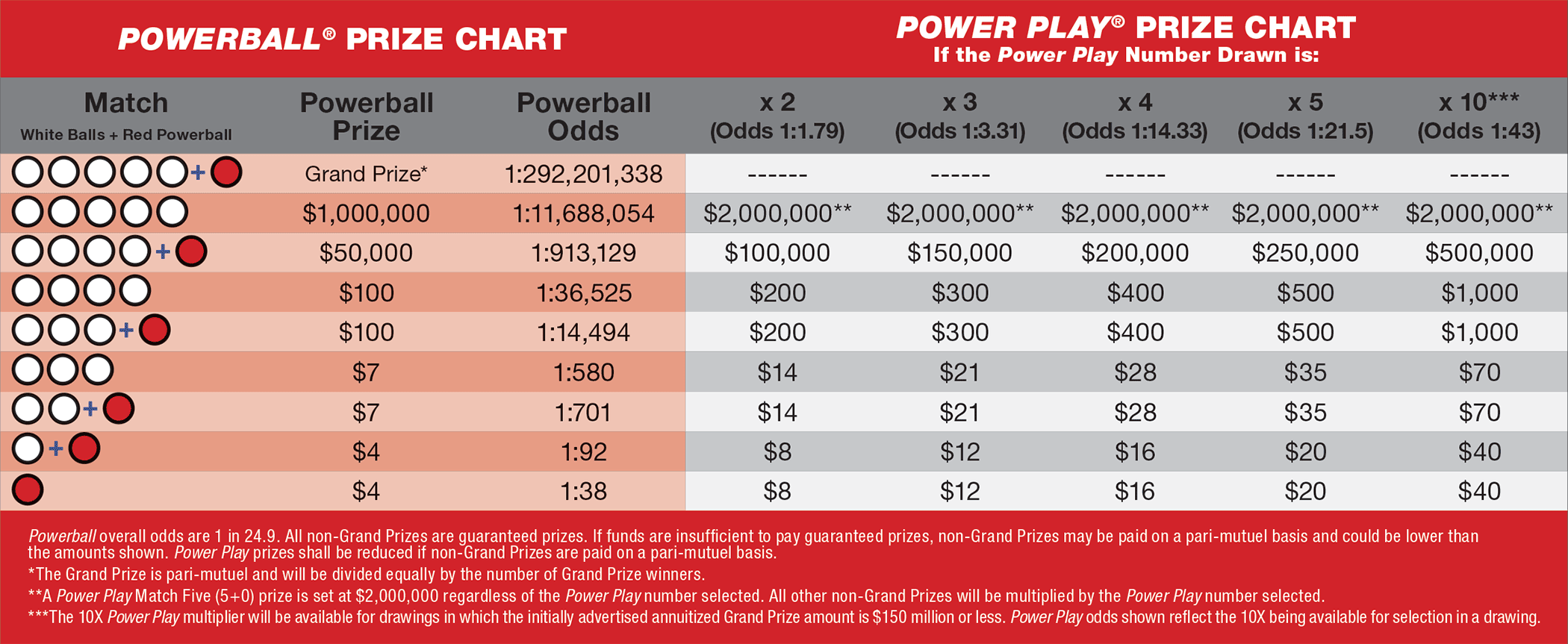
The lottery represents the ultimate “black swan” event in personal finance—an unpredictable, high-impact occurrence. While the odds of winning are roughly 1 in 292 million for Powerball, the financial implications of such a win require a level of sophistication that most individuals are unprepared for. This has led to the term “Sudden Wealth Syndrome,” a psychological and financial condition where individuals struggle to manage the pressures of a massive windfall.
The Importance of the “Golden Circle”
Financial advisors specialize in “sudden wealth” suggest that before a winner even turns in their ticket, they must establish a “Golden Circle” of professionals. This includes:
- A Tax Attorney: To navigate the complex filing requirements and potential gift taxes.
- A Fee-Only Financial Planner: To create a long-term investment strategy that prioritizes capital preservation over risky growth.
- A Certified Public Accountant (CPA): To manage the immediate tax liabilities.
- An Estate Planner: To protect the wealth for future generations through trusts and legal entities.
Asset Protection and Privacy
One of the greatest risks to a lottery winner’s financial health is the loss of privacy. In many states, winners are required by law to be identified publicly. This often leads to a barrage of “requests” from estranged relatives, unscrupulous investment “opportunities,” and predatory lawsuits. Professional wealth management involves using legal structures, such as blind trusts or limited liability companies (LLCs), to claim the prize where state law allows, thereby shielding the individual’s identity and protecting their new assets from external threats.
The Opportunity Cost of the Lottery Mentality
While it is fun to track what the lotto is at, it is important to view the lottery through the lens of opportunity cost. In personal finance, every dollar spent on a lottery ticket is a dollar that could have been working elsewhere.
Gambling vs. Investing
The lottery is often referred to as a “tax on those who are bad at math,” but it is more accurately described as a high-risk, low-probability gamble. From a professional investment standpoint, the “expected value” of a lottery ticket is almost always negative. For example, if a ticket costs $2 and the odds of winning are 1 in 300 million, the jackpot would need to be well over $600 million (after taxes) for the ticket to have a positive expected value—and even then, the risk of splitting the pot with another winner makes the math unfavorable.
The Power of Consistent Contributions
Consider the alternative: a person who spends $10 a week on lottery tickets is spending $520 a year. If that same $520 were invested annually in a low-cost S&P 500 index fund with an average annual return of 8%, after 30 years, that individual would have approximately $58,000. While $58,000 is not a $500 million jackpot, it is a guaranteed accumulation of wealth based on historical market performance, whereas the lottery is a statistical near-certainty of loss.
Strategic Wealth Management for the High-Net-Worth Winner
For the person who actually defies the odds, the transition from “playing the lotto” to “managing wealth” is instantaneous. The strategy shifts from accumulation to preservation.
Diversification and Risk Mitigation
A massive lottery win allows for a level of diversification that most investors can only dream of. A professional portfolio for a lottery winner typically moves away from high-stakes speculation. Instead, it focuses on:
- Fixed Income: High-quality municipal bonds that provide tax-advantaged income.
- Real Estate: Tangible assets that provide both utility and a hedge against inflation.
- Equities: Global index funds to ensure the capital grows at a rate that outpaces inflation.
- Philanthropy: Establishing a private foundation can provide significant tax breaks while allowing the winner to create a lasting legacy.
The “Burn Rate” and Sustainability
The greatest pitfall for winners is the “burn rate”—the speed at which they spend their principal. Many lottery winners go bankrupt within five to ten years because they treat the principal as spendable income. Financial professionals recommend living off the interest generated by the win rather than the win itself. If a $100 million net win is invested conservatively at a 4% withdrawal rate, the winner has an annual budget of $4 million without ever touching the original $100 million. This is the difference between being “rich” for a few years and being “wealthy” for a lifetime.
Conclusion: The Lottery as a Financial Tool?
Ultimately, when we ask “what is the lotto at right now,” we are participating in a national daydream about financial freedom. While the lottery is an ineffective tool for wealth building, it serves as a powerful case study in the complexities of modern finance. It highlights the impact of taxes, the importance of interest rates in annuity calculations, the necessity of professional legal and financial advice, and the psychological traps of sudden wealth. For the vast majority, the best “lotto” strategy is to invest in one’s own financial education and consistent market participation, ensuring that wealth is built on a foundation of strategy rather than a stroke of extreme luck.
aViewFromTheCave is a participant in the Amazon Services LLC Associates Program, an affiliate advertising program designed to provide a means for sites to earn advertising fees by advertising and linking to Amazon.com. Amazon, the Amazon logo, AmazonSupply, and the AmazonSupply logo are trademarks of Amazon.com, Inc. or its affiliates. As an Amazon Associate we earn affiliate commissions from qualifying purchases.