
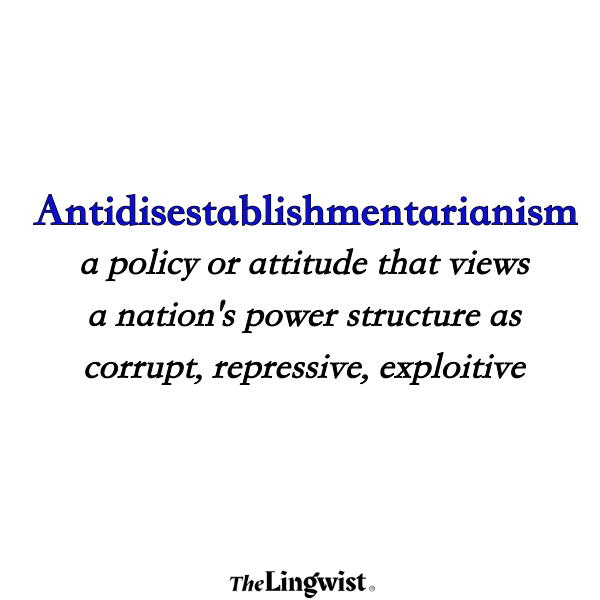
In the traditional sense, when someone asks, “What is the long word in the dictionary?” the mind often jumps to pneumonoultramicroscopicsilicovolcanoconiosis or the 189,819-letter chemical name for the protein Titin. However, in the realm of modern technology, the “dictionary” has evolved from a dusty tome on a library shelf into a dynamic, hyper-scaled database of strings, tokens, and data points. In the tech industry, the concept of a “long word” isn’t just a linguistic curiosity; it is a fundamental challenge in data architecture, software engineering, and artificial intelligence.

As we transition from human-readable text to machine-processed data, the “longest word” represents the limits of our current processing power and the complexity of the algorithms we build. This article explores the technical nuances of string length, the architecture of digital dictionaries, and how the tech world manages the “long words” of the 21st century.
The Architecture of Length: How Software Processes Extreme Strings
At its core, every word in a digital dictionary is a “string”—a sequence of characters that a computer must store, index, and retrieve. While a human sees letters, a machine sees bytes. The way software handles exceptionally long words or strings is a testament to the efficiency of modern computer science.
Character Encoding and the UTF-8 Revolution
In the early days of computing, the ASCII standard was sufficient for the English alphabet, allocating 7 bits per character. However, as the digital dictionary expanded to include global languages and complex symbols, the technology had to evolve. Today, UTF-8 (Unicode Transformation Format) is the gold standard.
When dealing with the “longest words,” UTF-8 is crucial because it uses variable-width encoding. A single “word” in a digital dictionary might contain characters from multiple scripts, each requiring between one and four bytes. For tech professionals, managing the “long word” means ensuring that memory allocation is dynamic enough to handle these variations without causing system lag or data corruption.
Buffer Overflows and Memory Management
From a software engineering perspective, an unexpectedly long word can be a liability. If a program expects a word of standard length but receives a string of 100,000 characters, it can trigger a “buffer overflow.” This occurs when a volume of data exceeds the storage capacity of the memory buffer, potentially overwriting adjacent memory.
Modern programming languages like Rust and Python have built-in protections against this, but in lower-level languages like C or C++, the “longest word in the dictionary” could theoretically be used as an exploit to crash a system or execute malicious code. Thus, the technical definition of a word’s length is inextricably linked to digital security.
Beyond the Human Eye: “Long Words” in Data Science and Machine Learning
In the world of Artificial Intelligence (AI) and Natural Language Processing (NLP), the dictionary is no longer a list of definitions; it is a high-dimensional vector space. The way AI “reads” a long word is fundamentally different from human cognition.
Tokenization: Breaking Down Complexity
When a Large Language Model (LLM) like GPT-4 encounters a long word, it doesn’t necessarily see it as a single unit. Instead, it uses a process called “tokenization.” Tokenizers break down long or complex words into sub-word units.
For example, the word “unbelievable” might be broken into “un,” “believ,” and “able.” In this context, the “longest word” is simply a sequence of tokens. The technical challenge for AI researchers is “context window” management. Because models have a finite limit on how many tokens they can process at once, exceptionally long strings of data (the digital equivalent of a long word) require sophisticated “attention mechanisms” to ensure the model doesn’t lose the “meaning” of the beginning of the string by the time it reaches the end.
Vector Embeddings and Semantic Space
In a digital dictionary powered by machine learning, words are converted into numerical arrays called embeddings. A long, complex word occupies a specific coordinate in a multi-dimensional space. The tech behind this allows machines to understand that “pneumonoultramicroscopicsilicovolcanoconiosis” is semantically related to “lung disease” and “silica dust,” even if the word itself is rarely used. This transformation of length into mathematical coordinates is what allows search engines to provide accurate results even when we use complex or technical jargon.
Long-Tail SEO: The “Long Words” of Search Engine Success

In the ecosystem of digital marketing technology and search algorithms, the “longest words” often take the form of “long-tail keywords.” These are not necessarily long single words, but long, specific phrases that represent the “dictionary” of user intent.
The Algorithmic Shift to Natural Language
Search engines have evolved from simple keyword matching to complex Natural Language Understanding (NLU). Google’s BERT and MUM algorithms are designed to handle the complexity of long-form queries. From a tech standpoint, this means that the “dictionary” the search engine uses must be able to parse the relationship between every word in a long string.
For tech-driven businesses, the “long word” is a metaphor for specificity. The technology must be able to index millions of these long-tail permutations to connect a user with the exact piece of software or documentation they need. This requires massive indexing power and distributed computing clusters (like those found in Google’s Spanner database).
Semantics vs. Syntax
The technical challenge of the “long word” in SEO is the move from syntax (the letters) to semantics (the meaning). Modern web crawlers use “entity recognition” to identify the core components of a long string. If a user types a very long, specific technical query into a search bar, the technology doesn’t just look for those exact characters; it looks for the “entities” mentioned and their relationship to one another. This is the difference between a static dictionary and a “knowledge graph.”
Security and Length: When Long Words Become Digital Threats
In the realm of digital security, length is often used as a tool for both defense and attack. The “longest word” in a security dictionary might be a complex cryptographic key or a malicious string designed to overwhelm a firewall.
Password Entropy and Cryptographic Hashes
In tech, we often encourage users to use “long words” or phrases as passwords. This is based on the principle of entropy. The longer the string, the more computationally expensive it is for a hacker to “brute force” it. A dictionary attack—where a hacker tries every word in a standard dictionary—is easily defeated by a “long word” that doesn’t exist in any traditional lexicon.
Technically, these long strings are then “hashed” using algorithms like SHA-256. The hash is a fixed-length string that represents the long word. This allows the system to verify the password without ever storing the “long word” itself, a critical component of modern digital security architecture.
Denial of Service (DoS) via String Complexity
Conversely, “long words” can be weaponized. In a “ReDoS” (Regular Expression Denial of Service) attack, an attacker submits a specially crafted, very long string to a web application. If the application’s regex (regular expression) logic is not optimized, it can enter a state of “catastrophic backtracking,” where the CPU works exponentially harder to process the long string, eventually freezing the server. This highlights why, in tech, the length of a word must always be validated and sanitized before it enters a system’s core logic.
The Future of Digital Lexicons: Quantum Dictionaries and Infinite Strings
As we look toward the future of technology, the way we define and store the “longest words” is set to change once again. With the advent of quantum computing, the “dictionary” may no longer be stored in binary bits but in qubits.
Quantum Superposition in Data Storage
A quantum dictionary could theoretically store every possible “long word” simultaneously through superposition. This would revolutionize cryptography and data retrieval, allowing for the instantaneous search of strings that would take classical computers billions of years to process. In this future, the “length” of a word becomes less of a constraint on processing time and more of a factor in data density.
The Growth of Synthetic Media
As we move into an era of AI-generated content, the “dictionary” is expanding at an exponential rate. Every day, “new words” are created by algorithms—synthetic strings that describe new concepts in code, medicine, and engineering. The tech infrastructure of tomorrow will need to be infinitely scalable to house the “long words” generated not by human tongues, but by machine processors.
Conclusion
When we ask “what is the long word in the dictionary” through the lens of technology, we find that the answer is not a single 45-letter noun. Instead, the “long word” is a symbol of the ever-expanding complexity of the digital age. It represents the challenges of memory management, the brilliance of AI tokenization, the strategy of search algorithms, and the necessity of robust digital security.
In tech, length is data, and data is power. Whether we are protecting against buffer overflows or training the next generation of neural networks, our ability to handle the “longest words” determines the efficiency, security, and intelligence of our digital world. As our dictionaries continue to move from paper to the cloud, the pursuit of managing length and complexity remains at the heart of technological innovation.
aViewFromTheCave is a participant in the Amazon Services LLC Associates Program, an affiliate advertising program designed to provide a means for sites to earn advertising fees by advertising and linking to Amazon.com. Amazon, the Amazon logo, AmazonSupply, and the AmazonSupply logo are trademarks of Amazon.com, Inc. or its affiliates. As an Amazon Associate we earn affiliate commissions from qualifying purchases.