
The 7 wood, a versatile and often underappreciated piece of golf technology, plays a critical role in a golfer’s arsenal, bridging significant distance gaps that other clubs might leave open. Understanding its primary technical specification—the loft—is fundamental to appreciating its design and maximizing its performance on the course. In the realm of golf equipment, where every degree and gram is engineered for optimal output, the loft of a 7 wood is a carefully calculated parameter designed to deliver a specific ball flight and distance profile.
The Engineering Behind Fairway Woods
Modern golf clubs are sophisticated instruments, the result of extensive research and development in material science, aerodynamics, and kinetic energy transfer. Fairway woods, including the 7 wood, are prime examples of this engineering prowess, designed to offer high launch and significant distance from various lies. The specific characteristics of a club, such as its loft, lie angle, clubhead volume, and shaft flex, are all meticulously calibrated to achieve desired performance outcomes.
Defining Loft in Golf Club Design
Loft, in the context of golf clubs, refers to the angle of the clubface relative to the ground when the club is soled correctly. It is the primary determinant of a golf ball’s initial launch angle and, consequently, a major factor in its trajectory and carry distance. A higher loft angle typically results in a higher ball flight with more backspin, while a lower loft angle yields a lower, penetrating flight with less backspin. For fairway woods, the objective is to strike a balance: enough loft to get the ball airborne easily, even from tight lies, but not so much that it sacrifices too much forward distance.
The engineering challenge lies in creating a clubhead that not only presents the correct loft but also facilitates efficient energy transfer and optimal spin. This involves precise shaping of the clubface, careful weight distribution within the clubhead to control the center of gravity (CG), and the integration of advanced face materials that enhance ball speed across a wider area of the face.
The Role of Materials and Weight Distribution
The materials used in modern 7 woods are crucial for their performance. High-strength steel alloys, titanium, and carbon composites are commonly employed to create clubheads that are both durable and lightweight. These materials allow engineers to thin out sections of the clubface, increasing its flexibility for greater ball speed (often referred to as the “trampoline effect”), while precisely positioning discretionary weight.
Weight distribution within the clubhead significantly influences the effective loft and launch characteristics. By strategically placing weight lower and deeper in the clubhead, engineers can lower the center of gravity (CG). A lower CG generally promotes a higher launch angle and reduced spin, which are desirable traits for a 7 wood, helping golfers get the ball up quickly and carry it further. This intricate balance of material science and mass properties is a testament to the technological advancements in golf equipment design.
Decoding the 7 Wood’s Loft Specification
The 7 wood occupies a unique and valuable position within a golfer’s set. It’s designed to be more forgiving and easier to launch than a long iron or a low-lofted hybrid, yet capable of generating substantial distance. Its loft specification is key to achieving this specific performance envelope.
Typical Loft Range for a 7 Wood
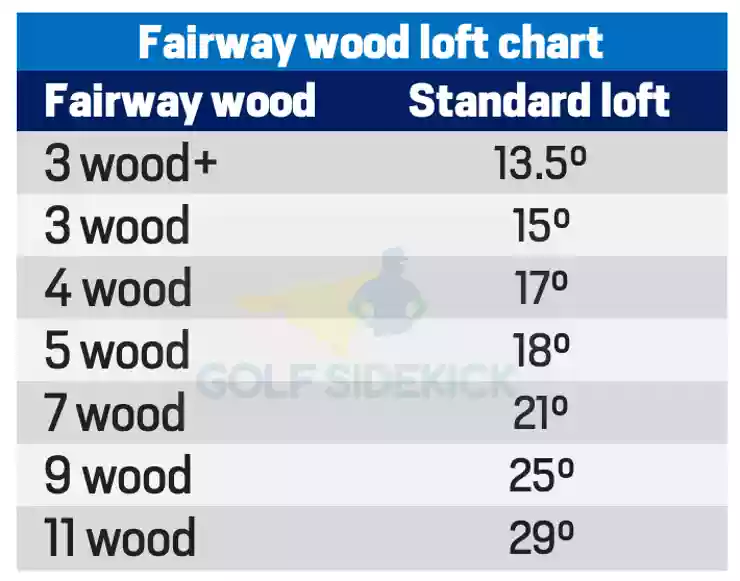
While there can be slight variations between manufacturers and specific models, the typical loft range for a modern 7 wood falls between 20 and 22 degrees. This places it roughly between a 5 wood (typically 18-19 degrees) and a 3 or 4 iron (typically 20-24 degrees depending on the set). This specific loft provides a critical balance, offering a higher launch than a 5 wood but more penetrating flight and greater distance than a higher-lofted hybrid or iron.
The precise degree of loft chosen by a manufacturer is the culmination of extensive testing and simulation, aimed at optimizing launch conditions for a wide range of golfers. Factors like face angle, sole design, and shaft length are all integrated to ensure the stated loft translates into predictable and effective on-course performance.
How Loft Impacts Ball Flight and Distance
The 20-22 degree loft of a 7 wood is engineered to deliver a ball flight that is both high and penetrating. This high launch angle allows the ball to carry over obstacles and land softly on greens, while the relatively low spin rate (compared to an iron with similar loft) helps the ball maintain its forward trajectory for maximum distance.

- Launch Angle: The 7 wood’s loft is optimized to create a sufficient initial launch angle, enabling the ball to ascend quickly, clear hazards, and reach its apex. This is particularly beneficial for golfers who struggle to get the ball airborne with lower-lofted clubs.
- Spin Rate: While generating enough lift, the design also aims to manage backspin. Excessive backspin can cause the ball to balloon and lose distance, especially into the wind. The 7 wood’s loft, combined with its clubhead design and CG placement, works to produce an optimal spin rate for distance and control.
- Carry Distance: The combination of optimal launch and spin allows the 7 wood to achieve impressive carry distances. For many golfers, it can be a reliable club for shots ranging from 180 to 220 yards, filling a crucial gap in their bag.
Comparing the 7 Wood to Other Clubs
Understanding the 7 wood’s loft in relation to its counterparts helps define its strategic utility.
- Vs. 5 Wood (18-19 degrees): The 7 wood has 2-4 degrees more loft than a 5 wood. This means it will launch higher, potentially land softer, and generally offer slightly less distance, but with increased forgiveness and ease of use, especially from less-than-perfect lies.
- Vs. Hybrids (e.g., 21-degree hybrid): While a 21-degree hybrid might have similar loft, the 7 wood typically has a larger clubhead volume and a longer shaft. The larger head often provides more stability and a higher Moment of Inertia (MOI), contributing to greater forgiveness on off-center hits. The longer shaft generally translates to higher clubhead speed and thus potentially more distance. Hybrids are often preferred for their iron-like versatility and workability, while the 7 wood prioritizes distance and launch from the fairway.
- Vs. Long Irons (e.g., 3-iron, 4-iron): The 7 wood’s loft is often comparable to a 3-iron or a strong 4-iron. However, the 7 wood’s design—with its larger head, lower CG, and wider sole—makes it significantly easier to hit than a long iron. It provides a much higher launch and greater forgiveness, making it a preferred alternative for golfers who struggle with the precision and power required for long irons.
Optimizing Performance with the 7 Wood
The technological advancements in club design are only fully realized when understood and applied strategically by the golfer. The 7 wood’s specific loft and accompanying design features make it a versatile tool for various on-course situations.
Launch Angle and Spin Rate Dynamics
The consistent high launch and controlled spin offered by the 7 wood’s loft are its greatest assets. For golfers seeking to optimize their ball flight, this club provides a reliable solution for:
- Carrying Water or Bunkers: The high launch angle ensures the ball gets airborne quickly, making it easier to clear hazards.
- Stopping the Ball on Greens: The combination of launch and moderate spin allows the ball to descend at a steeper angle and land softly, minimizing roll-out and maximizing chances of staying on the green, particularly on longer approach shots.
- Overcoming Tight Lies: The wider sole and forgiving design, enabled by the larger clubhead associated with its loft, helps the club glide through turf more easily than a long iron, reducing chunked shots.
Understanding the dynamic loft (the loft presented at impact) is also crucial. While the static loft is fixed at 20-22 degrees, a golfer’s swing can influence the dynamic loft. Golfers who deliver the club with a slight upward attack angle tend to maximize the effective loft and launch, whereas a steep, downward strike can reduce effective loft and lead to lower, less optimal shots.
Strategic Applications on the Course
The 7 wood’s technical profile makes it an incredibly strategic club:
- Long Par 3s and Par 4s: It provides a reliable option for tee shots on shorter par 4s where accuracy is paramount, or for long par 3s where reaching the green in one shot is a priority.
- Second Shots on Par 5s: For golfers looking to lay up or even reach par 5s in two, the 7 wood offers a high-launching, forgiving option that can advance the ball a significant distance.
- From the Rough: Its wider sole and greater mass can help it cut through thicker rough more effectively than a long iron, making it a surprisingly effective club from challenging lies.
- Windy Conditions: While generally a high-launch club, experienced golfers can manipulate their swing to reduce its launch in windy conditions, using its penetrating qualities to their advantage. However, for most, its primary use is to get the ball up and away.
The Evolution of Golf Club Technology
The modern 7 wood, with its optimized loft and performance, is a direct beneficiary of continuous technological innovation in golf equipment. This evolution shows no signs of slowing down, promising even more refined performance in the future.
Adjustability Features and Customization
Many contemporary fairway woods now feature adjustable hosels, allowing golfers to fine-tune the loft of their 7 wood. These adjustable systems can typically alter the loft by +/- 1 to 2 degrees, along with changes to the lie angle and face angle. This technology empowers golfers to dial in their ideal launch conditions, compensating for swing tendencies or adapting the club to specific course conditions. For example, a golfer might slightly increase the loft to gain more height or decrease it for a more penetrating flight. This level of customization was once unimaginable and represents a significant leap in golf club tech, allowing the golfer to essentially “engineer” their own club.

Future Trends in Fairway Wood Design
The future of fairway wood technology will likely continue to focus on enhancing forgiveness, increasing ball speed, and refining launch characteristics. We can anticipate:
- Further Material Innovations: Lighter, stronger, and more flexible materials will continue to emerge, allowing for greater discretionary weight and more extreme designs.
- Advanced Aerodynamics: Clubhead shapes will become even more optimized to reduce drag during the swing, contributing to higher clubhead speeds.
- Smarter Weighting Systems: More dynamic and accessible weighting systems will allow golfers to easily adjust the center of gravity to influence launch, spin, and even shot shape bias.
- Integration with Data Analytics: Tools that provide real-time feedback on launch angle, spin, and ball speed will become more sophisticated and integrated into the club fitting process, leading to even more precise customization of loft and other parameters.
Ultimately, the 7 wood’s loft of 20-22 degrees is a calculated specification, a testament to the meticulous engineering that goes into every modern golf club. It is designed to provide a specific blend of launch, distance, and forgiveness, making it an indispensable technological tool for golfers seeking to improve their game.
aViewFromTheCave is a participant in the Amazon Services LLC Associates Program, an affiliate advertising program designed to provide a means for sites to earn advertising fees by advertising and linking to Amazon.com. Amazon, the Amazon logo, AmazonSupply, and the AmazonSupply logo are trademarks of Amazon.com, Inc. or its affiliates. As an Amazon Associate we earn affiliate commissions from qualifying purchases.