
In the 21st century, the concept of “safety” has undergone a radical transformation. While traditional metrics of national safety often focused on geopolitical stability, crime rates, or physical conflict, a new frontier of risk has emerged: the digital landscape. Today, the question of what constitutes the “least safe country in the world” must be answered through the lens of technology. A nation may be physically peaceful but digitally catastrophic, serving as a breeding ground for state-sponsored hacking, a haven for ransomware collectives, or a vacuum where data privacy laws are non-existent.

When we analyze national safety from a tech perspective, we look at the robustness of a country’s cybersecurity infrastructure, the prevalence of digital surveillance, and the vulnerability of its critical systems to external interference. This article explores the least safe countries in the world by evaluating digital risk, cybersecurity indices, and the technological vulnerabilities that define modern insecurity.
Defining Safety in the Digital Age
To identify the world’s least safe nations, we must first redefine safety for the digital era. Physical borders no longer provide an absolute shield against threats. In the current landscape, a country’s safety is increasingly tied to its “threat surface”—the sum total of its internet-connected vulnerabilities.
The Shift from Physical to Virtual Threat Landscapes
Historically, a “dangerous” country was one plagued by civil unrest or high violent crime. However, for the global digital economy, a dangerous country is one where the rule of law does not extend to the internet. These are nations where “cyber-lawlessness” prevails. In these environments, individual users, corporations, and government entities are constant targets for phishing, malware, and sophisticated social engineering attacks. The danger here is not to one’s physical person, but to one’s identity, financial assets, and intellectual property.
Key Metrics: Data Privacy, Infrastructure Vulnerability, and Cybercrime Rates
Digital safety is measured by several key technological metrics. First is the existence and enforcement of data protection laws. Countries without a framework similar to the GDPR (General Data Protection Regulation) are often seen as less safe because there is no legal recourse for data breaches. Second is the resilience of critical infrastructure. If a nation’s power grid, water supply, or healthcare system is managed by outdated, unpatched software, that nation is fundamentally unsafe. Finally, we look at the prevalence of botnets and malicious traffic originating from within a country’s borders, which often indicates a lack of internal security hygiene.
Top Candidates for the World’s Least Digitally Safe Nation
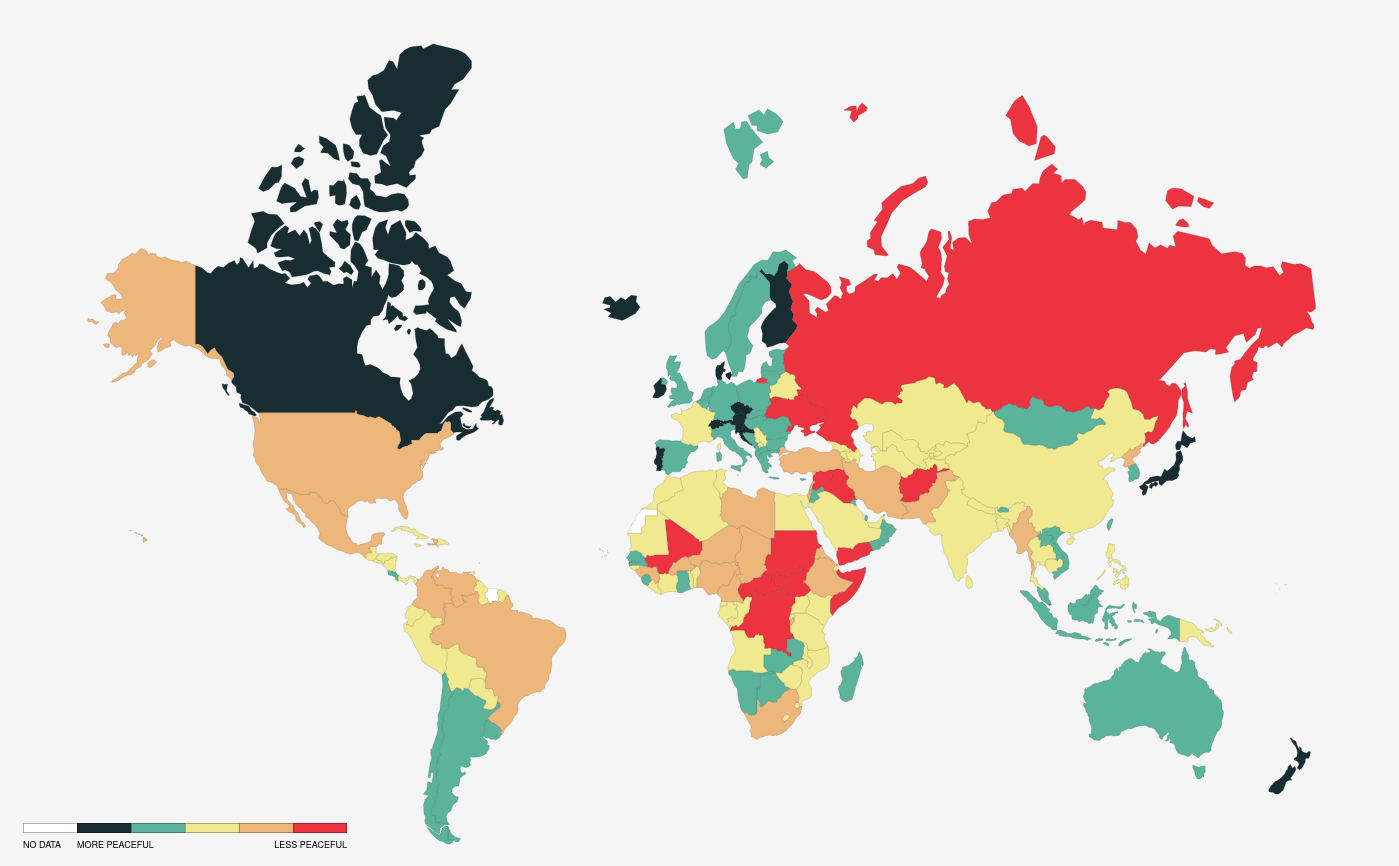
When examining technical data and reports from organizations like the International Telecommunication Union (ITU) and various private cybersecurity firms, certain nations consistently rank at the bottom of the safety spectrum. These rankings are typically based on a combination of high surveillance, lack of legal protections, and high rates of malware infection.
State-Sponsored Surveillance and Personal Data Risk
Several nations are considered “least safe” because the primary threat to the user is the state itself. In countries where the government exercises absolute control over the internet backbone, privacy is nonexistent. Deep Packet Inspection (DPI) technologies are frequently used to monitor citizens’ communications in real-time. From a tech perspective, these environments are unsafe because they utilize “backdoors” in hardware and software to bypass encryption. For a tech-savvy traveler or a remote business, operating within these borders means assuming that every byte of data transmitted is compromised.
Nations with Minimal Cybersecurity Legislation
At the other end of the spectrum are countries that are unsafe because of neglect rather than overreach. Many emerging economies in regions like Sub-Saharan Africa and Southeast Asia have seen rapid mobile internet adoption without the corresponding development of cybersecurity legal frameworks. In these nations, there are often no laws against unauthorized access to computer systems, making them “safe havens” for cybercriminals to host command-and-control (C2) servers. This lack of regulation makes the digital environment highly volatile for local users and international investors alike.
The Intersection of High Connectivity and Low Security
Some of the least safe countries are those that have leapfrogged traditional infrastructure to achieve high smartphone penetration but lack the educational resources to promote digital literacy. When millions of first-time internet users access the web via unpatched, low-end Android devices, they create a massive, vulnerable ecosystem. Countries with high rates of pirated software are particularly at risk, as cracked operating systems and applications are frequently bundled with trojans and crypto-miners.

The Role of Infrastructure: When National Grids Become Targets
A country’s safety is only as strong as its weakest server. One of the most terrifying aspects of modern tech-based insecurity is the vulnerability of Industrial Control Systems (ICS) and Supervisory Control and Data Acquisition (SCADA) systems.
Legacy Systems vs. Modern Attacks
The “least safe” countries often rely on legacy industrial systems that were never intended to be connected to the internet. In Eastern Europe and parts of the Middle East, we have seen real-world examples of how technological insecurity can lead to physical danger. When a country’s electrical grid or nuclear cooling systems are managed by software with known, unpatched vulnerabilities, the entire nation sits on a digital powder keg. The “safety” of these nations is compromised by “technical debt”—the cost of maintaining old systems that are increasingly difficult to secure against modern exploits.
The Vulnerability of Emerging Markets
Emerging markets are often the least safe because they are building “Smart Cities” on top of insecure foundations. The rush to implement Internet of Things (IoT) devices in municipal infrastructure—such as traffic lights, water sensors, and public Wi-Fi—without robust end-to-end encryption creates massive security gaps. For hackers, these countries represent a “path of least resistance.” The lack of a centralized Computer Emergency Response Team (CERT) in many of these nations means that when an attack happens, there is no coordinated technical response to mitigate the damage.
Global Indices and Technical Rankings
To objectively determine the least safe country, tech analysts look at various indices that aggregate data on digital threats.
Analyzing the ITU Global Cybersecurity Index (GCI)
The ITU’s GCI measures the commitment of countries to cybersecurity at a global level. Countries that rank at the very bottom often share several traits: they lack a national cybersecurity strategy, they have no specialized police units for cybercrime, and they do not participate in international threat-sharing agreements. Nations such as Eritrea, Burundi, and North Korea often find themselves at the bottom of these lists, though for very different technical reasons—ranging from a total lack of connectivity to highly controlled, weaponized internal networks.
VPN Usage and Data Encryption Trends as Safety Proxies
An interesting way to measure a country’s safety is to look at the “defensive tech” used by its population. In countries that are digitally unsafe, there is often a massive spike in the use of Virtual Private Networks (VPNs) and encrypted messaging apps like Signal or Telegram. While these tools provide safety for the individual, their high prevalence is a technical indicator that the underlying network is untrusted. If a country’s digital environment requires every user to wrap their traffic in layers of third-party encryption just to achieve basic privacy, that country is, by definition, digitally unsafe.
Protecting Yourself: Mitigation Strategies in High-Risk Digital Zones
Whether you are a digital nomad, a multinational corporation, or a cybersecurity researcher, operating in the world’s least safe countries requires a specialized technical stack and a “Zero-Trust” mindset.
Implementing Zero-Trust Architecture
In high-risk countries, the “Zero-Trust” model is the only viable security posture. This philosophy assumes that the network is already compromised. From a technical standpoint, this involves strict identity verification, micro-segmentation of data, and the use of Multi-Factor Authentication (MFA) that does not rely on SMS (which is easily intercepted by local telcos). In the least safe countries, the hardware itself is suspect; therefore, hardware security modules (HSMs) and encrypted “vaults” for sensitive keys are essential.
Hardware vs. Software Security Measures
When the software environment is hostile, users must turn to hardware solutions. This includes using “burner” devices—laptops and phones that are wiped or destroyed after leaving the high-risk zone. Furthermore, the use of hardware security keys (like YubiKeys) provides a physical layer of protection that software-based attacks cannot easily bypass. In nations where state actors might use “Man-in-the-Middle” (MITM) attacks to serve fake software updates, verifying cryptographic signatures becomes a life-or-death technical requirement.
Conclusion: The Future of National Safety
The title of “least safe country in the world” is no longer a static designation. As technology evolves, so do the risks. A country that is safe today could become a digital wasteland tomorrow following a massive data breach or the collapse of its cyber-defense infrastructure. In the modern era, national safety is a product of code, encryption, and digital vigilance. Understanding these tech-centric risks is the first step toward navigating a world where the most dangerous threats are often the ones we cannot see.
aViewFromTheCave is a participant in the Amazon Services LLC Associates Program, an affiliate advertising program designed to provide a means for sites to earn advertising fees by advertising and linking to Amazon.com. Amazon, the Amazon logo, AmazonSupply, and the AmazonSupply logo are trademarks of Amazon.com, Inc. or its affiliates. As an Amazon Associate we earn affiliate commissions from qualifying purchases.