
Navigating the world of personal finance requires a keen understanding of how debt functions, and for most individuals, a vehicle loan is one of the most significant financial commitments they will ever undertake. Unlike a mortgage, which is secured against an appreciating asset (in most market conditions), a vehicle loan is secured against a rapidly depreciating asset. Therefore, understanding the interest rate on vehicle finance is not just about knowing a percentage; it is about understanding the cost of capital, the impact on your monthly cash flow, and the long-term health of your personal balance sheet.

In the current economic climate, interest rates are dynamic, influenced by central bank policies, inflation, and institutional risk appetite. To master your money, you must look beyond the “monthly payment” and focus on the mechanics of interest rates.
Understanding the Fundamentals of Vehicle Finance Rates
The interest rate on a vehicle loan is essentially the price you pay to borrow money from a lender to purchase a car. However, the “sticker price” of the interest rate can be deceptive. To truly understand what you are paying, you must differentiate between various financial terms and structures.
Annual Percentage Rate (APR) vs. Base Interest Rate
When shopping for vehicle finance, you will often see two different figures: the interest rate and the APR. The interest rate is the percentage of the principal loan amount charged by the lender annually. The APR, however, is a more accurate reflection of the total cost of borrowing. It includes the interest rate plus any additional fees, such as origination fees, documentation charges, or mandatory insurance premiums. For a savvy borrower, the APR is the primary metric for comparison, as it reveals the hidden costs of the loan.
Fixed vs. Variable Interest Rates
Vehicle finance typically offers two types of rate structures: fixed and variable.
- Fixed Rates: These remain constant throughout the life of the loan. They provide predictability, making it easier to budget for the long term. In a rising interest rate environment, locking in a low fixed rate is a powerful defensive financial move.
- Variable Rates: These are tied to a benchmark index (such as the Prime Rate). If the central bank raises rates to combat inflation, your car payment will increase. While variable rates might start lower than fixed rates, they carry a higher level of risk, especially during periods of economic volatility.
Simple Interest vs. Precomputed Interest
Most modern auto loans use a simple interest formula, where interest is calculated based on the remaining principal balance. This benefits the borrower who pays more than the minimum or pays early, as it reduces the total interest paid. Some subprime lenders, however, use “precomputed interest,” where the total interest is calculated at the start of the loan and becomes a fixed debt regardless of how quickly you pay it off. Understanding this distinction is vital for effective debt management.
The Core Determinants: Why Rates Vary Between Borrowers
No two borrowers are offered the same rate. Lenders use sophisticated risk-assessment models to determine the likelihood of a borrower defaulting on a loan. Several key factors influence where you land on the interest rate spectrum.
The Critical Role of Your Credit Score
Your credit score is the single most influential factor in determining your vehicle finance rate. Lenders categorize borrowers into tiers:
- Super-Prime (780+): These borrowers receive the lowest possible rates, often very close to the base lending rate.
- Prime (660–779): These borrowers receive competitive rates but may not qualify for the absolute “teaser” rates advertised by manufacturers.
- Subprime (Below 600): Borrowers in this category face significantly higher interest rates—sometimes exceeding 15% or 20%—to compensate the lender for the increased risk of default.
Loan-to-Value (LTV) Ratio and Down Payments
The amount of “skin in the game” you have matters. The Loan-to-Value (LTV) ratio compares the loan amount to the actual value of the vehicle. If you provide a substantial down payment (e.g., 20%), you reduce the lender’s risk. Because the loan is well-collateralized, lenders are often willing to lower the interest rate. Conversely, “zero-down” financing usually attracts higher rates because the lender is at a loss the moment the car is driven off the lot.
The Impact of the Loan Term
The duration of your finance agreement—typically ranging from 36 to 84 months—has a direct correlation with the interest rate. Statistically, longer loans are riskier for lenders. Economic circumstances can change significantly over seven years, and the vehicle’s value will drop well below the remaining balance (being “underwater”). Consequently, a 72-month loan will almost always have a higher interest rate than a 48-month loan.
Market Dynamics: Where to Find the Most Competitive Rates

Not all sources of vehicle finance are created equal. Depending on your financial profile, different institutions will offer varying degrees of value.
Traditional Banking Institutions vs. Credit Unions
Traditional banks offer convenience, especially if you already have an account there. However, credit unions are member-owned, non-profit entities. Because they don’t have to answer to shareholders, they frequently offer interest rates that are 1% to 2% lower than commercial banks. For anyone looking to optimize their personal finance, checking with a local credit union is a mandatory step.
Captive Financing and Manufacturer Incentives
“Captive” lenders are the financial arms of car manufacturers (e.g., Ford Credit, Toyota Financial Services). These institutions often offer promotional rates, such as 0% or 0.9% APR, to move inventory. While these rates are unbeatable, they are usually reserved for super-prime borrowers and may require you to forgo “cash-back” rebates. You must run the math to see if the low interest rate saves you more than a large upfront discount would.
The Rise of Online Lenders and Fintech
The digital transformation of finance has introduced online-only lenders that have lower overhead costs than physical banks. These platforms often provide instant pre-qualification and highly competitive rates. However, it is essential to read the fine print regarding service fees and early repayment penalties that might be buried in the digital agreement.
Calculating the True Cost: Interest and Your Personal Balance Sheet
To truly understand vehicle finance, you must look at the amortization of the loan. Every dollar spent on interest is a dollar that isn’t being invested in the stock market, a retirement fund, or a high-yield savings account.
The Total Cost of Borrowing
If you finance a $30,000 vehicle at a 3% interest rate over 60 months, you will pay approximately $2,300 in interest. If that same loan has an 8% interest rate, you will pay over $6,500 in interest. That $4,200 difference is pure “opportunity cost.” Over five years, that money could have grown significantly if invested in a diversified portfolio. Understanding the interest rate is about recognizing how much of your future labor you are signing away to the lender.
Depreciation and Negative Equity
Vehicles lose a significant portion of their value the moment they are sold. If your interest rate is high and your loan term is long, you may find yourself in a state of “negative equity,” where you owe more than the car is worth. This is a dangerous financial position. If the car is totaled or if you need to sell it urgently, you will have to pay the lender the difference out of pocket. Low-interest rates and shorter terms are the best defenses against this financial trap.
Expert Strategies for Negotiating a Lower Rate
Interest rates are rarely set in stone; they are often a starting point for negotiation. By treating vehicle finance as a product you are “buying,” you can secure better terms.
The Power of Pre-Approval
Never walk into a dealership without a pre-approval from an outside lender (like your bank or credit union). A pre-approval gives you a “ceiling.” When the dealership’s finance manager offers you a rate, you can compare it to your pre-approval. If they want your business, they will often match or beat the rate you already have. This shifts the power from the lender to the borrower.
Timing and Economic Indicators
Interest rates are influenced by the broader economy. If the Federal Reserve or your country’s central bank indicates a rate cut is coming, it might be worth waiting a month or two to secure finance. Additionally, dealerships have monthly and quarterly targets. Financing a vehicle at the end of a slow month can sometimes yield more aggressive “subsidized” rates from the dealer as they scramble to hit their volume bonuses.
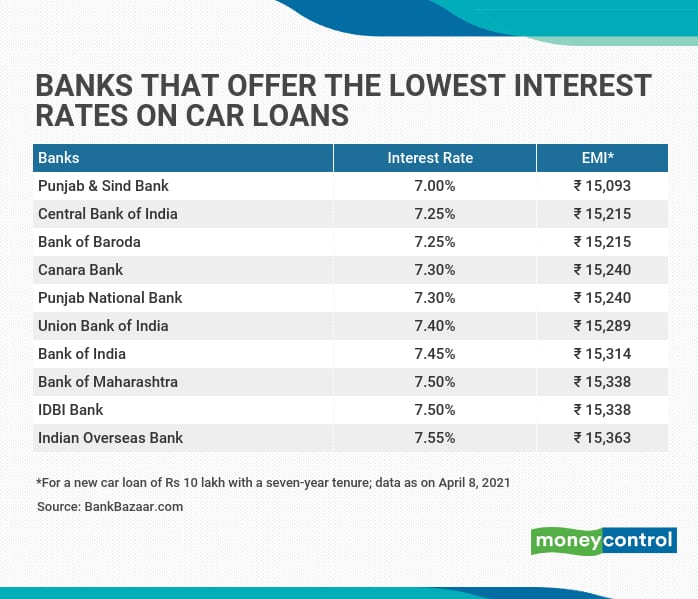
Refinancing as a Wealth Tool
Many people assume they are stuck with their initial interest rate for the duration of the loan. This is a misconception. If your credit score has improved significantly since you bought the car, or if market interest rates have dropped, you can refinance your vehicle loan. By moving from a 10% rate to a 5% rate, you can shave thousands off your debt and accelerate your journey toward financial independence.
In conclusion, the interest rate on vehicle finance is more than just a number on a contract; it is a critical lever in your personal financial engine. By understanding how these rates are calculated, what factors influence them, and how to negotiate for the best terms, you can ensure that your vehicle remains a tool for mobility rather than a weight on your wealth-building potential. Professional financial management starts with the details, and in the world of vehicle finance, the details are found in the interest.
aViewFromTheCave is a participant in the Amazon Services LLC Associates Program, an affiliate advertising program designed to provide a means for sites to earn advertising fees by advertising and linking to Amazon.com. Amazon, the Amazon logo, AmazonSupply, and the AmazonSupply logo are trademarks of Amazon.com, Inc. or its affiliates. As an Amazon Associate we earn affiliate commissions from qualifying purchases.