
The question of “what is the current housing interest rate” is perhaps the most significant inquiry in the modern financial landscape. For the average individual, the interest rate on a mortgage is the single most influential factor determining the long-term cost of homeownership. In an era of economic volatility, shifting central bank policies, and fluctuating inflation, understanding how these rates are set—and how they impact your wallet—is essential for sound financial planning.
Navigating the mortgage market requires more than just looking at a daily ticker. It requires an understanding of the macroeconomic forces at play, the microeconomic factors that lenders consider when evaluating an applicant, and the strategic tools available to borrowers to mitigate high costs. This guide delves into the mechanics of housing interest rates, providing the professional insight needed to navigate the current financial climate.
The Mechanics of Mortgage Interest Rates: Why They Move
To understand the current housing interest rate, one must first understand that mortgage rates are not set in a vacuum. They are the result of a complex interplay between government policy, investor sentiment, and global economic health. While many people believe the Federal Reserve sets mortgage rates directly, the reality is more nuanced.
The Federal Reserve’s Role and the Federal Funds Rate
The Federal Reserve (the Fed) influences mortgage rates through its control of the federal funds rate—the interest rate at which commercial banks borrow and lend to one another overnight. When the Fed raises this rate to combat inflation, it becomes more expensive for banks to borrow money. To maintain their profit margins, banks pass these costs on to consumers in the form of higher interest rates on credit cards, personal loans, and, indirectly, mortgages. However, mortgage rates often move in anticipation of Fed actions rather than in direct response to them.
Inflation and the 10-Year Treasury Yield
The most accurate bellwether for fixed-rate mortgages is actually the 10-year Treasury yield. Investors view Treasury bonds as “safe” assets. When inflation is high, the purchasing power of the future interest payments on those bonds decreases, leading investors to demand higher yields. Because mortgage-backed securities (MBS) compete for the same investors as Treasury bonds, mortgage rates typically track the 10-year yield closely. If the yield on the 10-year Treasury rises, you can almost certainly expect housing interest rates to follow suit.
Types of Mortgage Rates Available in Today’s Market
Not all interest rates are created equal. Depending on your financial goals and your tolerance for risk, the “current rate” available to you will depend heavily on the type of loan product you select. Choosing the right structure can save a borrower tens of thousands of dollars over the life of the loan.
Fixed-Rate Mortgages: Stability and Predictability
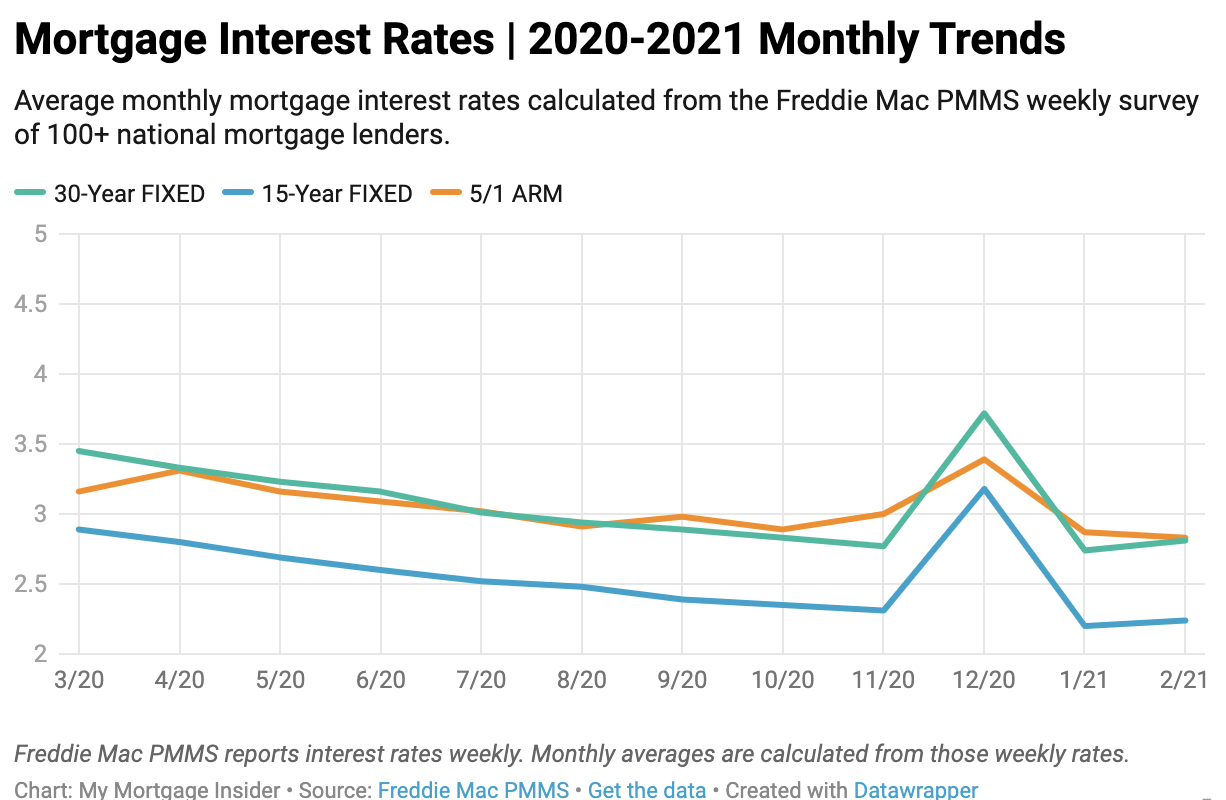
The 30-year fixed-rate mortgage remains the gold standard for American homebuyers. It offers the ultimate hedge against inflation; once you lock in your rate, your principal and interest payment will never change, regardless of how high market rates climb in the future. For those with a shorter horizon, the 15-year fixed-rate mortgage typically offers a significantly lower interest rate in exchange for higher monthly payments, allowing the borrower to build equity much faster and pay less total interest over time.
Adjustable-Rate Mortgages (ARMs) and Hybrid Options
In a high-interest-rate environment, Adjustable-Rate Mortgages (ARMs) often gain popularity. These loans typically offer a lower “teaser” rate for an initial period (such as 5, 7, or 10 years). After this period, the rate adjusts annually based on market indices. For a professional who intends to sell the property or refinance before the adjustment period begins, an ARM can be a strategic financial tool to lower monthly overhead. However, they carry the inherent risk of payment shock if rates remain high or increase further.
Government-Backed Loans (FHA, VA, and USDA)
It is important to note that government-backed loans often feature different interest rate structures than conventional loans. FHA loans, designed for those with lower credit scores or smaller down payments, may offer competitive rates but come with mandatory mortgage insurance premiums. VA loans, available to veterans and active-duty service members, often provide some of the lowest interest rates on the market with no down payment requirement, representing a significant financial advantage for those who qualify.

Factors That Determine Your Personal Interest Rate
When you see a “headline” interest rate in the news, it represents an average for borrowers with pristine credit. Your personal interest rate—the one a lender actually offers you—is determined by your individual financial profile. Understanding these variables allows you to take steps to optimize your profile before applying.
Credit Score and Debt-to-Income (DTI) Ratio
Your credit score is the primary tool lenders use to assess risk. A borrower with a score above 760 will almost always receive the lowest available rates, while a borrower with a score in the 600s may face rates 1% to 2% higher. Similarly, your Debt-to-Income (DTI) ratio—the percentage of your gross monthly income that goes toward paying debts—signals your ability to manage monthly payments. Lenders generally prefer a DTI below 36%, although some programs allow for higher ratios at the cost of a higher interest rate.
Down Payment Size and Loan-to-Value (LTV)
The “skin in the game” you provide also influences your rate. A larger down payment reduces the lender’s risk. If you provide a 20% down payment, you achieve an 80% Loan-to-Value (LTV) ratio, which usually eliminates the need for Private Mortgage Insurance (PMI) and can trigger a lower interest rate tier. Conversely, a small down payment results in a higher LTV, which lenders offset by charging higher interest rates or additional fees.
Strategies to Secure the Best Possible Rate
In a fluctuating market, timing and strategy are just as important as your credit score. If you are shopping for a home, you shouldn’t simply accept the first rate quoted. There are proactive financial maneuvers you can use to lower your effective interest rate.
The Importance of Rate Locking
Interest rates can change multiple times in a single day. A “rate lock” is an agreement between a borrower and a lender to freeze an interest rate for a specific period, usually 30 to 60 days, while the loan is processed. This protects the borrower from market volatility. In a rising rate environment, locking in early is a crucial defensive strategy. Some lenders even offer “lock and shop” programs that allow you to freeze a rate before you have even found a specific property.
Buying Down the Rate with Discount Points
For borrowers with extra cash on hand, “buying points” is a common strategy to secure a lower long-term rate. One discount point typically costs 1% of the total loan amount and reduces the interest rate by approximately 0.25%. This is essentially “prepaid interest.” To determine if this is a wise financial move, you must calculate the “break-even point”—the number of months it will take for the monthly savings to equal the upfront cost of the points. If you plan to stay in the home for a decade or more, buying points can be an excellent investment.
The Long-term Impact of Interest Rates on Real Estate Investment
From a wealth-building perspective, interest rates dictate the viability of real estate as an asset class. For investors, the “current rate” isn’t just a monthly cost; it is a hurdle rate that must be cleared to ensure positive cash flow and a healthy Return on Investment (ROI).
Calculating ROI in a High-Rate Environment
When interest rates are high, the cost of debt service consumes a larger portion of rental income. This requires investors to be more disciplined with their acquisitions. A property that was a “good deal” at a 3% interest rate may become a liability at 7%. Smart investors use these periods to focus on value-add opportunities where forced appreciation (through renovations or management improvements) can offset the higher cost of borrowing.
The Strategy of “Marrying the House and Dating the Rate”
A common sentiment in the real estate industry during periods of high interest rates is to “marry the house and date the rate.” This philosophy suggests that if you find the right property at a fair price, you should proceed with the purchase despite the high interest rate, with the intention of refinancing when rates eventually drop. While this strategy assumes that rates will decrease in the future, it allows buyers to avoid the intense competition and price surges that typically occur when interest rates fall. However, this should only be done if the current payment is genuinely affordable within your current budget.

Conclusion: Staying Informed in a Dynamic Market
The current housing interest rate is a moving target that reflects the broader health of the global economy. For the savvy individual, it is not merely a number to be feared, but a factor to be managed. By understanding the macroeconomic drivers, optimizing your personal financial health, and using strategic tools like rate locks and discount points, you can secure a mortgage that aligns with your long-term financial goals. Whether you are a first-time homebuyer or a seasoned investor, staying informed is the best way to ensure that your home remains an asset rather than a financial burden.
aViewFromTheCave is a participant in the Amazon Services LLC Associates Program, an affiliate advertising program designed to provide a means for sites to earn advertising fees by advertising and linking to Amazon.com. Amazon, the Amazon logo, AmazonSupply, and the AmazonSupply logo are trademarks of Amazon.com, Inc. or its affiliates. As an Amazon Associate we earn affiliate commissions from qualifying purchases.