
Understanding interest rates is the cornerstone of effective personal and business financial management. When we ask “what is the interest rate for banks,” we are essentially looking at two sides of the same coin: the rate at which banks lend money to consumers and the rate at which banks borrow money from the central bank or pay interest to depositors. These rates dictate everything from the cost of your monthly mortgage payment to the growth of your retirement savings.
In the current economic landscape, interest rates are dynamic, influenced by central bank policies, inflation, and global market stability. Navigating this environment requires a deep dive into how these rates are set, why they fluctuate, and how you can position your finances to benefit from these movements.
The Foundation of Bank Interest: The Federal Reserve and the Prime Rate
To understand the interest rates you see at your local branch or online banking portal, you must first understand the “base” of the pyramid. In the United States, the Federal Reserve (the Fed) sets the Federal Funds Rate. This is the interest rate at which commercial banks borrow and lend their excess reserves to each other overnight. While this rate isn’t what you pay directly, it is the primary lever that determines all other interest rates in the economy.
The Federal Funds Rate and Its Ripple Effect
When the Federal Reserve adjusts the federal funds rate, it is attempting to control economic growth and inflation. If the economy is overheating and inflation is high, the Fed raises rates to make borrowing more expensive, which cools spending. Conversely, if the economy is sluggish, the Fed lowers rates to encourage borrowing and investment.
This rate creates a ripple effect. When it rises, the “Prime Rate”—the base interest rate that commercial banks charge their most creditworthy corporate customers—rises as well. Most consumer loan products, such as credit cards and home equity lines of credit (HELOCs), are indexed to the Prime Rate. Therefore, when the Fed moves, your interest costs usually move in tandem.
The Discount Window
Another crucial “rate for banks” is the discount rate. This is the interest rate charged to commercial banks and other depository institutions on loans they receive from their regional Federal Reserve Bank’s lending facility—the discount window. While banks prefer to borrow from each other at the federal funds rate, the discount window serves as a backup liquidity source. The rate is typically set higher than the federal funds rate to encourage banks to borrow from the market first.
Interest Rates for Savers: Maximizing Your Return on Deposits
For the individual looking to grow their wealth, interest rates represent the “yield” or the price the bank pays you to use your money. Banks use your deposits to fund loans for other customers, and in exchange, they provide you with interest. However, not all savings vehicles are created equal.
High-Yield Savings Accounts (HYSA)
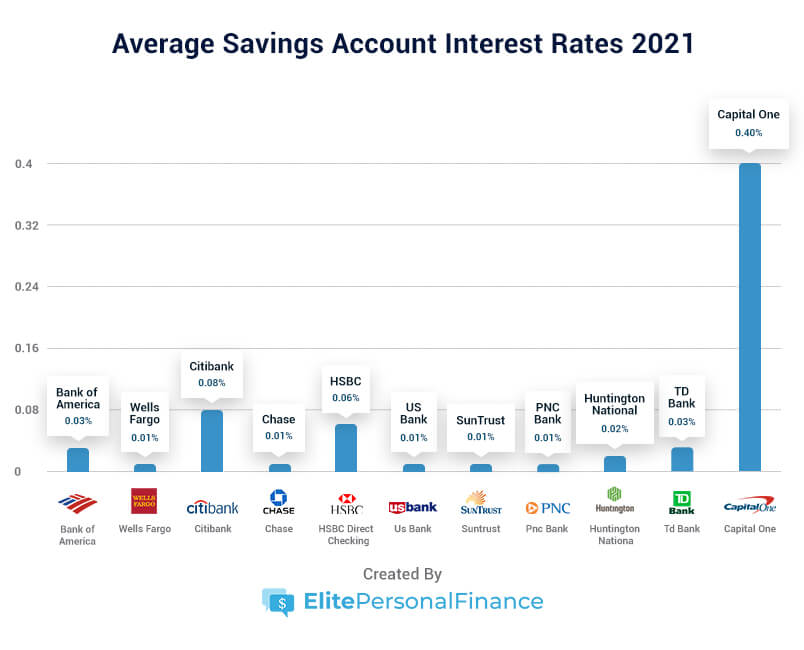
In a high-interest environment, the traditional savings account at a “big four” brick-and-mortar bank often offers negligible returns, sometimes as low as 0.01%. However, online banks have revolutionized this space. Because they lack the overhead costs of physical branches, they can offer High-Yield Savings Accounts with rates that are often 10 to 20 times higher than the national average. These accounts are liquid, meaning you can withdraw your money at any time, making them the ideal vehicle for emergency funds.
Certificates of Deposit (CDs) and the Yield Curve
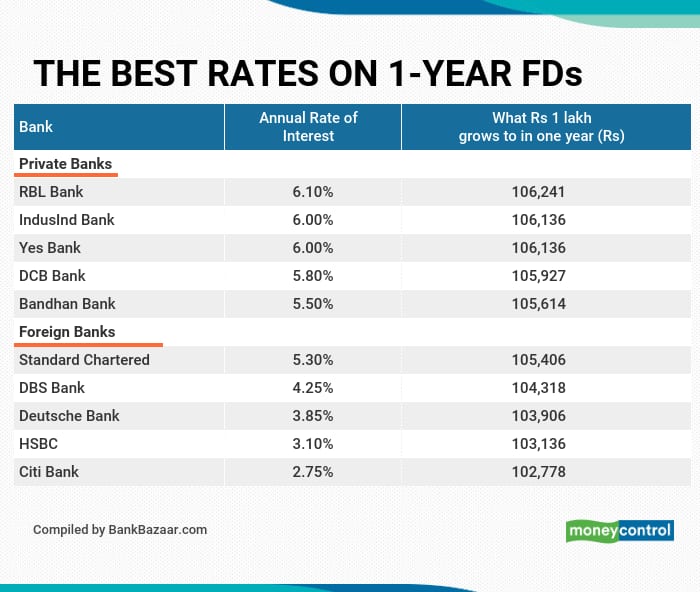
If you have capital that you do not need to access immediately, Certificates of Deposit (CDs) offer a way to “lock in” a specific interest rate for a set period, ranging from three months to five years. The trade-off for a higher interest rate is a lack of liquidity; withdrawing funds before the CD matures usually results in a penalty.
Investors often look at the “yield curve” when deciding on CD lengths. In a normal economy, longer-term CDs offer higher rates to compensate for the risk of time. However, in an “inverted yield curve” scenario—often a precursor to a recession—short-term rates may actually be higher than long-term rates. Understanding these nuances allows you to “ladder” your CDs, maturing them at different intervals to maintain liquidity while capturing high rates.
Money Market Accounts (MMAs)
Money Market Accounts sit somewhere between a checking account and a savings account. They often offer tiered interest rates, where higher balances earn higher yields. While they provide better rates than standard savings accounts and often come with check-writing privileges, they may require higher minimum balances to avoid fees.
Interest Rates for Borrowers: The Cost of Capital
On the flip side of the financial ledger is the interest rate you pay when you borrow money. This is the “APR” or Annual Percentage Rate. For banks, the interest they charge on loans is their primary source of revenue. For you, it is the cost of leveraging capital to buy assets or manage cash flow.
Mortgage Rates and the 10-Year Treasury Yield
While the Fed influences short-term rates, long-term mortgage rates are more closely tied to the yield on the 10-year Treasury note. Investors in the bond market dictate these rates based on their expectations of future inflation and economic growth.
-
Fixed-Rate Mortgages: These provide stability, as your interest rate remains the same for the life of the loan (usually 15 or 30 years).
-
Adjustable-Rate Mortgages (ARMs): These offer a lower initial rate for a set period, after which the rate adjusts periodically based on market indices. In a rising rate environment, ARMs can be risky; in a falling rate environment, they can be advantageous.
Personal Loans and Credit Cards
Interest rates for personal loans and credit cards are typically much higher than mortgages because they are “unsecured”—they aren’t backed by an asset like a house or a car.
-
Credit Cards: These are often the most expensive form of debt. Rates are usually variable and tied to the Prime Rate plus a “margin” based on your creditworthiness.
-
Personal Loans: These usually offer fixed rates and are often used for debt consolidation. The interest rate you receive is heavily dependent on your DTI (debt-to-income) ratio and your credit score.
The Role of Credit Scores
It is impossible to discuss the interest rate for banks without mentioning the FICO score. While the Fed sets the floor for interest rates, your credit profile determines how far above that floor you will sit. A borrower with a 760+ credit score may be offered a mortgage at 6.5%, while a borrower with a 620 score might be offered 8% or higher. Over the life of a 30-year loan, this “spread” can result in hundreds of thousands of dollars in extra interest payments.
Why Interest Rates Differ Across Institutions
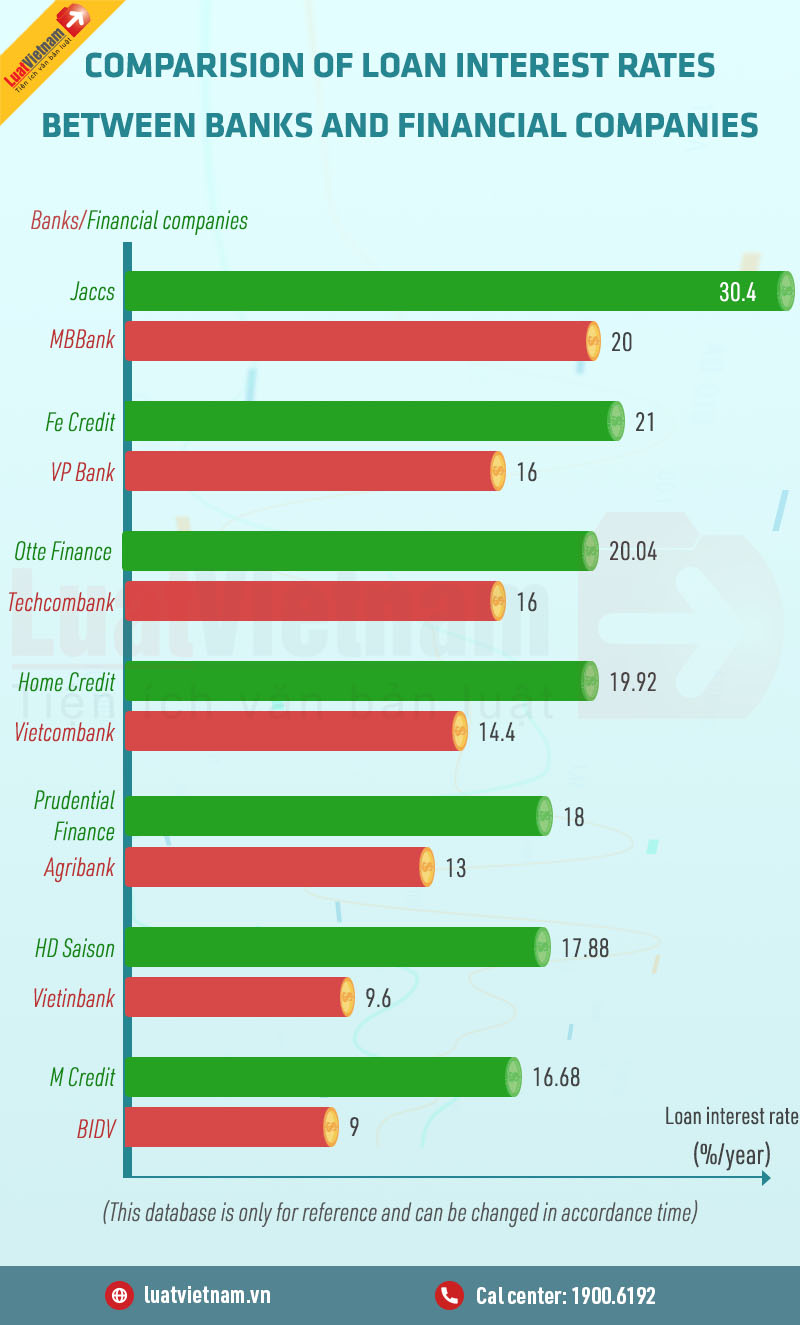
You may notice that while the national news talks about a specific “interest rate,” the actual numbers you see at different banks vary wildly. This discrepancy is driven by the bank’s business model and its need for capital.
Online Banks vs. Traditional Banks
Traditional banks have significant capital expenditures: thousands of physical buildings, tellers, and administrative staff. To maintain their profit margins, they often offer lower interest rates on savings and charge higher fees. Online-only banks (Neobanks) operate with lean structures, allowing them to pass those savings to the consumer in the form of higher APYs (Annual Percentage Yields) on deposits and lower interest rates on loans.
Credit Unions
Credit unions are member-owned, non-profit cooperatives. Because they do not have to answer to shareholders demanding quarterly profits, they can often offer more competitive interest rates than commercial banks. For many consumers, credit unions represent the “sweet spot” of personalized service and low borrowing costs.
Regional vs. National Banks
Smaller regional banks sometimes offer promotional interest rates to attract new deposits if they need to increase their lending capacity. If a regional bank wants to expand its commercial real estate lending, it might offer a “special” CD rate that is significantly higher than the national average to quickly bring in the necessary capital.
Strategic Financial Management in a Variable Rate World
In an era where interest rates can shift rapidly, being a passive observer can be costly. To truly master the “interest rate for banks,” you must adopt a proactive strategy.
-
Refinance Strategically: When market rates drop significantly below your current loan rate, refinancing can save you thousands. However, you must calculate the “break-even point”—the time it takes for the monthly savings to outweigh the closing costs of the new loan.
-
Utilize Interest-Bearing Checking: If you keep a significant “buffer” in your checking account, ensure it is an interest-bearing account. While the rates are lower than HYSAs, earning 1% or 2% on money that would otherwise earn 0% is a simple way to combat inflation.
-
Monitor the Spread: In the banking world, the “spread” is the difference between what the bank pays you for your deposits and what they charge you for loans. By minimizing the interest you pay (through high credit scores and shopping around) and maximizing the interest you earn (through HYSAs and CDs), you effectively narrow that spread in your own favor.
-
Leverage Side Hustle Income: For those involved in online income or side hustles, the interest rate environment dictates where you should store your profits. In high-rate environments, keeping business reserves in a business high-yield savings account can provide a secondary stream of passive income that supports your operations.
Interest rates are more than just numbers on a screen; they are the pulse of the financial system. By understanding how banks determine these rates and how they interact with the broader economy, you can move from being a consumer of financial products to a strategist of your own wealth. Whether you are looking to buy a home, start a business, or simply grow your savings, the interest rate is the most powerful tool—or the most significant hurdle—in your financial journey.
aViewFromTheCave is a participant in the Amazon Services LLC Associates Program, an affiliate advertising program designed to provide a means for sites to earn advertising fees by advertising and linking to Amazon.com. Amazon, the Amazon logo, AmazonSupply, and the AmazonSupply logo are trademarks of Amazon.com, Inc. or its affiliates. As an Amazon Associate we earn affiliate commissions from qualifying purchases.