
Determining whether you are legally required to file a federal income tax return is one of the most fundamental steps in personal financial management. For many, the answer is straightforward, but for those with fluctuating incomes, multiple side hustles, or unique filing statuses, the requirements can be nuanced. The Internal Revenue Service (IRS) sets specific gross income thresholds every year, primarily based on your filing status and your age. Understanding these benchmarks is not just about staying compliant with federal law; it is about optimizing your financial health, ensuring you receive the refunds you are owed, and avoiding unnecessary penalties.
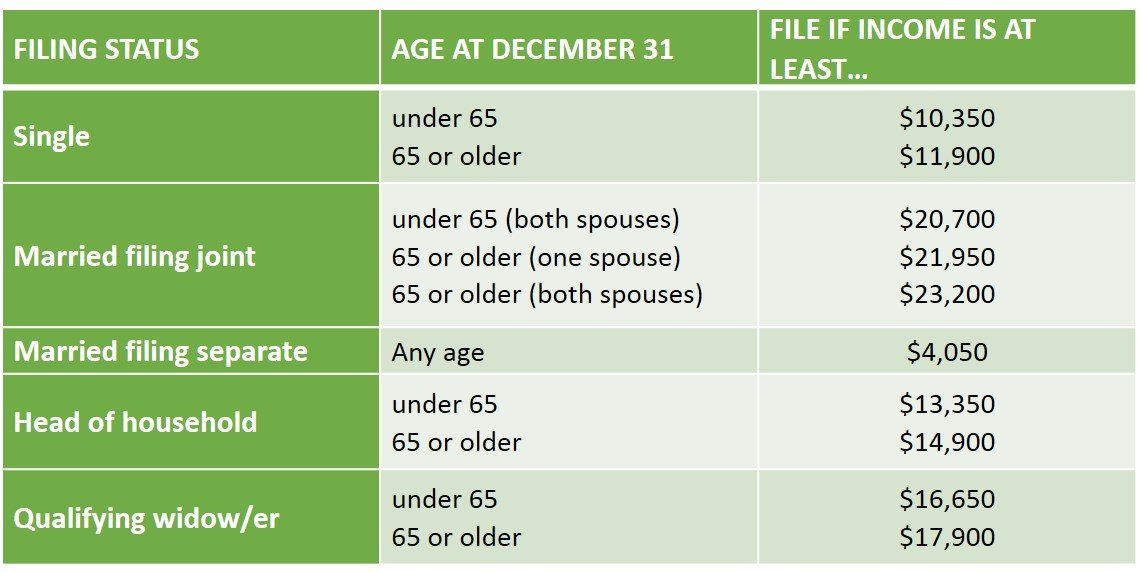
In the realm of personal finance, knowing your filing obligation is the first line of defense against administrative headaches. While the tax code is often viewed as a complex web of regulations, the fundamental “filing requirement” is built upon the concept of the standard deduction. If your gross income exceeds the standard deduction for your specific category, you generally must file a return.
Understanding the Thresholds: Filing Status and Age
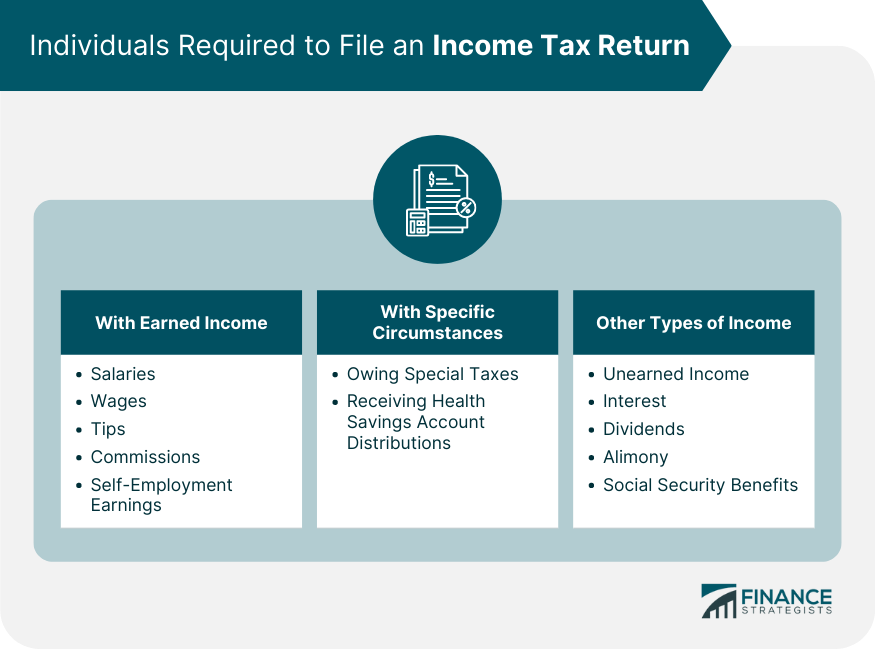
The primary factor in determining your filing requirement is your “gross income.” This includes all income you receive in the form of money, goods, property, and services that is not exempt from tax. This encompasses everything from your W-2 wages and tip income to business income, interest, dividends, and even certain portions of Social Security benefits if your total income reaches a specific level.
Single and Married Filing Separately
For most individuals under the age of 65 who file as Single, the income threshold is tied directly to the standard deduction. For the 2023 tax year, this was $13,850. For the 2024 tax year, the threshold rises to $14,600 due to inflation adjustments. If you are 65 or older, the IRS provides an additional standard deduction, effectively raising your filing threshold.
If you choose the status of Married Filing Separately, the rules are significantly more stringent. Regardless of your age, if you are married and filing a separate return, you must file if your gross income is at least $5. This low bar exists to prevent couples from unfairly splitting income to lower their overall tax bracket without adhering to the joint filing requirements.
Married Filing Jointly and Qualifying Surviving Spouses
Couples who file jointly benefit from the highest income thresholds. For the 2023 tax year, a married couple under 65 was required to file if their combined gross income reached $27,700. For 2024, this increases to $29,200. If one spouse is 65 or older, the threshold increases; if both are 65 or older, it increases further. This status is often the most financially advantageous for families, as it doubles the standard deduction and provides access to various credits that are phased out at lower income levels for single filers.
Qualifying Surviving Spouses (formerly known as Qualifying Widow/Widower with Dependent Child) follow the same income thresholds as Married Filing Jointly. This status is designed to provide a financial cushion for those who have lost a spouse but are still maintaining a household for a dependent child.
Head of Household
The Head of Household status is designed for unmarried individuals who pay more than half the cost of keeping up a home for themselves and a qualifying person. Because this status is intended to support those with dependents, the income threshold is higher than the Single status but lower than Married Filing Jointly. For 2023, the threshold was $20,800, rising to $21,900 for 2024. This status offers a significant tax break compared to filing as Single, reflecting the increased financial burden of supporting a household.
The Standard Deduction Connection
The relationship between the standard deduction and the filing requirement is the cornerstone of the American tax system. The standard deduction is the portion of income not subject to tax that can be used to reduce your overall tax bill. If your total gross income is less than your standard deduction, you technically have no taxable income, which is why the IRS generally does not require a return in these instances.
Inflation Adjustments for Tax Years 2023 and 2024
One of the most critical aspects of personal finance is tracking how inflation impacts tax brackets and deductions. The IRS adjusts these figures annually to prevent “bracket creep,” where inflation pushes taxpayers into higher tax brackets even though their real purchasing power hasn’t increased.
For the 2024 tax year, we have seen a significant jump in the standard deduction amounts. A Single filer’s deduction rose by $750, and Married Filing Jointly rose by $1,500. For a savvy investor or a budget-conscious household, these numbers are vital for year-end tax planning. If your income is hovering right at the edge of these thresholds, you may have the flexibility to defer certain income or accelerate deductible expenses to stay below the filing requirement or reduce your overall liability.
Self-Employment and the Gig Economy Rule

In the modern financial landscape, side hustles and freelance work have become ubiquitous. However, the rules for self-employed individuals differ drastically from those who only receive a W-2 from an employer. When you are an employee, your employer handles the payment of Social Security and Medicare taxes. When you are self-employed, you are both the employer and the employee.
The $400 Net Earnings Threshold
If you operate a business, work as a freelancer, or participate in the gig economy (such as driving for a rideshare service or selling items online), the standard filing thresholds often do not apply. Instead, you must file a federal income tax return if your net earnings from self-employment were $400 or more.
This $400 rule catches many taxpayers off guard. You might have a traditional job where you earn $10,000 (which is below the $14,600 Single threshold) and a side business where you earn $600. Even though your total income is only $10,600, you are legally required to file a return because your self-employment income exceeded the $400 limit.
Calculating Self-Employment Tax
The reason for this low threshold is the Self-Employment Tax. This tax covers Social Security and Medicare. Even if you do not owe any “income tax” because your total earnings are low, you still owe the self-employment portion of your earnings. Failure to file and pay this tax can lead to significant penalties and interest over time. From a financial growth perspective, properly reporting this income also ensures you are accruing credits toward your future Social Security benefits.
Unearned Income and Dependent Filing Rules
While earned income (wages and salaries) is the most common form of revenue, unearned income—such as interest, dividends, and capital gains—has its own set of rules, particularly for those who can be claimed as a dependent on someone else’s return.
Investment Income, Dividends, and Capital Gains
For the average adult, unearned income is simply added to their gross income to see if they meet the general filing threshold. However, if your only source of income is unearned (for example, you live off investment dividends), the filing requirement might be lower than the standard deduction for earned income.
Rules for Children and Other Dependents
The “Kiddie Tax” and dependent filing rules are designed to prevent parents from shifting large amounts of investment assets to their children to avoid higher tax brackets. If a child or another person can be claimed as a dependent, they must file a return if:
- Their unearned income was more than $1,250 (for 2023).
- Their earned income was more than $13,850 (for 2023).
- Their gross income was more than the larger of $1,250 or their earned income (up to $13,450) plus $400.
For parents teaching their children about money and investing, understanding these thresholds is vital. It is often the child’s first encounter with the financial responsibilities of adulthood.
Why You Should File Regardless of Income
Even if you fall below the income requirements listed above, there are several compelling financial reasons to file a tax return voluntarily. In many cases, not filing can actually result in leaving money on the table.
Claiming Refundable Tax Credits
The most common reason to file voluntarily is to claim a refund of federal income tax withheld from your paychecks. If you worked a part-time job and earned $5,000, you are well below the filing threshold. However, if your employer withheld $500 in federal taxes, the only way to get that money back is to file a return.
Furthermore, several tax credits are “refundable,” meaning the government will send you a check for the credit amount even if you owe zero taxes.
- Earned Income Tax Credit (EITC): This is a significant credit for low-to-moderate-income working individuals and couples, particularly those with children.
- Child Tax Credit (CTC): A portion of this credit may be refundable if you meet certain income requirements.
- American Opportunity Tax Credit (AOTC): For students in their first four years of post-secondary education, a portion of this credit is refundable.
Protecting Against Identity Theft and Future Benefits
Filing a tax return, even a “zero” return, can serve as a security measure. Tax-related identity theft occurs when someone uses your Social Security number to file a fraudulent return and claim a refund. By filing your return early, you effectively “lock” your Social Security number for that tax year, preventing others from filing in your name.
Additionally, having a record of income is often necessary for various financial milestones. If you plan to apply for a mortgage, a student loan, or even certain types of insurance, lenders and institutions often require two years of tax returns as proof of income. Maintaining a consistent filing history, regardless of whether it was legally required, demonstrates financial stability and makes these future processes significantly smoother.
Ultimately, the question of what income is required to file taxes is as much about strategy as it is about compliance. By understanding the thresholds for your filing status, the unique rules for self-employment, and the benefits of filing voluntarily, you can navigate tax season with confidence and ensure that every dollar in your financial portfolio is working toward your long-term goals.
aViewFromTheCave is a participant in the Amazon Services LLC Associates Program, an affiliate advertising program designed to provide a means for sites to earn advertising fees by advertising and linking to Amazon.com. Amazon, the Amazon logo, AmazonSupply, and the AmazonSupply logo are trademarks of Amazon.com, Inc. or its affiliates. As an Amazon Associate we earn affiliate commissions from qualifying purchases.