
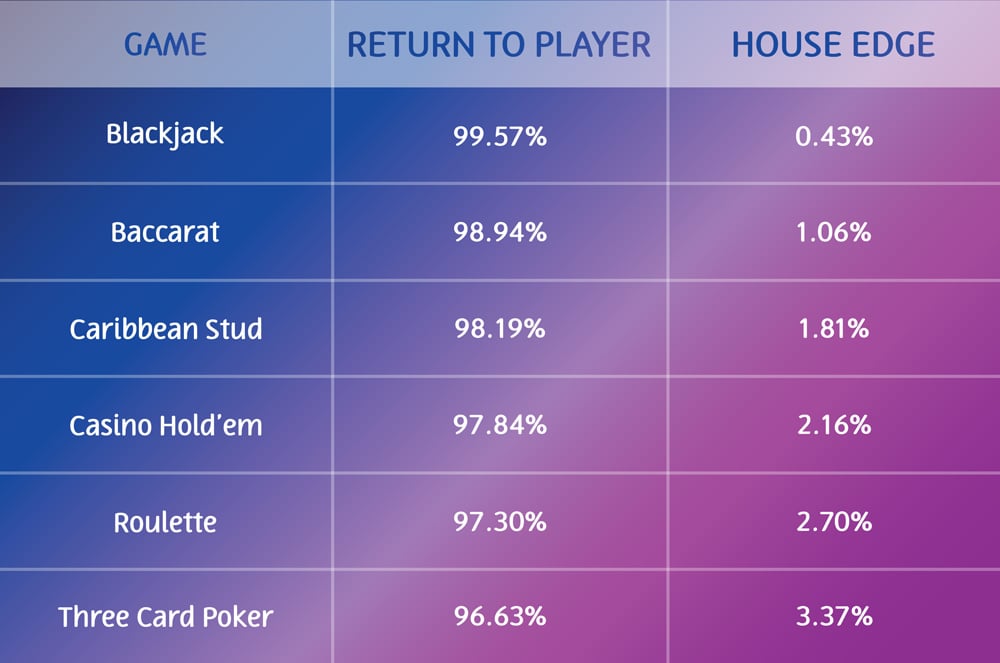
In the landscape of personal finance and strategic risk management, understanding the mathematical probability of any investment is paramount. Whether you are allocating capital into the stock market, purchasing real estate, or engaging in a game of skill and chance at a casino, the “house edge” represents the cost of participation. In blackjack, often considered the most favorable game for the player, the house advantage is the statistical margin that ensures the venue remains profitable over the long term.
For the disciplined individual who views every dollar as a unit of potential growth, understanding the house advantage in blackjack is not merely about gambling; it is an exercise in probability theory, capital preservation, and expected value (EV).
The Mathematical Foundation of the House Edge
At its core, the house advantage—or house edge—is the mathematical difference between the true odds of an event occurring and the payout odds offered by the house. In blackjack, this edge is expressed as a percentage of the player’s original bet. For example, if a game has a house edge of 0.5%, a player can expect to lose an average of $0.50 for every $100 wagered over an infinite timeline.
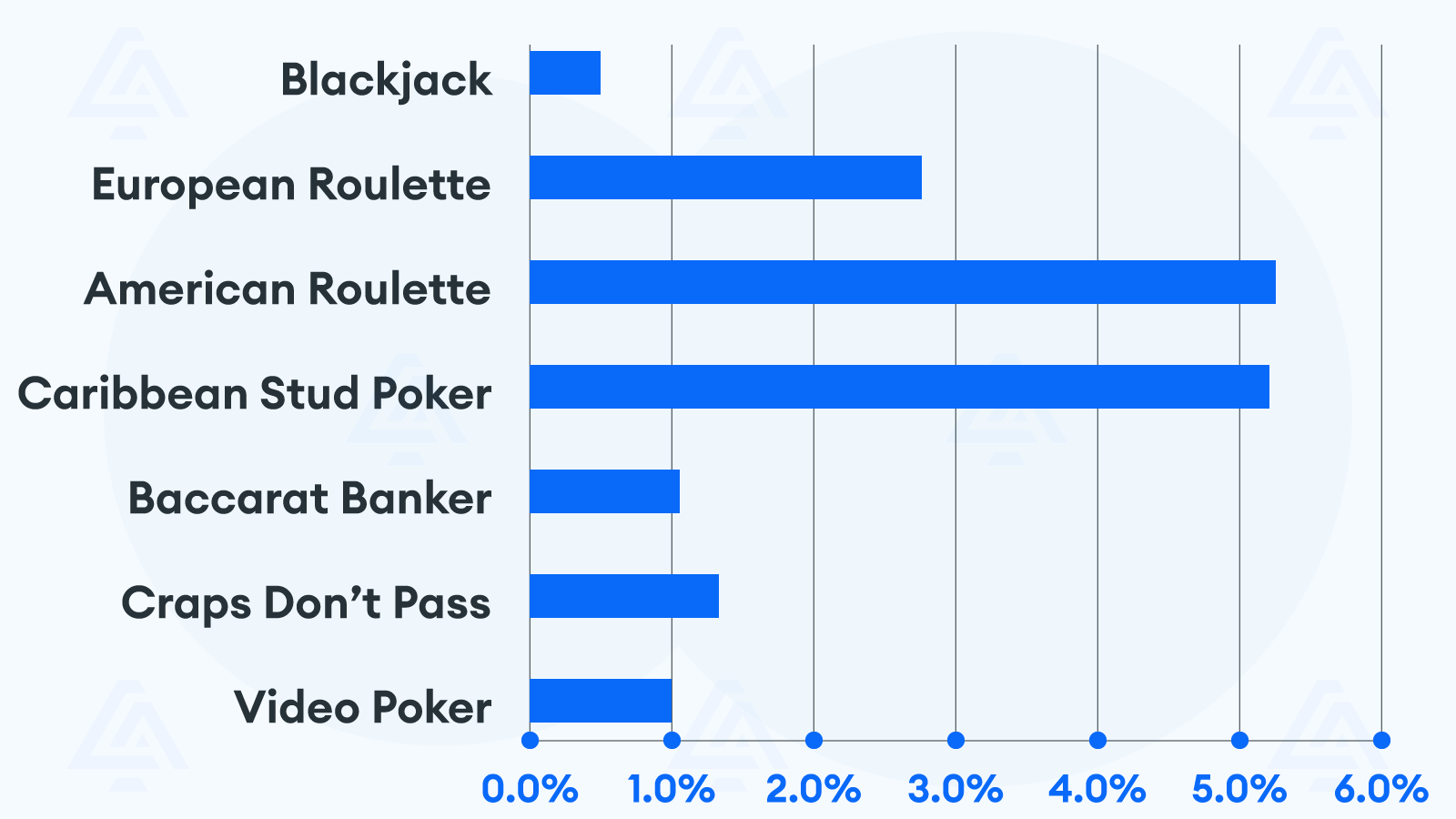
Unlike games of pure chance like slots or roulette, the house edge in blackjack is dynamic. It fluctuates based on the rules of the specific table and, most importantly, the skill level of the player.
The Positional Advantage: Why the House Wins
The primary source of the house advantage in blackjack is the simple fact that the player must act first. If both the player and the dealer “bust” (exceed a total of 21), the dealer wins by default. This “double bust” rule is the cornerstone of the casino’s profitability. Even though the game appears to be a near-even contest, this positional disadvantage creates a baseline margin that the player must overcome through strategy and specific bonus payouts, such as the 3:2 premium for a natural blackjack.
Expected Value and Variance
In financial terms, the house edge represents a negative Expected Value (-EV). However, it is essential to distinguish between the theoretical edge and short-term variance. Variance is the “swing” or “volatility” of the game. In a single session, a player might experience a significant profit due to a “hot” streak. However, as the sample size of hands increases—much like the performance of an index fund over decades—the actual results will inevitably gravitate toward the theoretical house edge.
Variables That Shift the Financial Margin
Not all blackjack games are created equal. Just as an investor must scrutinize the expense ratios and management fees of an ETF, a blackjack player must evaluate the specific rules of a table, as these can drastically alter the house advantage.
The Payout for a Natural Blackjack
The most significant variable in modern blackjack is the payout for a “natural” (an Ace and a ten-value card). Traditionally, blackjack pays 3:2, meaning a $100 bet returns $150. However, many casinos have introduced 6:5 payouts, where a $100 bet returns only $120.
From a financial perspective, this shift is devastating. A 6:5 payout increases the house edge by approximately 1.4%, effectively tripling the “cost” of the game for the player. For anyone concerned with capital efficiency, 6:5 blackjack tables should be avoided as aggressively as one would avoid a high-load mutual fund.
Number of Decks in Play
The “depth” of the shoe—the number of decks used—also influences the margin. Generally, the fewer the decks, the lower the house edge. A single-deck game, assuming all other rules are equal, provides the player with better odds than an eight-deck shoe. This is because the depletion of specific cards has a more significant impact on the remaining probabilities in a smaller pool, which favors the player’s ability to predict outcomes and benefits the frequency of natural blackjacks.
Dealer Rules: Soft 17 and Doubling Down
Specific procedural rules can shave or add basis points to the house edge:
- Stand on Soft 17 vs. Hit on Soft 17: If the dealer is required to stand on a “Soft 17” (an Ace and a 6), the house edge decreases by about 0.2%. If the dealer hits, the house gains an advantage.
- Double After Split (DAS): Tables that allow players to double their bet after splitting a pair are more favorable, reducing the house edge by roughly 0.14%.
- Surrender: The “late surrender” rule allows a player to forfeit half their bet rather than playing a weak hand against a strong dealer up-card. This is a powerful risk-mitigation tool that reduces the house edge by approximately 0.07%.
Strategy as a Tool for Capital Preservation
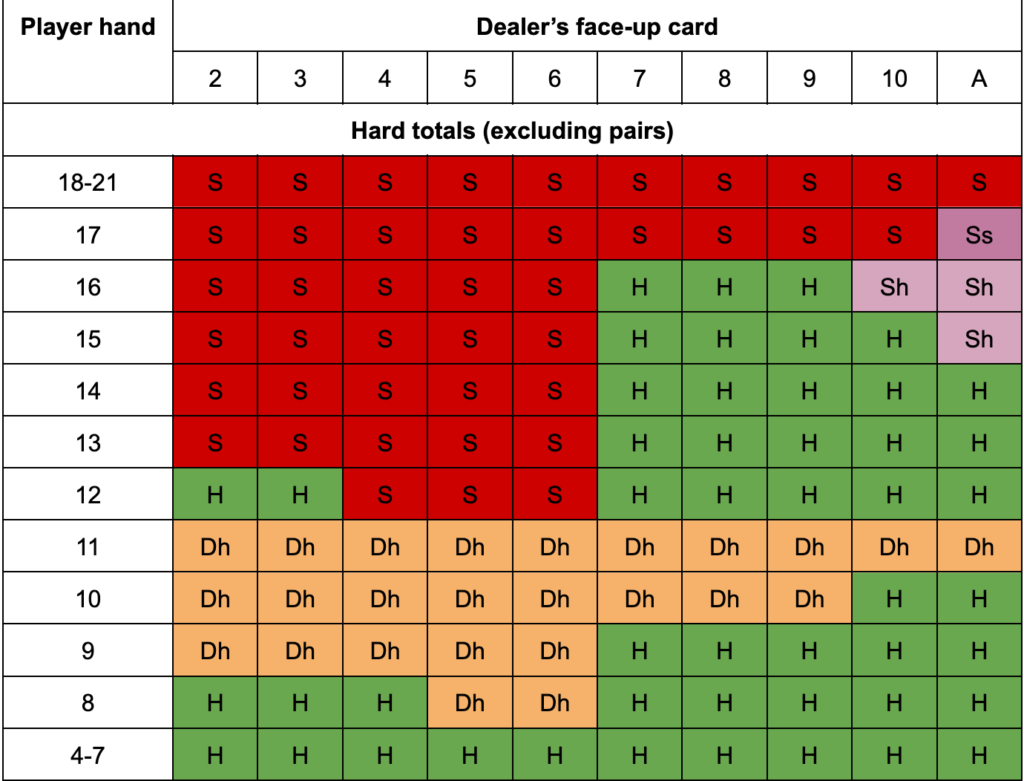
In the world of money management, “Basic Strategy” is the equivalent of a diversified, evidence-based investment portfolio. It is the mathematically optimal way to play every possible hand combination based on the dealer’s visible card.
Reducing the Edge Through Discipline
Without any strategy—playing by “gut feeling” or intuition—the house advantage can soar to 5% or higher. By strictly adhering to Basic Strategy, a player can reduce that edge to its theoretical minimum, often around 0.5% in a standard multi-deck game.
This reduction is significant. In financial terms, you are moving from a high-cost environment to a low-cost environment. While a 0.5% edge still favors the house, it creates a “low-friction” environment where the player’s capital can last significantly longer, increasing the probability of hitting a positive variance streak.
The Role of Card Counting in Flipping the Edge
For the professional or the “advantage player,” the goal is not just to reduce the house edge but to eliminate it and create a “player edge.” Card counting is a system of tracking the ratio of high cards to low cards remaining in the deck. When the deck is rich in tens and Aces, the probability of a player-favorable outcome increases.
When the count is high, the advantage shifts to the player (often between 0.5% and 2% in the player’s favor). At this point, the game becomes a +EV (Positive Expected Value) endeavor. Much like value investing—where an investor buys an asset for less than its intrinsic worth—the advantage player only “invests” heavily when the mathematical odds are in their favor.
Risk Management and Bankroll Allocation
Even with a low house advantage, a player can go “bankrupt” if they do not practice proper bankroll management. This is the same principle applied to business finance: liquidity is key to surviving volatility.
The Risk of Ruin
The “Risk of Ruin” is a mathematical concept that calculates the probability of losing one’s entire capital base before reaching a specific profit goal. Even in a game with a 0.5% house edge, a player with a small bankroll and high bet sizes faces a near-certainty of total loss due to standard deviation.
To mitigate this, one should treat their blackjack bankroll as a dedicated investment fund. Professional players often suggest having at least 100 to 200 times the minimum bet as a cushion to weather the inevitable “drawdowns” that occur in any risk-based environment.
Emotional Discipline vs. Rational Analysis
The greatest threat to a player’s financial standing at the blackjack table is not the house edge, but “tilt”—an emotional reaction to losses that leads to irrational betting. In personal finance, this is analogous to panic-selling during a market correction. Maintaining a professional, detached perspective on the house advantage allows the player to view each hand as a single data point in a long-term strategy, rather than a reflection of “luck.”
Blackjack as a Financial Metaphor
Understanding the house advantage in blackjack provides profound insights into the broader world of money and investing. It teaches the importance of:
- Fee Awareness: Just as 6:5 payouts erode capital, high management fees erode wealth. Always look for the most efficient “rules” in any financial contract.
- Probability Over Certainty: Success is not about winning every hand (or every trade), but about making decisions that have a positive expected value over thousands of iterations.
- The Power of Small Percentages: A 1% difference in the house edge or an investment return can result in a massive disparity in total capital over time.
In conclusion, the house advantage in blackjack is the “cost of doing business” in the casino. While it is designed to ensure the house wins in the long run, a sophisticated understanding of the variables involved allows an individual to minimize that cost. By viewing the game through the lens of a financial analyst—prioritizing low-edge environments, employing rigorous strategy, and managing risk through proper capitalization—one can transform blackjack from a game of chance into a study of disciplined financial execution.
aViewFromTheCave is a participant in the Amazon Services LLC Associates Program, an affiliate advertising program designed to provide a means for sites to earn advertising fees by advertising and linking to Amazon.com. Amazon, the Amazon logo, AmazonSupply, and the AmazonSupply logo are trademarks of Amazon.com, Inc. or its affiliates. As an Amazon Associate we earn affiliate commissions from qualifying purchases.