
For most individuals, purchasing a home is the most significant financial transaction of their lives. While the sticker price of a property often garners the most attention, the “price of the money” borrowed to facilitate that purchase—the home interest rate—is arguably more important. A difference of just one percentage point can result in tens of thousands, or even hundreds of thousands, of dollars in extra costs over the life of a loan. Understanding what home interest rates are, how they are determined, and how they interact with the broader economy is essential for anyone looking to build long-term wealth through real estate.
The Mechanics of Home Interest Rates
At its core, a home interest rate is the cost charged by a lender to a borrower for the use of principal over a set period. It is expressed as a percentage of the total loan amount. However, the internal mechanics of how these rates are structured and offered can vary significantly based on the type of financial product selected.
How Lenders Determine Rates
Lenders do not pick numbers out of thin air. Instead, they operate on a “spread.” They borrow money at a lower rate (often from the central bank or through customer deposits) and lend it to homebuyers at a higher rate. The difference between these two is the margin that covers the lender’s operating costs and profit. Additionally, lenders must account for the risk of default. If the economy is volatile, or if a borrower’s financial profile is risky, the interest rate will rise to compensate the lender for taking that risk.
The Role of the Central Bank
While the Federal Reserve (or the equivalent central bank in other nations) does not directly set mortgage rates, its influence is profound. By adjusting the federal funds rate—the rate at which commercial banks borrow from each other overnight—the Fed sets a floor for all other interest rates. When the Fed raises rates to combat inflation, the cost of capital for banks increases, which is invariably passed down to the consumer in the form of higher mortgage rates.
Fixed-Rate vs. Adjustable-Rate Mortgages (ARMs)
In the world of personal finance, the choice between a fixed-rate and an adjustable-rate mortgage (ARM) is one of the most critical decisions a borrower will make. A fixed-rate mortgage offers stability; the interest rate remains the same for the entire duration of the loan (usually 15 or 30 years). Conversely, an ARM typically offers a lower initial rate for a set period (such as 5 or 7 years), after which the rate adjusts periodically based on current market indices. While ARMs can be beneficial in a falling-rate environment, they carry significant risk if market rates climb.
Factors Influencing Your Personal Mortgage Rate
While macroeconomic factors set the “baseline” for interest rates, your personal financial health determines where you fall on the spectrum of available offers. Two different people applying for a loan on the same day at the same bank may receive vastly different interest rate quotes.
Credit Scores and Financial Health
Your credit score is perhaps the most influential factor in the rate-setting process. From a lender’s perspective, a high credit score (typically 760 and above) indicates a history of responsible debt management. This lower perceived risk allows the lender to offer their “prime” rate. Conversely, borrowers with lower scores may be hit with “loan-level price adjustments,” which can add significant percentage points to the base rate, making the loan much more expensive over time.
Debt-to-Income Ratio (DTI)
The Debt-to-Income ratio is a snapshot of your monthly financial obligations compared to your gross monthly income. Lenders use this to ensure that a borrower isn’t “house poor.” A lower DTI suggests that the borrower has a financial cushion, which can lead to more favorable loan terms. If your DTI is too high, a lender might still approve the loan but may mitigate their risk by charging a higher interest rate.
Loan-to-Value (LTV) and Down Payments
The amount of “skin in the game” you have matters. The Loan-to-Value ratio compares the amount of the mortgage to the appraised value of the property. A higher down payment—resulting in a lower LTV—reduces the lender’s exposure. If you provide a 20% down payment, you are viewed as a safer bet than someone putting down only 3%. Consequently, those who provide larger down payments are often rewarded with lower interest rates and the avoidance of Private Mortgage Insurance (PMI).
The Macroeconomic Landscape and Mortgage Trends

Home interest rates do not exist in a vacuum; they are a reflection of the global and national economic climate. Understanding these trends helps investors and prospective homeowners time their moves more effectively.
Inflation and Its Direct Impact on Borrowing
Inflation is the natural enemy of fixed-income investors and mortgage lenders. If a bank lends money at a 4% interest rate, but inflation is running at 5%, the bank is effectively losing purchasing power on the money it is paid back. To protect against this, interest rates generally rise alongside inflation. When the Consumer Price Index (CPI) shows a jump in the cost of goods and services, mortgage rates almost always follow suit as lenders attempt to maintain their “real” rate of return.
The Yield Curve and Bond Markets
Mortgage rates are often more closely tied to the 10-year Treasury note yield than they are to the Fed’s short-term rates. Most 30-year mortgages are paid off or refinanced within ten years, making the 10-year yield a primary benchmark. When investors are confident in the economy, they sell bonds, causing yields (and mortgage rates) to rise. When there is economic fear, investors “flight to quality,” buying bonds and driving yields and mortgage rates lower.
Global Economic Indicators
In a globalized financial system, events overseas can impact local home interest rates. For instance, economic instability in Europe or Asia can lead international investors to pour money into U.S. Treasury bonds as a safe haven. This influx of capital can inadvertently drive down interest rates for a homebuyer in a suburban neighborhood thousands of miles away.
Strategies for Securing the Best Home Interest Rate
Because the interest rate is the largest variable cost of homeownership, savvy borrowers must be proactive in securing the best possible terms.
Comparison Shopping and Loan Estimates
One of the biggest mistakes borrowers make is accepting the first quote they receive. Research consistently shows that getting at least three to five quotes can save a borrower thousands of dollars. When comparing, it is vital to look at the “Loan Estimate” form, which breaks down the interest rate alongside the Annual Percentage Rate (APR). The APR is a more comprehensive figure that includes the interest rate plus lender fees and points, providing a true “apples-to-apples” comparison.
Locking in Your Rate
Mortgage rates fluctuate daily, and sometimes hourly. Once you find a favorable rate, you have the option to “lock” it. A rate lock guarantees that the lender will honor the quoted interest rate for a specific period (usually 30 to 60 days) while your loan is being processed. This protects the borrower from sudden market spikes during the underwriting period.
Buying Down the Rate with Points
“Discount points” allow a borrower to pay more upfront in exchange for a lower interest rate. One point typically costs 1% of the total loan amount and reduces the interest rate by approximately 0.25%. This is an excellent strategy for those who plan to stay in their home for a long time (the “break-even” period), as the long-term interest savings will eventually outweigh the initial upfront cost.
The Long-Term Financial Impact of Interest Rates
The true weight of an interest rate is best understood through the lens of amortization—the process of paying off a debt over time through regular installments.
Amortization and Total Cost of Ownership
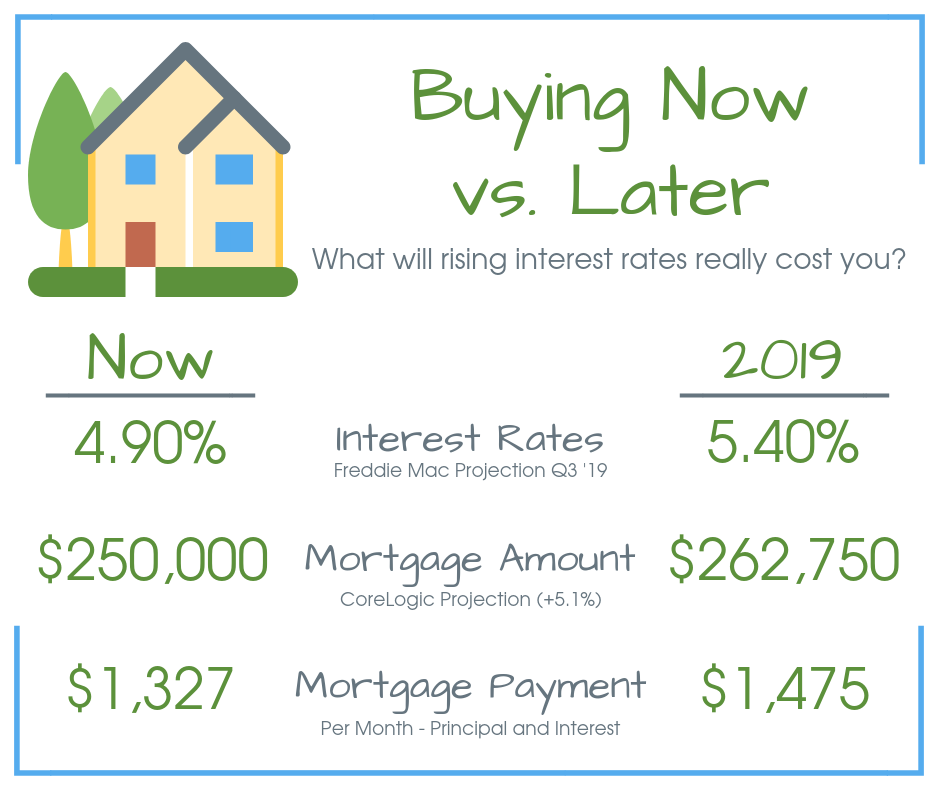
In the early years of a mortgage, the vast majority of your monthly payment goes toward interest rather than the principal balance. For a $400,000 loan at a 7% interest rate, a borrower will pay over $550,000 in interest alone over 30 years. If that same loan had a 4% rate, the total interest paid would drop to approximately $287,000. This massive disparity illustrates why the interest rate is the most critical lever in personal finance for homeowners.

Refinancing Opportunities
A high interest rate at the time of purchase does not have to be a life sentence. Refinancing is a powerful financial tool that allows homeowners to replace their current mortgage with a new one, ideally at a lower rate. When market rates drop significantly, refinancing can lower monthly payments, reduce the loan term, or allow the homeowner to tap into home equity for other investments. However, one must always calculate the closing costs of the new loan to ensure the “refinance break-even point” makes sense within their financial timeline.
In conclusion, home interest rates are the pulse of the real estate market and a primary driver of personal net worth. By understanding the interplay between your personal financial profile and the broader macroeconomic environment, you can navigate the complexities of the mortgage market with confidence. Whether you are a first-time buyer or a seasoned real estate investor, mastering the nuances of interest rates is the key to minimizing debt and maximizing long-term financial stability.
aViewFromTheCave is a participant in the Amazon Services LLC Associates Program, an affiliate advertising program designed to provide a means for sites to earn advertising fees by advertising and linking to Amazon.com. Amazon, the Amazon logo, AmazonSupply, and the AmazonSupply logo are trademarks of Amazon.com, Inc. or its affiliates. As an Amazon Associate we earn affiliate commissions from qualifying purchases.