
In the rapidly evolving landscape of biotechnology and medical software, the Henderson-Hasselbalch equation remains a foundational algorithm that bridges the gap between classical chemistry and modern digital innovation. While it originated as a theoretical framework for understanding blood acidity and buffer systems, today it serves as the underlying logic for a wide array of software tools, diagnostic apps, and automated laboratory systems. For developers in the bio-tech space and researchers utilizing high-throughput screening, understanding this equation is not just a matter of chemistry—it is a matter of optimizing the digital architectures that power modern life sciences.
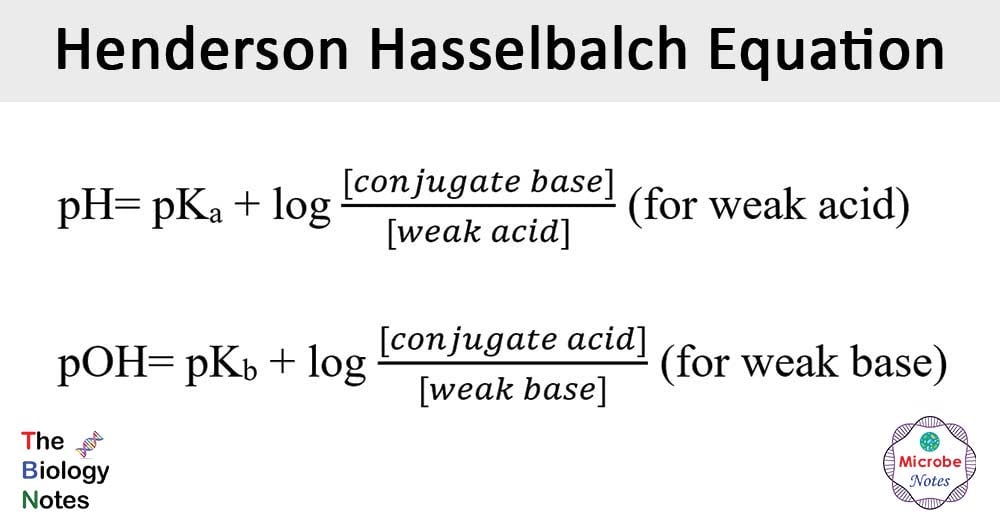
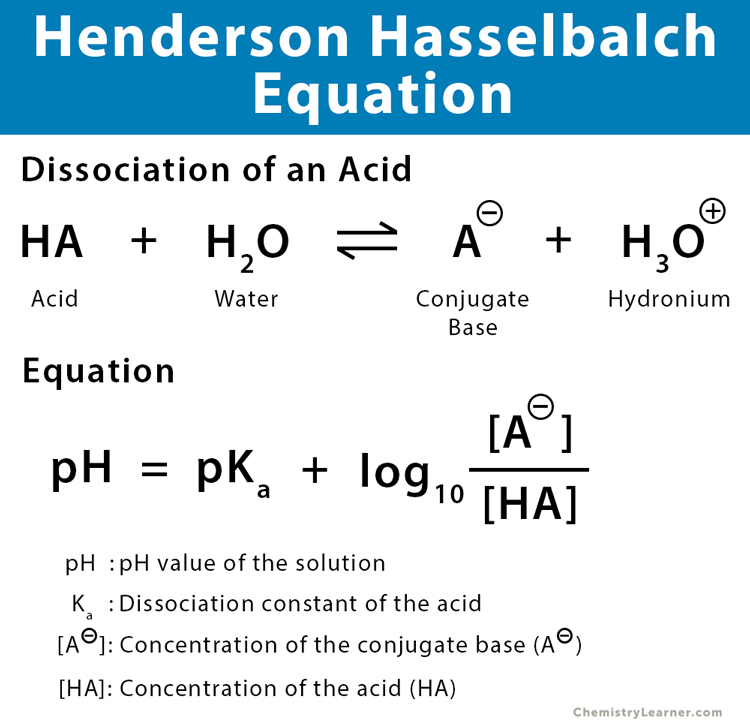
The equation itself—expressed as pH = pKa + log([A⁻]/[HA])—describes the relationship between the pH of a solution and the ratio of the concentrations of a conjugate acid and its conjugate base. In the context of technology trends, this formula is the core “logic gate” for any software designed to simulate biological environments, predict drug interactions, or manage the delicate homeostasis of bioreactors in synthetic biology.
The Mathematical Foundation of Digital Biochemistry
Before exploring its applications in AI and SaaS, it is essential to understand the structural logic that the Henderson-Hasselbalch equation provides to computational models. At its heart, the equation is a derivation of the acid dissociation constant (Ka). By applying a logarithmic transformation, the equation allows scientists and software to handle vast ranges of chemical activity within a linear, manageable scale.
Decoding the Equation: pH, pKa, and Logarithmic Ratios
In digital modeling, variables must be precisely defined. In the Henderson-Hasselbalch framework:
- pH is the measurement of acidity or alkalinity.
- pKa is the specific “tipping point” of a molecule, the pH at which it is 50% ionized.
- [A⁻] and [HA] represent the concentrations of the deprotonated and protonated forms of a substance.
For a software engineer building a laboratory calculator, these variables represent inputs that determine the behavior of a system. The logarithmic nature of the equation is particularly important for data visualization tools; it explains why small shifts in numerical input can result in massive changes in chemical behavior. This non-linear relationship is a critical consideration when designing user interfaces for chemical modeling software, where precision is paramount.
From Paper Calculations to Digital Algorithms
Historically, researchers calculated these values by hand to prepare buffers for experiments. However, the modern tech stack has automated this process. Today, “Buffer Calculators” are ubiquitous web-based tools and mobile apps that use the Henderson-Hasselbalch equation as their primary algorithm. By shifting these calculations from manual entry to automated code, the industry has significantly reduced human error, ensuring that the foundational environment for drug testing and genomic research is mathematically sound.
Integration into Modern Software Development and API Design
The transition from theoretical chemistry to functional code has led to the emergence of specialized APIs (Application Programming Interfaces) designed for the biotech industry. The Henderson-Hasselbalch equation is frequently hard-coded into the backends of these services, allowing third-party developers to integrate complex biochemical simulations into their own applications without needing to build the math from scratch.
Bio-Informatics and the Automation of Chemical Math
In the world of bio-informatics, Python and R are the dominant languages. Libraries such as Biopython or RDKit utilize the principles of the Henderson-Hasselbalch equation to calculate the isoelectric points of proteins or to predict how a specific molecule will behave when it enters the human stomach versus the bloodstream.
By integrating this equation into automated pipelines, tech companies can run millions of virtual simulations per second. This “In Silico” testing allows researchers to determine which chemical compounds are worth synthesizing in a physical lab, saving billions of dollars in R&D costs. The equation acts as a filter in the software, discarding compounds that would fail to maintain the necessary charge or solubility at physiological pH levels.
SaaS Platforms for Laboratory Management (LIMS)
Laboratory Information Management Systems (LIMS) represent a significant sector of the enterprise software market. These platforms manage everything from inventory to experimental results. A core feature of high-end LIMS is “Smart Preparation,” where the software calculates the exact mass of solutes required to reach a target pH based on the Henderson-Hasselbalch equation. This integration of the equation into SaaS workflows ensures that data integrity is maintained from the very beginning of the experimental process, providing a digital audit trail for regulatory compliance.
The Role of Computational Modeling in Pharmaceutical Tech
The pharmaceutical industry is currently undergoing a digital transformation, with the “Tech-Bio” movement leading the charge. At the center of this movement is the use of computational modeling to understand pharmacokinetics—how a drug moves through the body.
Machine Learning and Predictive Pharmacokinetics
Machine learning (ML) models are only as good as the features they are trained on. For drug discovery, one of the most critical features is the ionization state of a molecule, which is governed by the Henderson-Hasselbalch equation. Tech companies like Schrodinger or Atomwise use ML to predict the pKa of novel molecules.
Once the pKa is predicted, the Henderson-Hasselbalch equation is used to calculate the drug’s solubility and permeability across cell membranes. If a software model shows that a drug will be 99% ionized in the small intestine, it may predict poor absorption. This digital foresight allows developers to tweak the molecular structure—effectively “coding” the molecule—to achieve the desired biological response.
Digital Twins in Bioprocess Engineering
The concept of a “Digital Twin”—a virtual replica of a physical system—is a major trend in industrial IoT and bio-manufacturing. In the production of biologics (like insulin or monoclonal antibodies), maintaining a precise pH in the bioreactor is vital.
The Henderson-Hasselbalch equation is used to calibrate the digital twin of these bioreactors. By simulating the buffering capacity of the growth media, the software can predict how the addition of nutrients or the buildup of metabolic waste will affect the pH. This allows the system to make proactive adjustments to the hardware, such as injecting CO2 or base, before the environment becomes toxic to the cells.
Hardware Innovations: IoT and Real-Time pH Monitoring
The Henderson-Hasselbalch equation is not just confined to backend software; it is also being embedded into the firmware of the next generation of medical and industrial hardware.
Wearable Tech and Non-Invasive Biosensors
The wearable technology market is moving beyond simple heart rate monitors toward sophisticated biosensors. Companies are developing “smart patches” that analyze sweat or interstitial fluid. These sensors often measure pH as a proxy for physical exertion or metabolic distress.
The firmware in these devices uses the Henderson-Hasselbalch logic to translate raw electrical signals into actionable health data. For instance, if a wearable detects a shift in the buffering capacity of sweat, it can alert an athlete to potential lactic acid buildup. This represents the ultimate intersection of classical biochemistry and consumer-facing hardware.
Smart Bioreactors and the Future of Automated Feedback
In the field of synthetic biology, the goal is to treat biological organisms like programmable machines. This requires “Smart Labs” where hardware and software are deeply integrated. Automated liquid handlers and microfluidic chips now use real-time feedback loops powered by the Henderson-Hasselbalch equation.
As these devices move micro-liters of fluid, sensors provide constant data to a central processor. The processor uses the equation to calculate the exact adjustment needed to maintain stability in a micro-environment. This level of precision, enabled by the digital application of a 100-year-old equation, is what makes cutting-edge techniques like CRISPR and directed evolution possible at scale.

The Digital Frontier: From Theoretical Chemistry to Synthetic Biology
As we look toward the future of technology, the Henderson-Hasselbalch equation serves as a reminder that the most powerful digital tools are often built on a foundation of fundamental physical truths. In the coming decade, as AI-driven drug discovery becomes the standard and personalized medicine moves into the mainstream, the role of this equation will only expand.
We are seeing the rise of “Software-Defined Biology,” where the primary bottleneck in innovation is no longer the speed of a pipette, but the speed of an algorithm. In this environment, the Henderson-Hasselbalch equation is more than just a formula in a chemistry textbook; it is a critical component of the bio-tech source code. Whether it is being used to train a neural network, calibrate a wearable sensor, or manage a multi-million dollar bioreactor, this equation remains the gold standard for navigating the complex relationship between chemistry and the digital world.
For tech professionals entering the life sciences, mastering the implementation of these chemical principles within digital frameworks is the key to unlocking the next generation of health and environmental solutions. The equation provides the logic, the software provides the scale, and the result is a new era of precision technology.
aViewFromTheCave is a participant in the Amazon Services LLC Associates Program, an affiliate advertising program designed to provide a means for sites to earn advertising fees by advertising and linking to Amazon.com. Amazon, the Amazon logo, AmazonSupply, and the AmazonSupply logo are trademarks of Amazon.com, Inc. or its affiliates. As an Amazon Associate we earn affiliate commissions from qualifying purchases.