
For centuries, the study of human anatomy was limited to what the naked eye could see and what a basic scale could measure. In the quest to answer the fundamental question—”What is the heaviest organ in the human body?”—traditional medicine long ago identified the skin as the external champion and the liver as the internal heavyweight. However, in the modern era, the intersection of biology and technology has redefined how we quantify, analyze, and even replicate these vital components. Today, answering this question requires more than a simple measurement; it requires an exploration of diagnostic imaging, artificial intelligence (AI) volumetrics, and the burgeoning field of bio-engineering.

Identifying the Heavyweights: Skin vs. Liver Through the Lens of Diagnostic Tech
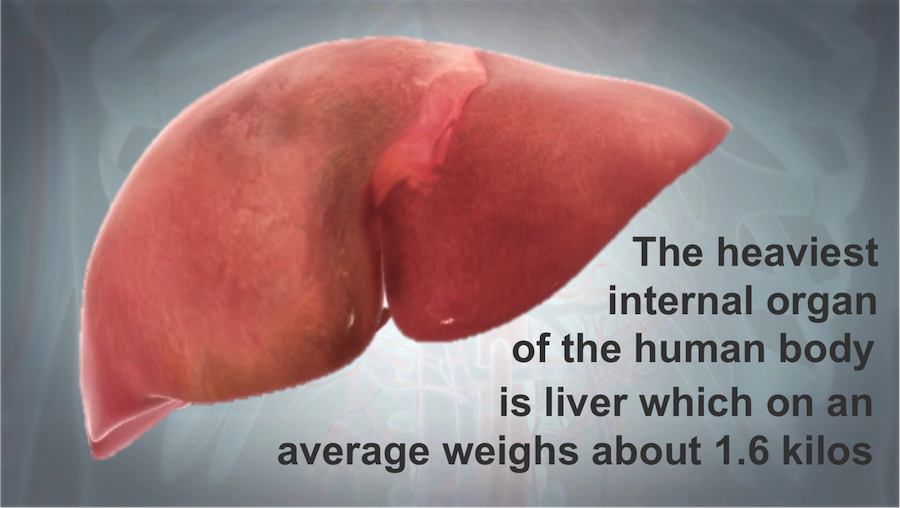
When we ask what the heaviest organ is, we must first define our parameters. Biologically, the skin is the undisputed winner, accounting for approximately 15% of total body weight. Internally, the liver holds the title, typically weighing between 3 and 3.5 pounds. Yet, the precision with which we understand these masses has been revolutionized by advancements in medical imaging technology.
The Precision of MRI and CT in Determining Organ Mass
Historically, organ weight was determined post-mortem. However, modern diagnostic tools like Magnetic Resonance Imaging (MRI) and Computed Tomography (CT) scans allow clinicians to calculate the mass of living organs with surgical precision. Using Hounsfield Units (HU) in CT scans, radiologists can differentiate between tissue densities—distinguishing muscle from fat and solid organ matter. This technological ability is crucial for identifying organomegaly (enlarged organs), which often serves as a primary indicator of systemic disease.
AI-Driven Volumetric Analysis: Beyond the Scales
The next frontier in measuring the body’s “heavyweights” is AI-driven volumetric analysis. Software integrated into modern imaging suites can now automatically segment organs in a 3D space. Instead of a radiologist manually tracing the borders of a liver or a kidney, AI algorithms can calculate the exact volume and estimated mass of an organ in seconds. This technology is vital for transplant surgery, where the “weight match” between donor and recipient can determine the success of the procedure. By using machine learning to analyze thousands of data points, we can now understand how organ weight fluctuates based on hydration, age, and technological interference.
The Skin: Analyzing the Body’s Largest Interface via Bio-Wearables and Sensory Tech
While the skin is the heaviest organ, weighing roughly 8 to 10 pounds in the average adult, its function is increasingly being augmented by technology. We no longer view the skin merely as a biological barrier; we see it as a sophisticated data interface. The technology used to monitor this “heavyweight” organ has transitioned from simple dermatology to advanced bio-wearables.
Smart Skin and Flexible Electronics
One of the most exciting trends in the tech world is the development of “E-skin” or electronic skin. Engineers are creating ultra-thin, flexible electronics that can be applied directly to the human skin to monitor vital signs, glucose levels, and even nerve signals. This synthetic augmentation mimics the biological skin’s sensory capabilities but adds a layer of digital connectivity. By integrating sensors into the body’s heaviest organ, tech companies are turning the human periphery into a continuous data-streaming device, effectively merging the biological with the digital.
The Data Weight of Our External Barrier
The skin is also our primary interface with the “Quantified Self” movement. From smartwatches that measure skin temperature and galvanic skin response (stress levels) to patches that track UV exposure, technology has turned the skin into a dashboard for personal health. The “weight” of the skin in a technological context is measured not just in pounds, but in the gigabytes of health data it generates over a lifetime. This shift represents a move from viewing organs as static biological parts to seeing them as dynamic, tech-enabled assets.
The Brain: The “Heaviest” Processing Unit in the Biological Network
Though the brain is not the heaviest organ by mass—weighing in at about 3 pounds—it is undoubtedly the “heaviest” in terms of metabolic demand and computational complexity. From a technological standpoint, the brain is the ultimate blueprint for the next generation of hardware.

Neural Connectivity and Computational Density
In the realm of software and AI, the brain’s architecture is the gold standard. While the liver processes toxins, the brain processes information at a rate that current supercomputers struggle to match. The “weight” of the brain is found in its 86 billion neurons and the trillions of synapses that connect them. Technology like Functional MRI (fMRI) and Diffusion Tensor Imaging (DTI) allows us to map these connections, treating the brain as a complex circuit board. This mapping is the foundation of the Connectome Project, a massive technological undertaking to “download” the structural map of the human mind.
Neuromorphic Computing: Mimicking the Brain’s Architectural Weight
The tech industry is currently obsessed with “neuromorphic computing”—designing computer chips that mimic the physical and functional structure of the human brain. Unlike traditional Von Neumann architecture, where the processor and memory are separate, neuromorphic chips (like Intel’s Loihi or IBM’s TrueNorth) attempt to replicate the brain’s efficiency. In this context, we are taking the lessons learned from the body’s most complex organ and applying them to the “organs” of our computers, creating a symbiotic relationship between biological evolution and silicon-based innovation.
Future Tech: Synthesizing the Heavyweights—3D Bioprinting and Synthetic Organs
As we look toward the future, the question of organ weight moves from the realm of observation to the realm of creation. If the liver is the heaviest internal organ, can we build a better, more efficient version in a lab?
Engineering Mass: The Challenges of Bioprinting Structural Integrity
3D bioprinting is the technological process of “printing” organ structures using “bio-ink”—a substance made of living cells. The primary challenge in printing a heavy organ like the liver is maintaining its structural integrity and vascularization. Engineers must use CAD (Computer-Aided Design) software to map out the intricate network of blood vessels required to keep a 3-pound mass of tissue alive. This is where high-end computing meets regenerative medicine; the “weight” of the organ is a hurdle that must be overcome by advanced materials science and structural engineering.
The Next Frontier: Lab-Grown Organs and Custom Weight Calibration
The ability to grow organs in a lab environment using a patient’s own stem cells is no longer science fiction. We are entering an era where organ weight might be calibrated for specific needs. For example, a synthetic liver could be engineered to be more resilient to specific toxins, or a patch of synthetic skin could be embedded with microscopic sensors before it is even grafted onto a patient. This represents the ultimate triumph of technology over biology: the ability to not only measure the heaviest organs in the body but to redesign them from the ground up.
The Digital Organ: Is Data the New Heaviest “Organ” of the Modern Human?
In the 21st century, we must consider if the definition of an “organ” should be expanded to include our digital presence. While the skin and liver have physical mass, the “digital organ”—the sum total of our biometric data, medical records, and digital identity—has a profound impact on our survival and well-being.
The Cybersecurity of Biological Data
As our physical organs become more integrated with technology (via pacemakers, insulin pumps, and smart grafts), the “weight” of their security becomes paramount. A “heavy” organ in the digital age is one that produces critical data. Protecting this data from cyber threats is the new frontier of digital security. If a hacker can access the data from your “heaviest organ” (the skin/bio-wearable interface), they can gain insights into your most private biological functions. Therefore, the technological infrastructure surrounding our organs is becoming just as vital as the organs themselves.
Quantified Self: Managing the Weight of Personal Health Tech
The proliferation of health apps and wearable devices has created a “data fatigue” or a “digital weight.” Users are now responsible for monitoring their own organ health through dashboards and alerts. This shift in responsibility is powered by Big Data and cloud computing. The technological “weight” of maintaining the human body has moved from the doctor’s office to the palm of our hands. We are now the technicians of our own biological machines, using software to ensure that our heaviest organs—and our lightest ones—are functioning at peak performance.
In conclusion, while the biological answer to “what is the heaviest organ” remains the skin and the liver, the technological answer is much more complex. Through the lenses of AI, bioprinting, and neuromorphic computing, we see that the true weight of our organs lies in their complexity, the data they generate, and our growing ability to replicate them through innovation. As we continue to merge our biological selves with our technological tools, the distinction between a “heavy organ” and a “heavy-duty processor” will only continue to blur.
aViewFromTheCave is a participant in the Amazon Services LLC Associates Program, an affiliate advertising program designed to provide a means for sites to earn advertising fees by advertising and linking to Amazon.com. Amazon, the Amazon logo, AmazonSupply, and the AmazonSupply logo are trademarks of Amazon.com, Inc. or its affiliates. As an Amazon Associate we earn affiliate commissions from qualifying purchases.