
Navigating the financial landscape of the Aloha State requires more than just an appreciation for its scenic beauty; it demands a sophisticated understanding of a unique and multi-layered tax system. Hawaii is often cited as having one of the highest tax burdens in the United States, yet the reality is more nuanced than a single percentage might suggest. For residents, investors, and business owners, the “state tax rate” is not a solitary figure but a composite of progressive income brackets, a distinctive excise tax, and various localized assessments.
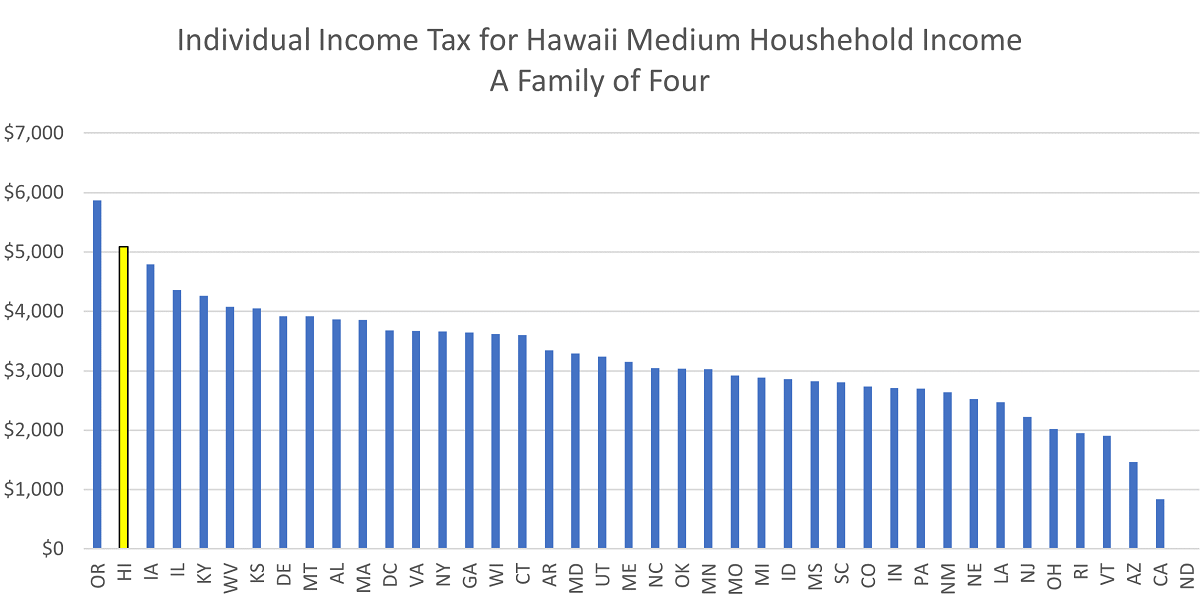
Understanding these rates is essential for effective personal finance management and long-term wealth preservation. In Hawaii, the interplay between different tax types—income, excise, and property—creates a financial environment that rewards proactive planning and meticulous record-keeping.
The Structure of Hawaii’s Progressive Income Tax
Hawaii utilizes a progressive income tax system, which means that as your income increases, the rate at which you are taxed also rises. This “ability-to-pay” model is among the most aggressive in the nation, featuring a high number of brackets that segment income into narrow corridors.
Filing Statuses and Marginal Rates
The state maintains twelve distinct tax brackets, a significantly higher number than the federal system or most other states. For the 2024 tax year, these rates range from a low of 1.1% to a top marginal rate of 11%.
For single filers and married individuals filing separately:
- The 1.1% rate applies to the first $2,400 of taxable income.
- The rates climb steadily through various increments (3.2%, 5.5%, 6.4%, etc.).
- The top rate of 11% kicks in for taxable income exceeding $200,000.
For married couples filing jointly:
- The brackets are effectively doubled, with the 11% rate applying to taxable income over $400,000.
It is vital to distinguish between your marginal tax rate (the rate paid on your last dollar of income) and your effective tax rate (the actual percentage of your total income paid in taxes). Because of the progressive structure, most taxpayers find their effective rate to be significantly lower than the top bracket they fall into. However, for high earners and entrepreneurs, the 11% threshold represents a significant consideration for capital allocation and residency planning.
Deductions and Exemptions in the Aloha State
To calculate taxable income, Hawaii allows for various deductions and exemptions that mirror, but do not exactly replicate, federal standards. Hawaii has not fully conformed to the federal Tax Cuts and Jobs Act (TCJA), meaning the state still utilizes personal exemptions—a feature the federal government has suspended.
Taxpayers can choose between the Hawaii standard deduction or itemized deductions. For those with significant mortgage interest, charitable contributions, or high medical expenses, itemizing often proves more beneficial at the state level even if they take the standard deduction on their federal return. Furthermore, Hawaii is notably “pension-friendly.” Most government pensions and employer-funded private pension distributions are exempt from state income tax, making it an attractive destination for retirees, provided they can manage the higher costs of consumption and housing.
The General Excise Tax (GET): More Than Just a Sales Tax
Perhaps the most misunderstood aspect of Hawaii’s financial system is the General Excise Tax (GET). While visitors often mistake it for a traditional sales tax, the GET is fundamentally different in its application and economic impact.
How the GET Affects Consumers and Business Owners
A traditional sales tax is a tax on the consumer, collected by the merchant. In contrast, the GET is a tax on the privilege of doing business in Hawaii. It is assessed on the gross income of the business itself. While businesses almost universally pass this cost on to the consumer, the legal obligation to pay the tax rests with the business entity.
The base state rate for the GET is 4%. However, because it is a gross receipts tax, it applies to nearly all business activities, including the sale of goods, the performance of services, and even the collection of rent. Unlike many states that exempt groceries or medical services from sales tax, Hawaii applies the GET to almost everything. This broad application is why the state is able to maintain a lower nominal rate than many mainland jurisdictions while still generating substantial revenue.
The Impact of County Surcharges and Tax Pyramiding
In addition to the 4% state rate, counties are permitted to add a surcharge. For example, the City and County of Honolulu adds a 0.5% surcharge to fund mass transit projects, bringing the total GET to 4.5%.

One of the more complex financial elements of the GET is “pyramiding.” Because the tax is applied at every level of a transaction—from the wholesaler to the retailer to the final consumer—the effective tax rate on a finished product can be higher than the nominal 4% or 4.5%. While there are wholesale rates (0.5%) designed to mitigate this effect, the GET remains a significant factor in Hawaii’s high cost of living. For business owners, managing GET compliance is a critical administrative task, as failing to properly calculate and remit these taxes can lead to severe penalties.
Property Taxes and the Real Estate Market Dynamics
For those looking at Hawaii through the lens of real estate investment or homeownership, the property tax landscape offers a surprising juxtaposition to the high income and excise tax rates.
Residential vs. Investment Property Tax Rates
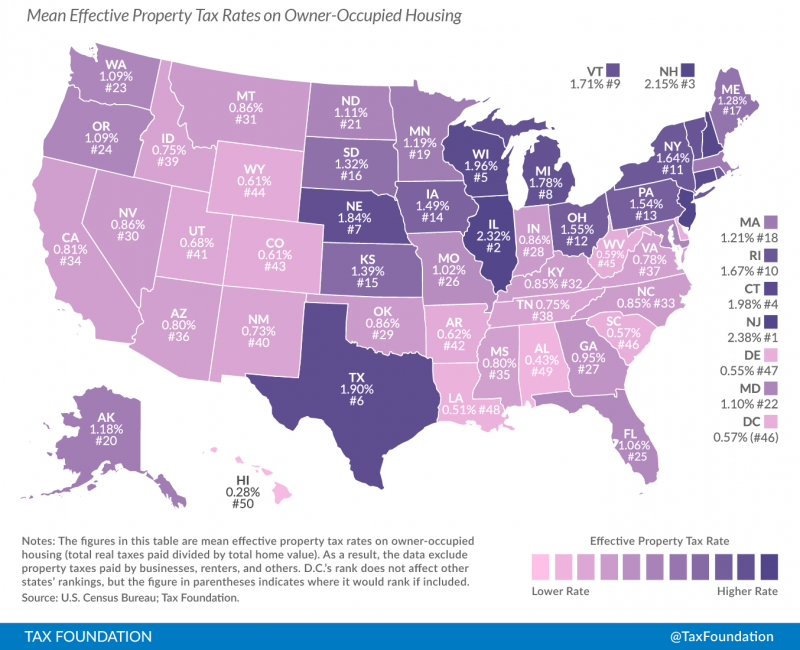
Hawaii consistently ranks as having the lowest effective property tax rates in the United States when measured as a percentage of property value. This is largely because property values in the islands are exceptionally high, allowing the counties to fund services with lower rates.
However, the specific rate you pay depends heavily on the “class” of the property. Owner-occupied primary residences receive the lowest rates and significant exemptions. In contrast, “Residential A” properties (typically non-owner-occupied investment properties valued over a certain threshold, such as $1 million) and commercial properties are taxed at much higher rates. For a real estate investor, this means that the carrying costs of a Hawaii property can shift dramatically depending on how the property is used and categorized by the county tax office.
The Transient Accommodations Tax (TAT) for Investors
Investors participating in the short-term rental market (such as Airbnb or VRBO) face an additional layer of taxation known as the Transient Accommodations Tax (TAT). As of recent years, the state TAT rate is 10.25%, and counties have introduced their own additional TAT surcharges (typically around 3%).
When combined with the GET, the total tax on short-term rental income can exceed 13% to 14%. For a personal finance strategy involving real estate, these “visitor taxes” must be factored into the cap rate and cash flow projections. While the low property tax provides a cushion, the heavy taxation on rental income requires a high level of occupancy and premium nightly rates to maintain profitability.
Corporate Tax Obligations and the Cost of Doing Business
For entrepreneurs and corporate entities, Hawaii’s corporate income tax is another layer of the financial puzzle. The state imposes a multi-tiered corporate tax rate:
- 4.4% on the first $25,000 of taxable income.
- 5.4% on income between $25,000 and $100,000.
- 6.4% on income exceeding $100,000.
While these rates are competitive compared to some high-tax states like California or New York, the cumulative burden of the GET, high unemployment insurance premiums, and a high minimum wage makes Hawaii a challenging environment for high-margin business operations. Strategic business finance in Hawaii often involves exploring the “High Technology Business Investment Tax Credit” or other specialized incentives designed to diversify the state’s economy beyond tourism and agriculture.
Strategic Financial Planning: Minimizing Tax Liability in Hawaii
Given the high-tax environment, residents must employ sophisticated financial strategies to protect their wealth and optimize their after-tax income.
Leveraging Renewable Energy Credits
Hawaii is a leader in renewable energy adoption, driven by the highest electricity costs in the nation. To incentivize this shift, the state offers robust tax credits for solar water heaters and photovoltaic systems. The Renewable Energy Technologies Income Tax Credit (RETITC) allows homeowners and businesses to claim a significant percentage of the installation cost against their state income tax. For a high-income earner, investing in solar is not just an environmental choice but a strategic financial move that provides a high internal rate of return through tax savings and reduced utility expenses.
Navigating Retirement Income Taxation
As previously mentioned, Hawaii’s treatment of retirement income is one of its most significant financial advantages. If you are planning for retirement, understanding which accounts are taxed is paramount.
- Social Security: Hawaii does not tax Social Security benefits.
- Public Pensions: Distributions from federal, state, or local government pension plans are generally exempt.
- Private Pensions: If the pension is entirely employer-funded, it is typically exempt.
- 401(k) and IRA Distributions: The portion of the distribution attributable to employer contributions may be exempt, but the portion representing the employee’s own contributions and the earnings thereon are generally taxable.
By structuring retirement withdrawals to maximize these exemptions, a retiree can enjoy a much lower effective tax rate in Hawaii than a working professional with the same gross income. This makes the state a unique financial paradox: expensive for those building wealth, but potentially advantageous for those who have already secured it.
In conclusion, the Hawaii state tax rate is a multifaceted system that requires constant attention. Whether it is the progressive climb of income tax, the broad reach of the GET, or the nuanced classifications of property tax, staying informed is the first step toward financial mastery in the islands. By understanding these levers, individuals and businesses can better navigate the “Paradise Tax” and build a sustainable financial future in the Aloha State.
aViewFromTheCave is a participant in the Amazon Services LLC Associates Program, an affiliate advertising program designed to provide a means for sites to earn advertising fees by advertising and linking to Amazon.com. Amazon, the Amazon logo, AmazonSupply, and the AmazonSupply logo are trademarks of Amazon.com, Inc. or its affiliates. As an Amazon Associate we earn affiliate commissions from qualifying purchases.