
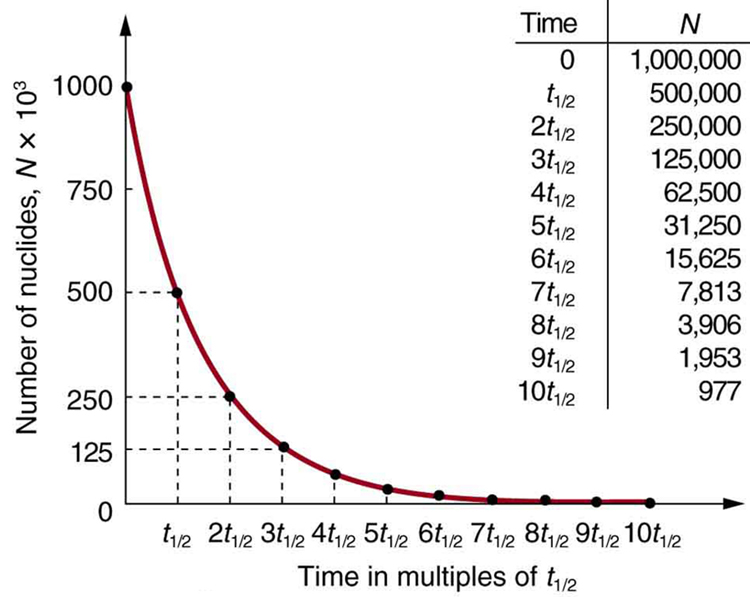
In the field of nuclear physics, the term “half-life” describes the time required for a quantity to reduce to half of its initial value. In the context of the modern technological landscape, this concept has been borrowed to describe a much more volatile phenomenon: the speed at which technical knowledge, software utility, and hardware relevance diminish. As we move deeper into the era of artificial intelligence and hyper-accelerated innovation, understanding the “technological half-life” is no longer just an academic exercise—it is a critical survival metric for developers, engineers, and IT leaders.
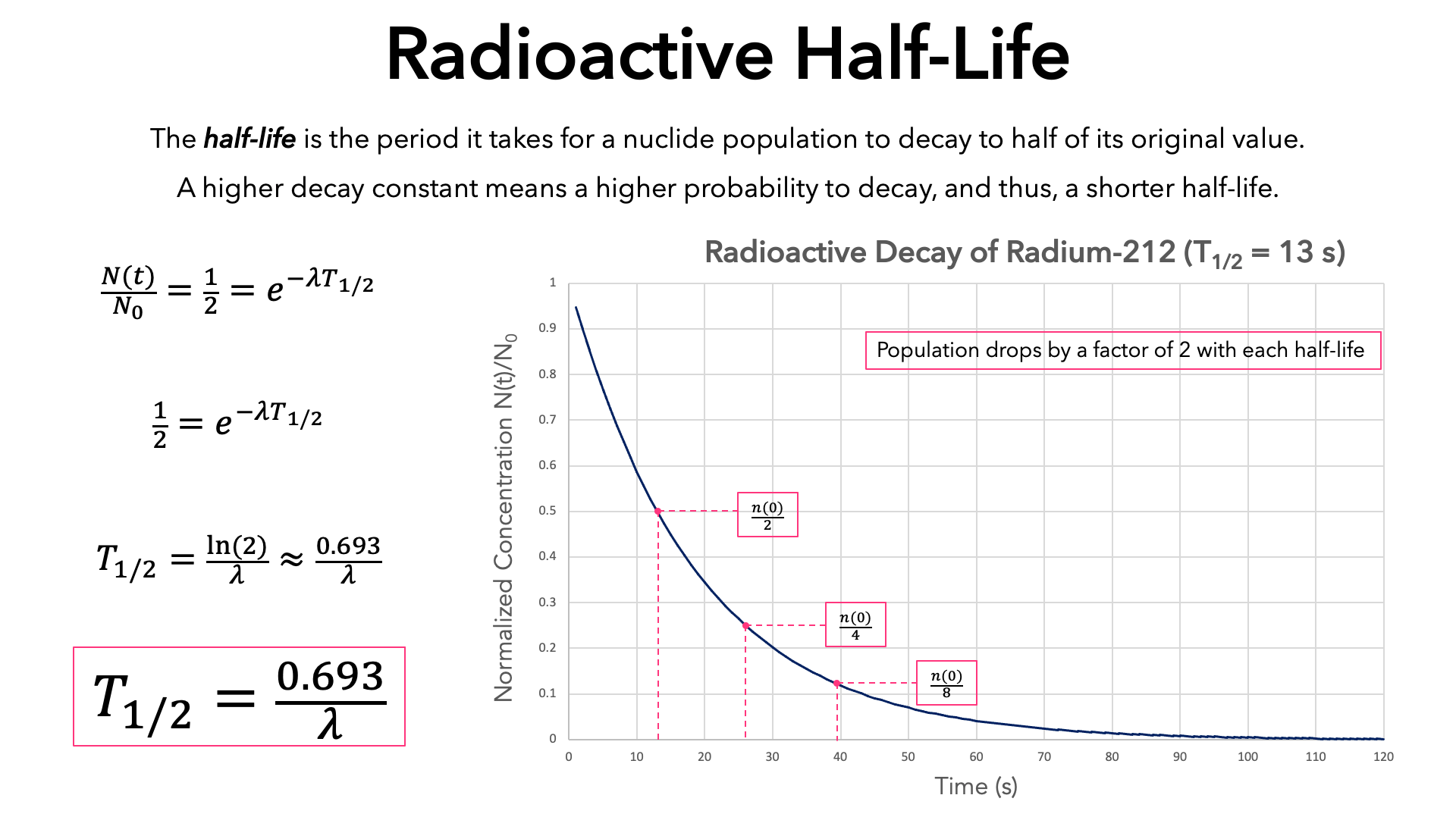
When we ask “what is the half-life” in a digital sense, we are measuring the duration of relevance. In the 1960s, the half-life of an engineering degree was estimated to be about a decade. Today, experts suggest that the half-life of a learned technical skill is closer to five years, with some specialized software proficiencies decaying in as little as eighteen months. This rapid erosion of utility creates a paradox where the more we learn, the faster we must unlearn and adapt.
The Half-Life of Technical Skills and Knowledge
The most immediate impact of technological decay is felt by the human element of the industry. The professional knowledge base required to build, maintain, and secure digital systems is under constant siege by the “new.” This is not merely about the arrival of better tools, but the fundamental shifting of paradigms.
From Specialization to Continuous Re-skilling
In previous decades, mastering a language like C++ or Java could provide a stable career foundation for twenty years. Today, while those languages remain foundational, the frameworks surrounding them—React, Vue, Angular, or the myriad of Python libraries—experience a much shorter half-life. A developer who masters a specific framework today might find that by the time they reach seniority, that framework has been superseded by a more efficient, AI-integrated alternative.
This compression of the knowledge half-life has given rise to the “just-in-time” learning model. Rather than front-loading an entire career’s worth of education, tech professionals must now treat their skill sets as a revolving portfolio. If the half-life of your current skill set is five years, you must replace 20% of your knowledge every year just to remain stagnant. To grow, the rate of acquisition must exceed the rate of decay.
The Impact of AI on Skill Longevity
The emergence of Large Language Models (LLMs) and generative AI has drastically accelerated the half-life of traditional coding skills. Tasks that once took hours of manual syntax debugging can now be offloaded to AI assistants. Consequently, the value of “syntax-memory”—knowing the exact commands of a language—is decaying rapidly. In its place, the “long-life” skills are shifting toward architectural design, prompt engineering, and the ability to audit AI-generated code. The technical half-life is no longer about “how to write,” but “how to direct and validate.”
Software Decay and the Lifecycle of Digital Infrastructure
Software does not wear out like a physical machine. A line of code written in 1995 will execute the same way today as it did then, provided the environment remains the same. However, the environment never remains the same. This leads to what is known as “software rot” or technical debt, where the half-life of a software solution is determined by its compatibility with an evolving ecosystem.
The Problem of Technical Debt
The half-life of a software product is often cut short by the accumulation of technical debt. When developers take shortcuts to meet deadlines, they create a future obligation to “repay” that debt with refactoring. Over time, the cost of maintaining the software exceeds the cost of rebuilding it. At this point, the software has reached its functional half-life.
In enterprise environments, the half-life of an internal application is typically five to seven years. Beyond this point, the underlying dependencies—operating systems, security protocols, and hardware integrations—have changed so significantly that the software becomes a liability. The “half-life” here represents the point at which the system becomes more of a hindrance to agility than an asset for productivity.
SaaS and the “Update Culture”
The shift from on-premise software to Software-as-a-Service (SaaS) has fundamentally changed the half-life of digital tools. In the past, a company might buy a perpetual license for a tool and use it for a decade. Now, with the subscription model, software is in a state of perpetual flux.
Features are added, interfaces are redesigned, and APIs are deprecated in real-time. This shortens the half-life of user proficiency. A user interface that was intuitive six months ago may be overhauled tomorrow, requiring the user to re-learn the workflow. While this keeps the software modern, it places a cognitive load on the user base, as the “half-life of mastery” for any given software version is now measured in months.
Hardware Obsolescence and the Physical Limits of Innovation
While software decay is driven by complexity, hardware half-life is driven by physics and consumer demand. For decades, Moore’s Law—the observation that the number of transistors on a microchip doubles approximately every two years—governed the half-life of hardware. If you bought a top-of-the-line computer, you knew its relative performance would be cut in half compared to new models within twenty-four months.
The End of Moore’s Law and the Shift to Efficiency
As we approach the physical limits of silicon-based chips, the half-life of hardware is changing. We can no longer rely on raw clock speed increases to render old hardware obsolete. Instead, the half-life is now defined by specialized processing units (like GPUs and TPUs for AI) and energy efficiency.
For a data center, the half-life of a server rack is not just about whether it still turns on; it is about the “Performance per Watt.” If a new generation of hardware can process twice the data for half the electricity, the older hardware reaches its economic half-life almost instantly. In the tech world, obsolescence is often an economic decision rather than a mechanical failure.
The Environmental Cost of Short Half-Lives
The rapid turnover of hardware—smartphones with a three-year half-life, laptops with five, and IoT devices with even less—has led to a global e-waste crisis. As the half-life of these devices shrinks, the pressure on the supply chain and the environment increases. Designers are now being challenged to extend the “useful half-life” of hardware through modularity and repairability. This is a counter-trend to the “planned obsolescence” that has dominated the tech industry for the last two decades.
Strategies for Longevity in a Hyper-Accelerated Ecosystem
Understanding that technology has a short half-life is the first step toward managing it. Whether you are an individual developer or a CTO, you must build systems and careers that account for the inevitable decay of relevance.
Building for Change: Adaptability as a Core Feature
In software engineering, the goal is now to build “evolvable architectures.” Since we know the half-life of any specific technology stack is short, we must design systems that can be swapped out in pieces. This is the philosophy behind microservices and containerization (like Docker and Kubernetes). By breaking a system into smaller, independent parts, you can replace a decaying component without collapsing the entire infrastructure. You are effectively managing the half-life of the system by ensuring that no single part is indispensable.
The “T-Shaped” Professional
To combat the short half-life of technical skills, the most successful professionals are adopting a “T-shaped” skill set. The vertical bar of the T represents deep expertise in a specific area (which will inevitably decay and need replacing), while the horizontal bar represents broad, fundamental knowledge (which has a much longer half-life).
Fundamentals such as computational logic, data structures, networking protocols, and systems thinking have a half-life of decades. By grounding yourself in these “long-life” principles, you create a foundation that allows you to quickly acquire the “short-life” skills of the moment.

Embracing the Beta Mindset
Finally, staying relevant in tech requires embracing a “permanent beta” mindset. In a world where the half-life of a tool is shrinking, the transition from “expert” to “novice” happens more frequently. The ability to unlearn outdated practices is just as important as the ability to learn new ones.
Organizations that recognize the technological half-life invest heavily in R&D and continuous training. They don’t wait for a system to break before looking for its successor; they begin the search as soon as the current system is deployed. In the digital economy, the only thing with a permanent half-life is change itself. By quantifying the decay of our tools and knowledge, we can better prepare for the innovations that will inevitably replace them.
aViewFromTheCave is a participant in the Amazon Services LLC Associates Program, an affiliate advertising program designed to provide a means for sites to earn advertising fees by advertising and linking to Amazon.com. Amazon, the Amazon logo, AmazonSupply, and the AmazonSupply logo are trademarks of Amazon.com, Inc. or its affiliates. As an Amazon Associate we earn affiliate commissions from qualifying purchases.