
The Golden Age of Greece, specifically the 5th century BCE in Athens, is frequently lauded for its philosophical breakthroughs and architectural marvels. However, from a financial and business perspective, this era represents something far more foundational: the birth of a sophisticated, high-liquidity market economy. To understand the Golden Age is to understand how a city-state leveraged strategic capital allocation, standardized currency, and maritime trade to become the preeminent economic superpower of the Mediterranean.
This period, often called the Periclean Age, was not merely a flourish of art and drama; it was a masterclass in economic hegemony. It provides a historical blueprint for how stability, innovation, and trade-friendly policies can catalyze a period of unprecedented wealth creation. For the modern investor or business leader, the Golden Age offers a lens through which to view the intersection of public policy, private enterprise, and global market influence.

The Economic Engine Behind the Cultural Renaissance
The transition of Athens into its Golden Age was fueled by a significant “capital injection” that transformed it from a regional player into a global financial hub. While many historical accounts focus on the victory over the Persian Empire, the financial reality was the consolidation of the Delian League’s treasury. Originally established as a defense fund, the movement of this treasury from Delos to Athens in 454 BCE represented one of history’s most significant transfers of wealth.
The Laurion Silver Mines: Natural Resource Management
Before the Delian League’s funds were centralized, Athens’ wealth was anchored by the silver mines at Laurion. Under the guidance of Themistocles, the state made a pivotal decision in 483 BCE. Rather than distributing the surplus silver to the citizenry as a one-time dividend, the state invested the capital into a naval fleet. This was a classic move of infrastructure investment over consumer spending. The resulting triremes provided the security necessary for maritime trade, which in turn generated the tax revenue that funded the Golden Age.
The Role of Metics in the Private Sector
Athens’ economic policy was notably open to “Metics”—resident aliens who were not citizens but were encouraged to settle and conduct business. This policy attracted the most talented merchants, bankers, and artisans from across the Greek world. By creating a favorable environment for foreign direct investment (FDI) and skilled labor migration, Athens ensured that its market remained competitive and innovative. These Metics were the venture capitalists of their day, funding the shipping voyages and manufacturing workshops that drove the city’s GDP.
The Attic Drachma: Establishing the World’s First Global Reserve Currency
One of the most enduring legacies of the Golden Age of Greece was the establishment of the Attic Drachma as a reliable medium of exchange. In the world of finance, trust is the ultimate commodity, and the Athenian “Owl” coin became the gold standard—or more accurately, the silver standard—of the ancient world.
Standardized Currency and Market Liquidity
Before the hegemony of the Drachma, trade was often hampered by the varying weights and purities of local currencies. Athens solved this through rigorous quality control and the sheer volume of its silver production. By enforcing the use of its coinage among its allies and trade partners, Athens reduced transaction costs and eliminated the friction of currency exchange. This created a high-liquidity environment where capital could move rapidly across borders, mirroring the modern dominance of the US Dollar in international trade.
The Psychology of Brand in Finance
The iconic design of the Athenian coin, featuring the owl of Athena, was an early example of “financial branding.” Traders from the Pillars of Hercules to the shores of the Black Sea recognized the Owl as a guarantee of value. This brand recognition allowed Athens to command a premium in the market. Even during times of political turmoil, the Drachma remained the preferred asset for wealth preservation, demonstrating that a stable, recognizable currency is the backbone of any golden age.
Maritime Finance and the Sophistication of Ancient Risk Management
The wealth of the Golden Age was not stored in vaults; it was put to work on the high seas. The Athenians pioneered sophisticated financial instruments that would look familiar to any modern investment banker or insurance broker.
Maritime Loans and Bottomry
Because maritime trade was high-risk due to piracy and storms, the Greeks developed “bottomry” loans. These were high-interest loans (often 20% to 30%) where the ship or its cargo served as collateral. However, the unique feature of these contracts was that if the ship was lost at sea, the debt was forgiven. Effectively, the high interest rate was a combination of a capital loan and an insurance premium. This allowed entrepreneurs with limited capital to undertake massive trade voyages, democratizing the potential for wealth creation and fostering a culture of calculated risk-taking.
Piraeus: The Logistics Hub of the World
The development of the port of Piraeus was a strategic masterstroke. It was designed as an “Emporion”—a dedicated commercial zone where goods from throughout the known world were traded. By implementing a low, consistent 2% tax on imports and exports, Athens ensured that it was more profitable for merchants to trade in Piraeus than anywhere else. This high-volume, low-margin tax strategy generated immense revenue for the state while keeping the cost of living low and the supply of luxury and essential goods high.
Public Works and the Athenian Stimulus Package
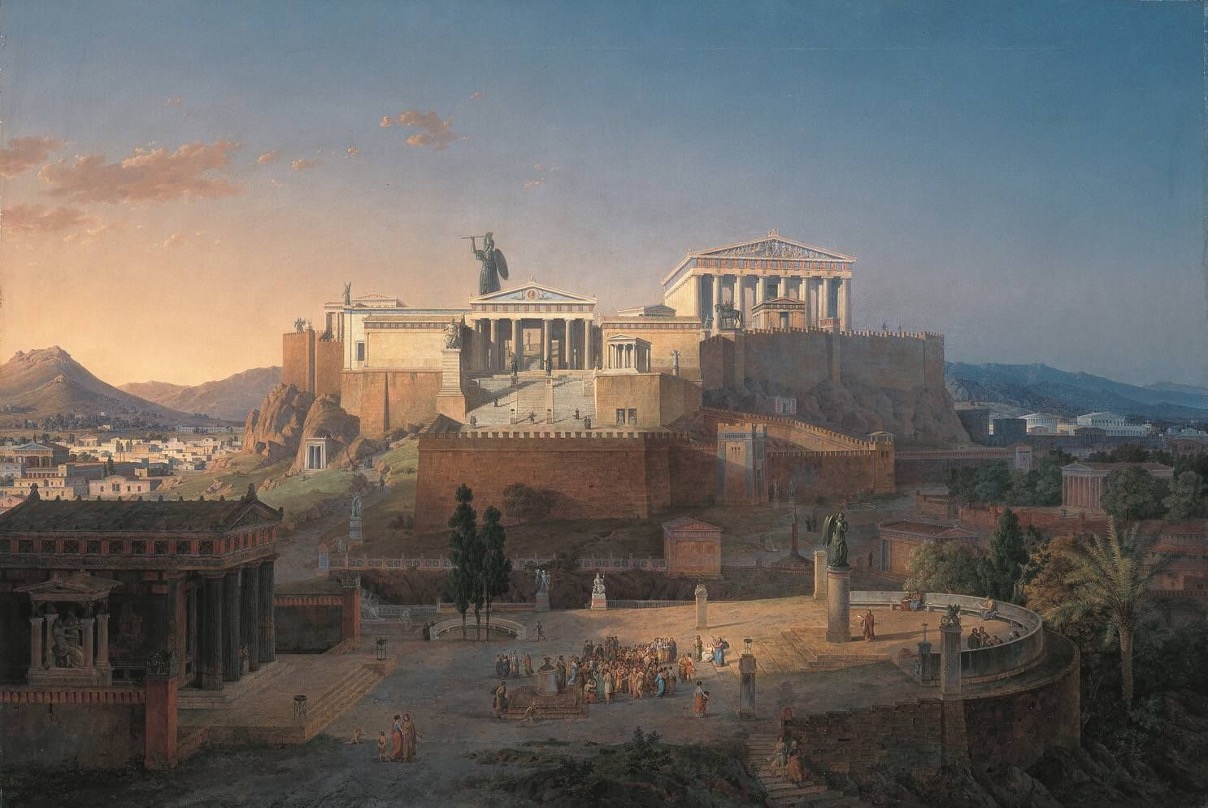
The monumental architecture of the Golden Age, including the Parthenon, was more than just an aesthetic achievement; it was a massive public works project that acted as a domestic stimulus package.
The Multiplier Effect of Construction
When Pericles commissioned the rebuilding of the Acropolis, he was essentially utilizing the Delian League’s treasury to create jobs. This project employed thousands of stonemasons, architects, laborers, and artists. The capital spent on these projects did not simply vanish; it circulated through the Athenian economy, creating a “multiplier effect.” The demand for materials spurred the growth of the transport and quarrying industries, while the wages paid to workers increased consumer spending in the local markets.
Investment in Intellectual Capital
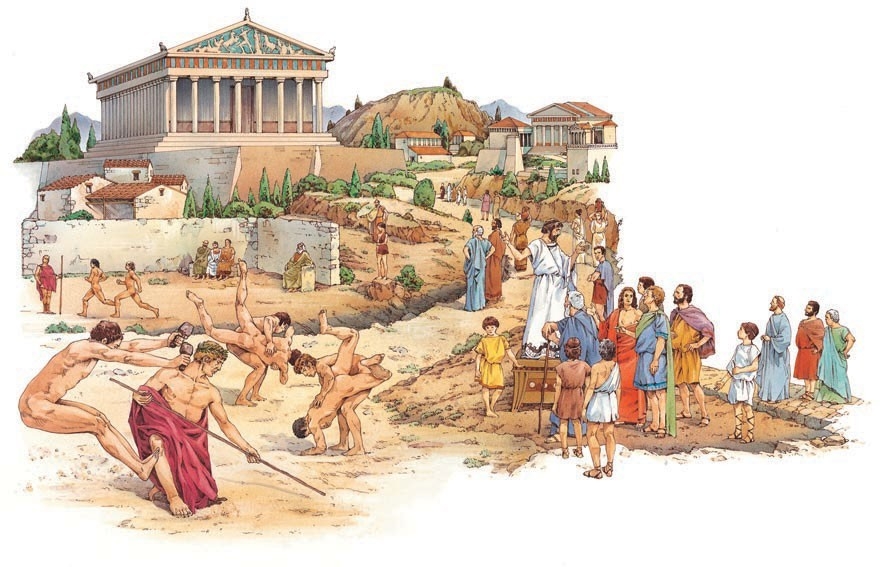
The Golden Age was also characterized by the “Sophist” movement and the rise of formal education. Wealthy Athenians invested heavily in the intellectual development of their heirs, hiring tutors to teach rhetoric, logic, and mathematics. This focus on “human capital” ensured that the leadership class was equipped with the cognitive tools necessary to manage complex estates, legal disputes, and state finances. In the Golden Age, knowledge was recognized as a primary asset, and the pursuit of wisdom was inextricably linked to the pursuit of influence and wealth.
The Wealth Legacy: Lessons in Capital Allocation and Economic Sustainability
What eventually ended the Golden Age was not a lack of culture, but a failure of fiscal sustainability and the costs of over-leveraged military expansion during the Peloponnesian War. However, the lessons of its peak remain relevant for modern financial strategy.
Diversification and Resilience
The Athenian economy was resilient because it was diversified. It was not dependent solely on agriculture; it had a robust manufacturing sector (ceramics, metalworking), a thriving service sector (banking, law), and a dominant trade sector. This diversification allowed Athens to withstand shocks that would have crippled more specialized economies. For the modern investor, the Golden Age serves as a reminder that wealth is best preserved through a broad base of uncorrelated assets and income streams.
The Importance of Institutional Trust
The ultimate lesson of the Golden Age of Greece is that economic prosperity is built on the foundation of institutional trust. The legal system in Athens, while far from perfect, provided a framework for contract enforcement and property rights. Merchants felt secure bringing their goods to Piraeus because they knew there was a legal recourse for disputes. The “Golden Age” was, in essence, a period where the “rules of the game” were clear, and the rewards for innovation and trade were accessible.
In conclusion, the Golden Age of Greece was far more than a historical period of “art for art’s sake.” It was a sophisticated economic ecosystem that pioneered the concepts of reserve currency, maritime insurance, and public stimulus. By understanding the financial mechanics that enabled the Parthenon to be built and the Drachma to dominate, we gain a deeper appreciation for the timeless principles of wealth creation and market leadership. The Golden Age reminds us that when capital is allocated wisely and markets are kept open, the resulting prosperity can echo through the centuries.
aViewFromTheCave is a participant in the Amazon Services LLC Associates Program, an affiliate advertising program designed to provide a means for sites to earn advertising fees by advertising and linking to Amazon.com. Amazon, the Amazon logo, AmazonSupply, and the AmazonSupply logo are trademarks of Amazon.com, Inc. or its affiliates. As an Amazon Associate we earn affiliate commissions from qualifying purchases.