
In the dynamic world of logistics, particularly for e-commerce entrepreneurs, small business owners, and those managing online income streams, understanding the nuances of shipping calculations is not just good practice—it’s paramount to financial success. Among the many terms that influence shipping costs, “girth” stands out as a critical, often misunderstood, dimension. Far from being an obscure measurement, a package’s girth directly impacts how carriers calculate shipping charges, influencing everything from your profit margins to your customers’ satisfaction.
At its core, the girth of a package refers to the measurement around the thickest part of a parcel. This isn’t just a simple circumference; rather, it’s a specific calculation designed by shipping carriers to account for the overall bulkiness of a package, complementing its length. For most carriers, the girth is calculated by taking twice the sum of the height and the width of the package. This crucial metric, combined with the package’s length, weight, and destination, forms the bedrock of shipping cost determination, directly affecting your business’s bottom line.
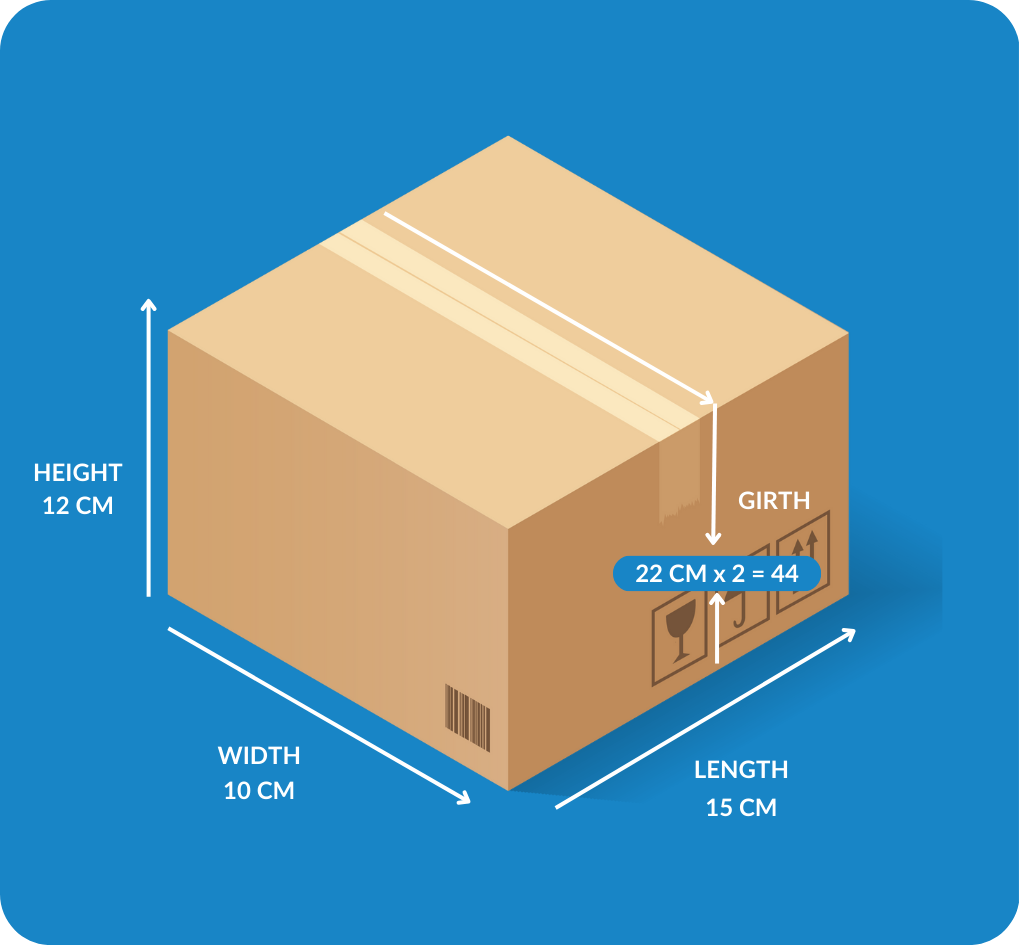
The Critical Role of Package Girth in Shipping Costs
Ignoring the girth of a package is akin to overlooking a significant line item in your business’s budget. For businesses that rely heavily on shipping products, whether as an online retailer, a dropshipper, or a creator selling handmade goods, a firm grasp of girth calculations is indispensable for accurate cost prediction, strategic pricing, and maintaining profitability. The impact is multifaceted, stretching from operational efficiency to customer relations.
Understanding Dimensional Weight and Its Impact
The concept of “dimensional weight” (often abbreviated as DIM weight) is perhaps the most significant financial implication tied to package girth. Shipping carriers don’t just charge based on the actual physical weight of a package; they also consider the space it occupies on their vehicles. This is where dimensional weight comes into play: it’s a theoretical weight calculated from a package’s volume. If a package is lightweight but bulky, carriers will charge based on its dimensional weight rather than its actual weight.
The standard formula for dimensional weight typically involves multiplying the length, width, and height of a package, then dividing by a specific DIM factor (e.g., 139 for inches/pounds for many carriers). The calculation of girth is integral to determining the overall dimensions that feed into this formula, especially when carriers combine it with length for a ‘length plus girth’ measurement. A larger girth contributes to a larger overall volume, potentially pushing your package into a higher dimensional weight bracket and, consequently, a higher shipping cost. For businesses operating on thin margins, an unexpected dimensional weight charge can quickly erode profits, turning a seemingly successful sale into a financial setback.
Carrier-Specific Girth Formulas and Their Variations
While the general principle of girth remains consistent, the exact formulas and how carriers apply them can vary. This introduces a layer of complexity that demands attention from any financially astute business owner. For instance, many carriers impose maximum size limits, often expressed as “Length plus Girth” not exceeding a certain total (e.g., 108 inches or 130 inches). Exceeding these limits can trigger significant surcharges or even lead to refusal of service.
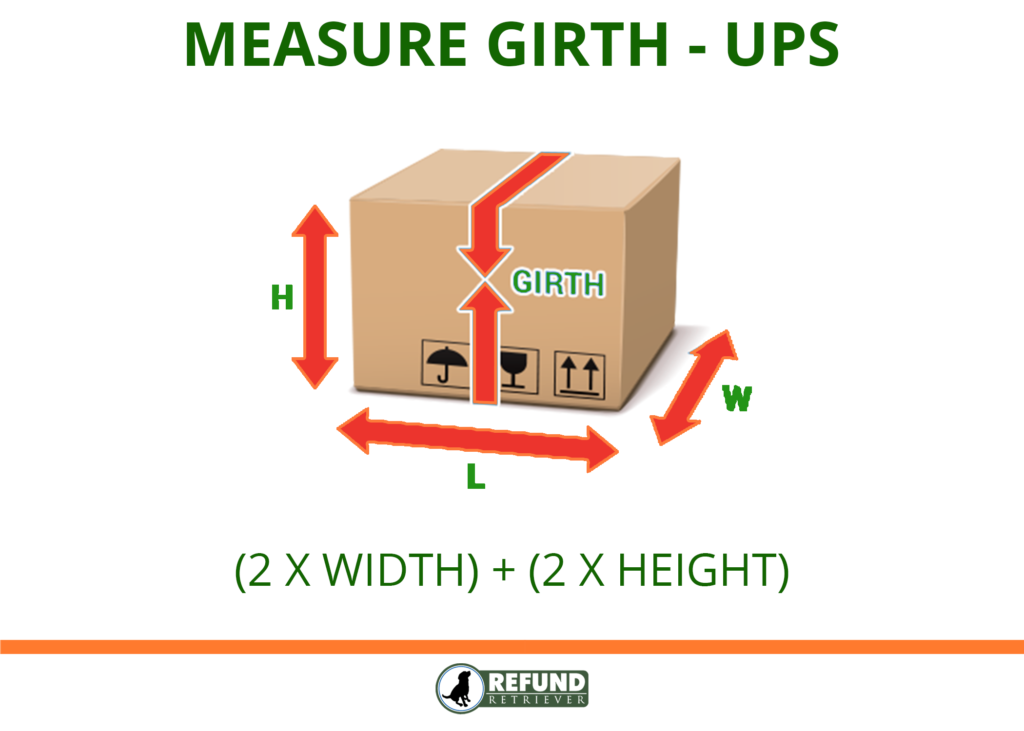
The specific formula for girth often used by major carriers like UPS, FedEx, and USPS is:
Girth = (2 x Width) + (2 x Height)
Here, ‘width’ and ‘height’ refer to the two smallest dimensions of the package. It’s crucial to correctly identify these to avoid miscalculations. While the formula seems straightforward, misinterpreting which side is the “width” or “height” can lead to inaccurate girth measurements, which in turn leads to incorrect shipping quotes and potential cost discrepancies down the line. Each carrier publishes detailed guides on their specific dimensioning rules, and a deep dive into these rules for the carriers you frequently use is an essential financial due diligence step.
Calculating Girth: A Step-by-Step Guide for Cost Optimization
Accurate girth calculation is not merely an academic exercise; it’s a practical skill that directly translates into cost savings and streamlined financial operations. Mastering this calculation is a fundamental step towards optimizing your shipping strategy and protecting your profit margins.
The Standard Girth Formula Explained
As mentioned, the standard formula for girth is:
Girth = (2 x Width) + (2 x Height)
To apply this formula correctly, you first need to identify the three dimensions of your package: length, width, and height.
- Length: This is always the longest side of the package.
- Width: Of the two remaining sides, this is the longer one.
- Height: This is the shortest side.
Let’s illustrate with an example:
Imagine a package with dimensions of 20 inches (Length), 10 inches (Width), and 6 inches (Height).
- Length = 20 inches
- Width = 10 inches
- Height = 6 inches
Now, calculate the girth:
Girth = (2 x 10 inches) + (2 x 6 inches)
Girth = 20 inches + 12 inches
Girth = 32 inches
Once you have the girth, you can combine it with the length to get the “Length plus Girth” measurement, which is often what carriers use for maximum size limits and sometimes for dimensional weight calculations:
Length + Girth = 20 inches + 32 inches = 52 inches

Understanding this number is critical because carriers often have thresholds for “oversize” or “large package” surcharges based on this combined measurement. Exceeding these thresholds can dramatically increase shipping costs, sometimes doubling or tripling them.
Practical Measurement Tips for Accuracy
Even with the correct formula, human error in measurement can lead to financial penalties. Precision is key.
- Use a Reliable Measuring Tool: A sturdy tape measure or a ruler designed for parcels is essential. Avoid using flimsy tools that can flex and give inaccurate readings.
- Measure the Outer Dimensions: Always measure the package’s outermost points, including any bulges, handles, or protrusions. Carriers measure the maximum dimensions, and failing to account for these can result in underestimation.
- Account for Irregular Shapes: If your package isn’t a perfect rectangular prism, measure the length of its longest side, and then measure the circumference around its thickest point perpendicular to the length. This circumference is its girth. For financial accuracy, it’s often more cost-effective to use standard box sizes whenever possible. If irregular shapes are unavoidable, invest in specialized packaging or padding that maintains a relatively uniform outer dimension.
- Double-Check Your Work: Before sealing and labeling a package, re-measure. A simple mistake can cost you money in unexpected surcharges or cause delays if the package needs to be re-processed by the carrier.
- Train Your Staff: If you have employees involved in packaging and shipping, ensure they are thoroughly trained on correct measurement techniques and the financial implications of inaccuracies. Consistent training minimizes errors and protects your profit margins.
Strategic Implications for E-commerce and Small Businesses
For businesses where shipping is a significant operational cost, a strategic approach to package dimensions and girth is not optional; it’s fundamental to financial health. Understanding and actively managing these factors can transform shipping from a drain on resources into a manageable and even optimized expense.
Mitigating Unexpected Shipping Surcharges
One of the most common financial pitfalls for e-commerce businesses is the unexpected surcharge. These can stem from a variety of factors, but incorrect dimension reporting (especially girth) is a leading culprit. Carriers use automated systems to measure packages, and if their measurements differ from what you declared, they will adjust the charges and bill you the difference, often with an additional correction fee.
By rigorously adhering to accurate measurement protocols and understanding carrier-specific limits on length plus girth, businesses can significantly reduce their exposure to these costly surcharges. This involves:
- Pre-calculating for every shipment: Integrate girth and dimensional weight calculations into your shipping workflow.
- Investing in dimensioning equipment: For high-volume shippers, automated dimensioners can provide precise measurements, virtually eliminating human error.
- Understanding “Large Package Surcharges”: Be aware of the thresholds that trigger these significantly higher fees (e.g., packages over 130 inches Length + Girth, or certain weights). Design your packaging strategy to stay below these limits whenever possible.
Designing Packaging for Profitability
Packaging is more than just protection; it’s a strategic financial tool. Optimizing your packaging to minimize girth and overall dimensions directly translates to lower shipping costs and increased profitability.
- “Right-sizing” Boxes: Avoid using oversized boxes for small items. Every inch of unused space contributes to higher dimensional weight and girth. Invest in a variety of box sizes that closely match your product offerings.
- Minimizing Void Fill: While necessary for product protection, excessive void fill can cause boxes to bulge, increasing girth. Use just enough void fill to secure the item, or consider custom inserts that fit snugly without adding bulk.
- Collapsible Packaging: For certain products, collapsible or flexible packaging options can reduce dimensions, especially girth, when the item is packed, leading to lower shipping costs.
- Strategic Product Bundling: When bundling multiple items, arrange them efficiently to create the smallest possible combined package dimensions. This requires careful consideration of how items fit together to minimize overall girth.
- Custom Packaging Solutions: For unique products, consider custom-designed packaging that perfectly fits the item, eliminating wasted space and unnecessary dimensions. While the upfront cost might be higher, the long-term savings in shipping can be substantial.
Integrating Girth Calculations into Business Operations
For businesses, the understanding of girth should permeate various operational aspects, influencing financial planning, customer pricing, and even product development.
- Shipping Cost Estimators: Integrate accurate girth and dimensional weight calculations into your online shipping cost estimators. This provides customers with realistic shipping fees upfront, preventing cart abandonment due to sticker shock and managing expectations.
- Inventory Management: When sourcing or designing products, consider their packed dimensions. Products that require excessively large packaging relative to their weight can become financially burdensome to ship.
- Budgeting and Forecasting: Accurately predicting shipping costs based on expected package dimensions allows for more precise financial budgeting and forecasting. This helps in setting realistic sales goals and profit targets.
- Product Pricing Strategy: Factor in dimensional weight and girth-based shipping costs when setting product prices. If a product has a high dimensional weight, its selling price may need to reflect the higher shipping cost to maintain profitability.
Advanced Strategies for Shipping Cost Management
Beyond basic adherence to measurement rules, proactive businesses can leverage their understanding of girth and dimensional weight to implement advanced strategies that yield significant financial advantages.
Negotiating Carrier Rates with Dimension Data
Armed with accurate data on your average package dimensions, including girth, you are in a stronger position to negotiate better rates with shipping carriers. Carriers offer discounts based on volume, but also on the efficiency of the packages you ship. If you can demonstrate that your packages consistently fall within optimal size and weight categories, or that you’ve actively worked to reduce dimensional weight, you might secure more favorable contractual rates.
Presenting a clear profile of your typical shipment dimensions, especially if you have managed to reduce average girth or dimensional weight over time, shows carriers that you are an efficient shipper. This data-driven approach strengthens your bargaining power and can lead to significant savings over the long term.
Software and Tools for Package Optimization
Manually calculating girth and dimensional weight for every package can be time-consuming and prone to error, especially for businesses with high shipping volumes. Fortunately, technological solutions are available to streamline this process and enhance financial accuracy.
- Shipping Software Integrations: Many e-commerce platforms and shipping management software solutions integrate directly with carrier APIs to automatically calculate dimensional weight and girth-based costs. These tools often alert you to potential surcharges or opportunities for optimization.
- Dimensioning Systems: For very large operations, automated dimensioning systems use sensors and cameras to instantly capture accurate package dimensions and weight, transmitting the data directly to shipping software for precise cost calculation and record-keeping.
- Packaging Optimization Software: Specialized software can analyze your product dimensions and suggest the most efficient box sizes or packaging configurations to minimize dimensional weight and girth, directly impacting your shipping expenditure.
- “What If” Scenario Planning: Utilize these tools to run “what if” scenarios. How much could you save if you reduced your average package height by 2 inches? What impact would a shift to a different box size have on your overall shipping budget? This allows for proactive financial planning and strategic decision-making.
By meticulously understanding “what is the girth of a package” and integrating this knowledge into every facet of your shipping and financial strategy, businesses can transform a complex logistical challenge into a powerful lever for profitability and sustainable growth.
aViewFromTheCave is a participant in the Amazon Services LLC Associates Program, an affiliate advertising program designed to provide a means for sites to earn advertising fees by advertising and linking to Amazon.com. Amazon, the Amazon logo, AmazonSupply, and the AmazonSupply logo are trademarks of Amazon.com, Inc. or its affiliates. As an Amazon Associate we earn affiliate commissions from qualifying purchases.