
Artificial Intelligence (AI) has rapidly transitioned from the realm of science fiction to an indispensable force shaping our daily lives and industries. From recommending movies to powering medical diagnostics, AI’s presence is undeniable. Yet, what we’ve witnessed so far is merely the genesis of its potential. The future of AI promises an era of profound transformation, characterized by more sophisticated algorithms, deeper integration into the fabric of society, and an evolving ethical landscape. This article will delve into the technological trajectories, the breakthroughs on the horizon, the challenges we must overcome, and the synergistic relationships AI will forge with other cutting-edge technologies.
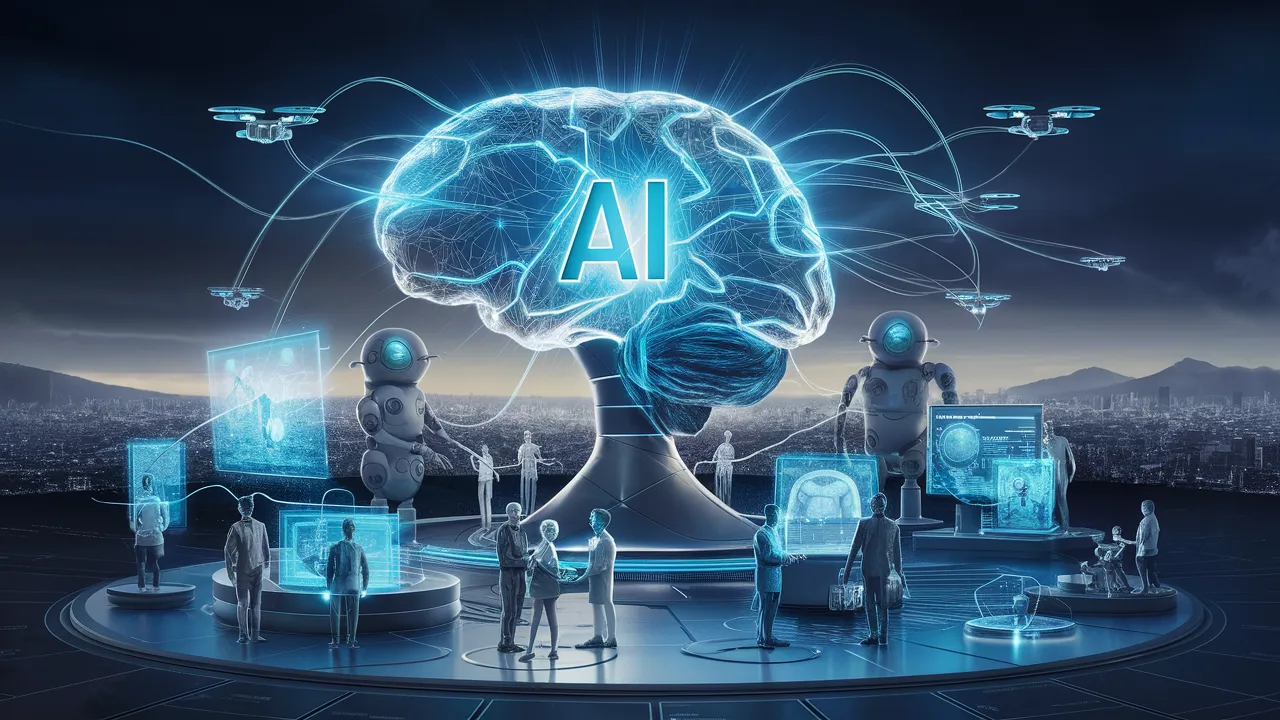
The Dawn of Ubiquitous Intelligence
The future of AI is one where intelligence is not confined to specialized systems but becomes pervasive, integrated seamlessly into every aspect of our existence. This shift from isolated applications to an omnipresent technological layer will redefine human-machine interaction and societal infrastructure.
AI Integration Across Industries
The integration of AI will deepen across virtually every sector, moving beyond efficiency gains to fundamentally reshaping operational models and service delivery. In healthcare, AI will power hyper-personalized medicine, predictive diagnostics that identify diseases before symptoms appear, and robotic surgeons with unprecedented precision. Drug discovery, currently a lengthy and expensive process, will be revolutionized by AI’s ability to simulate molecular interactions and accelerate compound identification.
Manufacturing will embrace AI for predictive maintenance, ensuring machinery operates at peak efficiency and minimizing downtime. Smart factories, orchestrated by AI, will adapt production lines in real-time to demand fluctuations, optimize resource allocation, and enhance quality control through advanced computer vision systems. The sector will see a rise in collaborative robots (cobots) working alongside humans, augmenting capabilities rather than simply replacing them.
Education will experience a tailored revolution. AI-powered platforms will offer personalized learning paths, adapting content and pace to individual student needs and learning styles. Tutors powered by AI will provide instant feedback and support, while AI will assist educators in identifying learning gaps and developing more effective pedagogical strategies. This will foster a more inclusive and effective learning environment globally.
Personal AI Assistants and Hyper-Personalization
The next generation of AI assistants will move beyond simple command execution to anticipate needs, understand context, and engage in truly natural language interactions. Imagine an AI that not only manages your schedule but proactively suggests optimal routes based on real-time traffic, reserves your preferred restaurant for an impromptu dinner, and even flags potential health issues based on your wearable data, all while maintaining a conversational flow.
Hyper-personalization, driven by advanced AI, will permeate consumer experiences. From retail recommendations that understand your nuanced preferences and future needs, to entertainment platforms that curate content far beyond genre tags, AI will create bespoke digital environments. This level of personalization will be powered by sophisticated data analysis, predictive modeling, and continuous learning from user interactions, pushing the boundaries of what is possible in individual user experiences.
Edge AI and Decentralized Intelligence
The proliferation of IoT devices necessitates a shift from cloud-centric AI processing to Edge AI. Processing data directly on devices—such as smart sensors, autonomous vehicles, and industrial machinery—reduces latency, conserves bandwidth, and enhances privacy. This decentralized approach allows for real-time decision-making where milliseconds matter, making systems more responsive and robust, especially in mission-critical applications. Edge AI will be crucial for the scaling of autonomous systems, smart cities, and advanced robotics, creating a network of intelligent endpoints that can operate independently or collaboratively.
Advancements Driving the Next Wave of AI
The future trajectory of AI is being shaped by ongoing breakthroughs in core technologies, pushing the boundaries of what these intelligent systems can achieve and how they operate.
Next-Generation Machine Learning and Foundation Models
While deep learning has fueled the current AI boom, the next wave will see even more sophisticated machine learning paradigms. Generative AI is rapidly evolving beyond text and image synthesis, extending to video, 3D models, and even synthetic data generation for training other AIs. These models, exemplified by large language models (LLMs) and large multimodal models (LMMs), are demonstrating remarkable emergent capabilities, including reasoning, complex problem-solving, and creative generation across diverse domains.
Foundation Models represent a paradigm shift, as they are trained on vast amounts of unlabelled data and can be adapted to a wide range of downstream tasks with minimal fine-tuning. This efficiency and versatility will accelerate AI deployment and democratize access to advanced AI capabilities, leading to more generalized and robust AI systems that can learn and adapt across different contexts, paving the way for Artificial General Intelligence (AGI) research.
Explainable AI (XAI) and Trustworthiness
As AI systems become more powerful and autonomous, the demand for transparency and interpretability grows. Explainable AI (XAI) is crucial for building trust, accountability, and ensuring ethical deployment. XAI techniques aim to make AI’s decision-making processes understandable to humans, rather than remaining “black boxes.” This is vital in high-stakes fields like medicine, finance, and legal systems, where understanding why an AI made a particular recommendation or decision is as important as the decision itself. Future AI systems will increasingly incorporate intrinsic explainability or post-hoc explanation modules, enabling users and regulators to audit, diagnose, and refine AI behavior effectively.
Quantum Computing’s Role in Supercharging AI
Though still in its nascent stages, Quantum Computing holds the promise of fundamentally changing AI’s capabilities. Quantum algorithms could solve problems currently intractable for classical computers, such as optimizing complex neural networks, accelerating material science simulations for better AI hardware, or breaking cryptographic barriers. Quantum machine learning (QML) could enable new forms of pattern recognition, faster training of complex models, and the processing of immense datasets in ways currently unimaginable. While practical quantum AI is still some years away, the convergence of these two fields represents a potential exponential leap in AI’s problem-solving capacity and intelligence.
Ethical and Societal Implications of Advanced AI

The rapid advancement of AI necessitates a proactive and thoughtful approach to its ethical and societal dimensions. As AI becomes more integrated and powerful, addressing concerns around data, fairness, and human agency becomes paramount.
Ensuring Data Privacy and Security in AI Systems
AI systems are ravenous consumers of data, making data privacy and security central to their ethical deployment. The future demands more robust frameworks for data governance, anonymization techniques, and secure multi-party computation to train AI models without compromising sensitive user information. Federated learning, where models are trained on decentralized datasets without the data ever leaving its source, will become more prevalent, offering a pathway to privacy-preserving AI. Cybersecurity for AI itself will also be critical, protecting models from adversarial attacks that could manipulate their outputs or compromise their integrity.
Addressing Algorithmic Bias and Fairness
AI models are only as unbiased as the data they are trained on. Historical biases present in training data can be amplified by AI, leading to discriminatory outcomes in areas like hiring, credit scoring, or criminal justice. The future of AI requires a concerted effort to develop methodologies for identifying and mitigating algorithmic bias before deployment. This includes techniques for data debiasing, fairness-aware machine learning algorithms, and comprehensive auditing frameworks. Building truly equitable AI systems is not just an ethical imperative but a technical challenge that demands innovative solutions to ensure AI benefits all segments of society fairly.
The Future of Work: Augmentation vs. Displacement
The increasing sophistication of AI will undoubtedly reshape the labor market. While some jobs may be automated, the more likely and positive outcome is AI augmentation, where AI tools enhance human capabilities, taking over repetitive or dangerous tasks and allowing humans to focus on creative, strategic, and interpersonal aspects of work. The challenge lies in managing this transition, requiring investment in reskilling and upskilling programs to equip the workforce with the necessary skills to collaborate effectively with AI. Understanding this symbiotic relationship, rather than viewing AI as solely a job destroyer, is key to harnessing its potential to create new forms of work and increase productivity across the board.
The Symbiotic Relationship with Other Emerging Technologies
AI’s future is not solitary; it is deeply intertwined with the progression of other groundbreaking technologies, creating powerful synergies that will drive unprecedented innovation.
AI and the Metaverse: Creating Intelligent Virtual Worlds
The concept of the Metaverse—persistent, interconnected virtual worlds—will be brought to life and enriched by AI. AI will populate these digital spaces with intelligent non-player characters (NPCs) that exhibit realistic behaviors, converse naturally, and adapt to user interactions, making virtual experiences more immersive and dynamic. AI will also facilitate content generation within the Metaverse, from creating virtual assets to designing entire virtual environments. Furthermore, AI will personalize user experiences within the Metaverse, tailoring environments, avatars, and interactions to individual preferences, blurring the lines between the digital and physical realms.
AI in Biotechnology and Drug Discovery
The intersection of AI and biotechnology holds immense promise. AI is already accelerating drug discovery by analyzing vast biological datasets, identifying potential drug candidates, and predicting their efficacy and toxicity. In the future, AI will play an even more critical role in personalized medicine, designing bespoke therapies based on an individual’s genetic makeup and health data. Gene editing techniques, like CRISPR, will be optimized and made safer through AI-driven precision, opening doors to cures for previously untreatable diseases. AI will enable breakthroughs in synthetic biology, designing new proteins and biological systems for various applications, from sustainable materials to advanced diagnostics.
Cybersecurity’s Evolving Battle with AI Threats and Defenses
The future of cybersecurity will be an ongoing arms race between AI-powered threats and AI-powered defenses. Malicious actors will leverage AI to create more sophisticated phishing attacks, autonomously discover vulnerabilities, and launch highly evasive malware. Conversely, AI will be indispensable for defending against these threats, offering real-time threat detection, predictive analytics to anticipate attacks, and automated incident response. Future cybersecurity systems will employ AI to analyze vast networks for anomalies, identify zero-day exploits, and even generate counter-measures automatically, transforming cybersecurity from a reactive process into a highly proactive and adaptive discipline.
Navigating the Path Forward: Challenges and Opportunities
Realizing the full potential of AI requires navigating a complex landscape of technical, ethical, and societal challenges, while seizing unparalleled opportunities for global progress.
The Need for Robust Regulatory Frameworks
As AI capabilities expand, the need for comprehensive and adaptive regulatory frameworks becomes increasingly urgent. These frameworks must balance fostering innovation with protecting fundamental rights, ensuring accountability, and mitigating risks. Topics like data governance, algorithmic transparency, liability for AI systems, and the responsible development of autonomous weapons systems demand careful consideration and international collaboration. Striking the right balance will be crucial for public trust and the sustainable growth of the AI industry.
Fostering AI Literacy and Education
A future powered by AI necessitates a globally AI-literate population. Understanding the basic principles of how AI works, its capabilities, and its limitations will be essential for individuals to navigate an AI-augmented world, both professionally and personally. Educational systems must adapt to integrate AI concepts, critical thinking about AI’s societal impact, and the development of new skills that complement AI. Fostering a knowledgeable public will enable informed participation in discussions about AI’s future and prevent misinformation or unfounded fears.
Collaborative Innovation: Open Source and Global Partnerships
The complexity and broad impact of AI mean that its future cannot be shaped in isolation. Collaborative innovation, particularly through open-source initiatives and international partnerships, will be vital. Open-source AI projects democratize access to powerful tools and foster rapid iteration and improvement. Global collaborations between academia, industry, governments, and civil society organizations are essential to address shared challenges, establish international standards, and ensure that AI’s benefits are distributed equitably across the globe, transcending geographical and economic divides.
In conclusion, the future of AI is not a singular destination but a dynamic, ever-evolving journey. It promises a world of unprecedented innovation, efficiency, and intelligence, where machines augment human capabilities in profound ways. However, this future also demands vigilance, ethical foresight, and a commitment to ensuring that AI serves humanity’s best interests. By proactively addressing challenges, fostering collaboration, and investing in responsible development, we can collectively steer AI towards a future that is not only technologically advanced but also equitable, secure, and profoundly beneficial for all.
aViewFromTheCave is a participant in the Amazon Services LLC Associates Program, an affiliate advertising program designed to provide a means for sites to earn advertising fees by advertising and linking to Amazon.com. Amazon, the Amazon logo, AmazonSupply, and the AmazonSupply logo are trademarks of Amazon.com, Inc. or its affiliates. As an Amazon Associate we earn affiliate commissions from qualifying purchases.