
In the traditional world of economics, the “Rational Man” theory suggests that individuals always make decisions that maximize their utility and financial gain. However, the reality of the market and personal finance tells a different story. If humans were purely rational, credit card debt would be non-existent, and everyone would buy low and sell high with robotic precision. Instead, our financial outcomes are dictated by the function of our behaviors—the underlying psychological drivers that trigger how we earn, save, spend, and invest.
Understanding the function of a behavior in a financial context is not just an academic exercise; it is the cornerstone of behavioral finance. By identifying why we act the way we do with our capital, we can pivot from self-sabotaging patterns to wealth-building systems. This article explores the mechanics of behavioral functions and how they influence the flow of money in both individual lives and global markets.

Understanding Behavioral Finance: The Psychology of Money
Behavioral finance is the study of the influence of psychology on the behavior of investors or financial practitioners. It assumes that investors are not “rational” but rather “normal,” meaning they are subject to biases and emotional triggers. When we ask what the function of a behavior is within this niche, we are looking for the purpose that a specific financial action serves for the individual.
The Cognitive Bias Framework
Every financial decision is filtered through a lens of cognitive biases. These are mental shortcuts (heuristics) that our brains use to process information quickly. While these shortcuts were useful for survival in the wilderness, they are often disastrous for a modern investment portfolio. For example, “Anchoring” is a behavior where an investor fixates on the price they originally paid for a stock, regardless of its current value. The function of this behavior is to provide a sense of stability and a reference point in a volatile market, even if that reference point is no longer relevant.
Why Logic Fails in Financial Planning
Most financial advice focuses on mathematics: compound interest, tax brackets, and asset allocation. Yet, many people fail to follow a simple budget. This is because the function of the behavior (overspending) often serves an emotional need rather than a logical one. For instance, “retail therapy” serves the function of emotional regulation—providing a temporary dopamine hit to mask stress or inadequacy. To improve one’s financial standing, one must address the function of the behavior (the stress) rather than just the symptom (the spending).
The Core Functions of Financial Behaviors
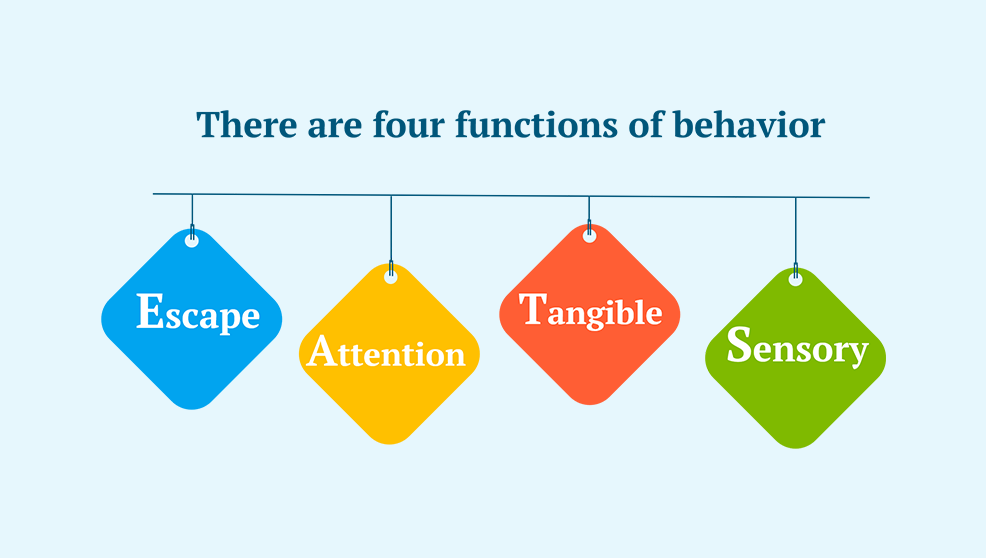
In behavioral psychology, behaviors generally serve four main functions: sensory stimulation, escape, attention, and tangible rewards. In the realm of money, these manifest as specific drivers that dictate our net worth.
Survival and Security
The most fundamental function of financial behavior is the pursuit of security. This is seen in conservative investing styles and the drive to build an “emergency fund.” When an individual hoards cash in a low-interest savings account despite high inflation, the function of that behavior is “Anxiety Reduction.” While it is mathematically suboptimal, the psychological function of feeling safe outweighs the desire for a 7% return in the stock market. Understanding this allows a financial advisor to suggest “cash-like” instruments that offer slightly higher yields without triggering the client’s survival-based fear.
Social Signaling and Status
A significant portion of consumer behavior serves the function of social signaling. We use money to communicate our position within a hierarchy. Purchasing a luxury vehicle or a designer watch often has little to do with the utility of the product and everything to do with the function of “Status Maintenance.” In brand strategy and personal finance, this is known as conspicuous consumption. If the function of a behavior is to signal wealth, the individual may actually erode their actual wealth to maintain the appearance of it.
Risk Mitigation and Loss Aversion
One of the most powerful functions of behavior in money management is loss aversion. Studies show that the pain of losing $1,000 is twice as potent as the joy of gaining $1,000. Therefore, the function of many investment behaviors is “Regret Avoidance.” Investors will hold onto a losing stock for years, hoping to break even, simply to avoid the psychological pain of realizing a loss. Recognizing this function is the first step toward implementing “stop-loss” strategies that protect a portfolio from catastrophic declines.
Analyzing Market Behavior: How Aggregate Actions Move Capital
The stock market is essentially a giant voting machine for human behavior. While individual behaviors are complex, aggregate behaviors create trends that can be analyzed to predict market shifts.
Herd Mentality in Stock Markets
When a particular asset class—be it Bitcoin, AI stocks, or real estate—starts to climb rapidly, we observe “herding behavior.” The function of this behavior is “Risk Diffusion.” By doing what everyone else is doing, the individual feels that if they fail, they won’t be alone. This creates a feedback loop that leads to bubbles. When the bubble bursts, the behavior shifts to “Panic Selling,” where the function is “Immediate Preservation.” Understanding these aggregate behavioral functions allows contrarian investors to buy when others are fearful and sell when others are greedy.
The Function of “Panic Selling” vs. “FOMO”
FOMO (Fear Of Missing Out) serves the function of “Opportunity Capture.” It is a proactive, albeit often reckless, behavior driven by the desire to participate in a perceived gain. Conversely, panic selling is a reactive behavior. Both are functions of high emotional arousal. Professional traders often use “Sentiment Analysis” tools to gauge these behavioral functions across the market. By quantifying how much of the current price action is driven by behavior versus fundamentals, they can identify mispriced assets and engage in arbitrage.
Re-engineering Financial Habits for Long-term Growth
If our natural behavioral functions often lead to poor financial outcomes, we must learn to re-engineer them. This involves creating “frictions” for bad behaviors and “lubricants” for good ones.
Automation as a Behavioral Override
The most effective way to manage the function of a behavior is to remove the need for the behavior altogether. This is the power of automation. By setting up automatic transfers to an investment account, you bypass the “Decision Fatigue” and “Present Bias” (the tendency to value immediate rewards over future ones). The function of the behavior moves from a conscious, emotional choice to a systematic, background process. This is the “set it and forget it” mentality that builds generational wealth.
The Delayed Gratification Multiplier
The ability to delay gratification is perhaps the most important behavioral function in money management. The famous “Marshmallow Test” demonstrated that children who could wait for a larger reward later, rather than a small one now, had better life outcomes. In finance, the function of delayed gratification is “Capital Compounding.” Every dollar not spent today is a “seed” that can grow into a “tree” tomorrow. To foster this, one must change the internal narrative: you aren’t “depriving” yourself today; you are “buying freedom” for the future.
The Future of Money: AI and Behavioral Analytics
As we move further into the digital age, the way we analyze the function of financial behavior is changing. Technology and finance are merging to create tools that can nudge us toward better decisions.
Hyper-Personalized Financial Advice
AI-driven fintech apps now analyze our spending patterns in real-time. They can identify when a user is likely to engage in “impulse buying” based on the time of day, location, or previous habits. The future of financial planning lies in “Behavioral Nudging,” where an app might send a notification to a user’s phone right as they enter a high-spending zone, reminding them of their long-term goals. Here, the technology serves the function of a “Digital Pre-frontal Cortex,” helping us regulate our impulses.

Ethical Implications of Behavioral Tracking
With the ability to track and influence the function of behaviors comes a significant ethical responsibility. Financial institutions can use behavioral data to either help a consumer build credit or to trap them in a cycle of high-interest debt. As we look toward the future of “Money,” the intersection of Big Data and Behavioral Science will be a major battleground. Investors and consumers must stay informed about how their behavioral data is being used to manipulate their financial functions.
In conclusion, money is rarely just about math. It is about the functions of the human psyche—our fears, our aspirations, and our social needs. By identifying the function of a behavior, whether it is an impulse to spend or a fear of the market, we can regain control over our financial destiny. Wealth is not just an accumulation of assets; it is the result of a mastered set of behaviors designed to serve our long-term survival and freedom.
aViewFromTheCave is a participant in the Amazon Services LLC Associates Program, an affiliate advertising program designed to provide a means for sites to earn advertising fees by advertising and linking to Amazon.com. Amazon, the Amazon logo, AmazonSupply, and the AmazonSupply logo are trademarks of Amazon.com, Inc. or its affiliates. As an Amazon Associate we earn affiliate commissions from qualifying purchases.